
Delivery Business Profit Calculator
Business Assessment Tool
Based on 2026 delivery market analysis. Input your specific details to see if your business could be profitable.
Your Business Viability Assessment
Starting a delivery business sounds simple: get a van, hire a driver, and start picking up packages. But in 2026, the landscape has changed. Amazon, UPS, and DoorDash don’t just dominate the market-they’ve raised the bar so high that small players need more than a vehicle to survive. So is it still worth it? The answer isn’t yes or no. It’s conditional. It depends on your location, your niche, and how sharply you can cut costs.
What’s Actually Changing in Delivery
Five years ago, local delivery meant pizza, dry cleaning, and pharmacy runs. Today, it’s grocery drops, same-day medical supplies, and e-commerce returns. The biggest shift? Customers now expect delivery in under two hours. That’s not a luxury-it’s the baseline. If you can’t match that, you’re already behind.
Platforms like Uber Connect, Roadie, and local apps have made it easier to find gigs, but they’ve also crushed margins. Drivers on these apps earn between $12 and $18 an hour after expenses. That’s barely above minimum wage in most cities. If you’re thinking of joining them as an independent contractor, think again. The real opportunity lies in owning the service-not just driving for it.
The Hidden Costs No One Talks About
You’ve seen the ads: "Earn $5,000/month with your van!" Here’s what they leave out:
- Vehicle maintenance: A delivery van needs new tires every 20,000 miles. Brake jobs every 30,000. That’s $3,000 to $5,000 a year, minimum.
- Insurance: Commercial auto insurance for a delivery business costs 3x more than personal coverage. In Texas, it’s $4,200/year. In California, it’s $6,800.
- Gas: With fuel averaging $3.85/gallon in 2026, a van doing 100 miles/day burns $1,100 a month.
- Permits and licenses: Most cities require a business license, a delivery permit, and a city zoning clearance. Fees range from $200 to $1,200 annually.
- Software: You need routing apps, invoicing tools, and customer tracking. Monthly subscriptions add up to $150-$300.
That’s $8,000 to $15,000 just to break even before you earn a dime. Most new owners underestimate this by 70%. If you don’t have savings to cover six months of fixed costs, don’t start.
Who’s Actually Making Money?
It’s not the guy with one van. It’s the operators who specialize.
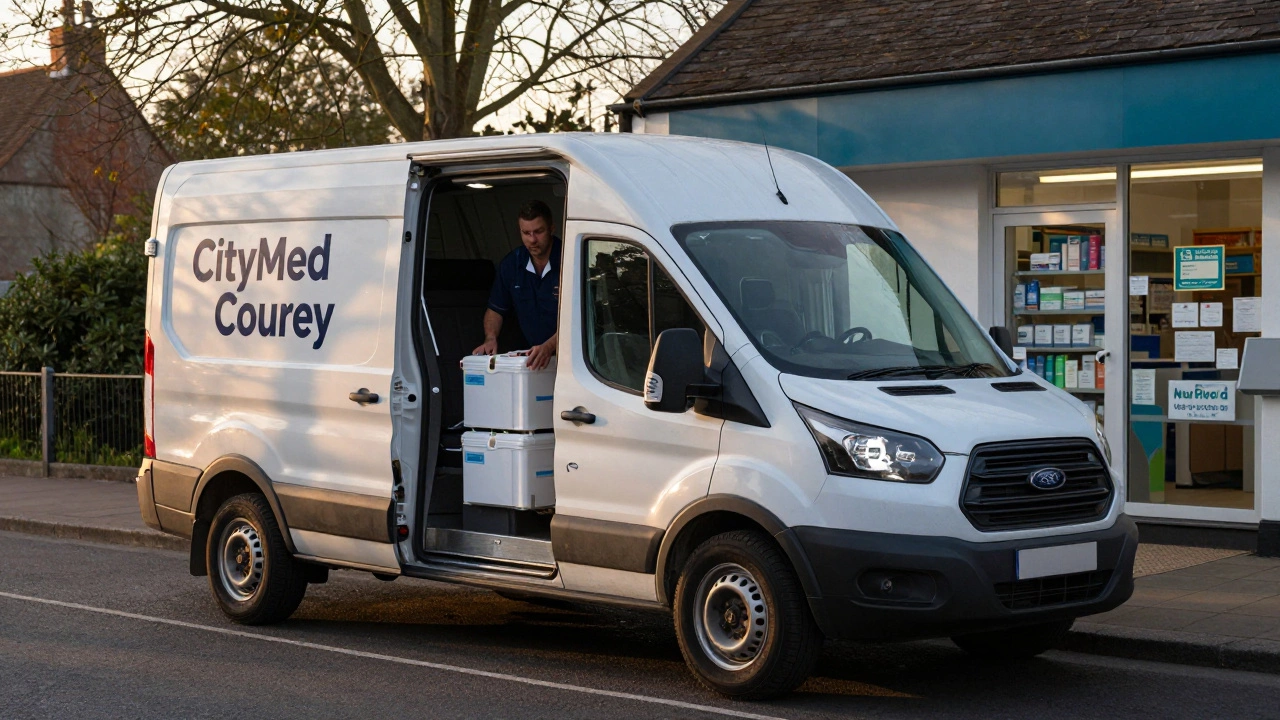
Take medical courier services a niche delivery service that transports lab samples, prescriptions, and medical devices under strict regulatory standards. These businesses charge $50-$120 per run. Why? Because they need certified drivers, temperature-controlled vans, and HIPAA-compliant tracking. Few competitors exist. A single driver can do 4-6 runs a day. That’s $200-$700 daily. Multiply that by five days, and you’re looking at $50,000-$175,000 a year in gross revenue.
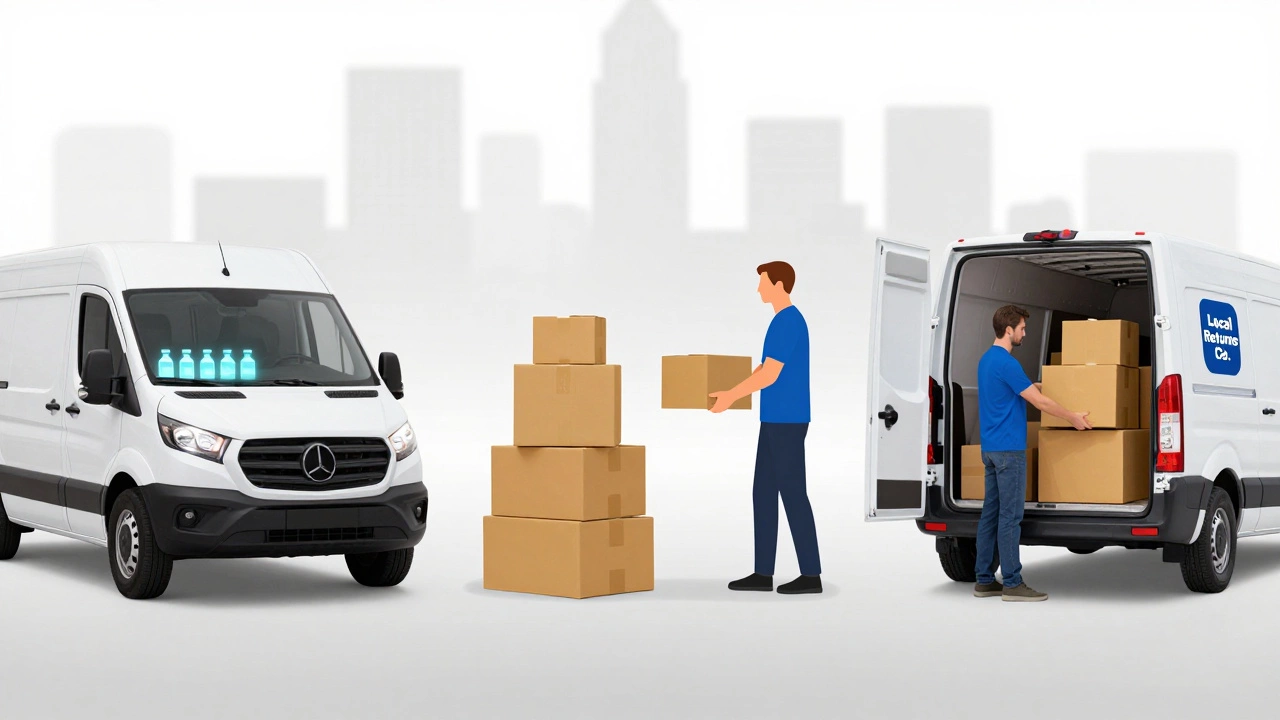
Another winner? retail returns a delivery model focused on picking up unwanted online purchases from homes and returning them to warehouses or stores. E-commerce returns hit $1.2 trillion in 2025. Most retailers outsource this. You can partner with local boutiques or Amazon sellers and charge $8-$15 per return. One driver, one van, 30 returns a day? That’s $240-$450 daily. No warehouse. No inventory. Just logistics.
And then there’s last-mile delivery for small e-commerce brands a service that handles final delivery for online stores that can’t afford UPS or FedEx rates. These brands pay $5-$8 per delivery. They don’t want national carriers-they want someone who shows up on time, texts updates, and handles fragile items with care. If you build trust, they’ll stick with you.
Where It Doesn’t Work
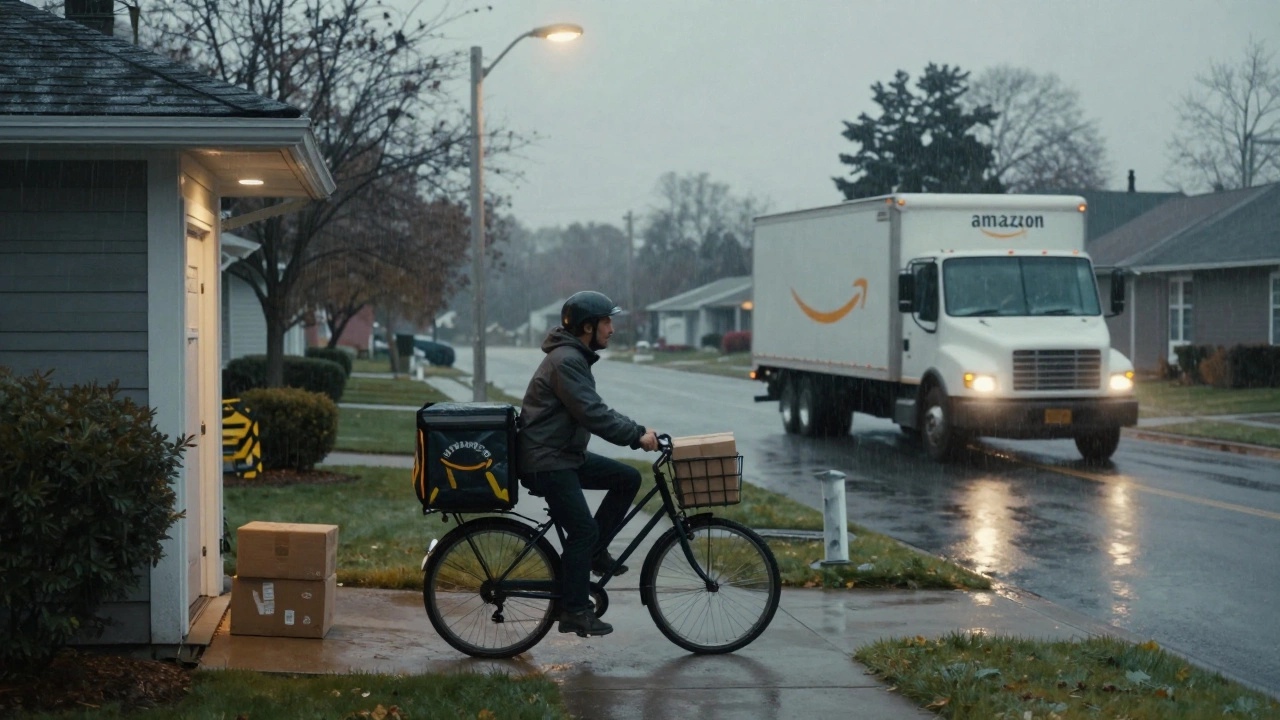
Don’t try to compete with DoorDash or Uber Eats unless you have a restaurant contract locked in. The margins are razor-thin. Tip-dependent drivers undercut you. You’ll lose money on every order.
Don’t start in a city with over 500,000 people unless you have a team of five or more drivers. The competition is too fierce. The customer acquisition cost is too high. You’ll burn cash trying to get noticed.
Don’t buy a new van. Buy a used one. A 2019 Ford Transit with 60,000 miles costs $25,000. A new one? $45,000. You’re not delivering luxury-you’re delivering boxes. The van is a tool, not a status symbol.
How to Start Smart
If you’re serious, here’s the real roadmap:
- Choose a niche. Medical, returns, or small e-commerce. Pick one. Don’t try to do everything.
- Start in a town under 100,000 people. Fewer competitors. Easier to build reputation.
- Use a used van. Budget $15,000-$25,000. Keep it under 80,000 miles.
- Get commercial insurance. Don’t skip this. One accident wipes you out.
- Use free tools: Google Maps for routing, Zoho Invoice for billing, WhatsApp for customer updates.
- Find 3 local clients first. A pharmacy, a boutique, a small online store. Offer them 20% off for the first month. Get testimonials.
- Reinvest every dollar for the first six months. No salary. No luxury.
Most successful owners didn’t start with big dreams. They started with one client, one route, one van. They built trust. Then they added a second driver. Then a second van. Now they run a team of 12. It took three years. But they’re profitable.
The Real Profit Math
Let’s say you run a small medical courier service in Des Moines, Iowa:
- 4 runs/day × 5 days = 20 runs/week
- $70 per run = $1,400/week
- $5,600/month
- Expenses: $2,100 (gas, insurance, maintenance, software)
- Net profit: $3,500/month
That’s $42,000 a year. Before taxes. And you’re not working 80-hour weeks. You’re working 45. You have control. You own the business. No app owns you.
Compare that to driving for Uber. You’d need to do 120 rides a week to hit $3,500 after fees. And you’d be stuck in traffic, chasing tips, and answering customer complaints. No ownership. No growth.
Final Verdict
Is it worth starting a delivery business? Yes-if you’re smart. No-if you’re impatient.
The market isn’t dead. It’s just crowded. The winners aren’t the ones with the fanciest vans. They’re the ones who solve one specific problem better than anyone else. Medical deliveries. Returns. Local e-commerce. These aren’t glamorous. But they’re profitable. And they’re growing.
If you’ve got $10,000 to invest, a reliable vehicle, and the discipline to stick with it for a year, you can build something real. If you’re looking for a quick win? Walk away. This isn’t a hustle. It’s a business. And businesses take time to grow.
How much money do I need to start a delivery business?
You need at least $10,000 to $15,000 to cover a used van, commercial insurance, permits, and six months of operating expenses. Most people underestimate this. Don’t start with less than $8,000 in savings. You’ll need it to survive the first few months before you turn a profit.
Can I start a delivery business with just one van?
Yes-and you should. Most successful delivery businesses started with one van and one driver. The key isn’t scale at first-it’s reliability. Deliver on time, every time. Build trust with a few local clients. Once you have steady work, then add a second van. Trying to grow too fast kills more businesses than not growing at all.
What’s the most profitable niche in delivery right now?
Medical courier services and retail returns are the two most profitable niches in 2026. Medical deliveries charge $50-$120 per trip and have almost no competition outside major cities. Retail returns are exploding because online shopping keeps growing, and retailers hate handling returns themselves. Both require specialization, but they pay well and have low customer churn.
Do I need a license to start a delivery business?
Yes. You’ll need a general business license, a commercial vehicle permit, and possibly a city-specific delivery permit. Requirements vary by state and city. In some places, you also need a background check. Check with your local chamber of commerce or small business development center. Skipping this can lead to fines or shutdowns.
Should I buy or lease a delivery van?
Buy used. Leasing sounds easier, but you’ll pay more over time and own nothing at the end. A 2019-2021 Ford Transit or Mercedes Sprinter with under 70,000 miles costs $20,000-$28,000. That’s a solid investment. If you can’t pay cash, get a small business loan with a 5-year term. Avoid short-term leases-they trap you with high monthly payments and mileage limits.
How do I find my first clients?
Go door to door. Visit local pharmacies, small retail stores, and e-commerce sellers. Offer a free trial delivery. Say: "I’ll deliver your next order for free if you’re happy with the service." Most will say yes. Once you have one testimonial, you can show others. Word of mouth is your best marketing tool in the first year.
Start small. Stay focused. Deliver reliably. The market will find you.