

Supply Chain vs. Logistics Classifier
Select a category to view examples of business tasks.
Select a Category
Learn which ones belong to Supply Chain and which are Logistics.
You’ve probably heard the terms thrown around in boardrooms, news articles, and casual conversations about business. Someone says, “We need to fix our supply chain,” while another argues, “It’s a logistics issue.” It feels like semantics, but getting this wrong can cost you millions. The short answer? No, logistics is not bigger than supply chain. In fact, it’s the other way around. Logistics is a vital piece of the puzzle, but the supply chain is the entire picture.
To understand why, we have to stop thinking of them as competitors for size and start seeing them as layers of a system. One contains the other. If you’re running a business, especially one that ships physical goods, knowing where one ends and the other begins is the difference between reacting to problems and preventing them entirely.
The Big Picture: What Is Supply Chain Management?
Imagine you are buying a coffee maker from an online store. You click “buy,” wait three days, and receive a box. That delivery was logistics. But what happened before you clicked buy? Where did the steel for the heating element come from? Who designed the plastic casing? How did the factory get the electricity to run the assembly line? Did the company decide to manufacture in Vietnam or Mexico based on tariff rates?
All of those questions belong to Supply Chain Management (SCM), which is the end-to-end oversight of everything involved in creating and delivering a product to the final consumer. SCM starts at the very beginning-the raw materials-and doesn’t stop until the customer has the product in their hands (and sometimes even after, when they return it).
Think of SCM as the brain of the operation. It handles:
- Sourcing: Finding suppliers for raw materials like cotton, silicon, or aluminum.
- Procurement: Negotiating prices and contracts with those suppliers.
- Production Planning: Deciding how much to make based on demand forecasts.
- Inventory Management: Balancing having enough stock without tying up cash in dead inventory.
- Demand Planning: Predicting what customers will want next season.
If any link in this chain breaks-if a supplier in China shuts down due to a port strike, or if a new regulation bans a specific chemical used in manufacturing-the whole system fails. That’s why SCM is broader. It manages relationships, risks, and strategies across multiple organizations, not just within your own four walls.
The Moving Parts: Defining Logistics
Now, let’s zoom in. Once the coffee maker is built, packed, and sitting in a warehouse, it needs to move. This is where Logistics comes in. Logistics is the detailed organization and implementation of moving goods, people, or information. Specifically, in commerce, it focuses on the flow and storage of goods between the point of origin and the point of consumption.
Logistics is the muscle. It’s tactical. It answers questions like:
- Which trucking company offers the best rate for a pallet shipment from Ohio to Texas?
- Should we use air freight to meet a tight deadline, or sea freight to save money?
- How do we optimize warehouse layout so pickers don’t walk unnecessary miles?
- What packaging prevents breakage during transit?
- How do we handle last-mile delivery to ensure the customer gets the package on time?
When you hire a 3PL provider (Third-Party Logistics), you are outsourcing these specific tasks. They manage the transportation, warehousing, and fulfillment. They don’t usually tell you who to buy your raw materials from or how to design your product. They just move what you give them efficiently.
In the coffee maker example, logistics kicks in after production. It ensures the finished good travels from the factory floor to the distribution center, then to the retailer’s shelf or directly to your doorstep. It deals with carriers, customs brokers, warehouse staff, and delivery drivers.
Key Differences: Scope, Timeframe, and Relationships
So, if logistics is part of the supply chain, how do we clearly distinguish them in practice? Let’s look at three critical areas where they diverge.
| Feature | Supply Chain Management | Logistics |
|---|---|---|
| Scope | End-to-end: Raw materials to final customer | Specific segment: Movement and storage of goods |
| Focus | Strategic planning, supplier relationships, risk management | Tactical execution, transportation optimization, warehousing |
| Time Horizon | Long-term (years): Building resilient networks | Short-to-medium term (days/months): Meeting immediate delivery windows |
| Key Activities | Sourcing, procurement, production planning, demand forecasting | Freight forwarding, inventory control, order fulfillment, last-mile delivery |
| Relationships | External (suppliers, manufacturers) and internal | Internal operations and external carriers/warehouses |
Consider the relationship aspect. A supply chain manager spends weeks negotiating a contract with a steel supplier in Japan, analyzing geopolitical risks, and ensuring ethical labor practices. A logistics manager is focused on getting that steel from the port in Los Angeles to the factory in Detroit by Tuesday morning, choosing between rail or truck based on current fuel surcharges.
Both are essential. But the supply chain manager sets the stage; the logistics manager performs the play.
Why the Confusion Persists
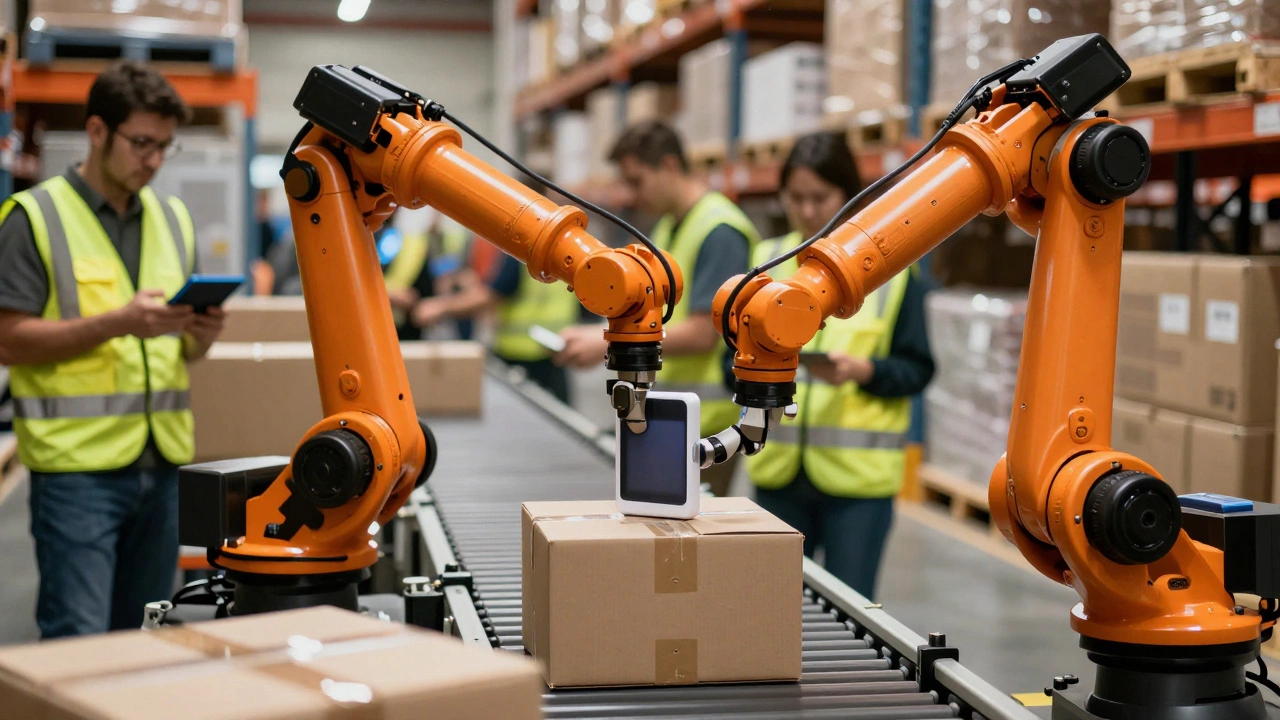
Why do people still mix these up? Partly because modern technology blurs the lines. Today’s Logistics Software often includes features for demand planning and supplier visibility. Platforms like SAP Integrated Business Planning or Oracle SCM Cloud handle both strategic sourcing data and real-time shipment tracking.
When software integrates these functions, it feels like one thing. But conceptually, they remain distinct. Another reason is organizational structure. In smaller companies, one person might wear both hats. The operations director sources materials *and* picks the courier service. As businesses grow, these roles split. You get a VP of Supply Chain Strategy and a Director of Logistics Operations.
This separation is crucial for scaling. If you try to manage global supplier negotiations with the same mindset you use for optimizing local delivery routes, you’ll fail. One requires deep analytical forecasting and relationship building; the other requires operational agility and cost-per-unit precision.
Real-World Example: The Smartphone Lifecycle
Let’s trace a smartphone to see how these concepts interact in reality. Apple doesn’t make every component itself. They rely on a massive global network.
The Supply Chain Side: Apple engineers work with TSMC in Taiwan to design custom chips. They source rare earth minerals from Australia for magnets. They negotiate long-term agreements with Foxconn for assembly. They forecast global demand to decide whether to produce more iPhone 16s or focus on iPads. They assess risks, like potential tariffs on Chinese imports, and diversify manufacturing to India. All of this is supply chain management. It’s about strategy, relationships, and resilience.
The Logistics Side: Once the phones are assembled in Zhengzhou, China, they need to reach stores in New York, London, and Tokyo. Logistics teams book cargo space on container ships. They clear customs in Rotterdam. They transport boxes via truck to regional distribution centers. They manage inventory levels in warehouses so stores don’t run out during launch week. They coordinate last-mile delivery for online orders. This is logistics. It’s about movement, speed, and accuracy.
If the supply chain fails-say, TSMC has a chip shortage-Apple can’t build phones, no matter how good their logistics are. If logistics fails-say, a storm delays shipments from Asia-Apple builds phones, but they sit in warehouses, costing money and missing sales targets. Both must work together.
How to Optimize Both for Your Business
Whether you run a small e-commerce brand or a large manufacturer, you need to strengthen both areas. Here’s how to approach each.
For Supply Chain Strength:
- Diversify Suppliers: Don’t rely on a single source for critical components. Build a tiered supplier base.
- Improve Visibility: Use tools that track your suppliers’ suppliers. If your raw material supplier is facing shortages, you need to know before they tell you.
- Collaborate Closely: Share demand forecasts with key partners. When everyone plans together, waste decreases.
For Logistics Efficiency:
- Right-Size Warehousing: Store high-turnover items closer to shipping docks. Use data to determine optimal inventory placement.
- Negotiate Carrier Contracts: Leverage volume discounts. Consider multi-modal transport (combining rail and truck) to reduce costs.
- Automate Fulfillment: Invest in warehouse management systems (WMS) that reduce picking errors and speed up processing times.
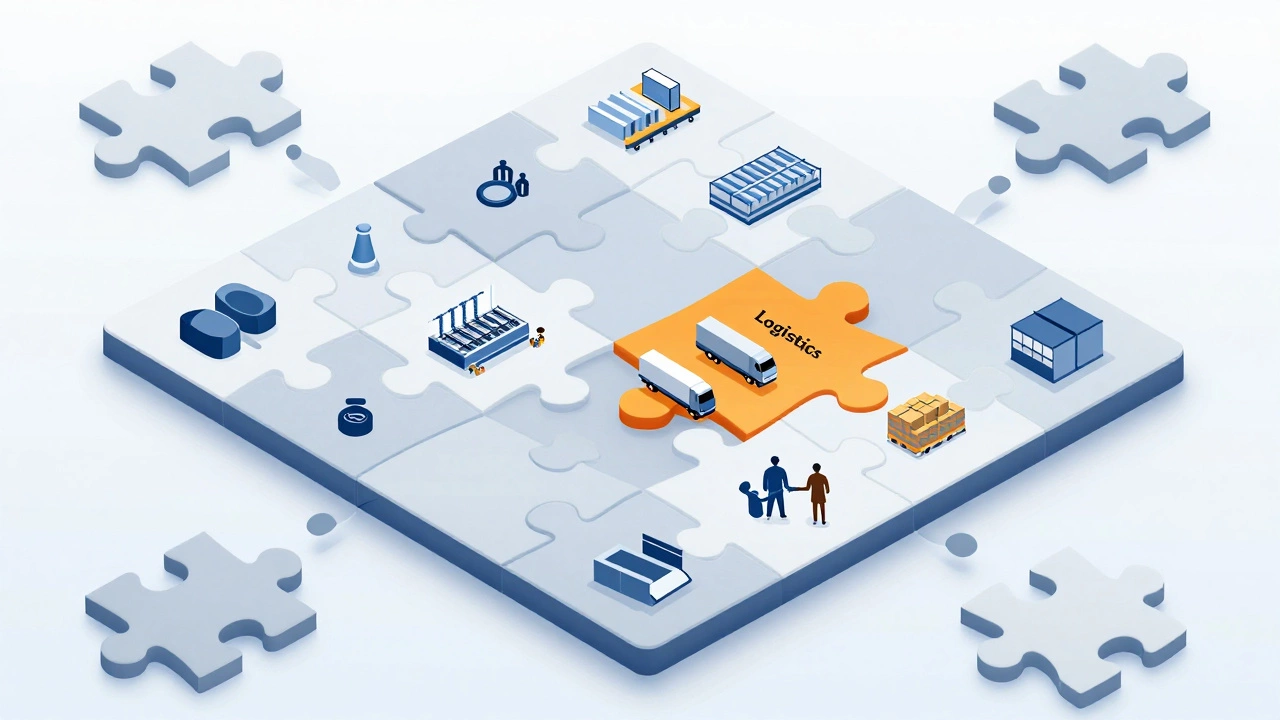
Remember, logistics is a subset of supply chain. Optimizing logistics alone won’t save you if your supply chain is broken. Conversely, a perfect supply chain strategy means nothing if you can’t deliver the product reliably. You need both.
Common Pitfalls to Avoid
Many businesses fall into traps when trying to manage these functions. Watch out for these mistakes.
1. Treating Logistics as Just Shipping: Many think logistics is only about picking a courier. It’s also about reverse logistics (returns), inventory accuracy, and packaging efficiency. Ignoring returns can destroy profit margins.
2. Siloed Departments: When procurement, production, and logistics operate in silos, communication breaks down. Procurement buys cheap materials that are harder to ship. Production creates batches that don’t match logistics capacity. Break down these walls with integrated software and cross-functional meetings.
3. Over-Optimizing for Cost: Cutting logistics costs by using slower, cheaper carriers might hurt customer satisfaction. Cutting supply chain costs by switching to a lower-quality supplier might increase defect rates. Always balance cost with service level and quality.
4. Ignoring Data: Both fields thrive on data. Supply chain needs predictive analytics for demand. Logistics needs real-time tracking for visibility. If you’re making decisions based on gut feeling rather than data, you’re leaving money on the table.
The Future: Integration and Technology
As we move through 2026, the line between supply chain and logistics continues to blur thanks to technology, but the distinction remains vital for strategy. Artificial Intelligence is transforming both. AI algorithms predict demand spikes (supply chain) and dynamically route trucks to avoid traffic (logistics). Blockchain provides transparency from raw material extraction to final delivery.
However, technology doesn’t replace the need for understanding the core concepts. You still need to know whether a problem is a sourcing issue or a transportation issue to apply the right solution. Automation handles the execution, but humans must define the strategy.
Companies that succeed are those that view logistics as a critical component of their broader supply chain ecosystem. They don’t ask, “Which is bigger?” They ask, “How do I integrate them seamlessly?”
Is logistics a part of supply chain?
Yes, logistics is a subset of supply chain management. While supply chain covers the entire journey from raw materials to the end consumer, logistics specifically handles the movement, storage, and flow of goods within that larger process.
What is the main difference between supply chain and logistics?
The main difference lies in scope. Supply chain management is strategic, covering sourcing, production, and relationships with suppliers. Logistics is tactical, focusing on transportation, warehousing, and delivery execution.
Can a business have good logistics but a bad supply chain?
Absolutely. You can have efficient delivery systems (good logistics) but still face disruptions due to poor supplier selection, inaccurate demand forecasting, or production bottlenecks (bad supply chain). Both must function well for overall success.
Who is responsible for supply chain vs. logistics?
In large organizations, these are separate roles. A Supply Chain Manager oversees sourcing, procurement, and production planning. A Logistics Manager handles transportation, warehousing, and order fulfillment. In smaller businesses, one person may handle both.
Does supply chain include reverse logistics?
Yes. Reverse logistics, which involves handling returns, repairs, and recycling, is part of the broader supply chain process. It ensures that products flowing back from customers are managed efficiently, reducing waste and recovering value.