
Ecommerce Logistics Cost Calculator
Enter your store's data to compare fulfillment models.
Cost Analysis Results
ReadyEnter your details and click "Compare Costs" to see the breakdown.
Imagine you just bought a pair of sneakers online. You clicked "Buy Now," entered your address, and waited. Two days later, the box arrived at your door. It felt like magic, right? But behind that simple transaction was a massive, complex machine working overtime. That machine is logistics, defined as the detailed organization and implementation of a complex operation involving the movement of goods from origin to consumption. In the world of e-commerce, logistics isn't just about moving boxes; it's the backbone of customer satisfaction and business survival.
If you are running an online store or planning to start one, understanding what logistics actually entails is crucial. It’s not merely shipping. It’s a symphony of inventory control, warehousing, transportation, and data analysis. Get it wrong, and you lose customers. Get it right, and you build a brand they trust. Let’s break down exactly what this means for your business today.
The Core Components of Ecommerce Logistics
To understand logistics, you have to look at its parts. It’s not a single action but a chain of events. Think of it as a relay race where every runner must hand off the baton perfectly. If one person drops it, the whole team loses.
First, there is Inventory Management, which refers to the process of ordering, storing, and using a company's inventory. This is where it all starts. You need to know exactly what you have in stock, where it is located, and when you need to reorder. Without accurate inventory data, you risk overselling items you don’t have, leading to cancelled orders and angry customers.
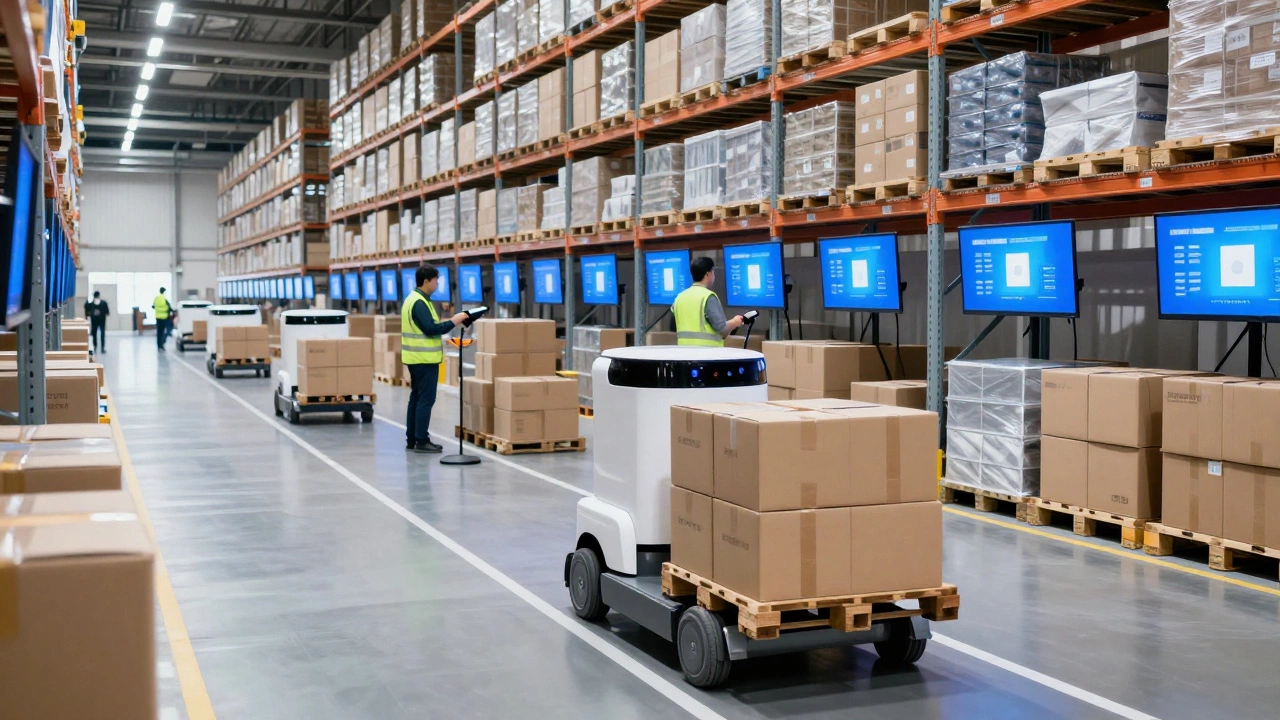
Next comes Warehousing, described as the storage of goods in a building or facility before they are sold or distributed. Your warehouse is the hub. It needs to be organized so that pickers can find items quickly. Chaos here leads to slow processing times. Modern warehouses use barcode scanners and automated systems to speed this up, but the principle remains: location matters.
Then we have Order Fulfillment, which is the complete process of receiving, processing, and delivering orders to customers. This includes picking the item from the shelf, packing it securely, labeling it with the correct shipping information, and handing it over to a carrier. Speed and accuracy in this stage determine how fast your customer gets their package.
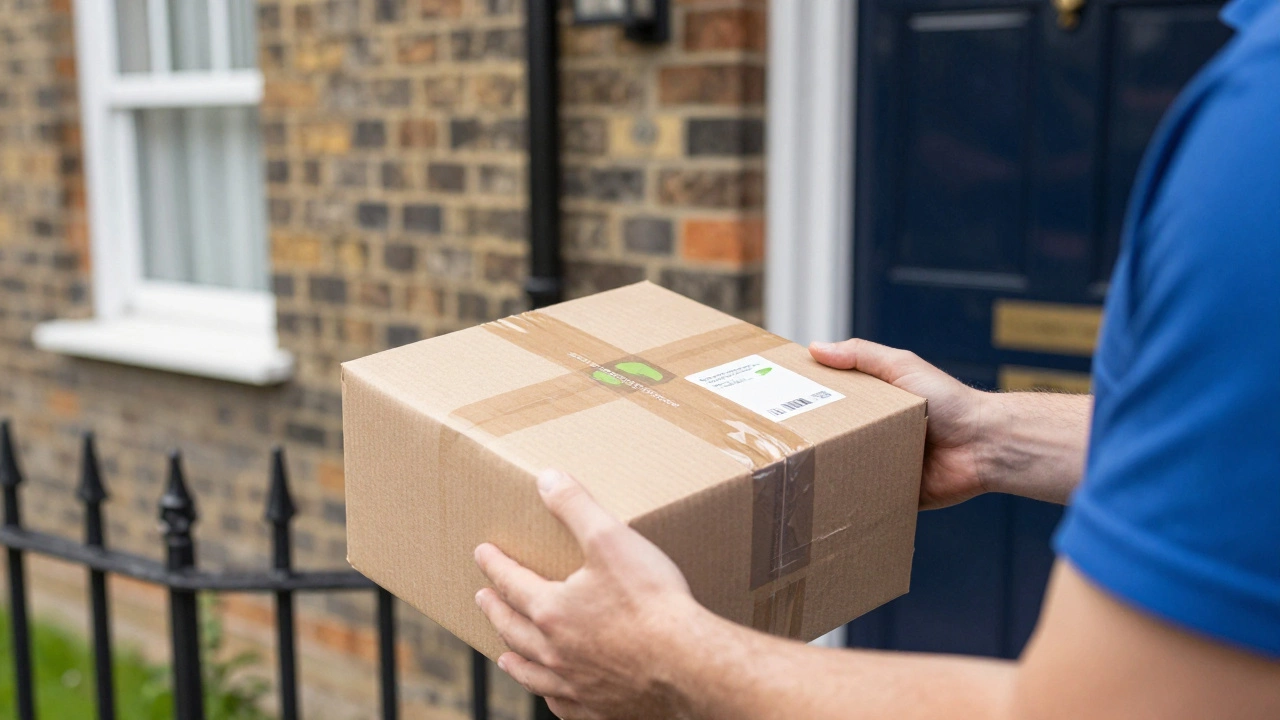
Finally, there is Last Mile Delivery, often cited as the final step of the delivery process from a distribution center to the end user. This is usually the most expensive and complicated part of the journey. It involves navigating traffic, finding addresses, and ensuring the package arrives undamaged. For many consumers, this is the only physical interaction they have with your brand, making it critical.
Why Logistics Makes or Breaks Your Store
You might think great marketing and a beautiful website are enough. They aren’t. According to various consumer surveys, shipping costs and delivery times are top reasons for cart abandonment. If your logistics are slow or unpredictable, no amount of ad spend will save you.
Consider the impact on customer retention. Acquiring a new customer is five times more expensive than keeping an existing one. Fast, reliable delivery creates loyalty. When a customer knows they can rely on your delivery window, they come back. Conversely, a lost package or a late delivery can drive them straight to a competitor.
Logistics also affects your cash flow. Efficient inventory management means you aren’t tying up capital in stock that sits on shelves gathering dust. You sell faster, you restock smarter, and your money works harder for you. Poor logistics lead to dead stock and emergency air freight charges, both of which eat into your margins.
In-House vs. Third-Party Logistics (3PL)
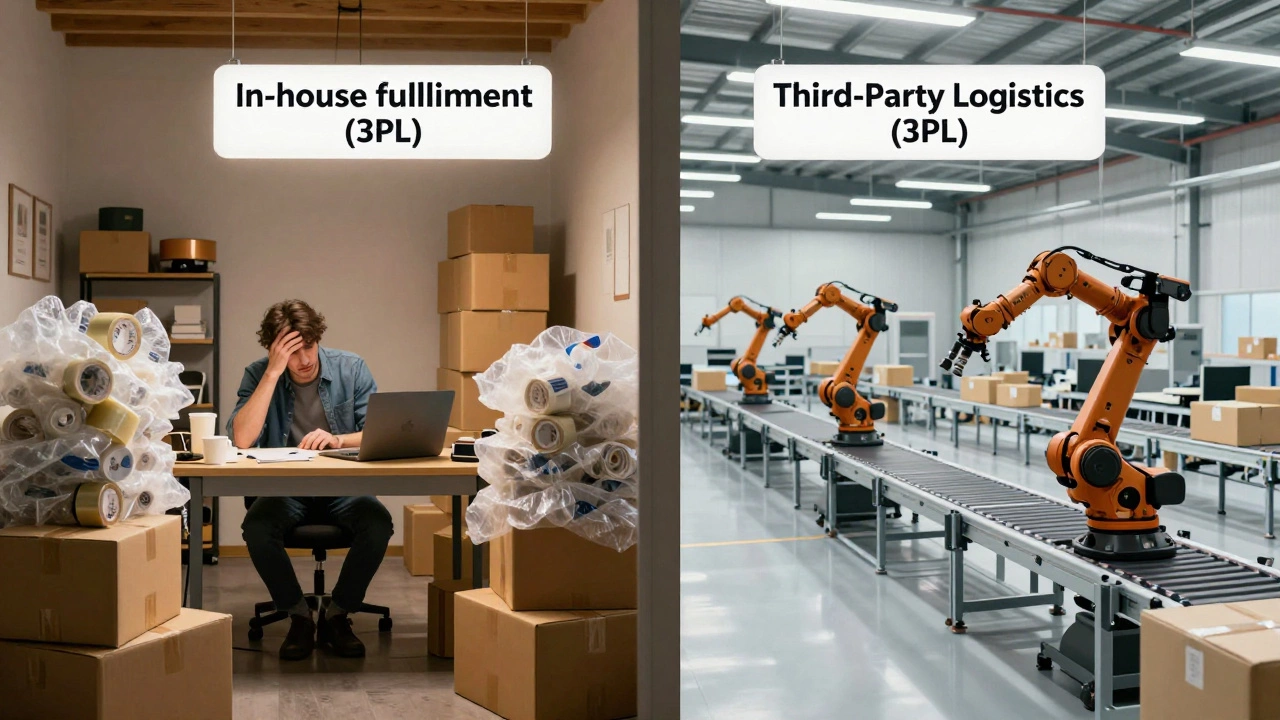
One of the biggest decisions you’ll face is how to handle these operations. Do you do it yourself, or do you hire someone else? This is the debate between in-house fulfillment and using a Third-Party Logistics provider (3PL), defined as an external company that handles some or all aspects of a business's logistics, including warehousing and transportation.
| Feature | In-House Fulfillment | Third-Party Logistics (3PL) |
|---|---|---|
| Control | High control over packaging and quality checks | Limited direct oversight; relies on partner standards |
| Cost Structure | High fixed costs (rent, labor, equipment) | Variable costs based on volume; lower upfront investment |
| Scalability | Difficult to scale quickly during peaks | Easy to scale up or down based on demand |
| Shipping Rates | Retail rates unless high volume negotiated | Bulk discounts passed on to merchants |
| Geographic Reach | Limited by your own warehouse locations | Access to multiple fulfillment centers nationwide |
If you are just starting out with low order volumes, in-house might make sense. You can pack orders from your garage or small office. It keeps costs low initially and gives you full control. However, as you grow, this model becomes a bottleneck. Hiring staff, renting space, and managing software becomes a full-time job that distracts from selling.
This is where a 3PL shines. They have the infrastructure already built. They negotiate better shipping rates because they move millions of packages. They can store your inventory in multiple locations across the country, allowing for faster two-day or even next-day delivery. For most growing ecommerce businesses, partnering with a 3PL is the logical next step.
The Role of Technology in Modern Logistics
Gone are the days of spreadsheets and manual phone calls. Today’s logistics run on data. Logistics Software, also known as Warehouse Management Systems (WMS), provides software solutions that help manage and optimize warehouse operations and inventory tracking. These tools connect your online store directly to your warehouse.
When a customer places an order, the software automatically updates inventory levels, generates a packing slip, and labels the package. This reduces human error significantly. Imagine manually typing in addresses for hundreds of orders a day. One typo, and the package goes to the wrong state. Automation prevents this.
Advanced systems also provide analytics. You can see which products sell best, which regions have the highest demand, and where bottlenecks occur. This data allows you to make informed decisions. For example, if you notice high sales in California, you might decide to move some inventory to a West Coast warehouse to reduce shipping times and costs.
Real-time tracking is another game-changer. Customers expect to know exactly where their package is. Integrated tracking systems send automatic updates via email or SMS. This transparency reduces customer service inquiries about "Where is my order?" freeing up your team to focus on other tasks.
Common Pitfalls to Avoid
Even experienced sellers stumble over common logistics issues. Being aware of these pitfalls can save you time and money.
- Ignoring Reverse Logistics: Returns are inevitable. Reverse Logistics refers to the process of moving goods from their typical final destination for the purpose of capturing value, or proper disposal. If you don’t have a clear return policy and process, returns become a nightmare. They clutter your warehouse and tie up capital. Make sure your system can handle returns efficiently, inspecting items and restocking them quickly.
- Poor Packaging: Don’t skimp on boxes and tape. Damaged goods lead to refunds and negative reviews. Invest in durable packaging materials that protect your products during transit. Also, consider unboxing experience; good packaging can enhance brand perception.
- Underestimating Seasonal Peaks: Black Friday, Christmas, and holiday seasons bring massive spikes in volume. If you are doing in-house fulfillment, ensure you have enough staff and supplies. If you use a 3PL, notify them well in advance so they can allocate resources for your account.
- Lack of Carrier Diversity: Relying on a single shipping carrier is risky. If that carrier has a strike or a system outage, your business stops. Work with multiple carriers (USPS, UPS, FedEx, DHL) to have backup options and competitive pricing.
Future Trends in Ecommerce Logistics
The logistics landscape is constantly evolving. Keeping an eye on trends can give you a competitive edge.
Automation and robotics are becoming more accessible. Autonomous mobile robots (AMRs) are now helping pick items in warehouses, increasing speed and reducing fatigue for workers. While large-scale automation is expensive, smaller robotic solutions are emerging for mid-sized businesses.
Sustainability is also a major focus. Consumers care about the environmental impact of their purchases. Using eco-friendly packaging materials and optimizing routes to reduce carbon emissions can appeal to this demographic. Some companies are even offering carbon-neutral shipping options.
Hyper-local fulfillment is another trend. By storing inventory in urban micro-fulfillment centers, businesses can offer same-day or even hour-level delivery in major cities. This meets the growing demand for instant gratification.
How much does ecommerce logistics cost?
The cost varies widely depending on your model. In-house fulfillment involves fixed costs like rent, salaries, and equipment, plus variable shipping costs. Using a 3PL typically involves per-order fees (pick and pack), storage fees (per pallet or bin), and shipping costs. Generally, 3PLs can reduce total logistics costs by 10-30% for growing businesses due to bulk shipping discounts and operational efficiencies.
What is the difference between logistics and supply chain?
Supply chain management is the broader concept that encompasses the entire flow of goods and services, including sourcing raw materials, manufacturing, and logistics. Logistics is a subset of supply chain management focused specifically on the movement, storage, and handling of goods from the point of production to the point of consumption.
When should I switch to a 3PL?
You should consider switching to a 3PL when your order volume exceeds what you can handle efficiently in-house, typically around 50-100 orders per day. Other signs include spending too much time on fulfillment instead of marketing/sales, facing high shipping costs, or needing to expand to new geographic regions without opening new warehouses.
How can I improve my last-mile delivery?
To improve last-mile delivery, use multiple carrier options to get the best rates and speeds. Offer real-time tracking to customers. Consider using local courier services for urgent deliveries in specific areas. Optimize your packaging to fit standard box sizes to avoid dimensional weight charges. Finally, communicate clearly with customers about delivery windows to set realistic expectations.
What is dropshipping in relation to logistics?
Dropshipping is a retail fulfillment method where a store doesn't keep the products it sells in stock. Instead, when a store sells a product using the dropshipping model, it purchases the item from a third party and has it shipped directly to the customer. The seller never sees or handles the product. This shifts the logistics burden entirely to the supplier or manufacturer.