
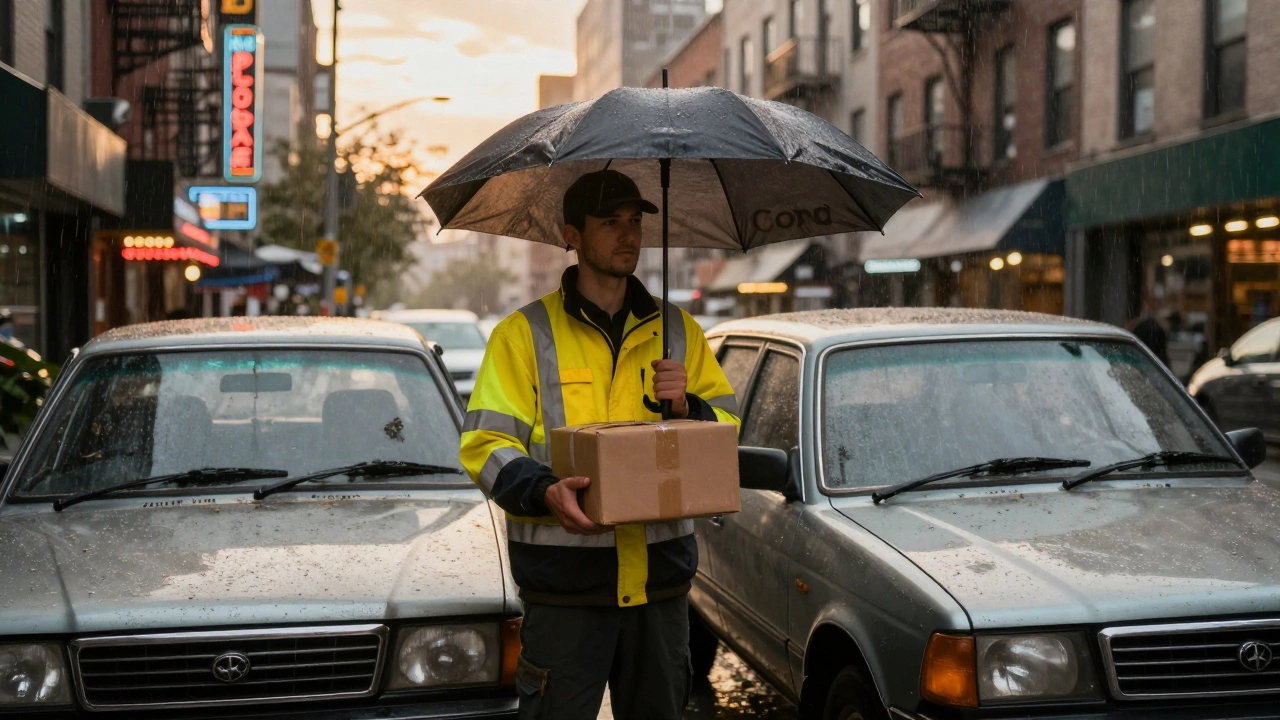
Local Courier Earnings Calculator
How much can you really make?
Estimate your potential earnings as a local courier, accounting for vehicle costs and location differences. Based on 2025 industry data.
Most people see local couriers as the face of fast delivery-showing up at your door with a package, often in rain or snow. But how much do they actually take home? The answer isn’t simple. It depends on where you live, who you work for, and how many hours you’re willing to drive. In 2025, local couriers in the U.S. earn between $15 and $28 per hour on average, but take-home pay can swing wildly based on the job structure.
Hourly Pay vs. Per-Delivery Pay
Not all courier jobs pay the same way. Some companies, like Amazon Flex or Uber Connect, pay per delivery. Others, like regional postal services or independent courier firms, offer hourly wages with benefits.
If you’re paid per delivery, you might earn $3 to $8 per package. That sounds good until you factor in fuel, vehicle wear, and time between stops. One courier in Atlanta reported making $22/hour on busy days with 30+ deliveries, but only $11/hour on slow weekdays when he did 12 deliveries. That’s the reality of gig-based pay: your income isn’t guaranteed.
Hourly couriers, on the other hand, get paid for time, not just deliveries. They often work for local logistics companies that handle contracts for pharmacies, law firms, or small e-commerce brands. These jobs usually pay $18 to $25 an hour, sometimes with health insurance and paid time off. The trade-off? Less flexibility. You’re tied to a schedule.
Location Matters More Than You Think
Pay varies dramatically by city. In San Francisco, a local courier can make $25 to $28 an hour-even $30 on peak days-because of high demand and cost of living. In contrast, couriers in rural areas of the Midwest or South often earn $15 to $18 an hour, even if they’re working the same number of hours.
Why? It’s simple economics. Big cities have more businesses needing same-day delivery. They also have higher operating costs, so companies pay more to attract drivers. In places like Nashville or Indianapolis, you might get $19/hour with a company van provided. In Boise or Omaha, you’re more likely to be driving your own car and getting $16/hour.
A 2025 survey by the National Courier Association found that couriers in the top 10 metro areas earned 38% more than those in non-metro areas. The gap hasn’t narrowed-it’s growing.
Who’s Hiring? Big Companies vs. Small Shops
Working for a big name like FedEx Ground or UPS doesn’t always mean better pay. In fact, many local courier jobs are with small, independent firms that handle niche routes-medical supplies, restaurant food, or legal documents.
Here’s how it breaks down:
- Big networks (FedEx, UPS, Amazon): Pay $18-$22/hour, often with benefits. But you’re stuck with fixed routes, strict time windows, and heavy penalties for delays.
- Independent courier companies: Pay $20-$28/hour. You might get more control over your schedule, but you’re usually on your own for insurance and repairs.
- Gig apps (Uber Connect, DoorDash Drive): Pay $15-$22/hour after expenses. High variability. You’re responsible for everything-gas, maintenance, taxes.
One courier in Chicago told me he switched from Uber Drive to a small medical courier firm. His pay jumped from $17/hour to $26/hour. Why? He was delivering lab samples and prescriptions. Those jobs pay more because they’re time-sensitive and require careful handling. No tips. No rush fees. Just steady, higher-paying work.
Expenses Eat Into Your Pay
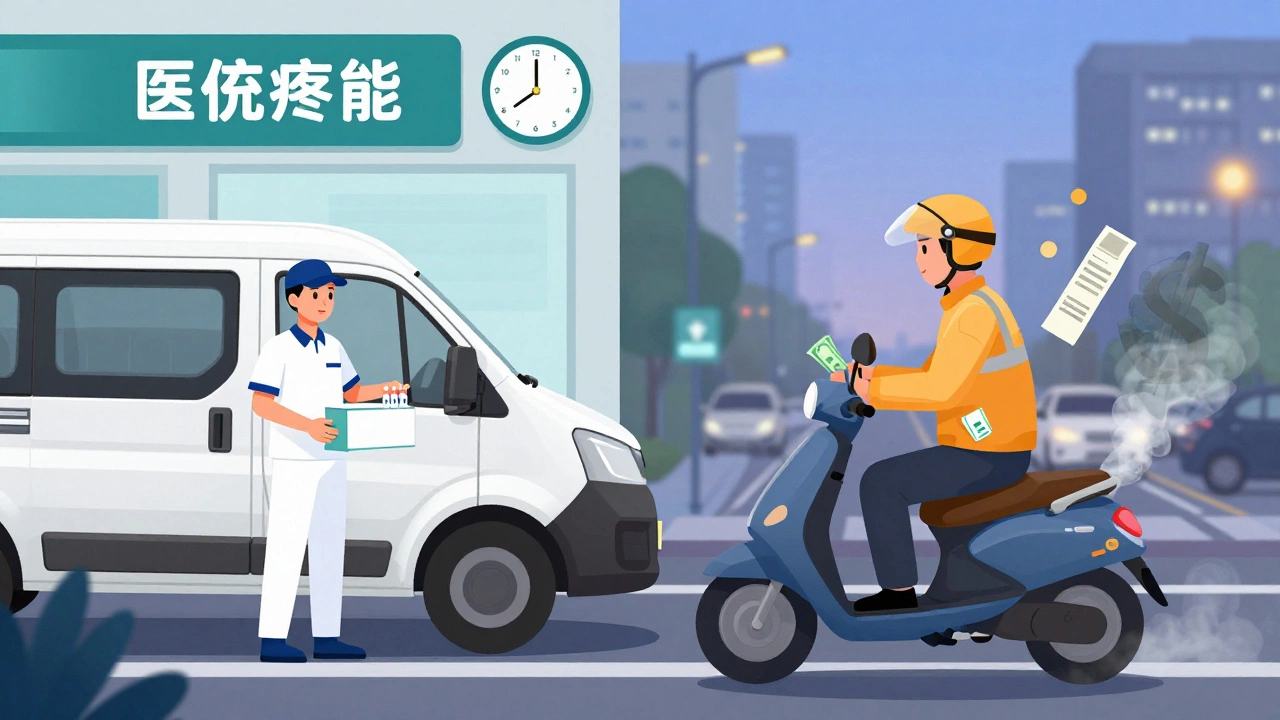
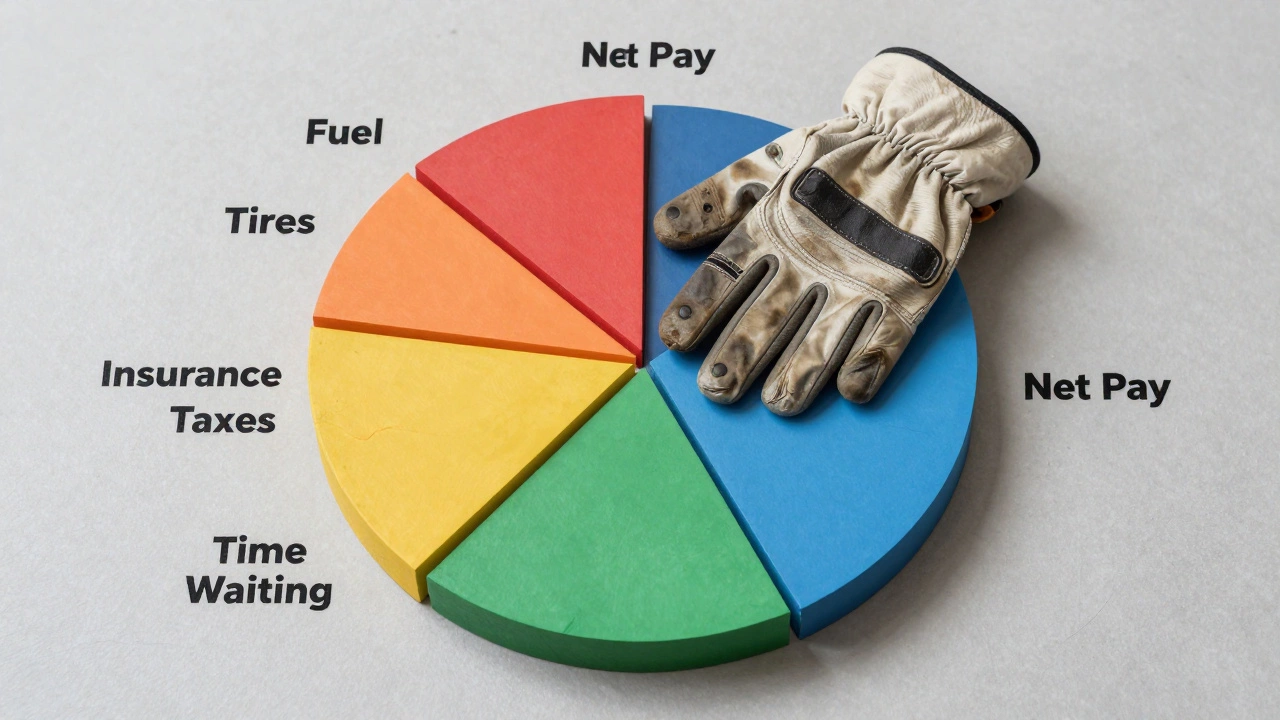
Here’s the part no one talks about: your paycheck isn’t your take-home pay. If you’re using your own car, you’re paying for gas, oil changes, tires, insurance, and repairs. The IRS standard mileage rate for 2025 is $0.67 per mile. That’s your baseline for what you should be reimbursed.
Let’s say you drive 120 miles a day on deliveries. That’s $80.40 in vehicle costs alone. If you make $150 a day before expenses, you’re down to $69.60. That’s $18.40/hour after costs-if you work 8 hours. But most couriers work 10 to 12 hours to hit that $150. Now you’re at $12/hour net.
Companies that provide a vehicle or pay mileage help a lot. But they’re rare. Most gig couriers never track their expenses. That means they think they’re making more than they are.
Peak Seasons and Overtime
Like retail workers during the holidays, couriers get paid more during busy times. In December 2025, many companies offered $3-$5 extra per delivery for orders between Christmas Eve and New Year’s Day. Some even doubled their base pay for night shifts.
Weekends are also profitable. A courier in Miami said he made $400 on a Saturday in December doing 38 deliveries-mostly gifts and last-minute orders. That’s $10.50 per delivery, or $26/hour after fuel. But he only worked that hard because he knew he’d get paid extra. Most of the year, he averaged $17/hour.
Peak seasons can boost annual income by 20-30%. But they’re short. If you’re counting on holiday pay to make your rent, you’re taking a risk.
What It Really Takes to Make $50K a Year
To earn $50,000 a year as a local courier, you need to make about $24/hour. That’s doable-but only if you work 45-50 hours a week consistently. Most couriers don’t. Many work 30-40 hours because they need time for family, side gigs, or rest.
Let’s do the math:
- 40 hours/week × $22/hour = $45,760/year
- 50 hours/week × $22/hour = $57,200/year
But subtract $10,000 for vehicle costs, insurance, and taxes (you’re self-employed if you’re gig-based), and you’re down to $47,200. Still solid. But that’s only if you’re consistent. Miss a week of work? That’s $880 gone.
Realistically, most local couriers make between $35,000 and $48,000 a year. Those hitting $50K+ are either working long hours, driving in high-demand cities, or delivering high-value goods.
Is It Worth It?
Is being a local courier a good job? It depends on what you need.
If you want:
- Flexibility? Yes. You can often choose your shifts.
- Steady income? Not really. It’s unpredictable unless you’re with a company that guarantees hours.
- Benefits? Only if you work for a big firm. Gig drivers get none.
- Work-life balance? Hard. You’re on the road most of the day. Rain, heat, or traffic doesn’t stop deliveries.
It’s a job for people who like being outside, don’t mind driving, and are good at managing their own money. It’s not a path to wealth-but it can be a solid middle-class job if you know how to play the system.
How to Maximize Your Earnings
If you’re already driving or thinking about it, here’s how to make more:
- Track every mile and expense. Use apps like MileIQ or QuickBooks Self-Employed. You’ll save on taxes and know your real pay.
- Target high-value deliveries. Medical, legal, and pharmaceutical couriers pay more. Apply for those gigs.
- Work for companies that provide vehicles. No car? No problem. Some firms give you a van or scooter. That alone can add $5-$8/hour to your net pay.
- Work weekends and holidays. That’s when the money is. Plan your schedule around peak demand.
- Don’t just drive-learn the area. The faster you know your routes, the more deliveries you can do in a day.
One courier in Portland started by driving for Uber Drive. Then he learned about local medical courier networks. He got certified to handle biohazard packages. Now he makes $28/hour with a company van and paid training. He didn’t just find a job-he built a skill.
How much does a local courier make per day?
Most local couriers make between $120 and $220 per day, depending on location, hours worked, and type of deliveries. In high-demand cities, experienced drivers can hit $250-$300 on busy days. But after fuel and vehicle costs, net daily earnings often range from $90 to $180.
Do couriers get paid for waiting time?
Usually not-unless you’re employed by a company with a formal pay structure. Gig drivers (like Uber or DoorDash) are only paid for driving and delivering. If you wait 20 minutes at a pharmacy or office, that’s unpaid time. Some regional couriers get paid hourly, so waiting time is included. Always ask before you start.
Can you make a living as a local courier?
Yes, but it’s not easy. Most couriers make between $35,000 and $48,000 a year, which is enough for a single person in many parts of the U.S. To make more, you need to work long hours, drive in high-paying areas, or specialize in higher-value deliveries. It’s not a path to wealth, but it can be a stable job if you manage expenses and schedule wisely.
Do I need a special license to be a local courier?
No special license is required for standard package delivery. A valid driver’s license and clean driving record are enough. But if you’re delivering medical supplies, hazardous materials, or large freight, you may need additional certifications. Always check local and state regulations before accepting certain types of jobs.
What’s the difference between a courier and a delivery driver?
The terms are often used interchangeably, but there’s a subtle difference. Couriers typically handle time-sensitive, non-retail items-legal documents, lab samples, pharmaceuticals, or business packages. Delivery drivers usually transport retail goods from stores or warehouses to homes. Couriers often get paid more because their jobs require reliability, discretion, and sometimes special handling.
Final Thoughts
The local courier job isn’t glamorous. It’s not a 9-to-5. But it’s one of the few gigs where you can earn a real income without a college degree. The key is knowing the hidden costs, choosing the right employer, and working smart. If you’re willing to put in the miles and track your numbers, you can make a solid living-especially in cities where delivery demand keeps rising.