

Courier Cost Calculator
Estimated Cost
Dimensional Weight Calculation:
Charged Weight:
Estimated Cost:
Based on your package dimensions and weight, we've calculated both the actual and dimensional weight. Couriers charge based on whichever is higher.
Always round up to the nearest 0.5kg as per industry standards.
Trying to send a package and not sure where to start? You’re not alone. Every day, millions of people in the UK and around the world need to ship something-maybe a birthday gift, a work document, or an online order return. Using a courier service doesn’t have to be confusing. It’s just a few straightforward steps, even if you’ve never done it before.
Choose the right courier for your needs
Not all couriers are the same. Some are fast, some are cheap, and some are better for fragile items. In the UK, popular options include Royal Mail, DPD, Parcelforce, Hermes, and DHL. If you’re sending something urgent, like a passport or medical sample, go for a next-day service. For heavier boxes or international shipping, check if the courier handles customs paperwork.For most people, the best starting point is comparing prices and delivery times on a multi-carrier platform like Parcel2Go or Parcel Monkey. These sites let you enter your package details and show you options from several couriers at once. You’ll see the price, estimated delivery date, and what’s included-like insurance or signature on delivery.
Measure and weigh your package
Couriers charge based on weight and size. If you guess wrong, you’ll get charged extra when they weigh it at the depot. Use a home scale to find the weight in kilograms. For size, measure the length, width, and height in centimeters. Multiply all three numbers together and divide by 5000 to get the dimensional weight. The courier will charge you for whichever is higher-actual weight or dimensional weight.For example, a box that’s 30cm x 20cm x 15cm weighs 1.2kg. The dimensional weight is (30 x 20 x 15) / 5000 = 1.8kg. So even though it only weighs 1.2kg, you’ll be charged for 1.8kg. Always round up to the nearest 0.5kg when entering details online.
Pack it properly
A good package doesn’t just survive the journey-it arrives looking like it was never moved. Start with a sturdy box. Don’t reuse a box unless it’s in perfect condition. Remove old labels and barcodes. Wrap fragile items in bubble wrap or packing paper. Fill empty space with crumpled paper or foam peanuts. Don’t overpack-it makes the box harder to handle. Seal all flaps with strong packing tape in a H-pattern.If you’re sending electronics, remove batteries if possible. Some couriers won’t accept items with lithium batteries unless they’re packed to specific standards. For liquids, use leak-proof containers inside a sealed plastic bag. Always label the outside with “Fragile” or “This Side Up” if needed.
Book your collection or drop off
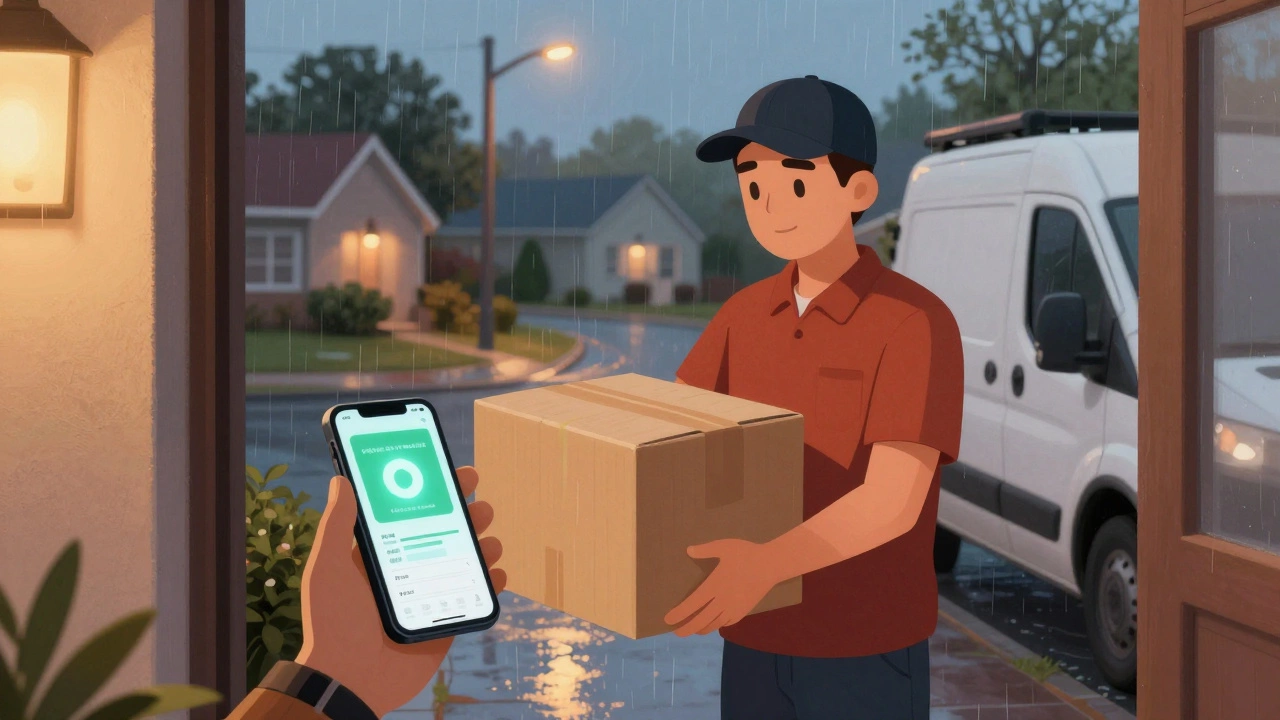
Most couriers let you book online in under five minutes. You’ll need:- Sender and recipient addresses (full, with postcodes)
- Package weight and dimensions
- Delivery preference (e.g., next day, Saturday delivery, morning/afternoon slot)
- Whether you want insurance or a signature on delivery
After booking, you’ll get a confirmation email with a tracking number. Some services, like DPD and Hermes, let you choose a delivery window. Others, like Royal Mail, will drop it at your door without a signature unless you pay extra.
If you don’t want to wait for a courier to pick up, you can drop off at a local depot or drop box. Most supermarkets, post offices, and convenience stores have drop-off points for major couriers. Just make sure the package is labeled correctly and you’ve printed your label.
Print and attach the label
After booking, you’ll get a shipping label. Print it on A4 paper. Don’t write the address by hand-couriers scan barcodes, not handwriting. Tape the label flat on the top of the package. Cover it with clear packing tape to protect it from rain or scuffs. Never put the label on a seam or corner. If it gets damaged, your package might get lost.Also, include a copy of the label inside the package in case the outside one falls off. Write the recipient’s name and address on a piece of paper and tuck it in.
Track your parcel and prepare the recipient
Once your package is scanned at the depot, you’ll get updates via email or SMS. Most couriers let you track your parcel in real time on their website or app. You’ll see when it’s picked up, sorted, out for delivery, and delivered.Let the recipient know the expected delivery date and give them the tracking link. If they’re not home, many couriers will leave the parcel in a safe place (like a porch or garage) or take it to a nearby pickup point. Some even let the recipient reschedule delivery through a link in the text message.
What to do if something goes wrong
Delays happen. Packages get damaged. Sometimes, they go missing. If your parcel doesn’t arrive on time, check the tracking first. If it says “delivered” but you didn’t get it, look around your property or ask neighbors. If it’s been more than 48 hours past the estimated date, contact the courier’s customer service.For damaged items, take photos before opening the box. Keep the original packaging. Most couriers require proof of damage within 24-72 hours of delivery. If you bought insurance, you can file a claim online. Royal Mail and DPD allow claims up to £1000 for lost or damaged goods, depending on the service you chose.
Don’t assume the courier will fix it automatically. You have to start the process. Keep your booking confirmation, receipt, and tracking number handy.
Save money on courier services
You don’t need to pay full price every time. Here’s how to cut costs:- Book online-most couriers give discounts for web bookings
- Use a comparison site to find the cheapest option
- Send in bulk-if you ship often, ask for a business account
- Avoid weekend or express deliveries unless necessary
- Use a drop-off point instead of home collection (saves £3-£5)
- Don’t over-insure-standard cover often covers up to £50 for free
Many online sellers use courier services daily. They know the tricks. You can too.
Common mistakes to avoid
Here’s what most beginners get wrong:- Using a flimsy box that crushes in transit
- Forgetting to remove old labels
- Not printing the label and trying to write by hand
- Assuming the courier will call before delivery (they rarely do)
- Not checking if the recipient needs to pay import duties (for international shipments)
- Waiting until the last minute to book-cut-off times are strict
Simple fixes prevent big headaches. Take five extra minutes to pack right. It’s worth it.
Do I need to be home when the courier delivers?
No, you don’t always need to be home. Most couriers will leave the parcel in a safe place if you give permission. You can also choose to have it delivered to a neighbor, a pickup point, or a locker. Some services let you redirect the package while it’s in transit using a tracking link.
Can I send a package internationally with a UK courier?
Yes, most major UK couriers like DHL, Parcelforce, and DPD offer international shipping to over 200 countries. You’ll need to fill out a customs form online when you book. The recipient may need to pay import taxes or VAT, depending on the country and value of the goods. Always check the destination country’s rules before sending.
How long does a courier delivery take in the UK?
Standard delivery usually takes 1-3 working days. Next-day delivery is available if you book before 4pm on a weekday. Saturday delivery is possible but costs extra. Rural areas may take an extra day. For guaranteed timing, choose a tracked service with a delivery window.
What can’t I send with a courier?
Most couriers ban hazardous items like explosives, flammable liquids, aerosols, and live animals. Batteries (especially lithium) have strict rules. Some won’t ship alcohol, tobacco, or perishable food unless you use a specialist service. Always check the courier’s prohibited items list before packing.
Is courier insurance worth it?
It depends on what you’re sending. Most basic services include free cover up to £50. If your item is worth more, like a laptop or jewelry, paying for extra insurance is smart. Claims are easier if you have proof of value-like a receipt or invoice. Without insurance, you might get nothing if it’s lost or damaged.
If you follow these steps, using a courier service becomes simple, reliable, and stress-free. You don’t need to be an expert-you just need to be prepared. Whether you’re sending a gift to your mum in Manchester or returning a faulty gadget from an online store, the process is the same. Book, pack, label, track, and relax. Your package will get there.