
Amazon vs. Traditional Logistics Comparison Tool
Select a business scenario or feature to see how Amazon's integrated logistics approach compares to traditional carriers.
You probably know Amazon as the place where you buy everything from toothpaste to treadmills. But if you look under the hood, the company moves more physical goods than most traditional shipping giants combined. So, is it actually a logistics company? The short answer is yes, but that label feels too small for what they are doing.
Think about the last package you received. It likely didn't come from a warehouse across town. It might have been stored in a facility just a few miles away, picked by a robot, packed by a human, and delivered by a driver who wasn't even wearing an Amazon uniform. This complex web of movement, storage, and data processing defines modern logistics. And Amazon has built a machine around this definition that rivals FedEx, UPS, and DHL.
| Feature | Amazon Logistics | Traditional Carriers (UPS/FedEx) |
|---|---|---|
| Primary Focus | E-commerce fulfillment & Last-mile | B2B Freight & General Parcel |
| Inventory Model | Owned inventory + Third-party sellers | Carrier-owned transport assets |
| Tech Stack | Proprietary AI, Robotics, AWS | Legacy systems + Modern APIs |
| Delivery Network | Hybrid (Employees + DSPs + Flex) | Employee Drivers + Franchise Partners |
The Evolution from Bookstore to Shipping Powerhouse
In the early days, Amazon was just a retailer. They relied entirely on partners like USPS and UPS to move their books. That changed when they realized that controlling the delivery experience meant controlling customer loyalty. If the box arrives late, you blame Amazon, not the carrier. This realization sparked a massive internal shift.
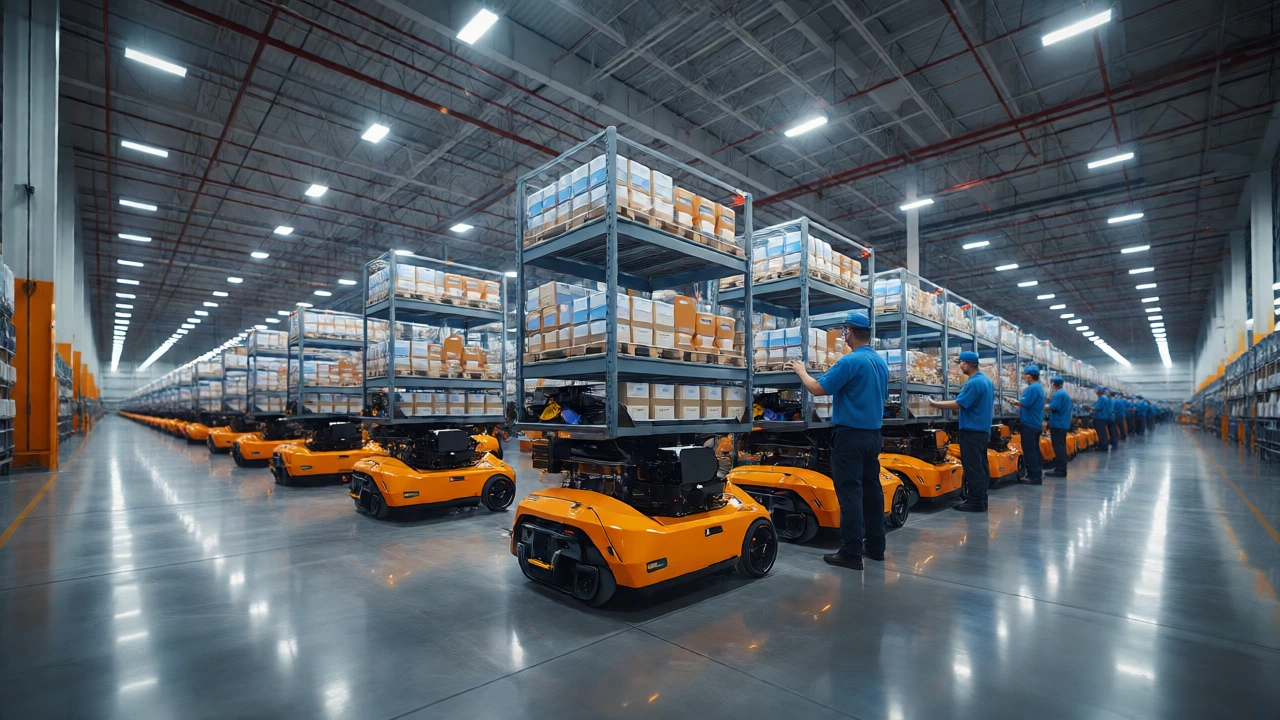
They started building their own warehouses, known as Fulfillment Centers. These aren't just big sheds with shelves. They are highly automated ecosystems where algorithms predict which products will sell in which zip codes before customers even click "buy." By positioning inventory closer to demand, Amazon reduced shipping times from weeks to days, and eventually, to hours.
This vertical integration is the hallmark of a true logistics company. You don't just sell the product; you manage the entire journey of that product from the manufacturer's factory floor to your doorstep. Amazon did this at a scale no one had attempted before. Today, they operate over 175 fulfillment centers globally. That’s not retail infrastructure; that’s logistics infrastructure.
Defining Logistics: More Than Just Trucks
To understand why Amazon fits the bill, we need to strip away the branding. What is logistics? At its core, it is the management of the flow of things between the point of origin and the point of consumption. It involves transportation, warehousing, inventory management, and information handling.
Does Amazon do these things? Absolutely. They own planes (Amazon Air), trucks, vans, and ships. They hold millions of units of inventory. They process billions of data points daily to optimize routes. If a company does all of this, calling it merely a "retailer" ignores the operational reality.
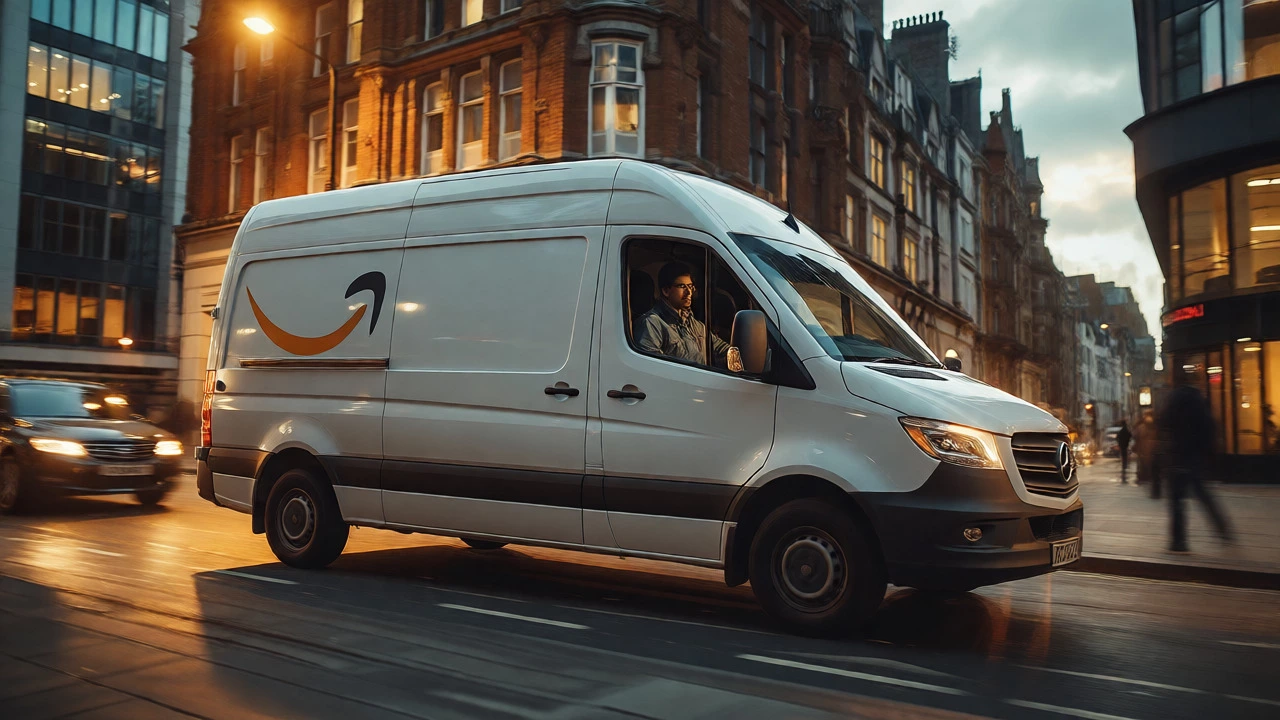
Consider the concept of Last-Mile Delivery. This is the final step of the courier service-the leg where the package goes from a local hub to your house. It is notoriously expensive and inefficient. Amazon attacked this problem head-on. Instead of relying solely on third parties, they created Amazon Logistics, a network of independent contractors and employees dedicated solely to moving packages.
This distinction matters because it changes how we view competition. When Amazon competes with Walmart, they compete on price and selection. But when they compete with FedEx, they compete on speed and reliability. In many markets, Amazon has surpassed traditional carriers in volume. In the US alone, Amazon delivers more packages per day than FedEx or UPS. That is a logistical achievement, not just a sales one.
The Hidden Engine: Data and Automation
What really separates Amazon from old-school freight companies is technology. Traditional logistics firms often struggle with legacy software and fragmented data. Amazon runs on a unified digital backbone. Every scan, every route change, and every inventory update feeds into their central brain.
This data advantage allows for dynamic routing. If traffic spikes in Liverpool or London, Amazon’s algorithm reroutes drivers instantly. If a warehouse gets congested, robots shift stock to prevent bottlenecks. This level of real-time control is rare in the industry. Most competitors can tell you where a package was. Amazon predicts where it will be.
Then there is the robotics component. Amazon acquired Kiva Systems years ago, now known as Amazon Robotics. These orange robots lift entire shelves of products and bring them to human pickers. This reduces walking time by up to 80%. It turns a warehouse worker from a walker into a picker. Efficiency gains like this are pure logistics optimization.
Furthermore, Amazon leverages AWS (Amazon Web Services) to power much of this intelligence. While AWS is sold to other companies, internally, it processes the petabytes of data required to coordinate global movements. The synergy between their cloud computing arm and their physical operations creates a moat that traditional logistics companies find hard to cross.
AWS and the Digital Twin of Logistics
You might wonder, "Why does a shipping company care about cloud servers?" Because modern logistics is a data problem. Tracking shipments, managing customs documentation, predicting weather delays, and optimizing fuel consumption all require massive computational power. Amazon doesn't just use AWS; they help define the standards for industrial IoT (Internet of Things).
Sensors in containers, GPS trackers in vans, and RFID tags on pallets all stream data to the cloud. Amazon uses this to create a "digital twin" of their supply chain. They can simulate disruptions-like a port strike or a pandemic-and adjust operations before the real-world impact hits. This proactive approach is what defines next-generation logistics.
Other companies pay Amazon for this capability. Many retailers and manufacturers use AWS tools specifically designed for supply chain visibility. So, in a way, Amazon sells logistics intelligence as a service. They are teaching the world how to move goods efficiently, using the same tools they use themselves.
Challenges and Criticisms
Being a logistics giant isn't without pain. The sheer scale of Amazon’s operation brings scrutiny. Labor practices in fulfillment centers have faced criticism regarding pace and safety. High turnover rates are common in warehouse jobs, and Amazon has had to invest heavily in training and automation to mitigate this.
Environmental concerns also loom large. Delivering packages quickly often means less efficient truck loading and more air freight. Amazon has pledged to reach net-zero carbon by 2040 through The Climate Pledge. They are investing in electric vans and renewable energy for their facilities. But critics argue that the culture of instant gratification drives unsustainable consumption patterns.
Regulatory pressure is another hurdle. Governments worldwide are looking at antitrust issues. Is Amazon a retailer, a marketplace, or a logistics provider? Regulators worry that Amazon favors its own logistics services over third-party carriers, potentially stifling competition. This blurring of lines makes legal definitions tricky.

Verdict: A Hybrid Powerhouse
So, is Amazon a logistics company? Yes, but it is also a tech company, a retailer, and a media conglomerate. It defies simple categorization because it integrates these functions seamlessly. You cannot separate the sale from the shipment anymore. The two are intertwined.
For businesses, this means Amazon is both a partner and a competitor. If you sell on Amazon, you rely on their logistics. If you ship independently, you compete with their speed. For consumers, it means higher expectations. We now expect two-day delivery as standard. Anything slower feels broken.
As we look toward 2030, Amazon will likely continue to blur these boundaries further. With advancements in drone delivery and autonomous vehicles, the definition of "logistics" may change again. But for now, treating Amazon as a logistics leader is the only way to accurately assess its market position. They have moved beyond just selling stuff; they are redefining how the world moves.
Frequently Asked Questions
Does Amazon own its delivery drivers?
Not exclusively. Amazon uses a hybrid model. Some drivers are direct employees, but a significant portion works for Delivery Service Partners (DSPs)-independent small business owners who contract with Amazon. Additionally, the Amazon Flex program allows individuals to use their own cars to deliver packages on a gig-economy basis.
How does Amazon compare to FedEx in size?
In terms of domestic parcel volume in the United States, Amazon has surpassed FedEx and UPS. However, FedEx and UPS still dominate in international freight, heavy cargo, and B2B logistics. Amazon focuses primarily on consumer-facing e-commerce parcels.
Is Amazon Logistics available to non-Amazon sellers?
Yes, through the Multi-Channel Fulfillment (MCF) program. Sellers can store inventory in Amazon warehouses, and Amazon will fulfill orders coming from other platforms like Shopify, eBay, or Walmart.com. This effectively turns Amazon into a third-party logistics provider (3PL) for other businesses.
What role does AWS play in Amazon's logistics?
AWS provides the cloud infrastructure and machine learning capabilities needed to process vast amounts of supply chain data. It enables real-time tracking, predictive analytics for inventory placement, and route optimization algorithms that keep the physical network running efficiently.
Are Amazon's warehouses fully automated?
No, they are semi-automated. Robots handle the heavy lifting of moving shelves, but humans are still required for picking, packing, and quality control. Full automation remains a goal, but current technology still relies heavily on human dexterity and decision-making for complex tasks.