
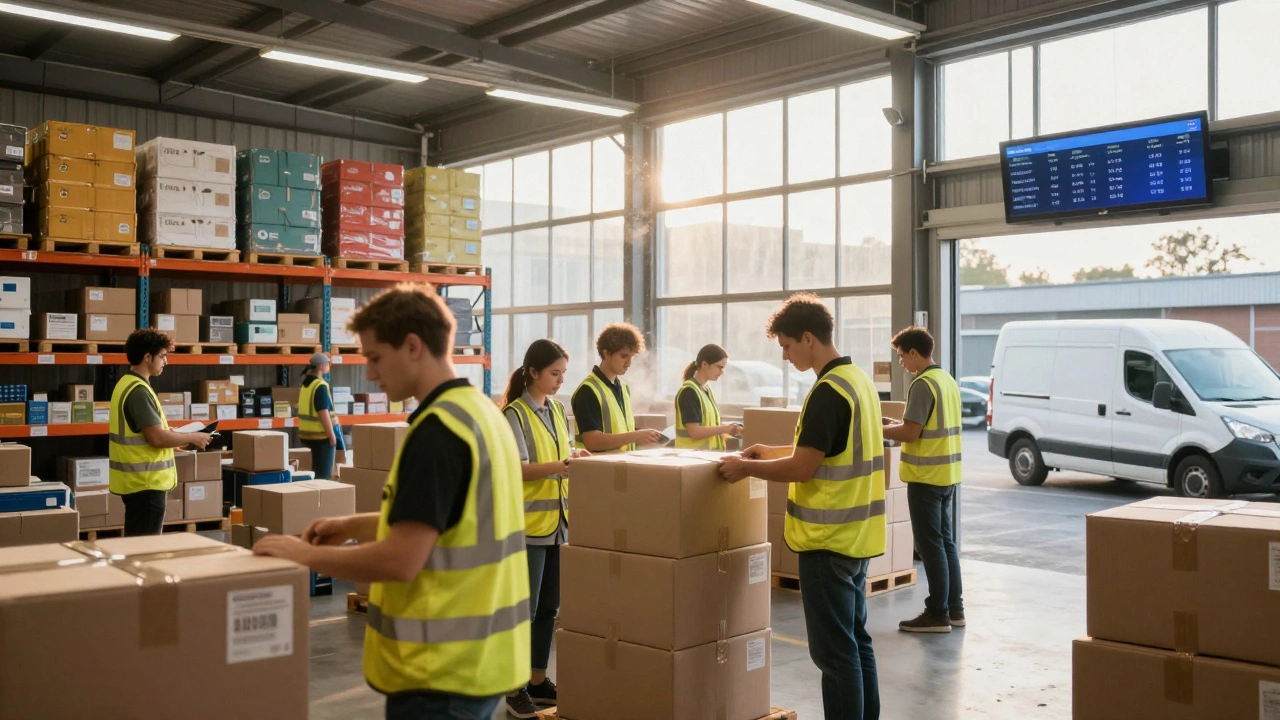
Logistics Cost Calculator
Estimate shipping costs based on real-world logistics parameters. This calculator uses industry-standard rates to show how transportation mode affects your delivery expenses.
Enter values above to see your estimated shipping costs.
People often ask if learning logistics is hard. The answer isn’t yes or no-it’s more like, "It depends on what you’re comparing it to." If you’ve ever waited for a package to arrive, wondered why your online order took six days instead of two, or seen a truck loaded with boxes at a warehouse, you’ve already seen logistics in action. You don’t need a degree in engineering to understand it. But if you’re thinking about making it your career, you need to know what you’re stepping into.
What logistics actually is (and isn’t)
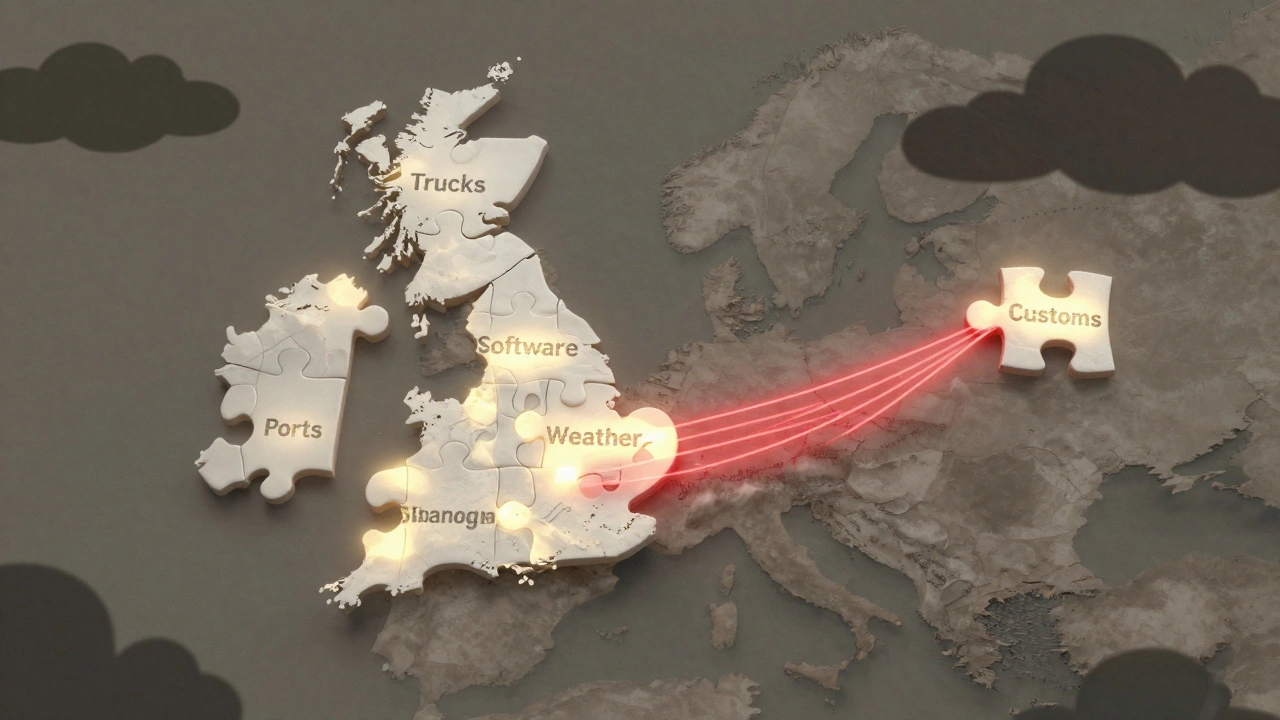
Logistics isn’t just about driving trucks or packing boxes. It’s the behind-the-scenes system that moves goods from manufacturers to your door. Think of it like a giant puzzle where every piece-warehouses, drivers, customs agents, software systems, and even weather forecasts-has to fit perfectly. One delay in one place can ripple across continents. A shipment stuck at a port in Shanghai can mean empty shelves in Manchester six weeks later.
Logistics companies don’t just deliver packages. They manage inventory across dozens of locations, predict demand spikes during holiday seasons, negotiate fuel contracts, track real-time vehicle locations, and handle customs paperwork for international shipments. It’s a mix of operations, data, people skills, and problem-solving.
Why people think it’s hard
Most people assume logistics is hard because it looks messy. And it is-on the surface. You see warehouse workers rushing around, delivery vans backed up on highways, and tracking pages that say "delayed due to weather." But that chaos is managed by systems and processes most people never see.
The real challenge isn’t memorizing rules or learning complex math. It’s learning how to think in systems. You have to understand how a change in one area affects another. For example, if a retailer decides to offer same-day delivery in London, that doesn’t just mean hiring more drivers. It means reworking warehouse layouts, adjusting delivery routes, training staff for faster pick-and-pack, and upgrading software to handle real-time updates. All of that has to be planned months in advance.
Another reason people find it intimidating is the jargon. Terms like "last-mile delivery," "cross-docking," or "freight class" sound like code. But they’re just shorthand for real processes. Once you see them in action, they become second nature.
What you actually need to learn
You don’t need to be a tech genius or a math whiz to start in logistics. Here’s what really matters:
- Basic supply chain flow: Where goods come from, how they move, and where they end up. This isn’t complicated-it’s just understanding the path from factory to customer.
- Inventory management: Knowing how much stock to keep, where to store it, and when to reorder. Too little? You run out. Too much? You waste money on storage.
- Transportation modes: When to use trucks, trains, ships, or planes. A shipment from China to Liverpool might travel by cargo ship first, then by rail, then by truck. Each leg has different costs, speeds, and rules.
- Technology tools: Most logistics work today happens in software. Systems like SAP, Oracle, or even simpler tools like TMS (Transportation Management Systems) help track shipments and optimize routes. You don’t need to code them-you just need to know how to use them.
- Communication: You’ll spend a lot of time talking to drivers, warehouse teams, customers, and suppliers. Being clear, reliable, and calm under pressure matters more than any certification.
Many people start in entry-level roles like warehouse assistant, dispatch clerk, or freight coordinator. From there, you learn by doing. Most companies train you on the job. You’ll pick up the software, the terminology, and the rhythms of the job without ever opening a textbook.
Real examples from the field
In Liverpool, a small logistics firm handling online fashion orders had a problem: returns were piling up. Customers were ordering two sizes and sending one back. The warehouse was overwhelmed. The solution? They added a simple rule: if a return came in within 48 hours, it went straight to a "fast-track" bin. Staff were trained to process those returns in under two hours. Within a month, turnaround time dropped from 72 hours to 18. No new software. No big budget. Just a better process.
Another example: a company shipping frozen food from Scotland to London switched from using regular refrigerated trucks to using temperature-controlled containers on rail. The cost went down 30%. The delivery window got tighter. The carbon footprint dropped. All because someone asked, "Is there a better way?"
These aren’t rare stories. They happen every day in logistics companies across the UK. The people who make these changes aren’t PhDs. They’re warehouse supervisors, dispatchers, or recent graduates who noticed a bottleneck and fixed it.
How long does it take to get good at it?
You can learn the basics in a few weeks. Understanding how a delivery gets from a warehouse to your doorstep? That’s something you can grasp after shadowing a driver for a day or watching a warehouse pick-and-pack process.
Becoming truly skilled? That takes time. Most professionals say it takes 18 to 24 months to feel confident handling complex logistics problems on your own. But here’s the good part: you’re not learning in a vacuum. Every day on the job, you’re building experience. You’ll make mistakes-like misrouting a shipment or forgetting a customs form-but those become lessons, not failures.
Many people get promoted within two years. A warehouse assistant becomes a team leader. A data clerk becomes a logistics coordinator. The path isn’t linear, but it’s clear if you’re willing to learn.
Who struggles the most?
People who expect logistics to be all about computers or spreadsheets often get frustrated. Yes, data matters. But if you hate talking to people, you’ll burn out fast. Drivers need help. Customers get angry when deliveries are late. Suppliers miss deadlines. You have to be the person who keeps things moving-even when things go wrong.
Those who do well are the ones who like solving puzzles with real-world consequences. They don’t mind getting their hands dirty. They notice when a delivery van is always late on Tuesdays and ask why. They’re the ones who ask, "What if we tried this?"
It’s not about being the smartest person in the room. It’s about being the most observant.

Is it worth it?
Logistics jobs are growing. In the UK alone, the sector added over 60,000 new roles in 2024. E-commerce is still expanding. More people are ordering online. More businesses need to ship goods globally. That means more demand for people who can make it happen.
Salaries start around £22,000 for entry-level roles. After two to three years, coordinators and supervisors earn £30,000-£40,000. With experience, logistics managers can hit £50,000+. And unlike some tech jobs, you can’t be replaced by AI overnight. A robot can move boxes. But it can’t negotiate with a driver stuck in traffic, calm an angry customer, or adjust a route because a bridge is closed.
And you don’t need to work in a big city. Logistics hubs exist everywhere-from Manchester to Birmingham to smaller towns with distribution centers. You can build a career without moving to London.
Where to start
If you’re curious, here’s how to test the waters:
- Visit a local warehouse or distribution center. Many offer open days or guided tours.
- Apply for an entry-level job-even if it’s just a weekend warehouse shift. You’ll learn more in one week than in a month of online courses.
- Watch YouTube videos of warehouse operations or truck dispatch centers. See how the systems work in real time.
- Ask someone in logistics what their worst day was. You’ll get a real story, not a textbook answer.
You don’t need to be an expert to start. You just need to be willing to show up, pay attention, and ask questions.
Final thought
Is learning logistics hard? Not if you’re ready to learn by doing. It’s not about memorizing formulas. It’s about understanding how things move-and why they sometimes don’t. The best logistics professionals aren’t the ones with the fanciest degrees. They’re the ones who notice when something’s off, fix it, and keep going. If that sounds like you, then it’s not hard at all. It’s just a job worth doing.
Do I need a degree to work in logistics?
No, you don’t need a degree. Many people start with no qualifications beyond GCSEs. Employers value experience, reliability, and problem-solving more than a diploma. That said, a degree in supply chain, business, or logistics can help you move faster into management roles-but it’s not a requirement to get started.
Can I learn logistics online?
Yes, you can learn the basics online through free courses from platforms like FutureLearn or LinkedIn Learning. But online learning only takes you so far. Logistics is a hands-on field. You’ll understand it best by working in a warehouse, driving a delivery van, or shadowing a planner. Theory helps, but experience builds real skill.
Is logistics a good career for someone who doesn’t like computers?
You’ll still need to use computers-most logistics jobs rely on software for tracking shipments, managing inventory, or scheduling routes. But you don’t need to be a tech expert. If you can use a smartphone, you can learn the tools. Many systems are designed to be simple. The real skill is knowing what the data means and how to act on it.
What’s the biggest mistake new people make in logistics?
They assume everything runs on perfect schedules. In reality, delays happen. Trucks break down. Weather shuts down ports. The biggest mistake is getting frustrated when things go wrong. The best logistics workers expect chaos and plan for it. They don’t panic-they adapt.
Are logistics jobs safe from automation?
Some tasks are being automated-like warehouse sorting or route optimization. But the human side isn’t going away. Negotiating with suppliers, handling customer complaints, managing teams, and making quick decisions during disruptions? Those still need people. Automation handles the routine. Humans handle the unpredictable.
Logistics isn’t glamorous. But it’s essential. And if you’re ready to be the person who keeps things moving, it’s one of the most satisfying careers you can build-without ever needing to be perfect.