
Courier Type Finder
What kind of delivery do you need?
Select the options that best describe your delivery requirements to get the most accurate recommendation.
Recommended Courier Type
When someone asks, "What is an example of a courier?" they’re not looking for a dictionary definition. They want to know who actually shows up at their door with a package, or who picks up a legal document and delivers it before lunch. A courier isn’t just a job title-it’s a real person, driving a van, riding a bike, or walking down your street with a package in hand. And the truth is, you’ve probably interacted with one dozens of times without even thinking about it.
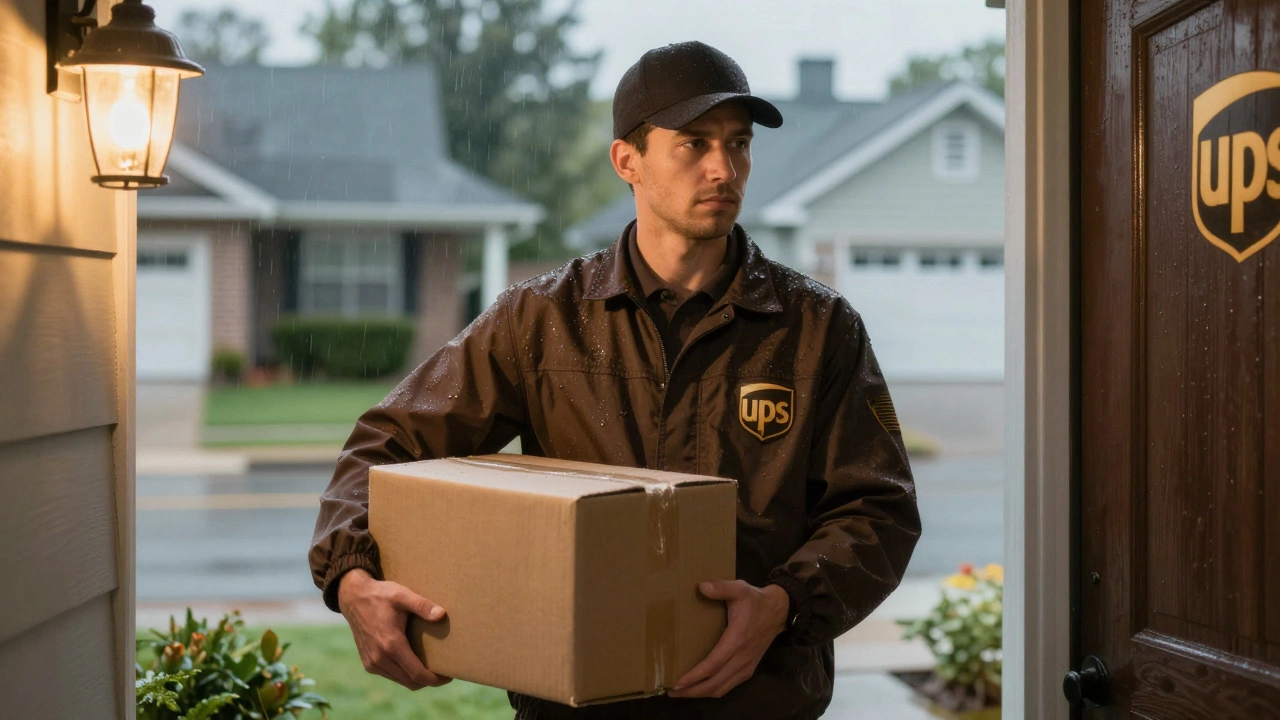
UPS Driver: The Most Common Courier You Know
Think about the last time you got a package from Amazon, a birthday gift from your mom, or a replacement part for your printer. Chances are, it was delivered by a UPS driver. That person is a courier. They don’t work for the post office. They’re employed by a private logistics company, but they do exactly what a courier does: pick up a package from one location and deliver it directly to another, often with a signature required.
UPS drivers follow set routes, but they’re not mail carriers. They handle time-sensitive deliveries, oversized boxes, and high-value items. They’re trained to handle fragile goods, verify recipient identity, and even reschedule deliveries if no one’s home. In 2025, UPS delivered over 6 billion packages worldwide. Most of those were handled by individual couriers on foot or in vans-not robots, not drones, not automated bins. Real people. Real shoes. Real weather.
FedEx Same-Day Courier: For When Time Is Everything
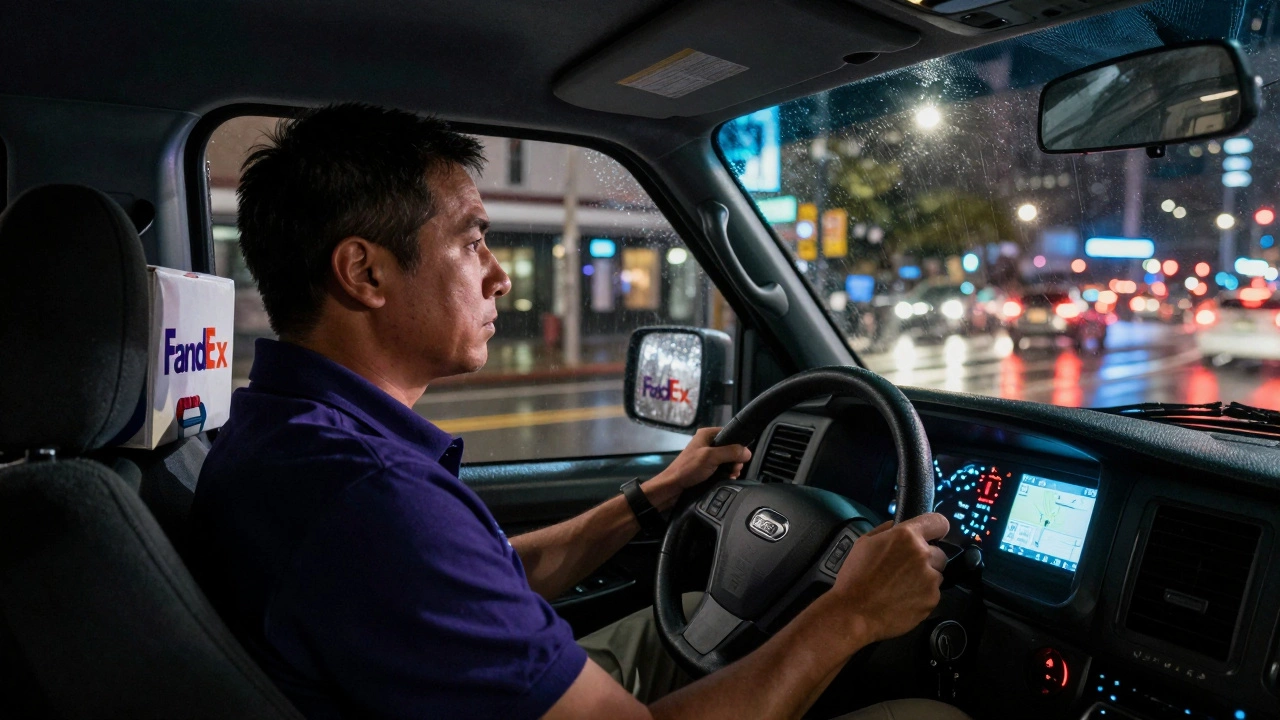
Imagine you’re a hospital administrator in Chicago. A critical lab sample needs to get from your facility to a specialist lab in Milwaukee by 10 a.m. tomorrow. You can’t wait for standard shipping. You call FedEx Same-Day. Within 30 minutes, a courier in a marked vehicle arrives, signs for the sample, and heads out with GPS tracking and temperature control.
This is a courier in its purest form. No sorting centers. No delays. Just a person, a vehicle, and a mission. FedEx’s same-day couriers are often used for medical samples, legal documents, prototypes, and even wedding rings. These couriers don’t just move boxes-they move outcomes. A single missed delivery could delay surgery, block a contract signing, or cost a business a major client.
Local Food Delivery Couriers: The Rise of the Gig Worker Courier
Open your phone at 7 p.m. and order sushi. Within 25 minutes, a person on a bike or scooter pulls up to your door with your order. That’s a courier too. Companies like DoorDash, Uber Eats, and Instacart rely on thousands of independent couriers every day.
These couriers aren’t employees-they’re contractors. They use their own bikes, scooters, or cars. They choose when to work. They earn per delivery. But their job is identical to traditional couriers: pick up from point A, deliver to point B, and ensure the item arrives intact and on time.
In 2025, over 4 million people in the U.S. worked as food delivery couriers. That’s more than the entire workforce of FedEx Ground. And while they’re often seen as part of the gig economy, their role is deeply rooted in the history of courier services-just with a smartphone app instead of a radio call.
Medical Courier: Delivering Life-Saving Goods
Not all couriers deliver pizza or laptops. Some deliver blood, vaccines, or human tissue. Medical couriers are a specialized subset. They’re trained in handling biohazards, maintaining cold chains, and complying with FDA and HIPAA regulations.
Think about the person who picks up a biopsy from a clinic in Atlanta and delivers it to a lab in Nashville within two hours. That courier doesn’t just drive. They monitor temperature logs, sign chain-of-custody forms, and sometimes drive through traffic jams with sirens on. One delay could mean a missed diagnosis.
Companies like LifeLink and World Courier specialize in this. Their couriers often have EMT or phlebotomy training. They’re not just drivers-they’re part of the healthcare system.
Legal Courier: The Quiet Heroes of the Courtroom
Law firms don’t use regular mail to send court filings. They use legal couriers. These couriers are often licensed, bonded, and trained to handle sensitive documents like subpoenas, divorce papers, or arrest warrants.
Legal couriers don’t just deliver-they verify. They get signatures. They confirm receipt. They record timestamps. In some states, legal documents can’t be served by mail-they must be delivered by a certified courier. In New York City alone, over 12,000 legal documents are hand-delivered daily by couriers.
These couriers know the courthouse layouts, the judges’ schedules, and the exact time filings are due. One missed deadline can throw a case into chaos. That’s why law firms pay extra for certified legal couriers. They’re not just delivering paper-they’re delivering justice.
What Makes a Courier Different From a Delivery Driver?
It’s easy to confuse a courier with a delivery driver. But here’s the difference:
- A delivery driver works for a retailer or warehouse and drops off items along a fixed route-like a grocery truck making 50 stops in a day.
- A courier works on-demand, point-to-point, and often handles high-value, time-sensitive, or sensitive items.
Couriers are hired for urgency, security, or exclusivity. You don’t call a courier to deliver a bulk order of toilet paper. You call one when you need a signed contract in hand by noon, or when you’re sending a newborn’s cord blood sample across state lines.
Common Misconceptions About Couriers
Many people think couriers are just “people who deliver packages.” That’s like saying a surgeon is just someone who cuts skin. The reality is more complex.
- Myth: All couriers work for big companies. Truth: Thousands of independent couriers operate locally-some with just a bike and a phone.
- Myth: Couriers are slow. Truth: Many offer 60-minute delivery windows, especially in urban areas.
- Myth: Couriers only do packages. Truth: They deliver everything from wedding dresses to medical devices to confidential corporate files.
The biggest misconception? That couriers are replaceable. They’re not. No algorithm can replace the judgment of a courier who sees rain coming and decides to walk the last block with a fragile item instead of leaving it at the door.

How to Spot a Real Courier
Not everyone who shows up with a box is a courier. Here’s how to tell:
- They drive a vehicle with a company logo (not a personal car with a sticker).
- They carry a handheld device to capture signatures or scan packages.
- They ask for your name and sometimes ID before handing over the item.
- They don’t ask if you want to “keep the box”-they’re not here to upsell.
Real couriers are trained to be professional, discreet, and efficient. They’re not salespeople. They’re messengers.
Why This Matters
When you order something online, you don’t think about the chain of people who got it to you. But behind every delivery is a courier-someone who left their home early, drove through traffic, carried a heavy box up stairs, and made sure it got to you safely.
Couriers keep the world moving. They’re the reason your prescription arrives on time. The reason your business deal closes. The reason your wedding dress isn’t wrinkled. They’re not glamorous. But they’re essential.
So the next time someone asks, "What is an example of a courier?"-point to the person outside your door. That’s your answer.
Is a FedEx driver a courier?
Yes, a FedEx driver who picks up and delivers packages directly to customers-especially for time-sensitive or high-value items-is a courier. FedEx Ground drivers delivering bulk parcels along fixed routes are delivery drivers. But FedEx Express couriers handling overnight documents, medical samples, or same-day deliveries are classic examples of couriers.
Can I become a courier without a truck?
Absolutely. Many couriers use bicycles, scooters, or even walk. Food delivery platforms like DoorDash and Uber Eats hire thousands of people who use personal bikes or cars. Local document couriers in cities like New York or San Francisco often use scooters to zip through traffic. All you need is reliable transportation, a smartphone, and the ability to meet delivery deadlines.
Are couriers the same as postal workers?
No. Postal workers deliver mail through the public postal system (like USPS), often using standardized routes and lower-priority service. Couriers work for private companies and offer faster, tracked, and often guaranteed delivery. Couriers handle high-value or urgent items; postal services handle general mail. Think of it like this: USPS is the bus system. Couriers are the private taxis.
Do couriers deliver internationally?
Yes, but not directly. International courier services like DHL, FedEx, and UPS use a network of local couriers at both origin and destination. For example, a package from London to Tokyo might be picked up by a local courier in London, flown across the world, then delivered by a local courier in Tokyo. The final leg-getting it to your door-is always handled by a local courier.
What’s the fastest courier service available today?
In major cities, services like Amazon Prime Now, Uber Connect, and local same-day couriers can deliver within 60 minutes. For urgent business needs, DHL Express and FedEx SameDay offer guaranteed delivery within 2-4 hours, even across state lines. These services are used by hospitals, law firms, and tech companies that can’t afford delays.
Next Steps: When You Need a Courier
If you need to send something urgent-legal papers, medical samples, a prototype, or a gift-you don’t need to guess who to call. Look for services labeled "same-day courier," "on-demand delivery," or "specialized logistics." Check reviews for reliability, not price. A cheap courier might be late. A good one gets it there on time, every time.
And remember: behind every package is a person. Treat them with respect. They’re not just a delivery service. They’re the reason your world keeps moving.