
E-commerce Return Rate Cost Calculator
Calculate Your Return Costs
Estimate the financial impact of product returns on your e-commerce business based on industry data (UK average return rate: 30%).
Estimated Financial Impact
Total Returns Value:
Processing Costs:
Total Cost Impact:
% of Revenue Lost:
Per-Order Impact:
When you click "Buy Now" on your phone and get a package delivered the next day, you’re seeing the end of a massive, invisible system called the e-commerce supply chain. It’s not just about shipping boxes. It’s about how every step-from a factory in Vietnam to your doorstep in Liverpool-is coordinated, tracked, and optimized to make online shopping feel effortless. But what exactly does "e-commerce in supply chain" mean? And why is it different from traditional retail logistics?
How e-commerce changed the supply chain game
Before online shopping took over, supply chains were built for bulk. Factories made thousands of identical items. Warehouses stored pallets. Trucks delivered full loads to big retail stores. The system was slow, predictable, and cheap to run. But e-commerce flipped that model on its head.
Now, retailers don’t just ship to stores-they ship directly to homes. And not just one item per shipment. Millions of single-item orders, with different sizes, brands, and delivery windows, flood the system every day. Amazon alone processes over 1.5 million orders per hour during peak seasons. That kind of volume demands a completely different kind of supply chain.
Traditional supply chains focused on economies of scale. E-commerce supply chains focus on speed, accuracy, and flexibility. It’s not about moving 10,000 units to a warehouse anymore. It’s about picking one red hoodie, one size M, from shelf 4B in a 2-million-square-foot fulfillment center, packing it, and getting it on a van headed for a terraced house in Manchester-all within 4 hours.
The five core components of an e-commerce supply chain
Think of the e-commerce supply chain as a five-stage relay race. Each handoff has to be flawless, or the whole delivery falls apart.
- Procurement and inventory planning - Retailers don’t just guess what’s popular. They use AI tools to predict demand based on trends, weather, social media buzz, and even local events. If a viral TikTok video suddenly makes a certain type of sneaker hot in Glasgow, the system needs to know within hours.
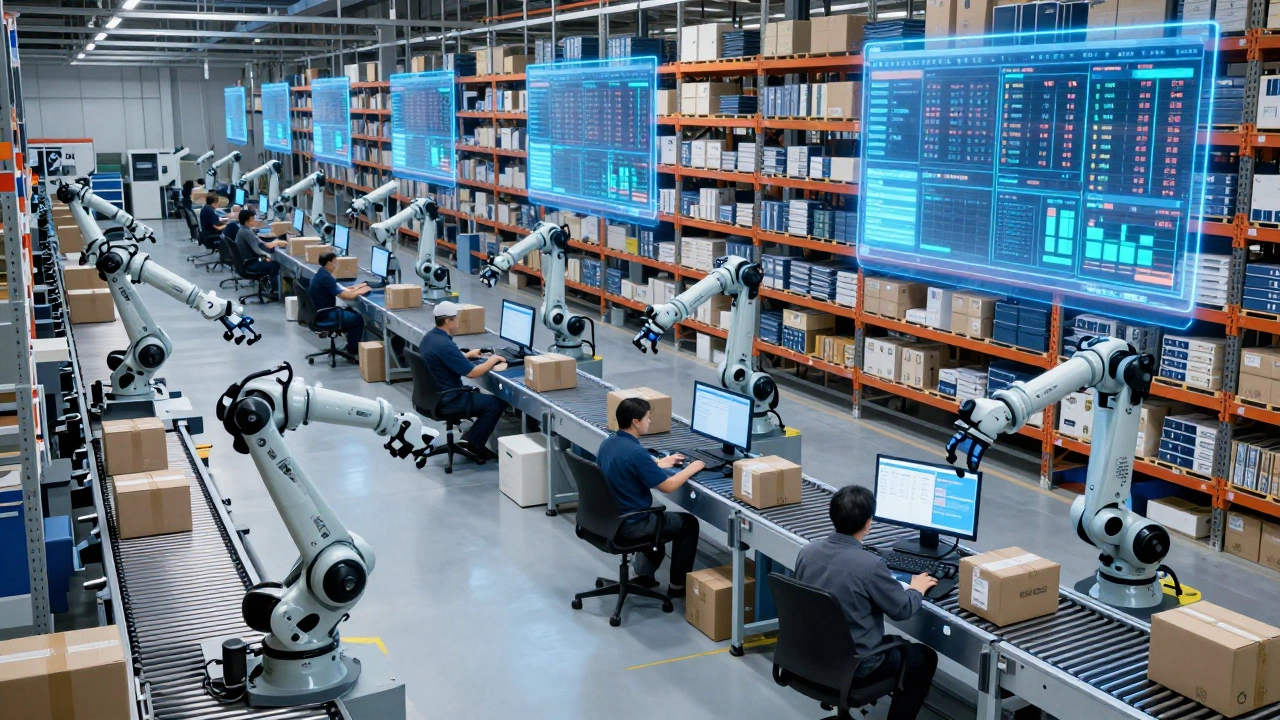
- Warehousing and fulfillment - This is where the magic happens. Modern e-commerce warehouses use robots, automated conveyors, and real-time inventory tracking. A single warehouse can handle 50,000+ orders per day. The goal? Pick, pack, and ship each order in under 15 minutes.
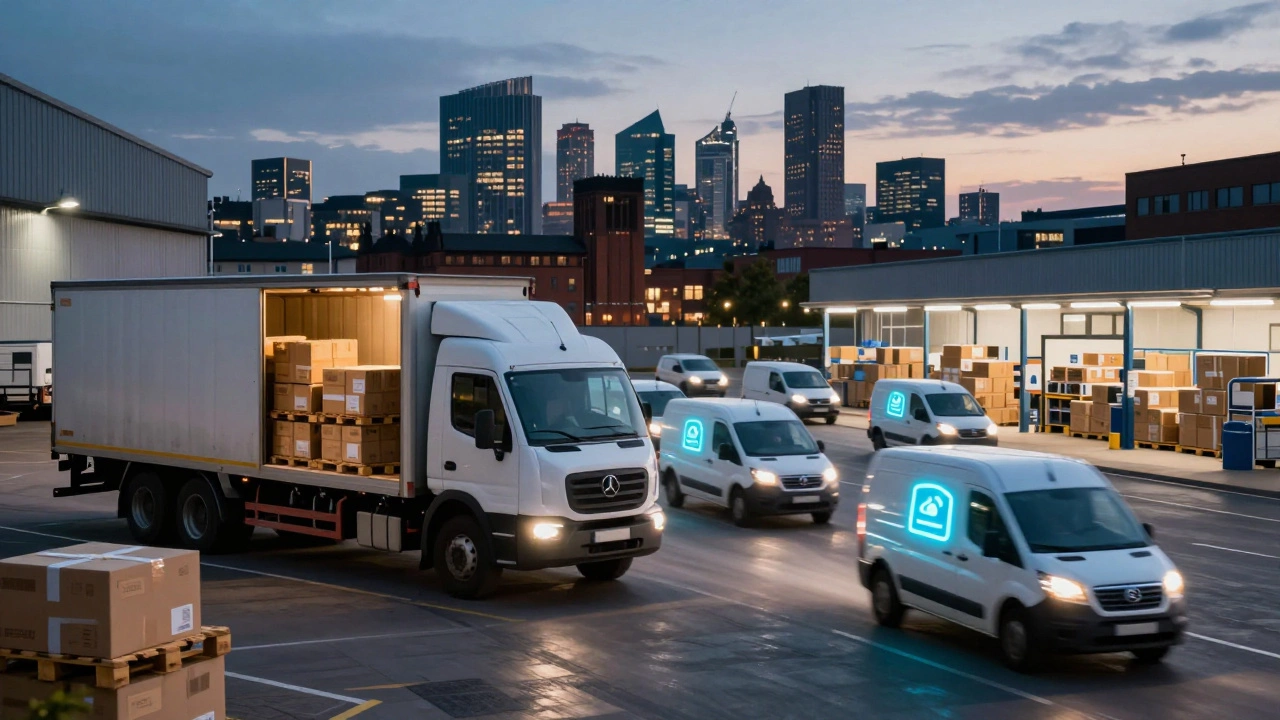
- Transportation and last-mile delivery - Getting the package from the warehouse to your door is the most expensive part. That’s why companies are testing drones, electric vans, and even local pickup points in corner shops. In the UK, over 60% of online orders now use a local delivery partner rather than national couriers.
- Reverse logistics - Returns are a huge part of e-commerce. About 30% of online purchases are returned, compared to 8-10% in physical stores. The supply chain has to handle returns as smoothly as it handles new orders. That means pre-paid return labels, drop-off points, and automated refund triggers.
- Data and visibility - Every package is tracked. Every delay is logged. Every customer gets a notification. This constant flow of data lets companies adjust routes, reroute stock, and even predict when a warehouse might run out of a product. It’s not just about moving goods-it’s about moving information.
Why e-commerce supply chains are more fragile
Here’s the catch: the faster and more precise the system, the more easily it breaks. A single warehouse fire in Birmingham can delay thousands of orders across the UK. A strike at a major port in Felixstowe can hold up shipments for days. A software glitch in the inventory system can make it look like a product is in stock-when it’s not.
Unlike traditional supply chains, which had buffers (extra stock, slower delivery times), e-commerce runs on just-in-time precision. There’s no room for error. That’s why top companies now invest heavily in redundancy: multiple fulfillment centers, backup carriers, and real-time monitoring tools that alert managers before a problem becomes a crisis.
How small businesses compete
You might think only giants like Amazon or ASOS can afford this kind of system. But that’s not true anymore. Platforms like Shopify, WooCommerce, and BigCommerce now integrate directly with logistics providers like DPD, Royal Mail, and Parcel2Go. A small business in Leeds can set up automated shipping labels, real-time tracking, and even return management without hiring a logistics team.
One handmade candle shop in Liverpool started using a third-party fulfillment service last year. Instead of packing 20 orders a night after work, they now ship 300+ orders daily. Their supplier handles storage, labeling, and delivery. The shop owner just focuses on making candles and posting on Instagram.
The future: automation, AI, and sustainability
The next big shift in e-commerce supply chains isn’t about speed alone-it’s about smart efficiency. AI now predicts not just what will sell, but where it should be stored. If data shows demand for winter coats spikes in Edinburgh two weeks before it does in Bristol, the system automatically moves stock ahead of time.
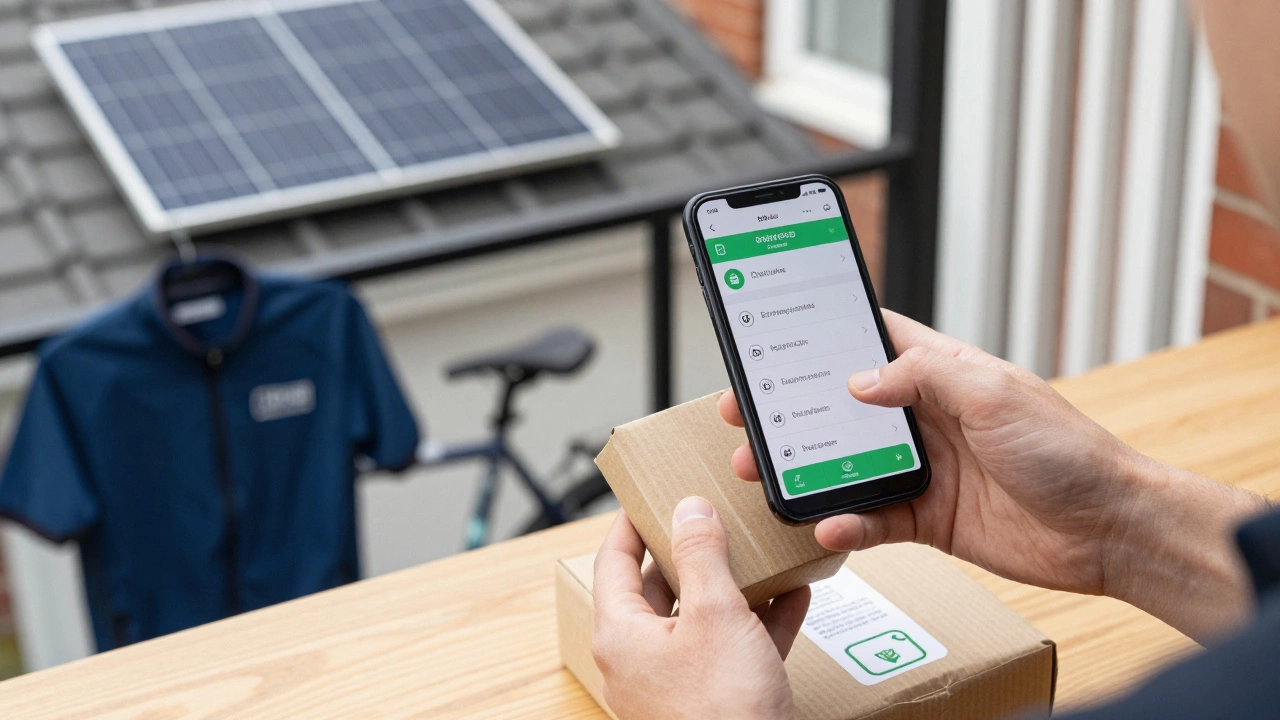
Electric delivery vans are replacing diesel trucks. Solar-powered warehouses are becoming common. Carbon tracking is now built into shipping quotes. Customers don’t just want fast delivery-they want sustainable delivery. And the supply chain is adapting.
By 2027, over 40% of UK e-commerce fulfillment centers will be fully automated. Robots will handle 70% of picking tasks. Humans will focus on quality control and exception handling. And delivery will be even faster: same-day, two-hour windows, and even drone drops in rural areas.
What this means for you
If you’re a shopper: you’re benefiting from a system that’s more advanced than most people realize. That next-day delivery? It’s not luck. It’s engineering.
If you’re a business owner: you don’t need a billion-dollar budget to join this system. Start small. Use integrated tools. Let experts handle the logistics while you focus on your product.
If you’re in logistics: this is the most dynamic time in the industry’s history. Skills in data analysis, automation, and customer experience are in high demand. The old model of driving a truck and loading pallets is fading. The new model is about managing networks, not just moving boxes.
E-commerce in the supply chain isn’t just a trend. It’s the new normal. And it’s only getting faster.
Is e-commerce supply chain the same as regular logistics?
No. Regular logistics focuses on moving large volumes of goods from manufacturers to retailers in bulk. E-commerce supply chain is built for individual orders, direct-to-consumer delivery, high return rates, and real-time tracking. It’s faster, more complex, and far more data-driven.
Why are returns such a big deal in e-commerce?
About 30% of online purchases are returned-three times higher than in physical stores. That’s because customers can’t try things on or see them in person. This means supply chains must have dedicated return centers, automated refund systems, and reverse logistics routes. Handling returns poorly can cost a company more than the original sale.
Can small businesses afford e-commerce logistics?
Yes. Platforms like Shopify and WooCommerce connect directly with delivery services such as DPD, Royal Mail, and Parcel2Go. Small businesses can use third-party fulfillment centers that handle storage, packing, and shipping for a fee. Many start with just £50-£100/month in logistics costs and scale as they grow.
What’s the biggest challenge in e-commerce supply chains today?
The biggest challenge is unpredictability. Unlike traditional retail, where demand is stable, e-commerce is driven by viral trends, flash sales, and seasonal spikes. A product can go from zero to 10,000 orders overnight. Systems must be flexible enough to handle that without breaking.
How is AI changing e-commerce logistics?
AI predicts demand before it happens, optimizes warehouse layouts in real time, routes deliveries to avoid traffic, and even identifies which returns are likely to be fraudulent. Companies using AI in logistics cut delivery times by 20-30% and reduce operational costs by up to 25%.