
E-commerce Profit Margin Estimator
Profit Comparison Tool
Estimate your take-home pay per unitQuick Takeaways
- E-commerce is the broad act of buying and selling goods online.
- Amazon is a specific platform (and retailer) that facilitates e-commerce.
- The choice between owning your own store and using a marketplace involves a trade-off between control and immediate traffic.
- Logistics vary wildly: you manage the warehouse in a standalone store; Amazon often handles it for you via FBA.
The Big Picture: What Exactly Is E-commerce?
When we talk about e-commerce is the trading of products or services using computer networks, primarily the internet, we aren't just talking about a website. It is an entire ecosystem. Whether you are buying a vintage lamp from an Etsy artist, ordering a subscription box from a startup, or buying a digital course from a coach, you are engaging in e-commerce.
E-commerce breaks down into several models. There is B2C (Business-to-Consumer), where a brand sells directly to you. Then there is B2B (Business-to-Business), where a wholesaler sells 500 office chairs to a corporation. You also have C2C (Consumer-to-Consumer), like when you sell an old bike on eBay. The common thread is that the transaction happens digitally, removing the need for a physical storefront as the primary point of sale.
In a pure e-commerce setup-specifically a direct-to-consumer (DTC) model-the business owns the entire customer journey. They own the website, they collect the email addresses, and they decide exactly how the packaging looks. This gives them total brand authority but puts the entire burden of finding customers on their shoulders.
Amazon: The Giant in the Room
Now, let's look at Amazon. While Amazon is an e-commerce company, it functions primarily as a massive online marketplace and technology company that provides a platform for third-party sellers. Think of it as a digital shopping mall. If you open a store in a mall, you get the benefit of the mall's foot traffic, but you have to follow the mall's rules and pay them rent.
Amazon operates in two distinct ways. First, they are a first-party retailer. They buy inventory from brands and sell it themselves (these are the "Sold by Amazon" items). Second, they are a third-party marketplace. They allow millions of independent sellers to list products on their site. This hybrid model is why they've become so dominant; they don't just sell things-they provide the infrastructure for others to sell.
The magic of Amazon isn't just the website; it's the logistics. They've spent billions building a network of fulfillment centers that turn the "last mile" of delivery into a science. For a seller, this means they can stop worrying about tape and boxes and instead focus on sourcing products.
Breaking Down the Logistics: Who Handles the Heavy Lifting?
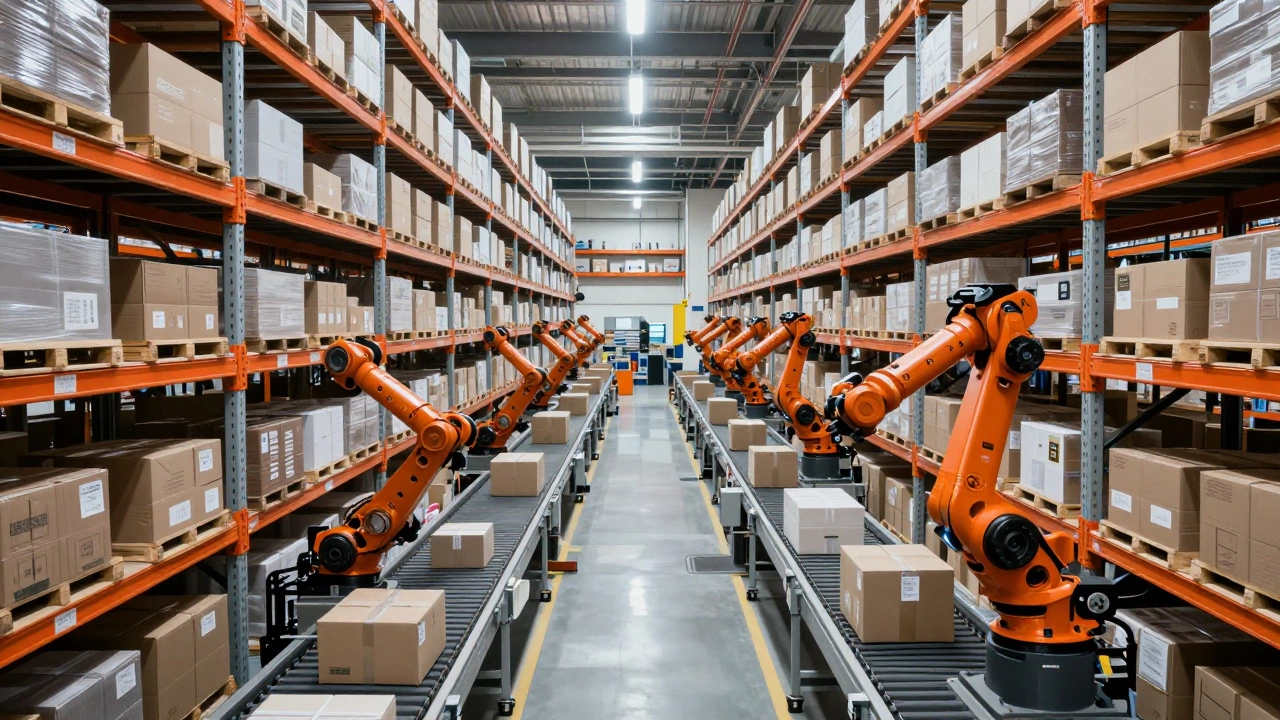
The biggest practical difference between running your own e-commerce site and selling on Amazon is how you move your stuff. In a standard e-commerce logistics setup, you have a few choices. You can garage-ship (pack everything yourself), hire a 3PL (Third-Party Logistics) provider, or build your own warehouse. You control the shipping speed, the carrier you use (like DHL or FedEx), and the unboxing experience.
Amazon flips this script with Fulfillment by Amazon, or FBA, a service where sellers send products to Amazon's warehouses, and Amazon handles storage, packing, and shipping. When a customer clicks "Buy Now," Amazon's algorithms decide which warehouse is closest to the buyer and ships it immediately. This is why Prime delivery is so fast-the inventory is already distributed across the country, not sitting in one single warehouse in a random town.
| Feature | Independent Store (Shopify/WooCommerce) | Amazon (FBA Model) |
|---|---|---|
| Customer Data | You own all emails and data | Amazon owns the customer relationship |
| Traffic Source | You must drive it (Ads, SEO, Social) | Built-in massive user base |
| Logistics Control | Full control over packaging & carriers | Amazon controls the process |
| Fees | Monthly software + transaction fees | Referral fees + storage & fulfillment fees |
| Brand Identity | Complete creative freedom | Limited to the Amazon template |
The Customer Relationship: Ownership vs. Access
If you run your own e-commerce site, you are building a relationship. When someone buys a coffee maker from your site, you get their email. You can send them a "thank you" note, suggest a better filter, or offer a discount on a grinder next month. This is called "Customer Lifetime Value," and it's the holy grail of business.
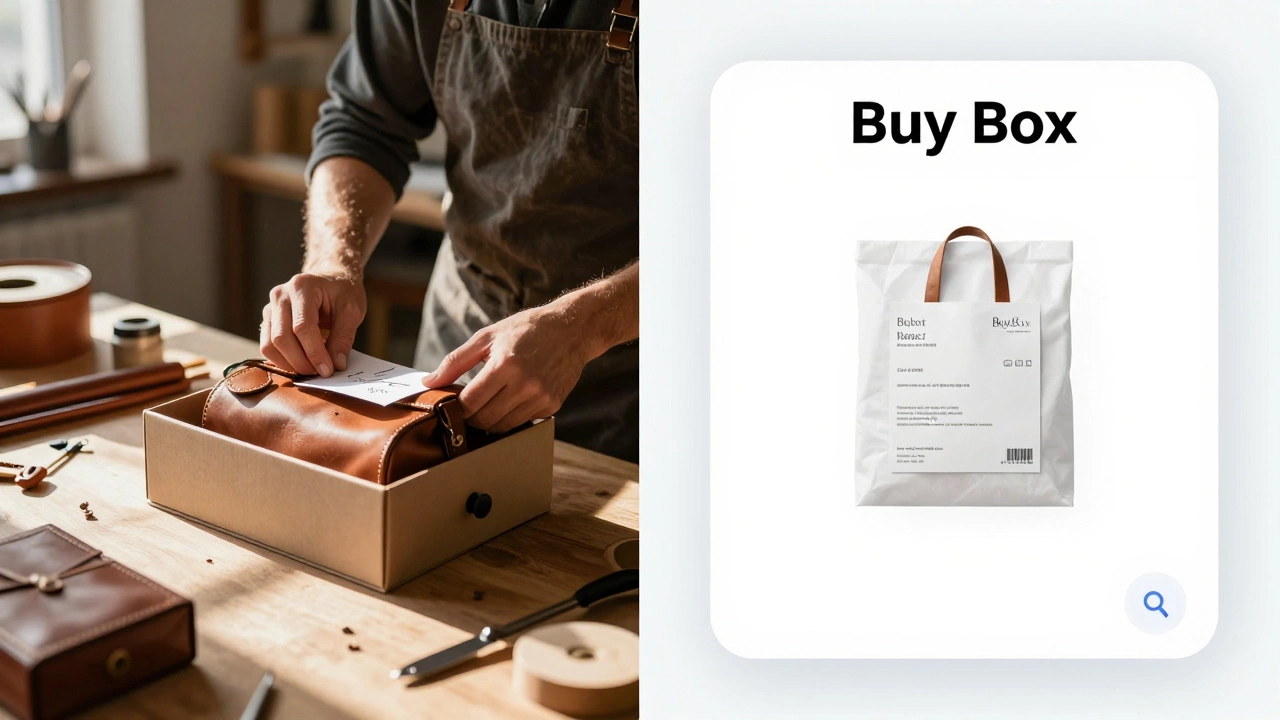
On Amazon, you are essentially a guest. Amazon protects its customer data fiercely. You don't get the buyer's email address to start a newsletter. You are competing side-by-side with ten other sellers who have the exact same product but are $0.50 cheaper. Your primary goal on Amazon isn't building a brand-it's winning the "Buy Box," the white area on the right side of the product page that lets a customer add the item to their cart with one click.
This creates a weird tension. Many brands start on Amazon to get quick cash flow and a huge audience. But once they've proven their product works, they move toward an independent e-commerce store to reclaim their margins and their data. They use Amazon as a discovery tool, but their own site as the loyalty hub.
Cost Structures and the "Hidden" Fees
Let's get concrete about the money. If you start a store using Shopify-a popular commerce platform that allows anyone to set up an online store without coding-you pay a monthly subscription fee. Your main costs are the platform, your marketing (Facebook/Google ads), and your shipping costs. If you sell a shirt for $20 and it costs $5 to ship, you keep most of that margin.
On Amazon, the math is different. You have referral fees (usually around 15% of the sale price) and FBA fees (picking, packing, and shipping). If that same $20 shirt sells on Amazon, you might pay $3 in referral fees and $5 in fulfillment fees. Suddenly, your profit is sliced much thinner. However, you didn't spend $10 on ads to find that customer because they were already searching for "blue cotton shirt" on Amazon.
There is also the cost of storage. Amazon charges you for the space your products take up in their warehouses. If your product doesn't sell quickly, you'll hit "long-term storage fees," which can eat your profits alive. In your own warehouse, you only pay the rent for the building, regardless of whether the items move in a day or a year.
Which One Should You Choose?
The answer depends on what you're selling and who you are. If you have a unique, high-ticket item with a strong brand story-like a handmade luxury leather bag-an independent e-commerce store is the way to go. You want the customer to feel the vibe of your brand, not the vibe of a warehouse.
If you're selling "commodity" goods-things people need quickly and don't care who sells them (like USB cables, AA batteries, or generic phone cases)-Amazon is the undisputed king. People don't go to a standalone website to buy a pack of batteries; they go to Amazon because it's convenient and the shipping is predictable.
The smartest players use a hybrid approach. They list on Amazon to capture the "impulse buy" and the massive search volume, but they push their most loyal customers toward their own site via inserts in the packaging. This hedges their risk. If Amazon decides to change its algorithm or ban an account, the business doesn't vanish overnight because they have a separate e-commerce home.
Is Amazon considered e-commerce?
Yes, absolutely. E-commerce is the general term for any commercial transaction conducted electronically. Amazon is simply one of the largest companies in the world that practices e-commerce. It is a specific instance of the broader concept.
Can I sell on both my own site and Amazon?
Yes, and this is often the best strategy. It's called a multi-channel sales approach. You can use your own site to build a brand and collect customer data while using Amazon to reach millions of people who would never have found your independent website.
What is the biggest risk of relying only on Amazon?
The biggest risk is "platform dependency." Because Amazon owns the customer data and controls the visibility of your products, they can change their fee structure, change the search algorithm, or suspend your account at any time, which could instantly kill your revenue stream.
Does Amazon FBA replace the need for my own warehouse?
For many sellers, yes. FBA handles storage, picking, packing, and shipping. However, some larger brands use a "hybrid" model where they keep some stock in their own warehouse for their direct website orders and send a portion to Amazon for their marketplace orders.
Which is cheaper to start: a Shopify store or an Amazon seller account?
Amazon is often cheaper and faster to start because you don't have to build a website or spend thousands on initial marketing to get your first visitor. However, the long-term cost of Amazon fees can be higher than the monthly subscription of a platform like Shopify.
Next Steps for Your Business
If you're just starting out, don't feel like you have to pick a side. Try the "Amazon First" approach to validate if people actually want your product. Once you see a steady stream of orders, invest in a professional e-commerce site. This allows you to transition from being just a "seller" to being a "brand owner." If you're already selling on your own site and growth has plateaued, adding Amazon as a secondary channel can inject a massive amount of new traffic into your ecosystem.