
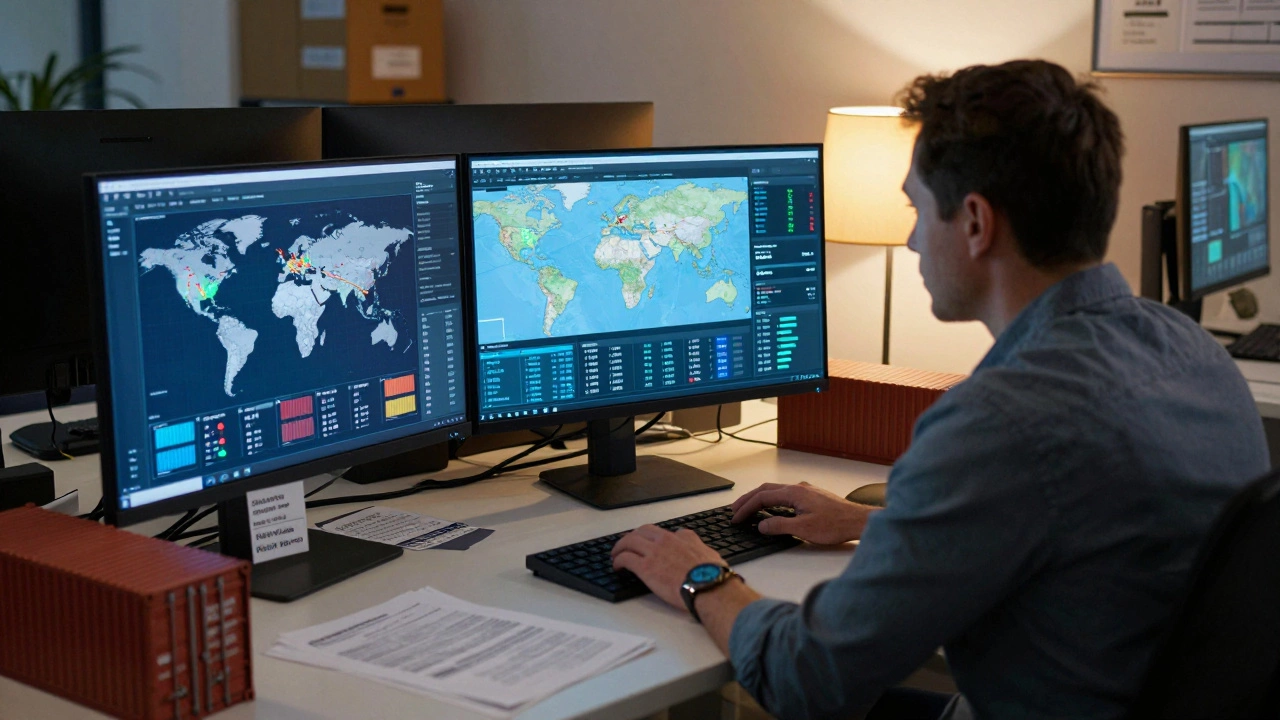
Freight Forwarding Cost Estimator
Calculate estimated shipping costs and see how value-added services impact freight forwarding expenses. This tool demonstrates how freight forwarders add value beyond just carrier rates.
Shipment Details
Value-Added Services
Estimated Total Cost
$3,495.00
Base Carrier Rate: $2,950.00 (20% markup)
Value-Added Services: $545.00
Cost Breakdown
Ever wonder how a company that doesn’t own a single truck or ship can make millions moving containers across oceans? Freight forwarders aren’t carriers-they’re middlemen. But don’t let that fool you. They’re the hidden engine behind 90% of global trade. If you’ve ever bought something online from China, Germany, or Brazil, a freight forwarder likely handled the messy parts so you didn’t have to.
They don’t move cargo-they coordinate it
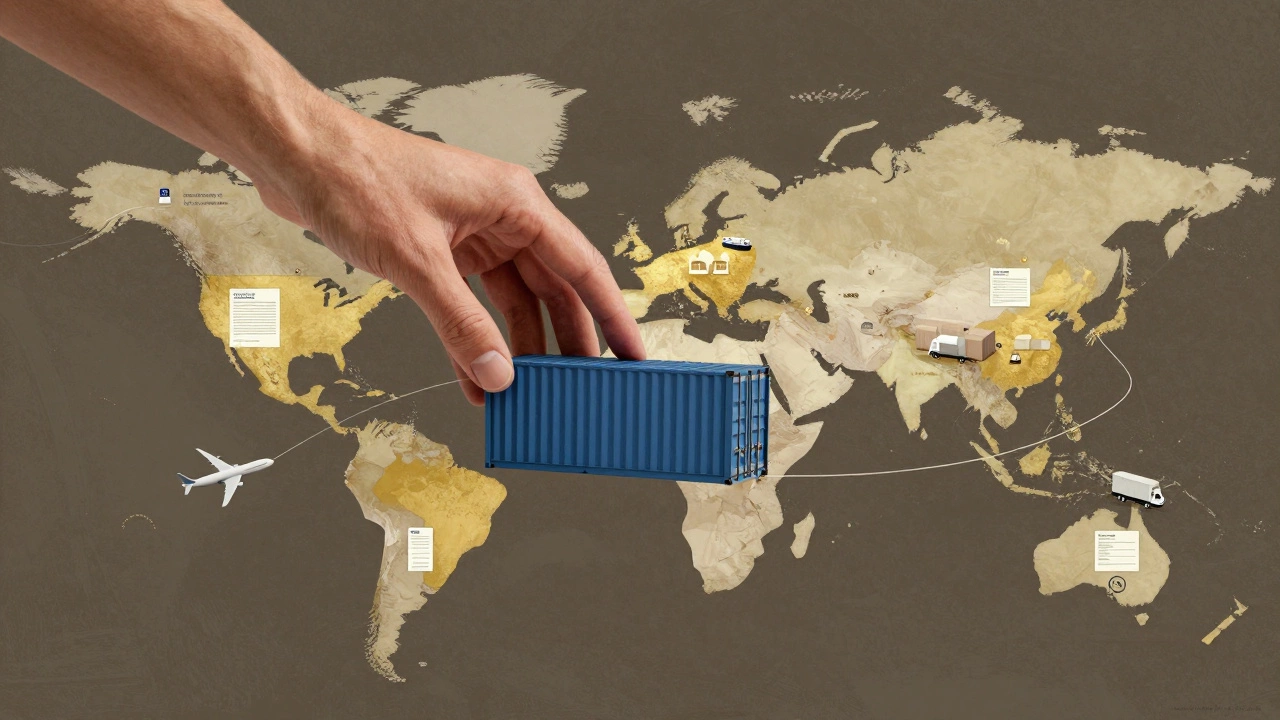
Freight forwarders don’t own ships, planes, or trucks. They don’t hire drivers or pilots. Instead, they act as your personal logistics coordinator. Think of them like a travel agent for cargo. You give them a shipment, and they figure out the best route, book space on a vessel, handle customs, and make sure everything arrives on time. Their profit comes from managing complexity.
Imagine you’re a small business in Manchester selling handmade furniture to customers in Australia. You need to get 10 pallets from your warehouse to Sydney. You could try calling ocean carriers, filling out customs forms in triplicate, negotiating port fees, and tracking the container yourself. Or you could hand it to a freight forwarder. They’ll handle it all-plus they’ve got volume discounts you’ll never get as a single shipper.
Their main income: markup on carrier rates
The biggest source of revenue for freight forwarders is the difference between what they pay carriers and what they charge you. This is called markup on carrier rates.
Let’s say a container from Liverpool to Singapore costs $3,200 on the open market. A forwarder with strong relationships might lock in $2,800 because they ship 50 containers a month. They then charge you $3,500. That’s a $700 profit on one shipment. Multiply that by hundreds of shipments a week, and you’ve got a healthy business.
This markup isn’t hidden-it’s built into your quote. You won’t see line items like “carrier cost: $2,800” on your invoice. Instead, you’ll see “Ocean Freight: $3,500.” That’s standard. You’re paying for convenience, expertise, and risk reduction, not just space on a ship.
Hidden fees? Not really-just value-added services
People often think freight forwarders make money by slapping on surprise charges. That’s not how the good ones operate. Legitimate forwarders make money by offering services you didn’t even know you needed.
- Documentation fees: Preparing bills of lading, commercial invoices, certificates of origin. One mistake here can hold your shipment for days.
- Customs clearance: Paying duties, classifying goods under HS codes, dealing with inspections. A misclassified product can get seized or taxed at 300% more.
- Warehousing: Holding goods before or after transport. Many forwarders own or partner with warehouses near ports.
- Insurance: Offering cargo insurance at a small markup. Most shippers don’t realize their carrier’s liability is limited to $500 per container unless they buy extra coverage.
- Consolidation: Combining small shipments from multiple clients into one full container. This cuts costs for everyone and boosts the forwarder’s profit margin.
These aren’t hidden fees. They’re transparent services. But they’re also where the real money is. A $150 documentation fee might seem small, but if you process 200 shipments a week, that’s $30,000 a month in pure profit-with almost no overhead.
They earn by fixing problems you didn’t know you had
The best freight forwarders don’t just move boxes-they prevent disasters. And they get paid for it.
Take a client shipping medical equipment from Germany to Brazil. The equipment needs temperature control. The forwarder doesn’t just book a container-they arrange for a reefer container, monitor humidity, and coordinate with customs agents who know how to fast-track sensitive goods. If they didn’t step in, the shipment could be delayed for weeks or ruined by heat.
That’s premium service. And clients pay extra for it. A standard shipment might cost $4,000. A temperature-controlled, customs-cleared, insured shipment with real-time tracking? That’s $7,500. The forwarder didn’t just move it-they de-risked it.
Long-term contracts lock in steady profits
Freight forwarders don’t rely on one-off deals. Their best clients sign annual contracts. These agreements guarantee volume, which lets the forwarder lock in better carrier rates. In return, the client gets predictable pricing-even when fuel prices spike or port strikes happen.
For example, a UK-based electronics distributor might sign a 12-month contract for 80 shipments per month to the US. The forwarder commits to a fixed rate of $2,900 per shipment. Even if market rates jump to $4,000 during a Red Sea crisis, the forwarder eats the difference. Why? Because they know they’ll make it back on volume, repeat business, and upsells.
These contracts turn shipping from a cost center into a stable revenue stream. That’s why the biggest forwarders have long-term clients who’ve been with them for 10, 15, even 20 years.
Technology is their silent profit engine
Modern freight forwarders aren’t just paperwork wizards-they’re tech companies in disguise.
Platforms like CargoWise, FourKites, and project44 let them track every container in real time, automate customs forms, and send instant updates to clients. That reduces labor costs and errors. But here’s the kicker: they charge clients for access to these tools.
Some forwarders bundle their tracking portal into the service fee. Others charge a monthly SaaS-style subscription-$50 to $200 per client-for access to dashboards, automated alerts, and export documentation templates. That’s recurring revenue with near-zero marginal cost.
And let’s not forget AI. Algorithms now predict delays before they happen. One forwarder in Rotterdam told me their system flagged a 72-hour delay on a shipment to Cape Town three days before it happened. They notified the client, rerouted the cargo, and saved them £12,000 in lost sales. That client renewed their contract immediately.
Who actually uses freight forwarders?
You might think only big corporations need them. But that’s not true.
- E-commerce sellers on Amazon or Shopify shipping from China to the UK? They use forwarders to handle customs and last-mile delivery.
- Manufacturers importing raw materials? Forwarders manage import compliance and duty savings.
- Nonprofits sending aid to Ukraine or Sudan? Forwarders navigate sanctions, war zones, and emergency protocols.
- Individuals moving abroad with household goods? Forwarders handle packing, storage, and international moves.
Everyone who ships internationally, no matter how small, benefits from a forwarder’s network and knowledge. That’s why the global freight forwarding market is worth over $1.6 trillion in 2026.

What happens when rates go crazy?
Remember the 2021-2022 shipping crisis? Container rates from Asia to Europe spiked from $2,000 to over $15,000. Many forwarders got crushed because they locked in low rates with clients.
But smart ones adapted. They switched to variable pricing models-adding fuel surcharges, peak season fees, and dynamic rate adjustments. They also started offering tiered service levels: basic, standard, premium. Clients could choose how much risk they wanted to take.
Today, most forwarders build flexibility into their contracts. They don’t promise fixed prices for the whole year anymore. Instead, they tie pricing to indices like the Shanghai Containerized Freight Index. That way, they don’t lose money when markets flip.
It’s not about shipping-it’s about trust
At the end of the day, freight forwarders don’t sell space on a ship. They sell peace of mind.
When your shipment gets stuck in Lagos customs, you don’t want to be calling a call center in India. You want someone who knows the port agents, speaks Portuguese, and can get your goods released before they rot. That’s the value.
The best forwarders become extensions of your team. They know your business, your deadlines, your compliance needs. They anticipate problems before you even notice them.
That’s why clients stick with them-even when someone else offers a lower quote. You don’t save money if your shipment never arrives.
Final thought: The real profit is in relationships
Freight forwarders make money by turning complexity into simplicity. They profit from scale, service, and trust. Not from owning assets-but from knowing who owns them, how they work, and when they’ll break.
If you’re shipping anything internationally, hiring a good forwarder isn’t an expense. It’s insurance. And like any good insurance, you won’t notice it until you need it-and then you’ll be glad you paid for it.
Do freight forwarders own their own ships or planes?
No, most freight forwarders don’t own ships, planes, or trucks. They act as intermediaries, booking space with carriers like Maersk, DHL, or FedEx. Their value comes from managing logistics, not owning transport.
Are freight forwarding fees transparent?
Reputable forwarders provide clear quotes with all fees listed upfront-ocean freight, documentation, customs, insurance. If a quote says "all-inclusive," ask for a breakdown. Hidden fees are a red flag.
How do I know if I’m overpaying?
Compare quotes from 3-4 forwarders for the same route and service level. If one is significantly cheaper, ask why. It could mean slower transit, no insurance, or hidden charges. The lowest price isn’t always the best deal.
Can I ship internationally without a freight forwarder?
Technically yes, but it’s risky. You’d need to handle customs paperwork, port fees, documentation, and carrier bookings yourself. Most businesses find the time, expertise, and stress not worth it-especially for cross-border shipments.
What’s the difference between a freight forwarder and a carrier?
A carrier (like Maersk or UPS) owns and operates the transport. A freight forwarder arranges transport with carriers on your behalf. Forwarders are your advisor; carriers are your vendor.