
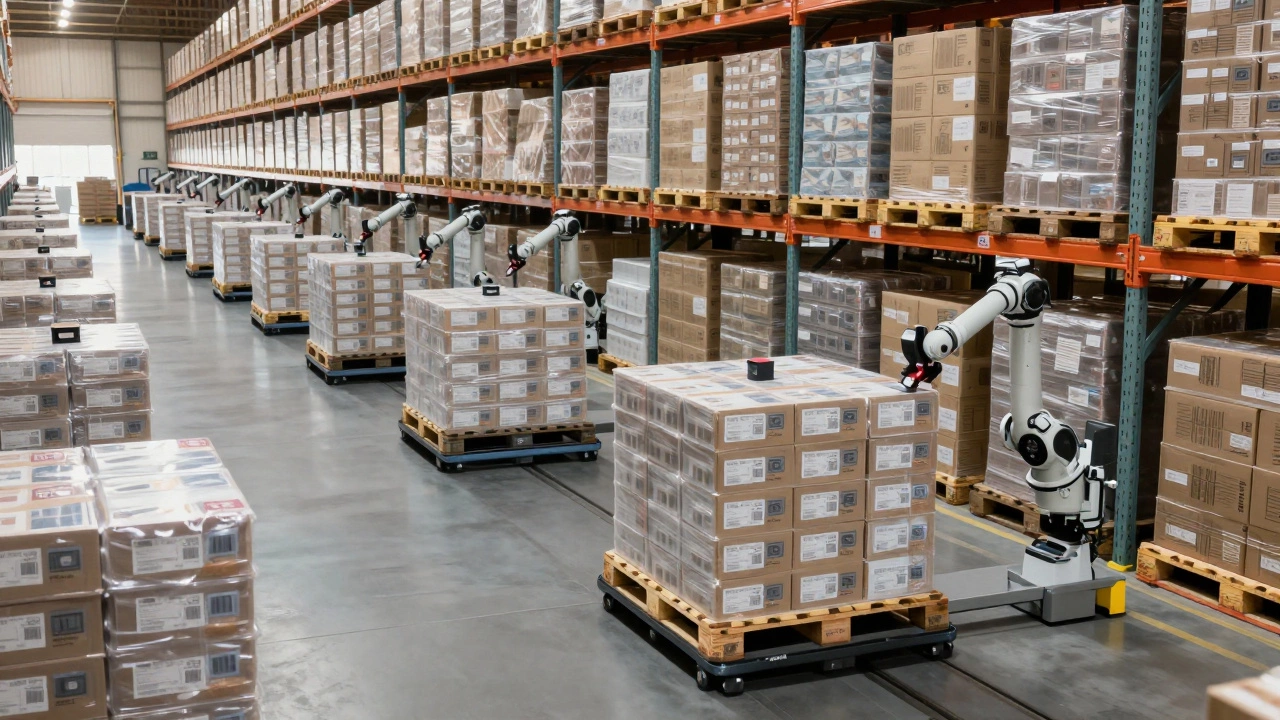
Ever seen a massive stack of boxes on a wooden platform rolling through a warehouse and thought, "Is that an Amazon pallet?"? You’re not alone. The idea of Amazon using giant pallets for shipping feels obvious - like, of course they’d move stuff that way. But here’s the truth: Amazon pallets aren’t a thing you can order, request, or even see listed on their website. Not as a service. Not as a product. Not as a customer-facing option.
That doesn’t mean pallets don’t exist in Amazon’s system. They do - just not for you.
What Amazon Actually Uses for Bulk Shipping
Amazon moves millions of items every day. Most of them? Small. Single boxes. One phone. Two books. A toaster. But every now and then, they need to move hundreds or thousands of units at once - say, from a factory in China to a fulfillment center in Ohio. That’s where pallets come in.
Inside Amazon’s own network, pallets are everywhere. Think 48x40 inch wooden or plastic platforms, stacked high with identical boxes, wrapped in plastic, labeled with barcodes, and moved by forklifts. These aren’t called "Amazon pallets." They’re just freight pallets - the same kind used by FedEx Freight, UPS Freight, and every major logistics company.
Amazon doesn’t sell this service. You can’t log into your Amazon account and click "Ship on Pallet." Why? Because pallet shipping isn’t for individuals. It’s for manufacturers, distributors, and suppliers who send bulk inventory to Amazon’s warehouses. If you’re a business selling 500 units of the same product, you’ll likely ship them on a pallet. But if you’re a shopper? You’ll get a box. Always.
Why People Think Amazon Offers Pallet Delivery
The confusion comes from three places.
- Third-party sellers: Some sellers on Amazon Marketplace ship bulk orders using pallets. When you see a listing that says "Fulfilled by Seller," and you order 100 units, you might get a pallet delivered. But that’s the seller’s choice - not Amazon’s.
- Warehouse tours: Amazon lets some business partners tour their fulfillment centers. People see pallets everywhere and assume Amazon offers pallet shipping to customers. It’s like seeing a forklift at a grocery store and thinking you can rent one to move your fridge.
- Google search results: Sites like "Pallet Shipping Services" or "Amazon Pallet Delivery" pop up because they’re trying to sell freight services and piggyback on Amazon’s name. They’re not affiliated with Amazon. Some even charge you to "get an Amazon pallet quote." That’s a scam.
There’s no such thing as an "Amazon pallet delivery service" for consumers. If someone tells you otherwise, they’re either mistaken or trying to sell you something.
How Real Pallet Shipping Works (If You Need It)
Let’s say you’re a small business owner and you just got your first big order - 300 units of your product. You need to get them to a warehouse. Here’s what you actually do:
- Stack your boxes neatly on a standard 48x40 inch pallet. Use shrink wrap or straps to hold them together.
- Label each pallet with your company name, destination, and tracking number.
- Call a freight carrier - like FedEx Freight, UPS Freight, or a regional LTL (Less Than Truckload) company.
- They’ll pick up the pallet, haul it to a hub, then transfer it to another truck heading to your destination.
- Delivery takes 2-7 days, depending on distance. Cost? Usually $100-$500 per pallet, depending on weight and zone.
This is how businesses move bulk goods. It’s not Amazon. It’s just standard freight.
Amazon’s Real Role in Pallet Logistics
Amazon doesn’t deliver pallets to your door. But they do run one of the largest pallet-handling networks in the world - inside their own warehouses. They use automated guided vehicles (AGVs), robotic arms, and AI-driven systems to move pallets at insane speeds. A single fulfillment center can process over 1 million pallets per week.
They also require suppliers to ship inventory on pallets that meet strict standards:
- Dimensions: 48x40 inches (standard US pallet)
- Weight: Under 1,500 lbs per pallet
- Height: No more than 72 inches
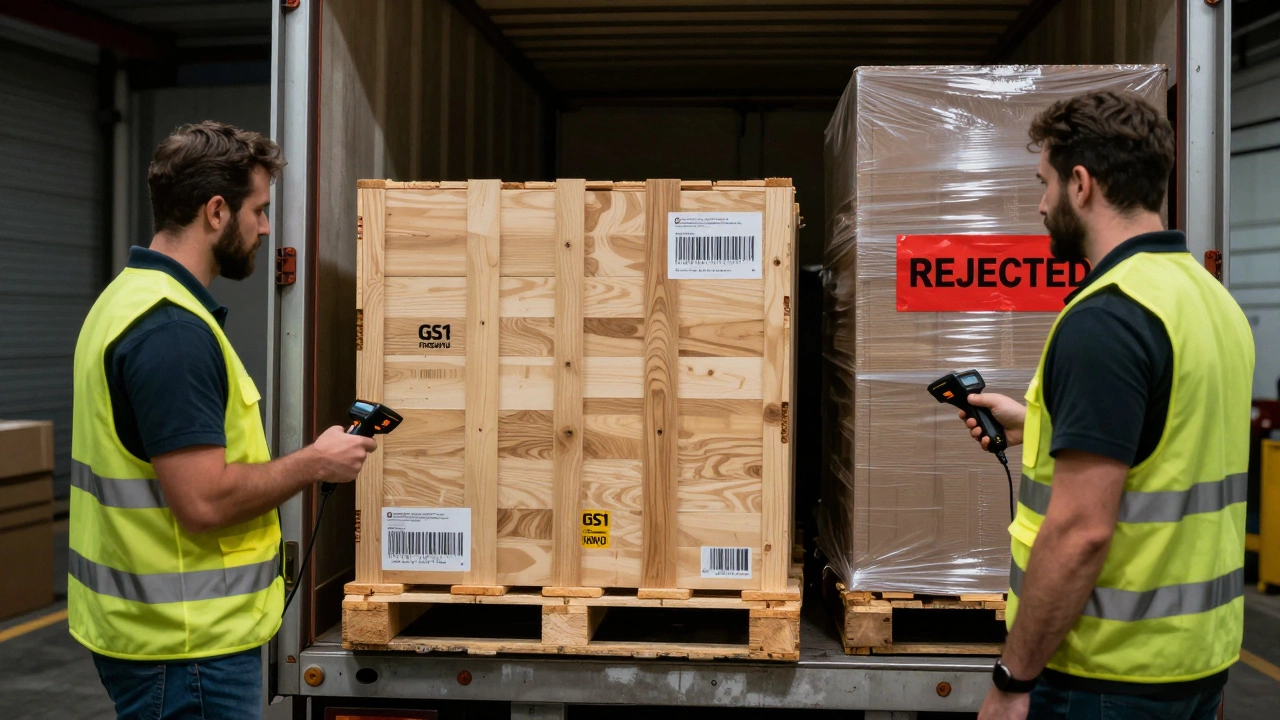
- Labeling: GS1 barcode, FNSKU, and destination code
- Wrapping: Securely shrink-wrapped or banded
If your pallet doesn’t meet these specs, Amazon will refuse it. No exceptions. So while you can’t ship a pallet to your home, if you’re selling to Amazon, your pallet better look like it came out of a logistics textbook.
What Happens If You Try to Ship a Pallet to Amazon?
Let’s say you’re a DIY seller and you’ve got 200 units of handmade candles. You load them onto a pallet, call a freight company, and ship it to an Amazon fulfillment center address you found online.
Here’s what happens next:
- The delivery driver drops it off at the gate.
- The receiving team scans the label.
- If the label matches an approved seller account and product code? The pallet gets accepted.
- If it’s missing a barcode? It sits for 48 hours. Then it’s returned.
- If it’s mislabeled or over 1,500 lbs? It gets rejected outright. You pay return shipping.
Amazon doesn’t play around with pallets. They’re a precision operation. One wrong label, one crooked stack, and your entire shipment gets delayed - or worse, thrown out.
Alternatives to "Amazon Pallets" for Bulk Shipping
If you need to move bulk goods, here are your real options:
| Service | Best For | Delivery Time | Cost per Pallet (US) | Amazon-Friendly? |
|---|---|---|---|---|
| UPS Freight | Reliable nationwide delivery | 3-7 days | $120-$400 | Yes |
| FedEx Freight | Time-sensitive bulk shipments | 2-6 days | $150-$450 | Yes |
| LTL Carriers (Regional) | Local or regional moves | 1-5 days | $80-$300 | Yes |
| Truckload (FTL) | 10+ pallets at once | 2-5 days | $1,200-$3,000 | Yes |
| Amazon Vendor Central | Selling directly to Amazon | Varies | Free (you pay carrier) | Yes - required |
None of these are "Amazon pallets." But they’re what actually works.
Final Answer: No, Amazon Pallets Don’t Exist - But This Is What Does
Amazon doesn’t offer pallet delivery to customers. Never has. Never will. If you’re looking to ship a pallet, you need a freight carrier - not Amazon.
But here’s the twist: Amazon’s entire supply chain runs on pallets. They’re the hidden backbone of everything you order. They’re just not for you to use.
So if you’re a business trying to send bulk inventory to Amazon? Use a freight service. Follow their pallet guidelines. Label everything perfectly. And don’t waste time searching for "Amazon pallets" - it’s a myth.
And if you’re a regular shopper? You’ll keep getting boxes. Because that’s what Amazon does best - one box at a time.
Can I ship a pallet to Amazon as a regular customer?
No. Amazon only accepts pallet shipments from approved suppliers through Vendor Central or Seller Central. Regular customers can’t ship to Amazon warehouses. If you try, your pallet will be refused or returned.
Are Amazon pallets cheaper than other freight services?
Amazon doesn’t offer pallet shipping to the public, so there’s no price to compare. If you’re a seller shipping inventory to Amazon, you pay a freight carrier - not Amazon. Rates depend on distance, weight, and speed - not Amazon branding.
Do Amazon warehouses use plastic or wooden pallets?
Amazon uses both, but they prefer plastic pallets for durability and hygiene. Plastic pallets don’t splinter, hold less dust, and last longer. However, wooden pallets are still common, especially for international shipments. The key is meeting Amazon’s size and weight limits - not the material.
Can I rent an Amazon pallet?
No. Amazon doesn’t rent, sell, or loan out pallets. Any website offering "Amazon pallet rental" is not affiliated with Amazon and likely a scam. Standard pallets are available from hardware stores or freight companies.
What happens if my pallet doesn’t meet Amazon’s standards?
It gets rejected. Amazon’s receiving systems scan for barcode accuracy, weight, dimensions, and labeling. If anything’s off, your pallet will be held, returned, or destroyed - and you’ll pay for return shipping. Always double-check Amazon’s supplier guidelines before shipping.