
Logistics Company Selector
Select your business needs to find the most suitable logistics provider from the top 10 companies featured in our 2026 supply chain report.
When you order something online and it shows up at your door in two days, you rarely think about the massive machine behind it. That machine? Logistics. And the companies running it are some of the most powerful, complex, and underrated players in the global economy. In 2026, the top 10 logistics companies aren’t just moving boxes-they’re managing networks of warehouses, drones, AI routing systems, and cross-border regulations that keep the world trading. This isn’t a list of the biggest by revenue alone. It’s a snapshot of who’s actually moving the needle-on time, at scale, and with real innovation.
United Parcel Service (UPS)
UPS doesn’t just deliver packages. It runs a global logistics empire with over 125,000 vehicles and 500,000 employees. In 2025 alone, it handled more than 5.8 billion shipments. What sets UPS apart isn’t just its brown trucks-it’s its proprietary ORION routing system. This AI-driven platform cuts millions of miles off delivery routes every year, saving fuel and time. Its network spans 220 countries, and it’s one of the few companies that owns its own fleet of cargo planes-600 of them. For businesses needing reliable, end-to-end control, UPS remains the gold standard.
FedEx Corporation
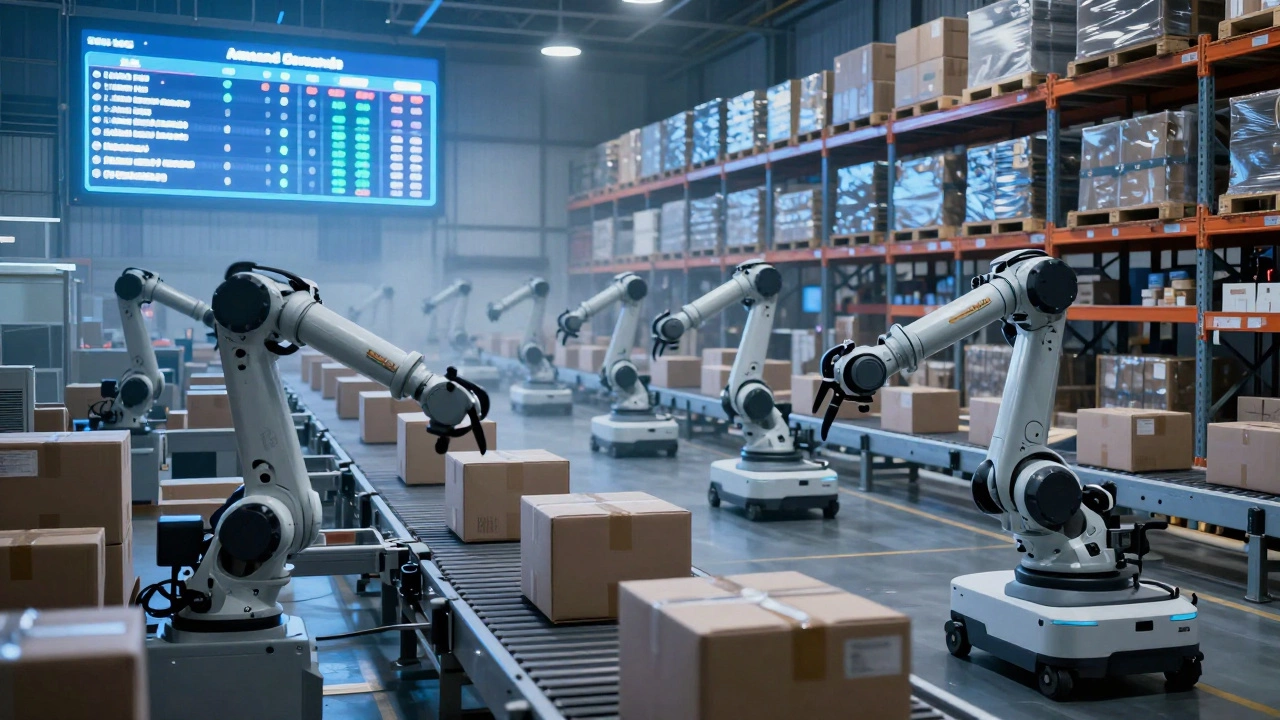
FedEx built its reputation on speed, and it still leads in express delivery. Its overnight shipping network is unmatched, especially for time-sensitive medical supplies, legal documents, and high-value electronics. In 2025, FedEx Ground delivered over 4.5 billion packages in the U.S. alone. The company’s $1.2 billion investment in automation at its Memphis hub-where robots sort 1.2 million packages per hour-shows how seriously it takes efficiency. FedEx also dominates international express shipping, with dedicated air routes connecting Asia, Europe, and North America. If you need something delivered tomorrow, FedEx is often the only option that guarantees it.
DHL Group
DHL is the global logistics giant that most Americans don’t realize dominates outside the U.S. It’s part of Deutsche Post, and it handles more international shipments than any other company. In 2025, DHL Express moved over 1.8 billion parcels across 220 countries. Its strength? Cross-border expertise. Whether it’s navigating customs in Brazil, handling hazardous materials in Dubai, or managing cold-chain logistics for vaccines in Africa, DHL has systems built for complexity. Its Supply Chain division also works with Fortune 500 companies to redesign entire distribution networks-not just move boxes.
Amazon Logistics
Amazon isn’t just a retailer anymore-it’s a logistics behemoth. Its in-house delivery network now handles over 60% of its U.S. orders, cutting out third-party carriers like UPS and FedEx for many routes. Amazon operates more than 1,100 fulfillment centers and 100 sortation centers. It owns over 100 cargo planes and has signed deals with regional carriers to fill gaps. What makes Amazon unique is its data-driven approach: it predicts where demand will spike before it happens, pre-positioning inventory in warehouses just miles from customers. For small businesses, Amazon’s delivery network is a double-edged sword-it’s fast, but it’s also hard to compete with.
Maersk
When you think of shipping, you think of big metal containers on oceans. That’s Maersk’s world. It’s the largest container shipping company on the planet, moving over 4 million TEUs (twenty-foot equivalent units) annually. Maersk doesn’t just carry goods-it owns ports, terminals, and digital platforms like TradeLens, which tracks shipments on blockchain. In 2025, it launched its first fleet of carbon-neutral vessels using methanol fuel. For global manufacturers and retailers, Maersk is the backbone of international trade. If your product came from China, Vietnam, or Germany by sea, there’s a good chance Maersk moved it.
DP World
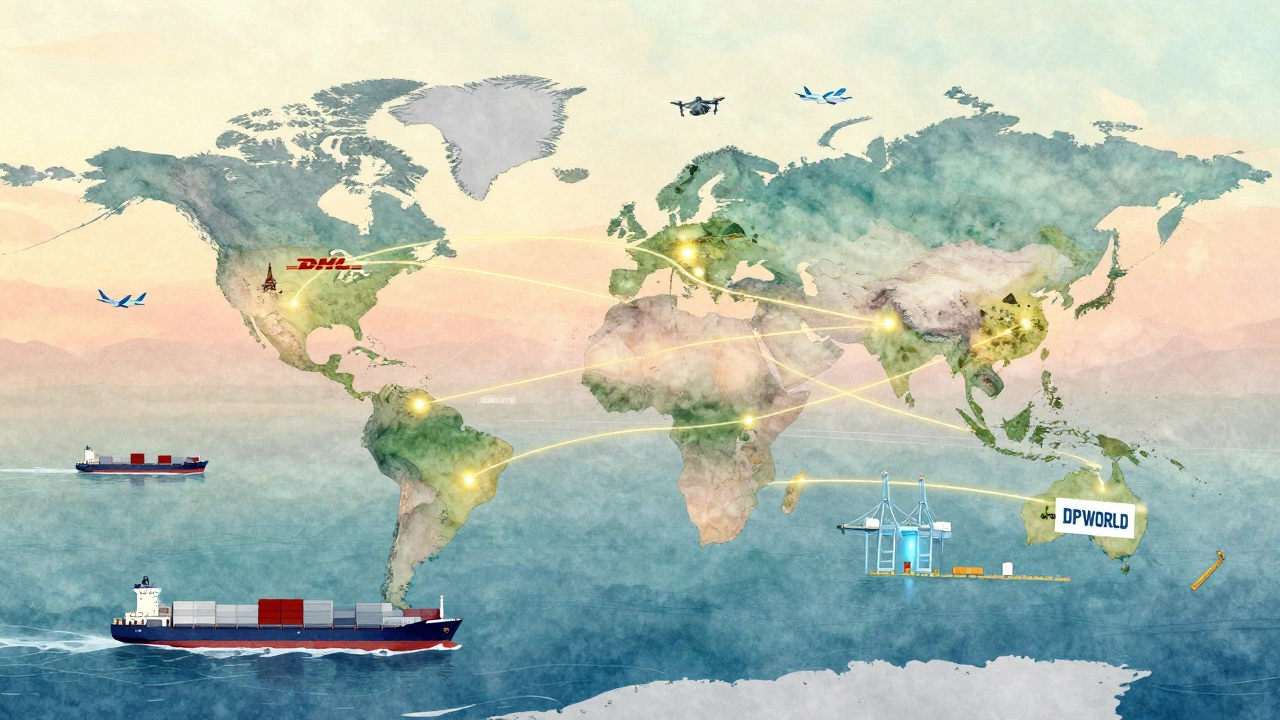
DP World isn’t a household name in the U.S., but it controls 80+ terminals in 40+ countries, including major ports like London Gateway, Jebel Ali, and Port Said. It’s owned by the government of Dubai and handles over 70 million TEUs per year. What makes DP World powerful is its control over the physical chokepoints of global trade. It doesn’t just move containers-it manages the entire port ecosystem, from cranes to customs clearance. Its investments in automation and AI-powered port operations are setting new standards for efficiency. If you’re importing goods into Europe or the Middle East, DP World is likely the first or last stop in your supply chain.
C.H. Robinson
C.H. Robinson is the middleman that most companies rely on but rarely see. It’s a third-party logistics provider (3PL) that connects shippers with carriers. Think of it as Uber for freight. Its Navisphere platform matches trucks, rail, and ocean vessels to shipments in real time. In 2025, it managed over 23 million shipments worth $220 billion. Unlike carriers that own assets, C.H. Robinson’s power comes from its network-over 100,000 carriers and 70,000 customers. For small and mid-sized businesses without in-house logistics teams, it’s the easiest way to move freight without hiring a whole department.
Yusen Logistics
Yusen Logistics, a subsidiary of Nippon Telegraph and Telephone (NTT) and Mitsubishi Corporation, is a quiet giant in Asia and North America. It specializes in air and ocean freight for automotive, electronics, and pharmaceutical clients. Its strength? Precision. Yusen manages complex supply chains for companies like Toyota and Sony, where timing and temperature control are critical. In 2025, it expanded its cold-chain logistics network across the U.S. and Europe, adding 15 new temperature-controlled warehouses. If your phone or medicine arrived in perfect condition after a long journey, Yusen might have been behind it.
DB Schenker
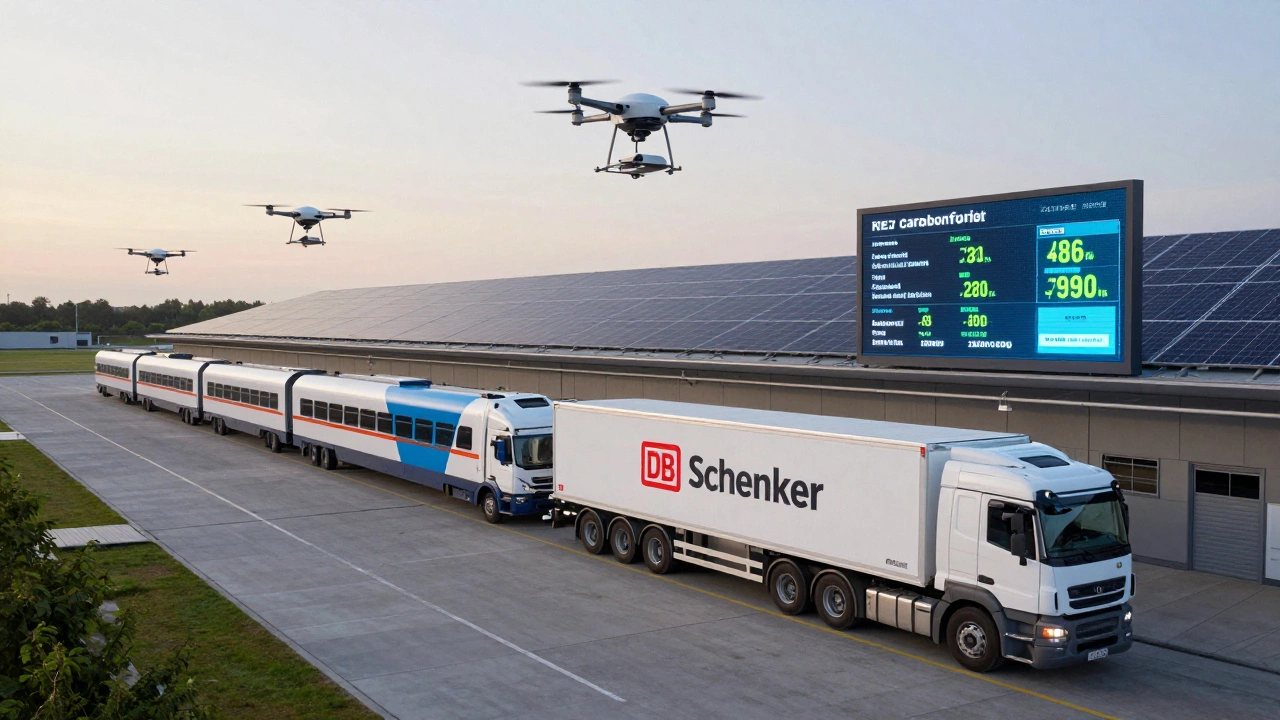
DB Schenker, part of Germany’s Deutsche Bahn railway group, is Europe’s largest logistics provider. It combines rail, road, air, and sea into one seamless system. What makes it stand out is its heavy investment in green logistics: it runs electric trucks in major cities, uses hydrogen-powered trains in Germany, and has pledged to cut emissions by 50% by 2030. Its digital platform, Schenker Digital, lets customers track shipments with live updates and carbon footprint reports. For European businesses needing sustainable, multi-modal transport, DB Schenker is the go-to.
XPO Logistics
XPO Logistics grew by acquiring smaller freight companies and turning them into a single, tech-driven network. It’s one of the largest contract logistics providers in North America, managing over 100 million square feet of warehouse space. Its big innovation? AI-powered warehouse management. XPO uses machine learning to predict inventory needs and optimize picking routes, cutting labor costs by up to 20%. It also operates one of the largest freight brokerage networks in the U.S., connecting over 50,000 carriers. For e-commerce brands scaling quickly, XPO offers a plug-and-play logistics solution without the overhead.
Why These Companies Matter
These ten companies don’t just move goods-they shape global trade, influence pricing, and determine how fast innovation reaches consumers. The lines between them are blurring. Amazon is buying warehouses. Maersk is building digital platforms. DHL is running drone deliveries in rural Africa. The future belongs to companies that combine physical infrastructure with digital intelligence.
For businesses, choosing the right partner isn’t about picking the biggest name. It’s about matching your needs: speed, cost, sustainability, or global reach. A small e-commerce brand might thrive with Amazon Logistics. A medical device maker needs Yusen’s cold-chain precision. A manufacturer shipping to 30 countries? DHL or Maersk. The right logistics partner doesn’t just deliver-it becomes part of your competitive edge.
What’s Changing in 2026?
Three big shifts are reshaping logistics right now:
- Autonomous trucks are being tested on U.S. highways by UPS and FedEx, with pilot programs reducing driver shortages.
- Green logistics is no longer optional. Maersk, DB Schenker, and DHL are investing billions in alternative fuels and carbon tracking.
- AI-powered forecasting lets companies like XPO and C.H. Robinson predict demand spikes before they happen-cutting overstock and delays.
These aren’t future ideas. They’re live systems in operation today.
Final Thoughts
The top 10 logistics companies aren’t just service providers-they’re infrastructure. They’re the hidden engines behind your online orders, your groceries, your electronics, and even your medicine. As supply chains get more complex and consumers demand faster delivery, these companies will only grow more critical. The ones that win aren’t the ones with the most trucks or planes. They’re the ones that think like software companies-adapting, predicting, and optimizing in real time.
How do I choose the right logistics company for my business?
Start by asking three questions: Where are your customers? How fast do deliveries need to be? What’s your budget? If you’re shipping internationally, DHL or Maersk are strong choices. For fast U.S. delivery, FedEx or UPS work best. If you’re an e-commerce brand, Amazon Logistics offers speed and integration. For complex supply chains, C.H. Robinson or XPO provide flexible, tech-driven solutions. Don’t pick the biggest-pick the one that fits your specific needs.
Are these logistics companies environmentally friendly?
Some are making big moves. Maersk has ordered carbon-neutral methanol-powered ships. DB Schenker runs electric trucks and hydrogen trains. DHL uses electric delivery vehicles in 100+ cities. FedEx and UPS have pledged to electrify their fleets by 2040. But not all are equal-older carriers still rely heavily on diesel. If sustainability matters to you, ask for their emissions reports and look for certifications like Science Based Targets initiative (SBTi).
Can small businesses use these top logistics companies?
Yes, but not always directly. Companies like UPS and FedEx offer small business shipping accounts with discounted rates. C.H. Robinson and XPO work with small shippers through their freight brokerage platforms. Amazon Logistics is mostly for sellers on its own marketplace. If you’re a small business, you might not need a direct contract-use a 3PL or shipping aggregator to access these networks at lower prices.
What’s the difference between a freight forwarder and a logistics company?
A freight forwarder (like C.H. Robinson) arranges transport but doesn’t own trucks or planes. A logistics company (like UPS or DHL) owns assets-warehouses, planes, fleets-and manages the entire process. Forwarders are good for flexible, one-off shipments. Logistics companies offer end-to-end control and reliability. Many top companies do both.
Which of these companies are best for international shipping?
DHL leads in global express delivery, especially for documents and small parcels. Maersk dominates ocean freight for large shipments. FedEx and UPS have strong international networks but charge more for cross-border. DP World handles port logistics, which matters if you’re shipping containers. For complex international routes-especially through Asia, Africa, or Latin America-DHL and Maersk are the most reliable.