
Logistics Facility Selector
Not sure if you need more space or a different type of facility? Answer these questions to find the right logistics solution for your business.
- Primary Goal:
- Tech Level:
- Typical UK Size:
You’ve got inventory. You need space. So you rent a warehouse. But as your order volume spikes-maybe you’re hitting 500 shipments a day instead of 50-you start noticing cracks in the model. Picking errors creep up. Shipping times lag. Your staff is running laps across concrete floors just to grab one SKU.
This is where most businesses hit a wall. They think "bigger" means more square footage. It doesn’t. It means a different type of facility. The question isn't really about physical dimensions; it's about operational complexity. When people ask what is bigger than a warehouse, they are usually looking for the next step up in the logistics ladder: the distribution center.
The Real Difference Is Speed, Not Size
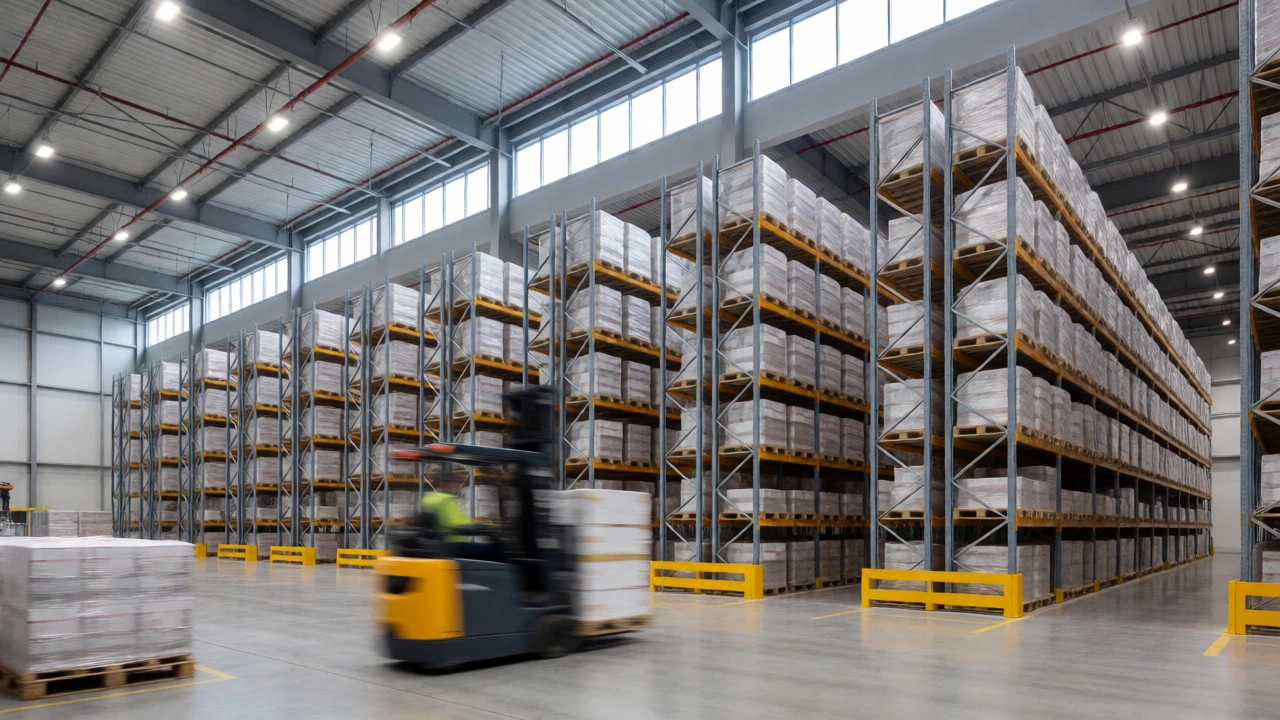
A warehouse is primarily for storage. Think of it as a giant garage where things sit until someone needs them. A distribution center (DC) is for movement. It’s designed to get goods in and out fast. While a DC might be physically larger-often ranging from 100,000 to over 500,000 square feet compared to a typical 20,000-50,000 sq ft warehouse-that size exists to support throughput, not just holding capacity.
If you are still treating your large facility like a warehouse, you are leaving money on the table. You’re paying for heating and security on empty pallets that should have been shipped three days ago. The shift from warehousing to distribution is a shift from static asset management to dynamic flow management.
Distribution Centers vs. Warehouses: The Core Split
Let’s break down why these two aren’t interchangeable, even if they look similar from the outside. Both have racks, both have forklifts, and both hold boxes. But their jobs are opposites.
- Warehouses focus on long-term storage. Goods might sit for months. The priority is density-fitting as much product into the smallest footprint as possible.
- Distribution Centers focus on short-term turnover. Goods might sit for hours or days. The priority is speed-minimizing the time between receiving an order and shipping it out.
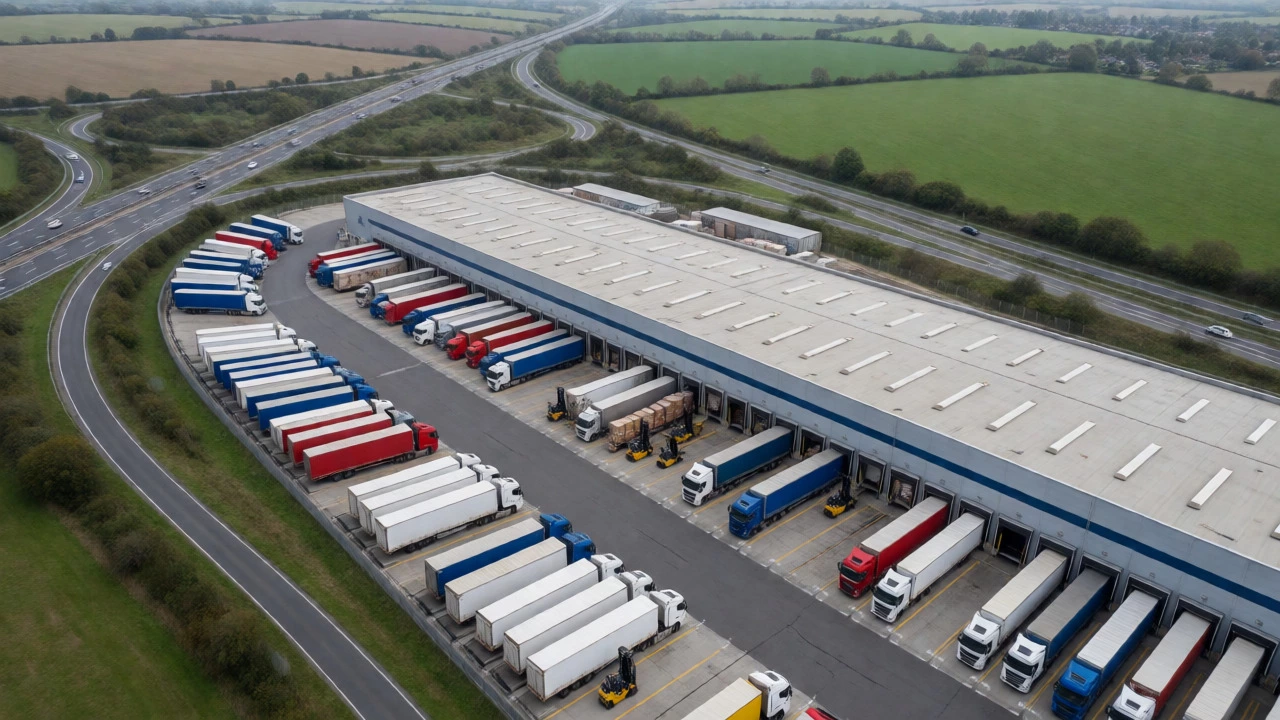
In the UK context, consider a retailer like Tesco. Their regional warehouses might hold seasonal stock for weeks. But their distribution centers near major motorways (like the M6 or M1 corridors) process thousands of orders daily for immediate delivery to stores. If you’re running an e-commerce brand, you likely need DC functionality, even if you call your building a warehouse.
Fulfillment Centers: The E-Commerce Specialist
If a distribution center is big, a fulfillment center is often smaller but significantly more complex per square foot. This is the entity that confuses many business owners. Is a fulfillment center bigger than a warehouse? Physically? Often no. Operationally? Yes, by a mile.
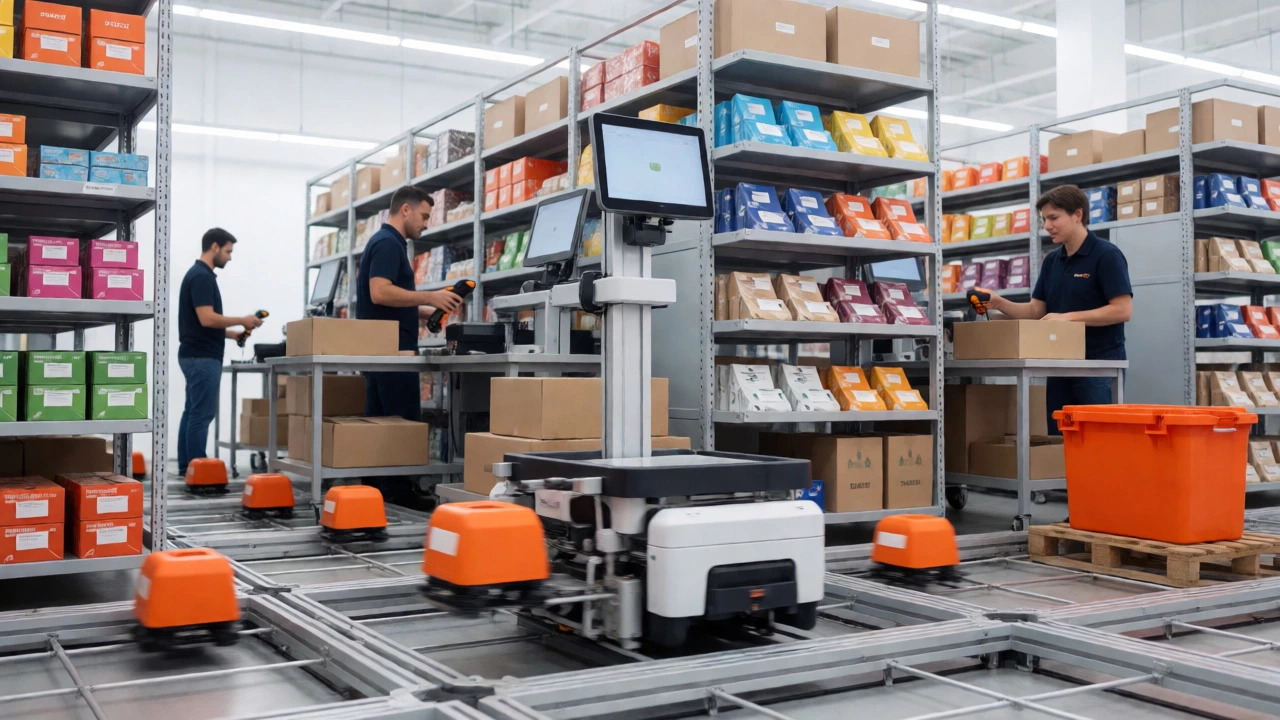
Fulfillment centers are built for single-item picking. In a traditional DC, you might pick 50 units of one SKU for a store shipment. In a fulfillment center, you might pick one unit of ten different SKUs for ten different customers. This requires:
- Advanced WMS (Warehouse Management Systems) software.
- Automated conveyors or robotic pickers (like Amazon Robotics).
- Packaging stations at every aisle end.
Companies like Shopify merchants using ShipBob or Amazon FBA rely on this model. The "bigness" here isn't the building; it's the data processing power and the labor intensity required to handle fragmented orders.
| Feature | Warehouse | Distribution Center | Fulfillment Center |
|---|---|---|---|
| Primary Goal | Storage | Movement & Consolidation | Individual Order Processing |
| Typical Dwell Time | Weeks to Months | Days to Weeks | Hours to Days |
| Order Type | Bulk/B2B | Bulk/B2B | Single Item/B2C |
| Tech Level | Low (Basic Scanners) | Medium (WMS, Forklifts) | High (Automation, AI) |
| UK Typical Size | 10k-50k sq ft | 100k-500k+ sq ft | 20k-100k sq ft |
Cross-Docking: The 'No Storage' Giant
Here’s a counter-intuitive concept: some facilities are massive but hold almost nothing. Enter cross-docking terminals. These are often part of larger distribution networks. Trucks arrive with inbound goods, which are immediately sorted and loaded onto outbound trucks. There is little to no storage phase.
Why would you want this? Because storage costs money. Every hour a box sits on a shelf is capital tied up. Cross-docking facilities can be huge-think of the sorting hubs used by DPD or Royal Mail-but their effective "inventory" is zero. They are bigger in terms of traffic flow and vehicle capacity, not in terms of stored assets. If your supply chain moves high-volume, low-value goods (like FMCG), cross-docking might be the "bigger" solution you need, allowing you to bypass traditional warehousing entirely.
Third-Party Logistics (3PL) Networks
Sometimes, the answer to "what is bigger than a warehouse" isn't a single building. It’s a network. A 3PL provider offers access to multiple facilities across regions. Instead of renting one giant warehouse in Liverpool, you use a 3PL with nodes in Manchester, London, and Bristol.
This distributed model is "bigger" because it covers more geography with less risk. If one facility floods (a real concern in parts of the UK), your inventory is safe elsewhere. It also reduces last-mile delivery costs. Shipping from a hub closer to the customer is cheaper and faster than shipping from one central mega-warehouse. For growing brands, scaling via a 3PL network is often smarter than trying to build or lease a single super-sized facility.
How to Choose the Right Scale for Your Business
Don’t just chase size. Match the facility type to your sales velocity. Here’s a quick heuristic:
- Choose a Warehouse if: You have slow-moving inventory, seasonal products you buy in bulk, or you serve other businesses (B2B) who order in pallet quantities.
- Choose a Distribution Center if: You need to consolidate shipments from multiple suppliers before sending them to retailers, or you require rapid turnaround for bulk orders.
- Choose a Fulfillment Center if: You sell directly to consumers (B2C), have high SKU counts, and need automated picking/packing to keep labor costs down.
Remember, the trend in 2026 is toward automation. Even traditional warehouses are adopting ASRS (Automated Storage and Retrieval Systems) to compete with DCs. If you stay purely manual while competitors automate, your "smaller" warehouse will feel inefficient compared to their "larger" automated hubs.
Is a distribution center always physically larger than a warehouse?
Not always. A small urban distribution center might be 50,000 sq ft, while a rural cold-storage warehouse could be 100,000 sq ft. The distinction lies in function: DCs prioritize speed and throughput, while warehouses prioritize storage density and duration.
What is the main difference between a fulfillment center and a distribution center?
A distribution center typically handles bulk shipments to other businesses or retail stores (B2B). A fulfillment center processes individual customer orders (B2C), involving picking single items, packing, and labeling for direct-to-consumer shipping.
Can I convert my warehouse into a distribution center?
Yes, but it requires investment. You’ll need better WMS software, optimized layout for faster picking routes, and potentially more dock doors to increase truck throughput. Labor training must also shift from inventory counting to order accuracy and speed.
Are cross-docking facilities bigger than standard warehouses?
In terms of vehicle capacity and floor area for staging, yes. However, they hold minimal inventory. They are designed for rapid transfer between inbound and outbound transport, making them operationally "larger" in terms of traffic flow rather than stored goods.
Which is cheaper: warehousing or distribution?
Warehousing generally has lower operational costs per unit if goods sit for long periods. Distribution centers have higher labor and tech costs due to the need for speed, but they can reduce overall supply chain costs by minimizing inventory holding periods and improving cash flow.