

SAP Logistics Module Selector
What is the primary challenge your logistics operation is facing? Select the scenario that best matches your current pain point.
"We have ghost inventory, pickers take too long to find items, or our warehouse is disorganized."
"Our trucks are driving half-empty, shipping costs are skyrocketing, or routes are inefficient."
"We frequently run out of stock during peak seasons or overproduce items that don't sell."
Key Takeaways
- SAP acts as a single source of truth, connecting sales, warehouse, and transport data.
- The transition from SAP ECC to SAP S/4HANA has moved logistics from batch processing to real-time data.
- Core modules like EWM and TM handle the actual movement and storage of goods.
- Integration reduces human error and eliminates the "silo effect" where departments don't talk to each other.
How SAP Actually Works in the Supply Chain
At its core, SAP SCM (Supply Chain Management) is designed to balance demand and supply. Think of it as a giant calculator that looks at how many products customers want and then tells the factory how much to make and the trucks where to go. In a traditional setup, your warehouse manager might use one system, and your fleet manager might use another. When those two systems don't talk, you get "ghost inventory"-where the system says you have 100 pallets of widgets, but the warehouse is actually empty. SAP solves this by using a shared database. When a sales rep in New York enters an order, the warehouse in New Jersey sees it instantly, and the procurement team in Germany knows they need to order more raw materials. This connectivity is what we call ERP (Enterprise Resource Planning). It's not just a logistics tool; it's a business operating system. By integrating logistics into the broader ERP, companies can track the exact cost of a shipment down to the penny, linking the fuel cost of a truck directly to the profit margin of a specific customer order.The Heavy Hitters: SAP EWM and SAP TM
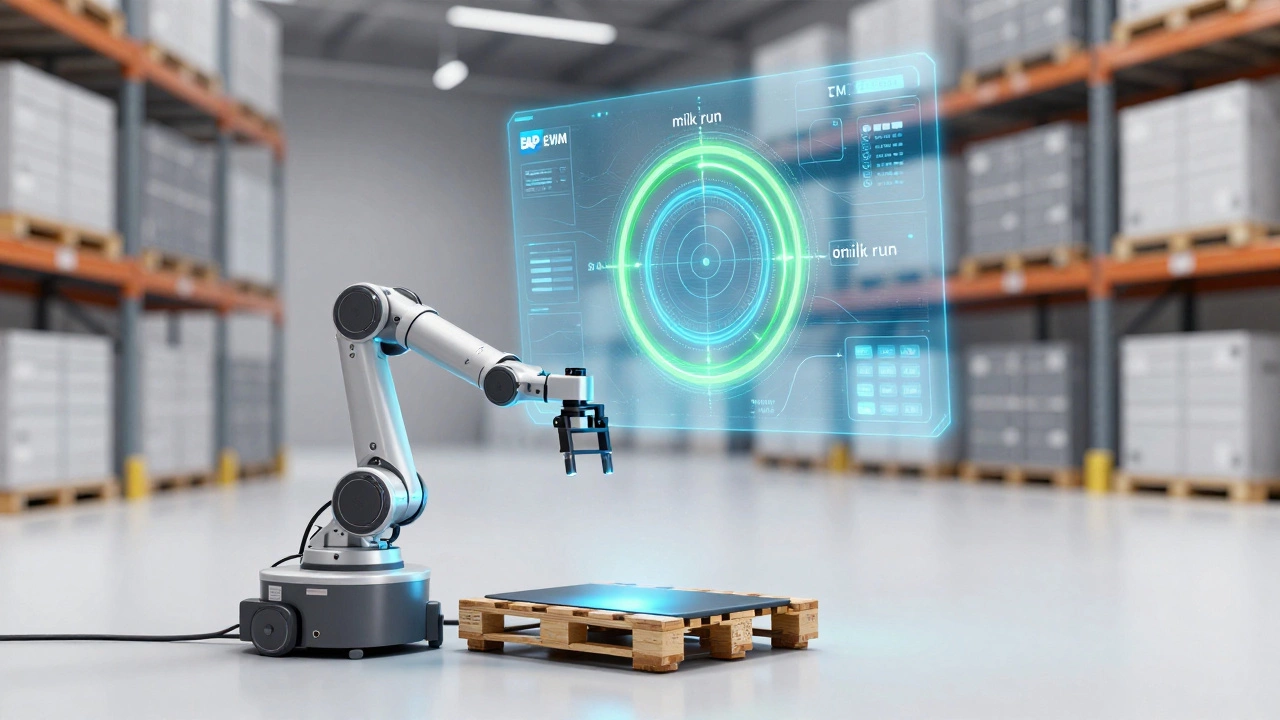
Not every company needs the full suite, but for those moving serious volume, two specific modules are non-negotiable. First, there is SAP EWM (Extended Warehouse Management). This is far more than a basic inventory list. It handles complex tasks like "slotting," which is the science of placing high-velocity items closest to the shipping dock to reduce picker travel time. If you're running a 500,000 square foot facility, saving 10 seconds per pick across 10,000 orders a day adds up to massive labor savings. Then you have SAP TM (Transportation Management). This module focuses on the road, rail, and sea. It helps logistics managers optimize freight routes to avoid empty miles. For example, instead of sending a half-empty truck to a client, SAP TM can suggest a "milk run"-a circular route that hits three different customers in one trip. This directly slashes fuel costs and reduces the carbon footprint of the operation.| Module | Primary Focus | Key Value | Real-world Example |
|---|---|---|---|
| SAP EWM | Internal Warehouse Ops | Inventory Accuracy | Automating robot pickers in a hub |
| SAP TM | External Freight | Shipping Cost Reduction | Optimizing multi-modal sea-to-rail routes |
| SAP IBP | Planning & Forecasting | Reducing Stockouts | Predicting winter demand for heaters |
The Shift to SAP S/4HANA: Why It Matters
For years, SAP ran on traditional databases that processed data in batches. This meant you might not know your actual inventory levels until the system "refreshed" overnight. In modern logistics, where customers expect 15-minute delivery updates, that's an eternity. Enter SAP S/4HANA. This is the latest generation of the software, built on an "in-memory" database. Instead of reading data from a slow disk, it keeps everything in the RAM. The result? Real-time analytics. If a ship is delayed by a storm in the Suez Canal, S/4HANA doesn't just tell you the ship is late. It can instantly simulate how that delay affects 5,000 different customer orders and suggest alternative air-freight options to keep the most critical clients happy. This shift from reactive to predictive logistics is the biggest leap in the industry in twenty years.Common Pitfalls and Implementation Realities
Here is the truth: SAP is not a "plug-and-play" software. You don't just download it and start shipping. Implementing SAP is often a multi-year project that can cost millions. The biggest mistake companies make is trying to force SAP to work exactly like their old, manual processes. SAP is built on "best practices." If the software tells you that your warehouse picking process is inefficient, it's usually because the software was designed based on data from thousands of the world's most efficient warehouses. The struggle is often cultural; employees who have "always done it this way" resist the rigid structure of an ERP. Another common issue is over-customization. When a company asks SAP consultants to write custom code for every tiny quirk of their business, they create a "technical debt" nightmare. When it comes time to upgrade the software, those custom tweaks break, leaving the company stuck on an obsolete version of the system.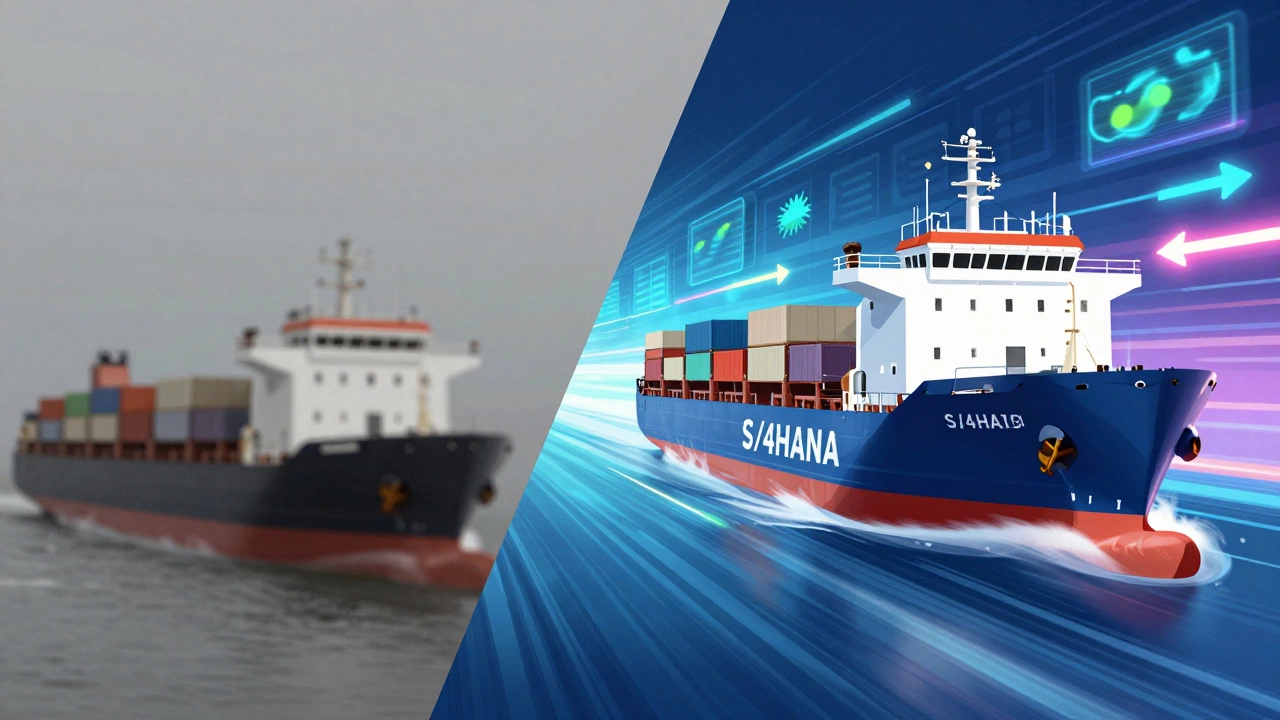
Integration with the Wider Ecosystem
SAP doesn't exist in a vacuum. In a modern logistics stack, it often talks to other specialized tools. You might use SAP for your high-level financial and inventory control, but plug in a specialized WMS (Warehouse Management System) for a specific niche, or a dedicated carrier API to get live tracking from DHL or FedEx. This is handled through API (Application Programming Interface) connections. For instance, when a pallet is scanned by a handheld device in a warehouse, that data travels via API into the SAP core, which then triggers an automated email to the customer saying, "Your order has left the warehouse." This seamless flow is what creates the "Amazon-like" experience for B2B customers.Is SAP Right for Your Business?
If you're running a local courier service with three vans and a garage, SAP is overkill. It would be like buying a Boeing 747 to go to the grocery store. You'd spend more time managing the software than moving the packages. However, if you're scaling into a mid-sized player with multiple warehouses, international shipments, and complex tax requirements, you'll hit a ceiling with basic software. At that point, the investment in a system that integrates SAP in logistics becomes a survival requirement. The goal is to reach a point where your software doesn't just record what happened, but tells you what is going to happen next.Is SAP the same as a WMS?
Not exactly. A WMS (Warehouse Management System) is specifically for the four walls of the warehouse. SAP is an ERP, meaning it handles the warehouse (via EWM), but also handles the accounting, HR, sales, and procurement. You can think of a WMS as a specialized tool and SAP as the entire toolbox.
How long does it take to implement SAP for logistics?
Depending on the size of the company, it can take anywhere from six months to several years. Smaller implementations using SAP S/4HANA Cloud are faster, but full-scale global rollouts often take years because of the need to clean up old data and train thousands of staff members.
What is the difference between SAP ECC and S/4HANA?
ECC is the older version that uses a traditional database. S/4HANA is the modern version that uses an in-memory database, allowing for real-time processing and much faster reporting. It's the difference between looking at a photo of your inventory from yesterday (ECC) and a live video stream of your inventory right now (S/4HANA).
Can SAP help reduce shipping costs?
Yes, primarily through the SAP TM module. By optimizing routes, consolidating shipments, and choosing the cheapest carrier for a specific lane, companies often see a significant drop in their total freight spend.
Does SAP support multi-currency and international taxes?
This is one of SAP's strongest points. It is designed for global trade and can handle hundreds of different currencies, complex VAT requirements, and customs documentation for almost every country in the world.