
Logistics Speed Comparison Tool
Compare Logistics Delivery Speed
Enter your order details below to see how long delivery would take with traditional logistics versus e-logistics.
Key Insight: E-logistics delivers faster than traditional logistics in this scenario.
When you order a pair of sneakers online and get them delivered in two days, you’re seeing e-logistics in action. But if that same pair of shoes had to travel from a warehouse to a store shelf first, then wait for you to drive there and buy it, that’s traditional logistics. The difference isn’t just about technology-it’s about speed, scale, and what customers expect today.
Traditional Logistics: The Old Way of Moving Goods
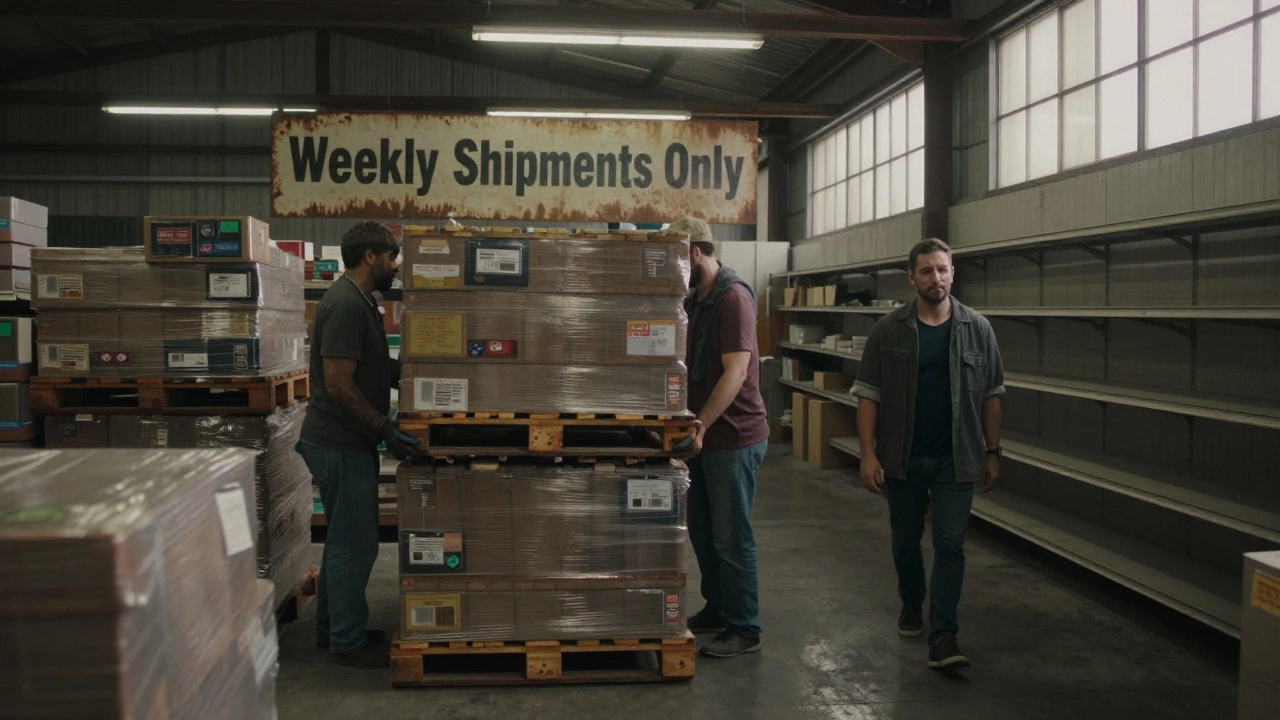
Traditional logistics has been around for decades. It’s the system that moved goods from factories to regional warehouses, then to retail stores, and finally to customers who walked in and bought them. Think of it as a slow, step-by-step chain: produce, ship to distributor, stock shelves, wait for customer.
This model works fine when demand is predictable. A supermarket orders 500 cans of beans every Monday because they’ve sold that much every Monday for years. Inventory is built up in bulk, shipments are consolidated, and delivery windows are wide-sometimes days or weeks apart.
But here’s the catch: it’s not built for surprise. If a heatwave hits and suddenly everyone wants ice cream, traditional logistics can’t react fast enough. Warehouses are full of beans, not popsicles. Stores don’t reorder daily. And customers? They’re stuck waiting.
E-Logistics: Built for the Digital Age
E-logistics is the engine behind Amazon’s two-day delivery, Zalando’s same-day returns, and even your local grocery app dropping off milk before lunch. It’s not just shipping online orders-it’s a complete rethink of how goods move from source to door.
Instead of one big warehouse per region, e-logistics uses a network of smaller fulfillment centers, often located near cities. These centers hold only the top-selling items-things that sell hundreds of units a day. When you click ‘buy’, the system instantly knows which center has your item, assigns a picker, packs it, and hands it off to a courier-all within hours.
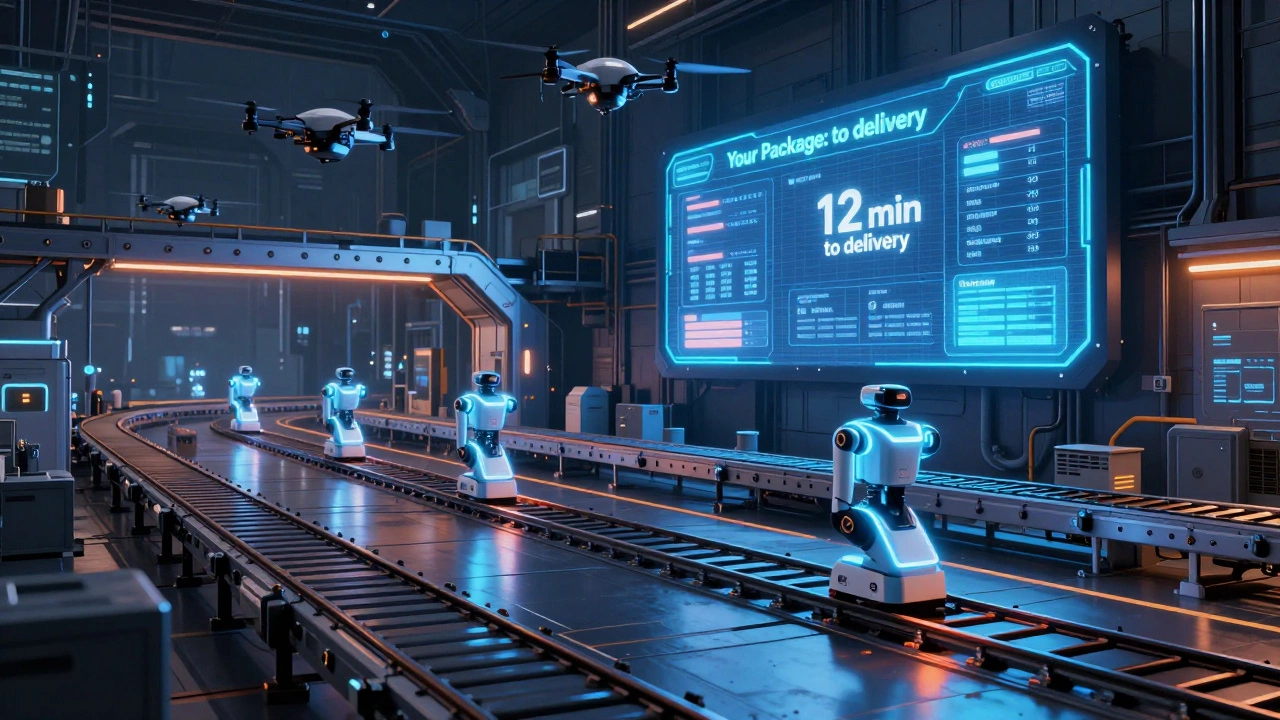
Real-time tracking, AI-driven demand forecasting, and automated sorting systems are standard. A warehouse in Manchester can process 10,000 orders in a single night because robots handle the picking, and software optimizes delivery routes for the morning rush.
Speed: Hours vs. Days
Traditional logistics moves goods on a weekly or monthly cycle. A shipment might leave the factory on Monday, arrive at the regional hub on Wednesday, sit for two days, then get dispatched to stores on Friday. By the time you see it on the shelf, it’s been weeks.
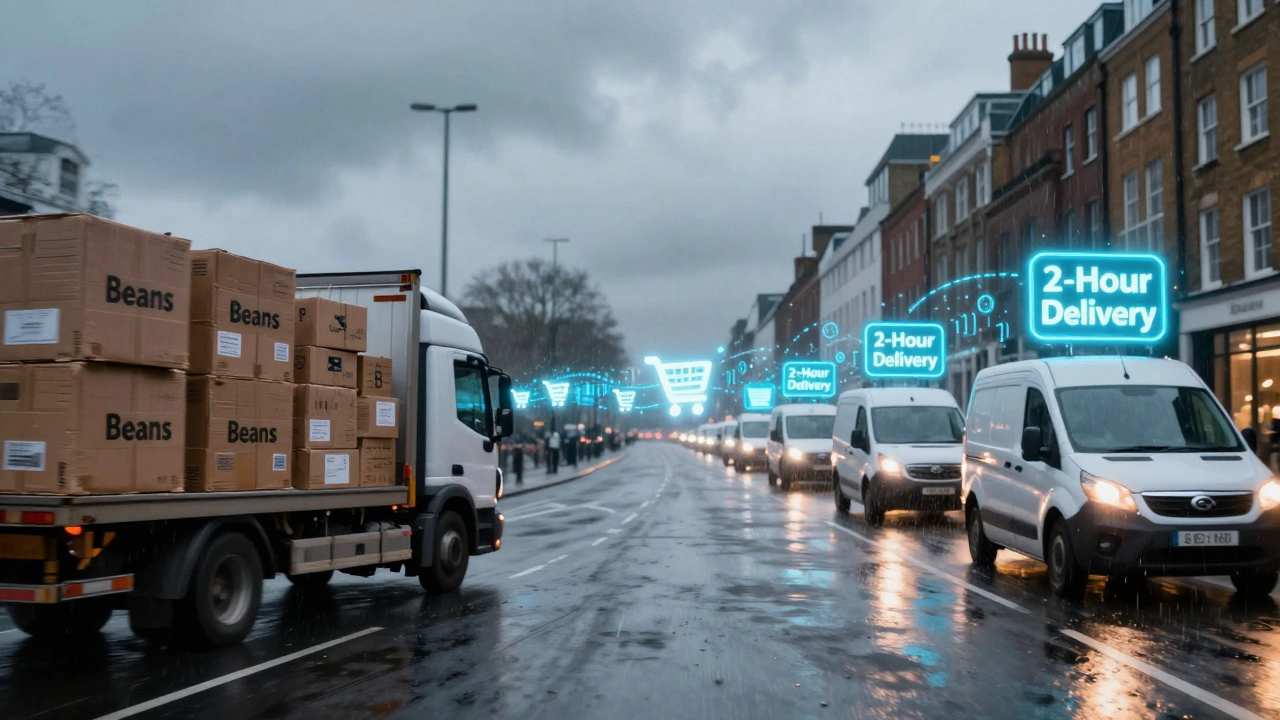
E-logistics cuts that down to hours. In the UK, over 60% of online orders delivered by major retailers now arrive within 24 hours. Some, like Amazon Prime and Ocado, offer 1-hour delivery windows in major cities. That’s not magic-it’s infrastructure. You can’t get that speed with pallets, slow trucks, and manual inventory counts.
Customers don’t just want fast delivery-they expect it. A 2024 study by the UK Logistics Association found that 78% of online shoppers will abandon a cart if next-day delivery isn’t offered. That’s the new baseline.
Inventory: Bulk vs. Dynamic
Traditional logistics relies on economies of scale. You order 10,000 units of a product because it’s cheaper to ship that way. But what if 3,000 of them never sell? You’re stuck with overstock, storage fees, and markdowns.
E-logistics flips that. It uses real-time sales data to keep inventory lean. If a product sells 50 units a day, the system orders just enough to cover 2-3 days of demand. It’s called just-in-time inventory, and it’s powered by algorithms that track trends, weather, even social media buzz.
For example, a popular hoodie might sell out in London on a Tuesday because a celebrity wore it on Instagram. Traditional logistics wouldn’t notice until next week’s sales report. E-logistics reorders 200 more units by Wednesday morning and ships them to three urban fulfillment centers before the weekend.
Returns: A Cost Center vs. A Feature
Returning a product used to be a nightmare. You had to drive to the store, wait in line, and hope they had the right form. If it was a gift? Good luck.
In e-logistics, returns are built into the system. You print a label at home, drop it in a parcel locker, and the system automatically processes the refund. Returns are often picked up within 24 hours. In fact, over 30% of online purchases in the UK are returned-e-logistics is designed to handle that volume.
Traditional logistics? Returns are an afterthought. Many retailers charge restocking fees or refuse them entirely. That’s why brick-and-mortar stores still have lower return rates-not because people buy less, but because they can’t easily return.
Technology: Manual vs. Automated
Traditional logistics still relies heavily on paper manifests, hand-held scanners, and human judgment for routing. A warehouse worker might spend half their shift walking to find a box. Mistakes happen. Delays pile up.
E-logistics uses barcode scanning, RFID tags, and AI to track every item. A pallet doesn’t just have a tracking number-it has a digital twin. Sensors tell you if a box was dropped, if temperature changed, if it’s heading the wrong way. Automated guided vehicles (AGVs) move goods without human input. Sorting centers can process 50,000 items an hour with near-zero error rates.
It’s not sci-fi. Companies like DHL and FedEx now use these systems across their UK hubs. Even small e-commerce sellers use platforms like ShipBob or Ordoro that automate the whole process for them.
Who Wins? The Customer
Traditional logistics served a world where convenience was a luxury. E-logistics serves a world where it’s the rule. The difference isn’t just operational-it’s cultural.
Customers today don’t care how many warehouses a company has. They care if their order arrives on time, if they can track it, and if they can return it without hassle. E-logistics answers all three. Traditional logistics struggles with even one.
That’s why retail giants are shutting down physical stores and investing billions in fulfillment centers. It’s not about saving money-it’s about staying alive. If you can’t deliver fast, you lose. Simple as that.
Can Traditional Logistics Survive?
Yes-but only if it adapts. Some traditional logistics providers are now offering hybrid models. A distributor might still ship to stores, but also partner with last-mile couriers to deliver directly to homes. Others are buying tech startups to plug the gaps.
But the shift is clear. The future isn’t about bigger trucks or more warehouses. It’s about data, speed, and responsiveness. Companies that cling to the old way will keep losing market share. Those that embrace e-logistics will grow-even if they started as a local hauler.
If you’re running a business, the question isn’t whether to switch. It’s how fast you can.
Is e-logistics only for big companies like Amazon?
No. E-logistics tools are now affordable for small businesses. Platforms like ShipBob, Easyship, and Shopify Fulfillment Network let even a one-person online store access warehouse networks, real-time tracking, and automated returns. You don’t need your own fleet-you just need the right software partner.
Does e-logistics cost more than traditional logistics?
Upfront, yes. Setting up automated fulfillment centers or paying for premium delivery services costs more than shipping pallets by truck. But over time, it saves money. Less overstock, fewer lost sales, lower return fraud, and higher customer retention add up. A 2025 survey found that businesses using e-logistics saw a 22% increase in repeat customers compared to those using traditional methods.
Can traditional logistics handle returns as well as e-logistics?
Not really. Traditional systems were never designed for high-volume returns. Handling returns manually means longer processing times, higher labor costs, and more errors. E-logistics automates the entire process-from return label generation to restocking. In the UK, e-commerce returns are processed 3x faster than in-store returns.
What’s the biggest challenge in switching from traditional to e-logistics?
Integration. Many businesses still use old inventory systems that don’t talk to modern logistics platforms. The biggest hurdle isn’t cost-it’s getting data to flow smoothly between your sales platform, warehouse, and delivery partners. Start small: connect your online store to a single fulfillment center before overhauling everything.
Are there environmental downsides to e-logistics?
There are trade-offs. More frequent deliveries mean more vans on the road. But e-logistics also reduces waste from overproduction and unsold stock. Many providers now use electric vans, optimize routes to cut emissions, and offer consolidated delivery slots. A 2024 study showed that e-logistics can reduce carbon emissions per item by up to 18% compared to traditional retail supply chains, when optimized properly.