

Logistics Career Salary & Path Estimator
Select a Role
Choose a role above to see details.
Key Requirements
- Select a role...
Essential Skills
Most people picture a delivery driver or a warehouse picker when they hear the word "logistics." It’s an understandable assumption. The industry is visible everywhere, from the trucks on the highway to the packages on your doorstep. But behind those moving parts sits a massive engine of strategy, data analysis, and high-stakes decision-making. And at the top of that engine are roles that pay significantly more than the average corporate salary.
If you are looking to break into the field or climb the ladder, knowing where the money is matters. In 2026, the highest-paying jobs in logistics aren’t just about moving boxes; they are about optimizing global networks, managing risk, and leveraging artificial intelligence to save millions. Let’s look at who makes the most, what they actually do, and how you can position yourself to earn it.
Quick Takeaways: The Top Earners
- Supply Chain Director/VP: The undisputed top earner, often commanding $150k-$300k+ depending on company size.
- Logistics Manager: A strong mid-to-senior role with salaries ranging from $80k to $130k.
- Procurement Manager: Critical for cost control, earning between $90k and $140k.
- Key Skills: Data analytics, AI integration, and strategic negotiation are worth more than basic operational knowledge.
- Trend: Companies are paying premiums for professionals who can navigate geopolitical instability and digital transformation.
The Crown Jewel: Supply Chain Director and VP
When we talk about the absolute ceiling for income in this sector, we are talking about executive leadership. The title might vary-Supply Chain Director, Vice President of Operations, or Chief Supply Chain Officer-but the responsibility is consistent. These individuals don’t just manage a team; they design the entire flow of goods for a multinational corporation.
In 2026, the demand for these leaders has skyrocketed. Why? Because the world is fragile. Geopolitical tensions, climate disruptions, and shifting trade policies mean that a broken supply chain can bankrupt a company overnight. Executives who can predict these breaks and reroute operations seamlessly are priceless assets.
A typical Supply Chain Director oversees procurement, manufacturing planning, distribution, and last-mile delivery. They work closely with C-suite executives to align physical goods movement with financial goals. If a semiconductor shortage hits, this person decides whether to halt production, source from a more expensive vendor, or redesign the product. That kind of pressure commands a high salary. In large enterprises, total compensation (salary plus bonuses and stock options) frequently exceeds $250,000 annually.
The Strategic Backbone: Procurement and Sourcing Managers
Before anything moves, it must be bought. This is where Procurement Managers come in. While often grouped under logistics, procurement is distinct because its primary focus is cost reduction and supplier relationship management. A skilled procurement manager doesn’t just buy materials; they negotiate contracts that can save a company millions over three years.
The salary for a senior procurement manager typically ranges from $90,000 to $140,000. However, in industries with volatile raw material costs like automotive or aerospace, experienced managers with specialized negotiation skills can push well past $150,000. The key differentiator here is expertise in global sourcing. You need to understand international trade laws, currency fluctuations, and ethical sourcing standards. If you can secure a stable supply of critical components during a crisis, you become indispensable.
Unlike general logistics roles, procurement requires a sharp eye for detail and a thick skin for negotiation. You are constantly battling against inflation and supplier scarcity. The best professionals use data analytics to forecast price trends, allowing them to lock in rates before spikes occur. This proactive approach is what separates the high earners from the rest.
Operational Excellence: Logistics and Distribution Managers
Once the goods are sourced, they need to move efficiently. This is the domain of the Logistics Manager and Distribution Center Manager. These roles are the bridge between strategy and execution. They ensure that inventory levels are optimal, warehouses run smoothly, and transportation costs are minimized.
Salaries for logistics managers generally fall between $80,000 and $130,000. The upper end of this range belongs to those managing complex, multi-modal distribution networks. For example, a manager overseeing a network of cross-docking facilities across Europe will earn more than someone managing a single regional warehouse. The complexity of the operation directly correlates with the paycheck.
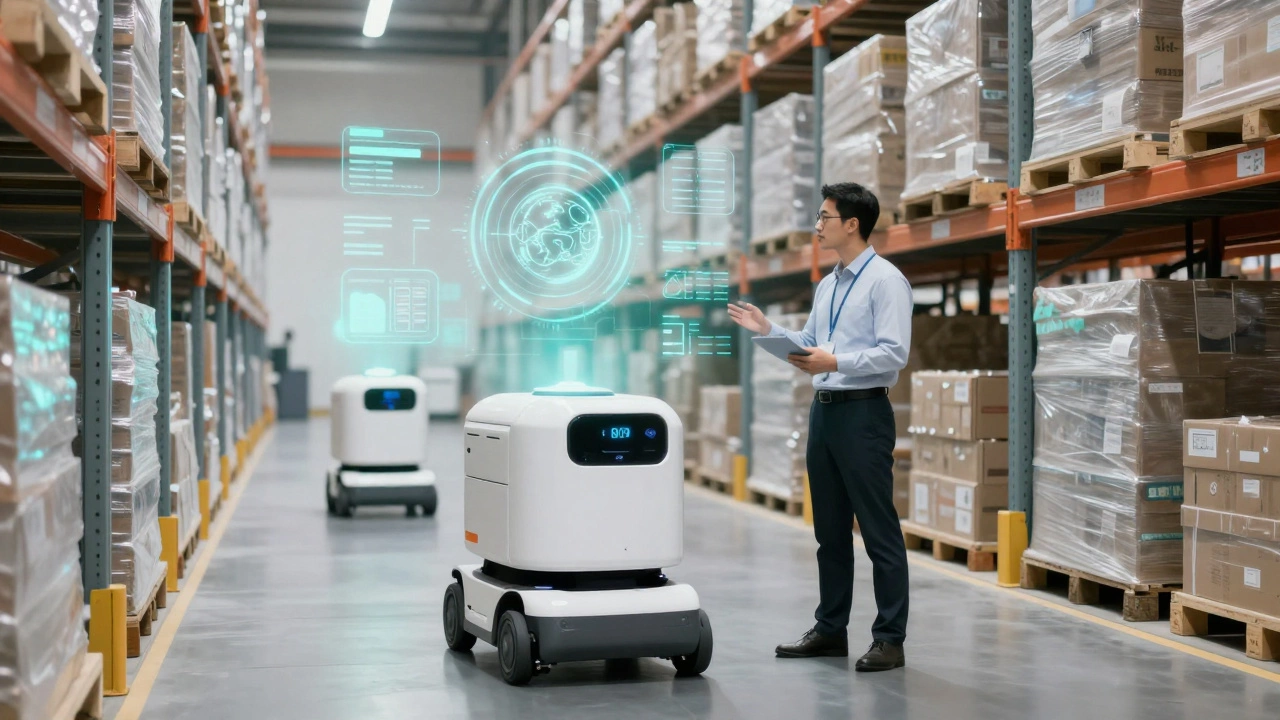
In 2026, the value of a logistics manager has increased due to the integration of automation. Modern warehouses use autonomous mobile robots (AMRs) and AI-driven inventory systems. A manager who understands how to optimize these technologies-not just operate them-is highly valued. You aren’t just watching forklifts anymore; you’re tuning algorithms that dictate robot paths. This technical proficiency allows you to command higher wages because you are driving efficiency gains that directly impact the bottom line.

The Technical Edge: Supply Chain Analysts and Data Scientists
Traditionally, logistics was a gut-feeling business. Not anymore. Today, the highest growth in salaries is happening in the analytical side of the industry. Supply Chain Data Scientists and advanced analysts are becoming some of the most sought-after hires. These professionals build predictive models that forecast demand, optimize routes, and identify risks before they materialize.
A senior supply chain data scientist can earn between $110,000 and $160,000. This role requires a mix of domain knowledge and hard technical skills. You need to know Python or R, understand machine learning frameworks, and have a deep grasp of supply chain dynamics. For instance, building a model that accurately predicts seasonal demand spikes for a retailer can prevent millions in lost sales or excess inventory costs.
Why does this role pay so well? Because data is the new oil in logistics. Companies have terabytes of data sitting idle. Professionals who can extract actionable insights from that data are rare. If you can prove that your algorithm reduced fuel consumption by 5% or improved on-time delivery by 10%, you have leverage in salary negotiations. This is a perfect path for those who prefer working with numbers and code rather than people management.
Specialized Niches: Cold Chain and Hazardous Materials
Not all logistics is created equal. Moving frozen vaccines or radioactive isotopes requires specialized knowledge, strict regulatory compliance, and higher liability management. Jobs in Cold Chain Logistics and Hazardous Materials (HazMat) Transport often carry a premium due to the complexity and risk involved.
A Cold Chain Director in the pharmaceutical industry, for example, ensures that temperature-sensitive products remain within specific ranges from manufacture to patient. Failure here isn’t just a delay; it’s a safety hazard and a total loss of product. Consequently, salaries for senior roles in this niche can exceed $140,000. Similarly, managers overseeing HazMat transport must navigate a labyrinth of federal and international regulations. The barrier to entry is high, which keeps supply low and wages high.
If you are willing to invest time in obtaining specialized certifications-such as Certified Cold Chain Professional (CCCP) or HazMat handling credentials-you can carve out a lucrative niche. These roles offer stability because the demand for pharmaceuticals and industrial chemicals is inelastic. People always need medicine, and factories always need raw materials.
Comparison of Top Logistics Salaries
| Role | Average Salary Range | Key Requirements | Primary Focus |
|---|---|---|---|
| Supply Chain Director / VP | $150,000 - $300,000+ | MBA, 10+ years exp, Leadership | Strategic oversight, Risk management |
| Procurement Manager | $90,000 - $140,000 | Negotiation skills, Global sourcing | Cost reduction, Supplier relations |
| Supply Chain Data Scientist | $110,000 - $160,000 | Python/R, Machine Learning, Analytics | Predictive modeling, Optimization |
| Logistics Manager | $80,000 - $130,000 | Operations management, WMS expertise | Efficiency, Inventory control |
| Cold Chain Director | $120,000 - $150,000+ | Pharma regulations, Temperature control | Compliance, Quality assurance |
How to Maximize Your Earning Potential
Knowing the titles is one thing; getting there is another. The gap between a $60,000 coordinator role and a $150,000 director role is bridged by specific actions. First, prioritize education that offers ROI. An MBA is still the gold standard for executive roles, but specialized Master’s degrees in Supply Chain Management from top-tier universities are gaining ground. Alternatively, professional certifications like CPIM (Certified in Planning and Inventory Management) or CSCP (Certified Supply Chain Professional) from APICS demonstrate competence and commitment.
Second, master the tools. In 2026, if you cannot interpret dashboards from ERP systems like SAP or Oracle, or if you haven’t used AI-driven forecasting tools, you are falling behind. Learn SQL. Understand how to visualize data. These skills allow you to speak the language of the CFO and CEO, not just the warehouse floor manager.
Third, seek out complexity. Early in your career, volunteer for projects that involve multiple stakeholders or international elements. Managing a simple domestic route teaches you little. Managing a cross-border shipment through customs during a trade dispute teaches you everything. Experience in navigating chaos is what gets you promoted.
Future Trends Impacting Salaries
The logistics landscape is shifting rapidly. Sustainability is no longer a buzzword; it’s a regulatory requirement. Companies are hiring Sustainability Officers within their supply chains to reduce carbon footprints. As regulations tighten in the EU and US, professionals who can balance cost efficiency with environmental compliance will see their salaries rise. Green logistics is the next frontier for high pay.
Additionally, the rise of nearshoring is changing the game. As companies move manufacturing closer to home to mitigate risk, the need for experts in regional logistics networks is growing. Understanding the nuances of North American or European intra-regional trade will be more valuable than generic global experience in certain contexts. Adaptability is your greatest asset.
Is an MBA necessary for the highest paying logistics jobs?
While not strictly mandatory, an MBA significantly boosts your chances for executive roles like Supply Chain Director or VP. Many top earners hold MBAs from reputable institutions because it provides the financial and strategic acumen needed for C-suite conversations. However, extensive experience combined with specialized certifications (like CSCP) can sometimes substitute for formal business school education, especially in technical or operational tracks.
Which logistics specialization pays the most in 2026?
Currently, roles combining strategic leadership with data science pay the most. Supply Chain Directors who are proficient in AI and analytics command the highest salaries. Specialized niches like Cold Chain (pharmaceuticals) and Hazardous Materials also offer premiums due to regulatory complexity and risk. Pure operational roles tend to cap out lower unless they scale to manage massive, multi-national networks.
Can I get a high-paying logistics job without a degree?
It is difficult but possible, particularly if you start in operations and climb through demonstrated performance. However, for the top 10% of salaries ($150k+), a bachelor’s degree is almost always a minimum requirement, and an advanced degree is common. Self-taught professionals often hit a "glass ceiling" without formal credentials that validate their strategic thinking abilities to HR departments and boards.
How does location affect logistics salaries?
Location plays a huge role. Major logistics hubs like Rotterdam, Singapore, Dubai, Chicago, and Los Angeles offer higher base salaries due to the concentration of headquarters and complex operations. However, remote work for analytical and strategic roles is increasing, allowing professionals in lower-cost areas to earn hub-level wages. Always adjust for cost of living when comparing offers.
What skills are most valuable for increasing my salary?
Beyond basic logistics knowledge, focus on three areas: Data Analytics (SQL, Python, Tableau), Strategic Negotiation, and Change Management. The ability to interpret data to drive decisions, negotiate favorable terms with suppliers, and lead teams through digital transformations are the skills that differentiate mid-level managers from high-earning executives.