
SAP EWM vs. Standard WMS Suitability Calculator
Operational Requirements
Select all features that are critical for your warehouse operations:
Comparison Overview
| Feature | SAP EWM | Standard WMS |
|---|---|---|
| Integration | Native | API/Middleware |
| Scalability | High | Medium |
| Automation | Built-in | Limited |
| Cost | High | Low-Medium |
| Setup Time | Months | Weeks |
Recommendation Analysis
SAP EWM Fit Score
Standard WMS Fit Score
Key Considerations:
Walk into any large distribution center today, and you’ll likely see a screen displaying the letters SAP. For warehouse managers, these three letters represent more than just a software vendor; they symbolize the backbone of modern supply chain operations. But what does SAP actually stand for, and why is it so dominant in the warehousing world?
SAP stands for Systems, Applications, and Products in Data Processing. Originally founded in Germany in 1972, the company started as a way to help businesses manage their financial data efficiently. Over the decades, it evolved from a simple accounting tool into a comprehensive suite of enterprise resource planning (ERP) software. In the context of warehousing, SAP provides specialized modules that control everything from the moment goods arrive at the dock until they are shipped out to customers.
The Evolution: From SAP WM to SAP EWM
To understand SAP’s role in warehousing, you have to look at how its technology has matured. Years ago, most companies used SAP Warehouse Management (WM), which was integrated directly into the core ERP system. It handled basic tasks like storage location management and picking strategies. However, as e-commerce exploded and customer expectations shifted toward same-day delivery, WM began to show its limits. It struggled with high-volume throughput and complex labor management needs.
This led to the development of SAP Extended Warehouse Management (EWM). Launched initially as an add-on and later available as a standalone solution, EWM is designed for sophisticated warehouses. Unlike WM, EWM offers real-time visibility, advanced slotting optimization, and deep integration with automation technologies like automated storage and retrieval systems (AS/RS). Today, when people ask about SAP in warehousing, they are usually referring to EWM or the cloud-based successor, SAP Digital Supply Chain.
Core Functions of SAP in Warehousing
So, what exactly does the software do inside the four walls of a warehouse? SAP acts as the central brain, coordinating physical movements with digital records. Here are the primary functions it handles:
- Inbound Processing: When goods arrive, SAP generates putaway strategies. Instead of randomly placing pallets, the system calculates the best storage location based on product velocity, size, weight, and compatibility. This reduces travel time for workers during picking.
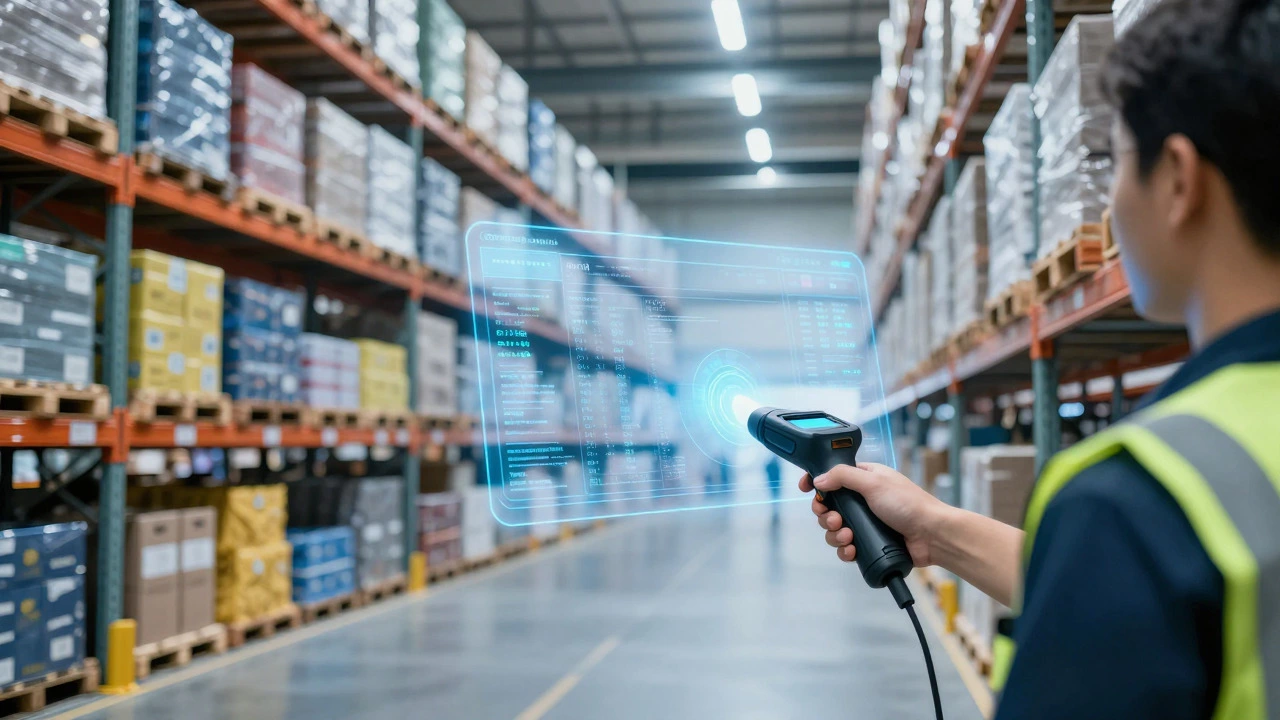
- Inventory Management: SAP tracks inventory in real-time. Every scan of a barcode updates the system instantly. This eliminates the need for frequent physical stocktakes and reduces discrepancies between recorded and actual stock levels.
- Picking and Packing: The system determines the most efficient pick path. Whether using batch picking, wave picking, or zone picking, SAP optimizes the sequence to minimize worker movement. It also guides packers on how to box items securely, often suggesting optimal packaging materials to reduce shipping costs.
- Outbound Shipping: Once orders are packed, SAP coordinates with transportation management systems (TMS) to schedule loading docks, assign carriers, and generate shipping labels. It ensures that the right products leave on the right truck at the right time.
Why Companies Choose SAP Over Competitors
You might wonder why businesses invest heavily in SAP when other warehouse management systems (WMS) exist. The answer lies in integration and scalability. Many smaller WMS solutions operate in silos, requiring manual data entry to connect with finance or procurement systems. SAP, being an ERP giant, connects seamlessly with other business processes.
| Feature | SAP EWM | Standard/Standalone WMS |
|---|---|---|
| Integration Depth | Native integration with SAP ERP (S/4HANA) | Requires API connectors or middleware |
| Scalability | High; supports global networks and millions of SKUs | Medium; may struggle with extreme volume spikes |
| Automation Support | Built-in controls for conveyors, sorters, and robots | Limited; often requires third-party integrations |
| Cost Structure | Higher initial investment and licensing fees | Lower upfront cost, subscription-based models common |
| Customization | Highly customizable but requires expert consultants | Easier to configure for small teams |
For multinational corporations, this seamless flow of data is critical. If a warehouse runs out of a specific component, SAP automatically triggers a purchase order in the procurement module and adjusts production schedules in the manufacturing module. This end-to-end visibility is hard to replicate with disjointed software stacks.
The Role of Automation and Robotics
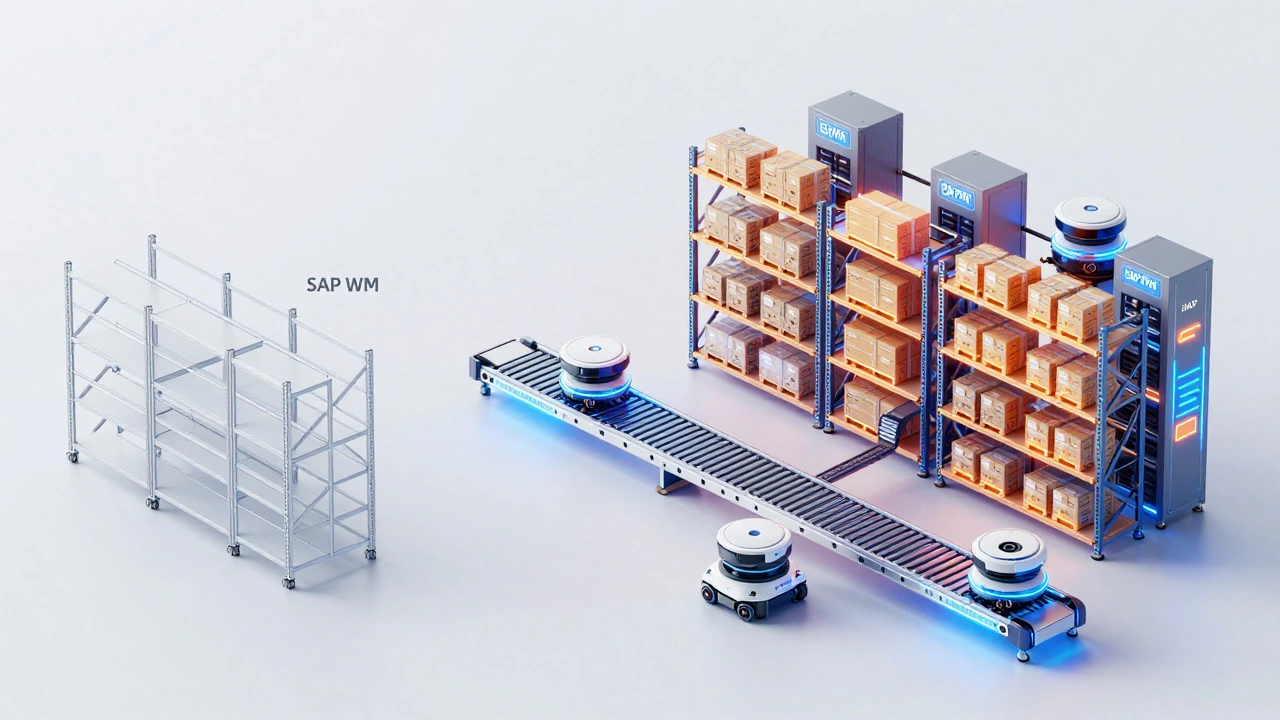
Modern warehousing is increasingly automated, and SAP plays a pivotal role here. Through SAP Integration Suite, the warehouse management system communicates directly with hardware controllers. Imagine a scenario where an autonomous mobile robot (AMR) picks up a shelf and brings it to a picker. SAP tells the robot which shelf to fetch, monitors its battery level, and reroutes it if a higher-priority order comes in.
This level of coordination reduces human error and increases speed. According to industry reports, warehouses using SAP EWM with automation can achieve up to 30% higher throughput compared to manual operations. The system also manages labor efficiency by tracking task completion times and identifying bottlenecks in real-time.
Challenges and Considerations
Despite its power, implementing SAP in warehousing is not without challenges. The complexity of the system means that implementation projects often take months or even years. Companies need skilled consultants who understand both logistics processes and SAP configuration. There’s also the issue of change management. Warehouse staff accustomed to paper-based systems or simpler digital tools may resist adopting SAP’s rigorous scanning protocols.
Additionally, the cost can be prohibitive for small and medium-sized enterprises (SMEs). While SAP offers cloud solutions like SAP Business ByDesign for smaller firms, the full power of EWM is typically reserved for larger organizations. Before committing, businesses must conduct a thorough ROI analysis to ensure the benefits justify the investment.

Future Trends: AI and Machine Learning in SAP
Looking ahead, SAP is integrating artificial intelligence (AI) and machine learning (ML) into its warehouse solutions. These technologies enable predictive analytics, allowing warehouses to anticipate demand surges before they happen. For example, ML algorithms can analyze historical sales data, seasonal trends, and even weather patterns to optimize stock levels proactively.
Another emerging trend is the use of augmented reality (AR) glasses powered by SAP. Pickers wearing AR devices receive visual cues overlaid on their field of view, guiding them to the exact bin location. This hands-free approach speeds up picking and reduces errors significantly. As these technologies mature, SAP will continue to redefine what’s possible in warehouse operations.
Conclusion: Is SAP Right for Your Warehouse?
Understanding what SAP stands for is just the beginning. The real question is whether its capabilities align with your business needs. If you’re managing a high-volume, complex distribution network with multiple locations, SAP EWM offers unparalleled control and integration. However, if you’re a smaller operation with straightforward requirements, a lighter-weight WMS might suffice.
Ultimately, the choice depends on your growth trajectory, budget, and technological readiness. Whichever path you choose, leveraging robust software like SAP can transform your warehouse from a cost center into a competitive advantage.
What does SAP stand for in warehousing?
SAP stands for Systems, Applications, and Products in Data Processing. In warehousing, it refers to the company’s suite of software solutions, particularly SAP Extended Warehouse Management (EWM), which manages inventory, picking, packing, and shipping processes.
Is SAP WM still used today?
While some legacy systems still use SAP Warehouse Management (WM), most new implementations favor SAP Extended Warehouse Management (EWM). EWM offers greater functionality, better performance, and support for modern automation technologies.
How much does SAP EWM cost?
The cost of SAP EWM varies widely depending on the scale of implementation, number of users, and customization requirements. Licensing fees, consulting costs, and hardware investments can total hundreds of thousands to millions of dollars for large enterprises.
Can SAP integrate with non-SAP systems?
Yes, SAP can integrate with non-SAP systems through APIs, middleware, and integration suites. However, native integration with other SAP modules (like S/4HANA) is seamless and requires less maintenance.
What industries use SAP for warehousing?
SAP is widely used across various industries, including retail, manufacturing, pharmaceuticals, automotive, and consumer goods. Any sector with complex supply chains and high inventory volumes benefits from SAP’s capabilities.