
Warehouse Scale Visualizer
Compare the massive scale of global warehouses by entering a company or facility type. See how many football fields or soccer pitches fit inside!
Imagine a building so large it could fit 15 football fields inside. Now imagine that this isn't just one building, but part of a network where some individual sites exceed 3 million square feet. When people ask who owns the biggest warehouse in the world, the answer almost always points to one name: Amazon. But the reality is more complex than a single address. It involves a massive ecosystem of fulfillment centers, robotics, and strategic real estate deals that redefine how we think about storage and shipping.
In 2026, the landscape of global logistics has shifted dramatically. The "biggest" title isn't static; it moves as companies expand, consolidate, or innovate. While Amazon dominates the conversation with its sheer scale, other players like Alibaba, JD.com, and traditional logistics giants are pushing boundaries in different ways. Understanding who really holds the crown requires looking beyond square footage to efficiency, automation, and global reach.
The Amazon Empire: More Than Just Boxes
Amazon operates a vast network of fulfillment centers across North America, Europe, and Asia, designed for rapid order processing and delivery. Unlike traditional warehouses that store goods for months, Amazon's facilities are high-turnover hubs. They receive inventory, sort it, pack it, and ship it out, often within hours.
The largest individual Amazon fulfillment center is widely considered to be the one in Bessemer, Alabama, or similar mega-sites in Kentucky and Pennsylvania. These facilities can span over 3 million square feet. To put that in perspective, that's enough space to cover 70 standard soccer pitches. But size alone doesn't tell the whole story. What makes these places "the biggest" in terms of impact is their internal complexity.
- Scale: Amazon operates over 1,000 fulfillment centers globally.
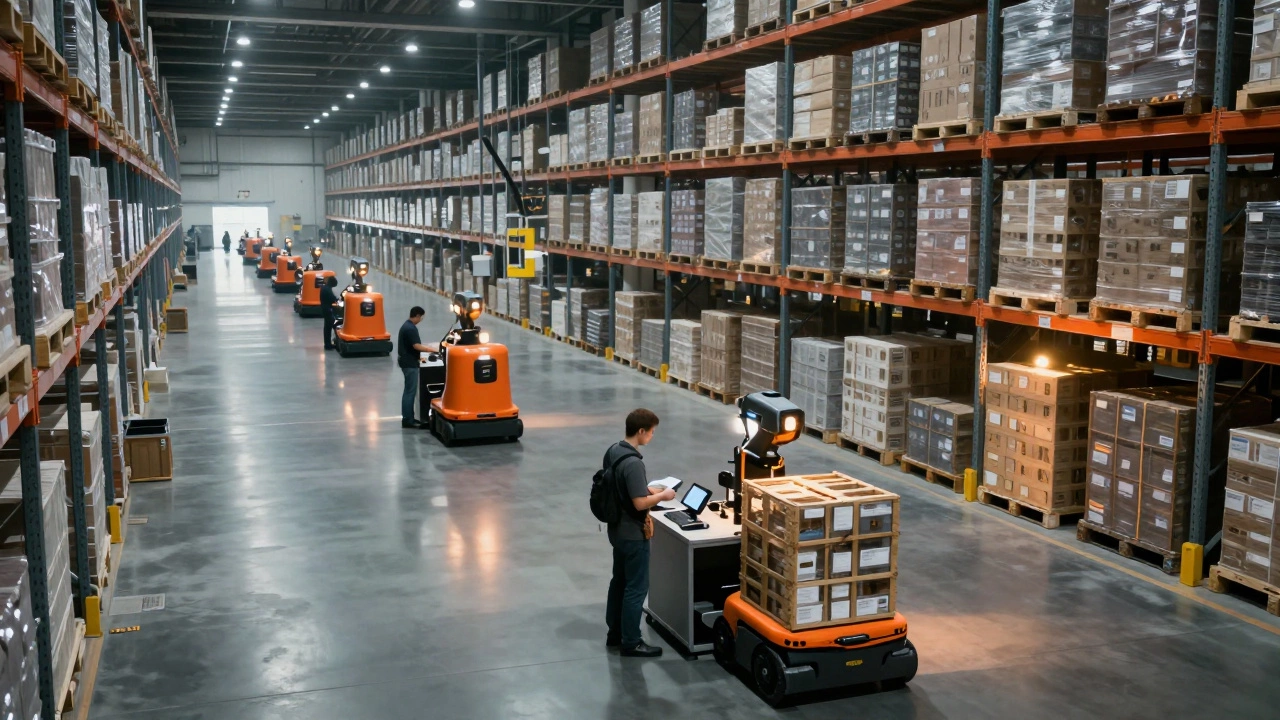
- Automation: Each site houses tens of thousands of robots, including Kiva-style mobile robots that bring shelves to human pickers.
- Throughput: During peak seasons like Prime Day or Black Friday, these centers process millions of packages daily.
Amazon doesn't just own the land; they own the technology stack running on it. This vertical integration allows them to optimize space usage down to the cubic inch. If you're wondering why Amazon keeps buying more land, it's because their business model relies on speed. The closer the warehouse is to the customer, the faster the delivery. So, while one building might be the "biggest," the network effect is what truly matters.
Beyond Square Footage: The Role of Automation
When evaluating the "biggest" warehouse, we have to consider density. A traditional warehouse might be larger in physical dimensions but hold less value due to inefficient layout. Modern warehouses use vertical space aggressively. High-bay racking systems allow storage up to 40-50 feet high. However, the real game-changer is automation.
Automated Storage and Retrieval Systems (AS/RS) are computer-controlled systems that automatically place and retrieve loads from defined storage locations. In Amazon's largest facilities, humans don't walk miles per day picking items. Instead, robots move the shelves to stationary workers. This reduces travel time by up to 80% and increases picking accuracy to 99.9%. This efficiency means a smaller footprint can handle more volume, challenging the definition of "biggest." Is the biggest warehouse the one with the most square footage, or the one that moves the most goods?
Other companies are adopting similar tech. Ocado Technology, a UK-based company, licenses its robotic warehouse solutions to supermarkets worldwide. Their Quick Commerce fulfillment centers are compact but incredibly dense. A single Ocado-powered hub can serve an entire city from a relatively small industrial unit. This shift suggests that future "biggest" warehouses might not be visible giants but highly optimized, invisible engines hidden in suburban parks.
Global Competitors: Who Else Is Playing?
While Amazon leads in Western markets, the global picture includes other heavyweights. In China, Alibaba Group operates a massive e-commerce and cloud computing empire with extensive logistics infrastructure through Cainiao Network. Cainiao doesn't always own the warehouses directly but manages a network that rivals Amazon's scale. During Singles' Day, the world's largest shopping event, Cainiao processes billions of parcels using smart logistics hubs that integrate data from multiple carriers.
JD.com, another Chinese giant, takes a different approach. They own and operate their entire logistics chain. JD's Asia No.1 Smart Warehouses are marvels of engineering. One such facility in Beijing covers 250,000 square meters and uses AI to predict demand before customers even click "buy." These warehouses feature automated sorting lines that can handle 10,000 packages per hour. JD's model proves that ownership isn't just about real estate; it's about controlling the flow of data and goods simultaneously.
In Europe, DHL Supply Chain and Geodis manage enormous third-party logistics (3PL) networks. While they may not own a single building bigger than Amazon's, their combined global footprint is staggering. They serve clients like Apple, Samsung, and major automotive manufacturers. For B2B logistics, these companies operate warehouses that prioritize bulk handling and cold chain integrity rather than individual parcel speed.
| Company | Primary Model | Key Strength | Notable Facility Type |
|---|---|---|---|
| Amazon | Direct Ownership & Operation | Speed & Consumer Reach | Mega Fulfillment Centers (3M+ sq ft) |
| Cainiao (Alibaba) | Network Orchestration | Data Integration & Scale | Smart Logistics Hubs |
| JD.com | End-to-End Ownership | Predictive AI & Automation | Asia No.1 Smart Warehouses |
| DHL Supply Chain | Third-Party Logistics (3PL) | B2B Expertise & Global Reach | Industrial Distribution Centers |
The Real Estate Angle: Who Actually Owns the Land?
Here's a twist: sometimes Amazon doesn't own the biggest warehouse outright. They often lease long-term from industrial real estate investment trusts (REITs). Companies like Prologis are the world's largest owner, operator, and developer of logistics real estate. Prologis owns millions of square feet of warehouse space globally. Many of the massive buildings you see near highways are owned by Prologis and leased to tenants like Amazon, Walmart, or Target.
This distinction matters. If you define "own" as holding the deed, then Prologis or similar REITs like Rexford Industrial Realty or EastGroup Properties might technically own the "biggest" structures. Amazon defines ownership through operational control. They build custom facilities tailored to their needs, often requiring landlords to construct specific power grids, roof heights, and loading dock configurations. This symbiotic relationship drives the construction of ever-larger buildings. As demand grows, so does the ceiling height. New builds now regularly feature 40-foot clear heights to maximize vertical storage.
Why Size Matters: The Economics of Scale
Why go big? The economics of warehousing favor scale. Larger facilities spread fixed costs-like security, HVAC, and management-over more units. They also allow for specialized zones. A 3-million-square-foot warehouse can have dedicated areas for electronics, clothing, groceries, and hazardous materials, all under one roof. This consolidation reduces transportation costs between stages of the supply chain.
However, there's a limit. Too big, and you face inefficiencies. Moving a robot from one end of a 3-million-square-foot floor to the other takes time. That's why Amazon is shifting toward a "hub-and-spoke" model. Giant regional centers handle bulk inventory, while smaller urban micro-fulfillment centers handle last-mile delivery. This hybrid approach balances the benefits of scale with the need for speed.
Future Trends: What Will the Next Big Warehouse Look Like?
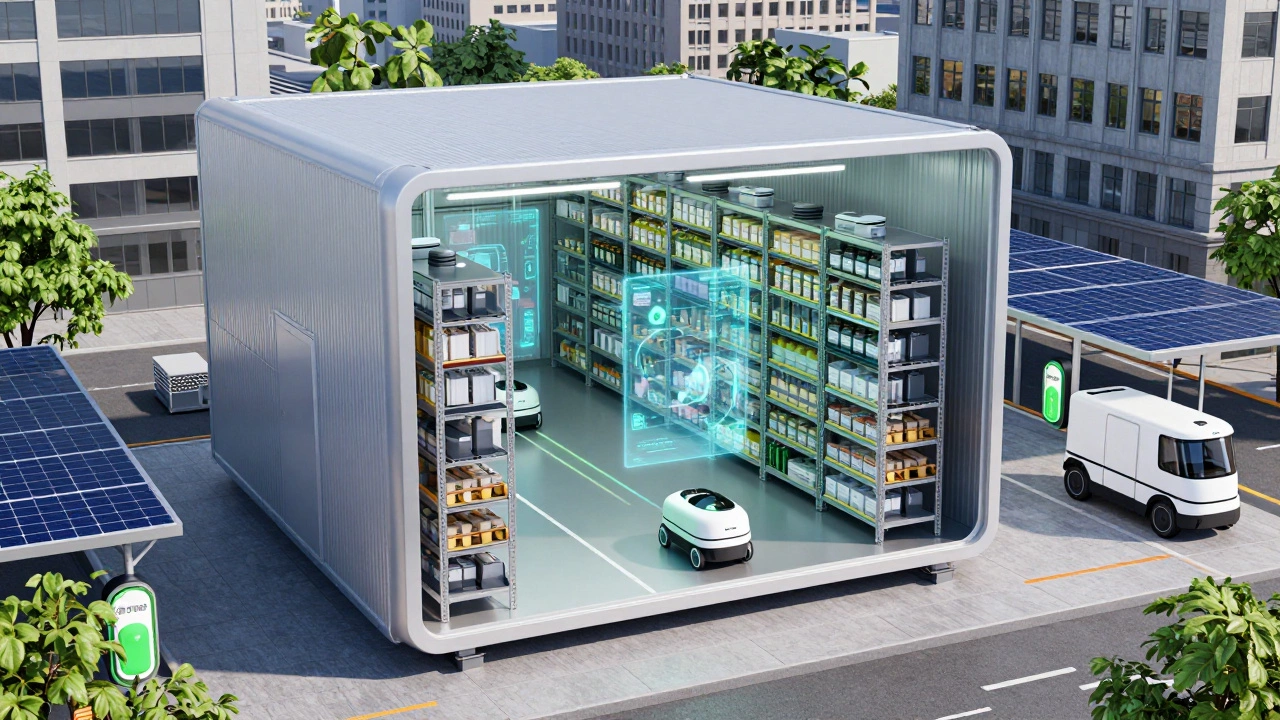
By 2027 and beyond, the concept of the "biggest warehouse" will evolve further. We're seeing a rise in Micro-Fulfillment Centers (MFCs) located in small urban spaces, such as basements of retail stores or vacant commercial buildings, to enable same-day delivery. These aren't huge, but collectively, they form a distributed network that rivals the capacity of a single mega-warehouse.
Sustainability is also reshaping design. New warehouses are being built with solar roofs, electric vehicle charging stations, and rainwater harvesting systems. Regulations in the EU and California are pushing for lower carbon footprints. This means future "biggest" warehouses won't just be measured in square feet but in tons of CO2 saved. Companies that fail to adapt risk losing contracts with eco-conscious brands.
Additionally, labor shortages are driving innovation. With fewer workers available, automation becomes essential. We're already seeing autonomous mobile robots (AMRs) that don't require magnetic tape on the floor, allowing flexible layouts. Drones are being tested for inventory counting and even short-range delivery. The warehouse of the future is less of a static box and more of a dynamic, living organism that adapts to demand in real-time.
Conclusion: It's Not Just About One Building
So, who owns the biggest warehouse in the world? If you mean the largest single structure used for e-commerce fulfillment, it's likely an Amazon facility in the US South. If you mean the entity with the most total warehouse space, it's Amazon again, followed closely by Alibaba's Cainiao network and JD.com. If you mean legal ownership of the land, look to industrial REITs like Prologis.
The true winner in this space isn't just the one with the biggest walls. It's the company that best combines space, technology, and data to move goods faster and cheaper than anyone else. As consumer expectations for instant delivery grow, the race for the "biggest" will continue, but the metrics will keep changing. The next frontier isn't just size-it's intelligence.
What is the largest warehouse in the world by square footage?
The title often goes to Amazon's fulfillment centers, particularly those in Bessemer, Alabama, or Paducah, Kentucky, which exceed 3 million square feet. However, some industrial complexes owned by Prologis or used by automotive manufacturers may be larger in pure structural size but are not single-e-commerce entities.
Does Amazon own all its warehouses?
No, Amazon uses a mix of owned and leased properties. They frequently lease long-term from industrial real estate firms like Prologis, EastGroup, and Rexford Industrial. This allows them flexibility without the capital expenditure of buying every building.
How do Amazon warehouses use robots?
Amazon uses mobile robots (formerly Kiva systems) to bring shelves of products to human pickers. This reduces the distance workers walk and speeds up order processing. They also use robotic arms for packing and autonomous vehicles for transporting goods between nearby facilities.
Who are the main competitors to Amazon in warehouse logistics?
Key competitors include Alibaba's Cainiao Network, JD.com in China, and third-party logistics providers like DHL Supply Chain and FedEx Ground Force. Walmart also operates a massive private logistics network to support its omnichannel strategy.
Why are warehouses getting taller?
Land is expensive and scarce near population centers. By building higher (up to 40-50 feet), companies can maximize vertical storage space. Advanced racking systems and automated retrieval machines make it safe and efficient to store goods at great heights.