
FedEx vs USPS Speed & Cost Estimator
Enter your shipment details below to see which carrier typically offers the best balance of speed and cost for your specific route.
FedEx
Analyzing...Est. Time: --
Rel. Cost: --
--
USPS
Analyzing...Est. Time: --
Rel. Cost: --
--
Enter distance and urgency to compare shipping options.
You’re staring at two tracking numbers. One is for a package you sent via FedEx and the other via United States Postal Service. You paid extra for the former because you assumed it would arrive by Tuesday. It’s Wednesday morning, and the USPS package just hit your doorstep while FedEx is still sitting in a sorting facility three states away. So, is FedEx actually faster? The short answer is: sometimes, but not always. And often, it’s not even close.
This isn’t just about brand loyalty or corporate rivalry. It’s about physics, logistics networks, and what you are actually paying for. If you need something across town today, neither might be your best bet. If you need it across the country in two days, one will beat the other depending on where it’s going. Let’s break down exactly when FedEx wins, when USPS surprises you, and how to stop overpaying for speed you don’t need.
The Core Difference: Private Network vs. Public Infrastructure
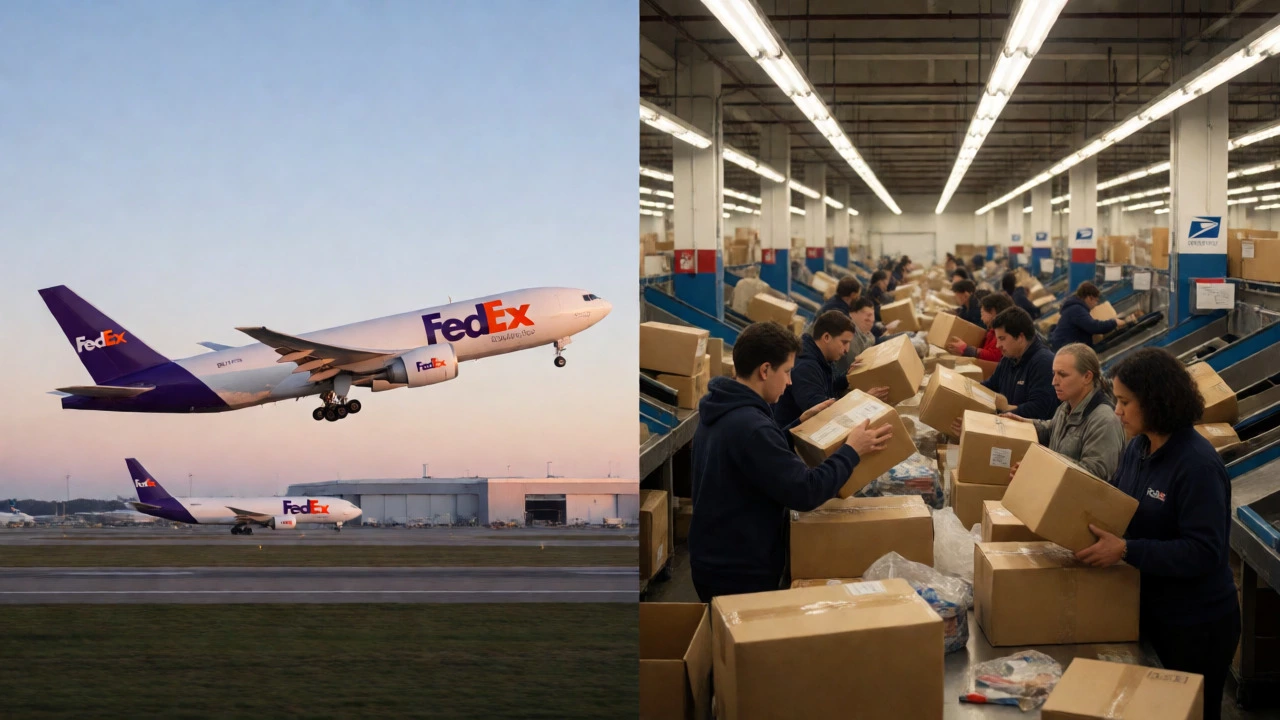
To understand speed, you have to look at the machine behind the package. FedEx is a private integrated carrier. This means they own the planes, the trucks, the hubs, and the drivers. They control every step of the journey from pickup to drop-off. This vertical integration allows them to prioritize packages based on service level agreements (SLAs). If you pay for FedEx Priority Overnight, that box gets special treatment. It moves first.
USPS, on the other hand, is an independent agency of the US government. It operates on a massive scale with fewer resources per parcel compared to private carriers. However, it has a unique advantage: universal access. USPS delivers to every address in the United States, including PO Boxes, military bases, and remote rural routes that FedEx charges hefty surcharges to reach. Because USPS relies heavily on commercial airlines for long-haul transport (rather than owning its own fleet), its speed can fluctuate more based on airline schedules and weather disruptions.
Think of FedEx like a dedicated sports car racing team. They have their own pit crews and mechanics. USPS is like public transit. It goes everywhere, it’s cheap, and if you know the schedule, you can get there fast. But if the bus breaks down, you wait.
When FedEx Wins: Speed and Predictability
If time is money, FedEx usually takes the crown. Their network is designed for speed. For domestic shipments within the contiguous US, FedEx offers several tiers that outpace standard USPS options.
- FedEx First Overnight: Delivers by 8:00 AM or 9:30 AM next business day. This is the fastest option available for most businesses. USPS cannot match this early-morning guarantee for general retail customers without expensive third-party workarounds.
- FedEx Priority Overnight: Delivers by 10:30 AM or 12:00 PM next business day. In major metropolitan areas, this is incredibly reliable.
- FedEx Standard Overnight: Delivers by end-of-day next business day. Still faster than USPS Priority Mail, which typically takes 1-3 days.
The key here is predictability. When FedEx says "by 10:30 AM," they have data backing that up. Their internal metrics show that over 95% of Priority Overnight packages meet their promised delivery window. Why? Because they control the last mile. If a driver runs late, another driver covers the route. There are no external variables like postal worker strikes or union negotiations slowing things down mid-transit.
However, this speed comes with a price tag. A 1-pound package sent via FedEx Priority Overnight can cost upwards of $40-$50 depending on distance. Compare that to USPS Priority Mail Express, which costs around $30-$35 for similar speed, and the gap widens further against regular Priority Mail.
When USPS Wins: Distance and Last-Mile Reach
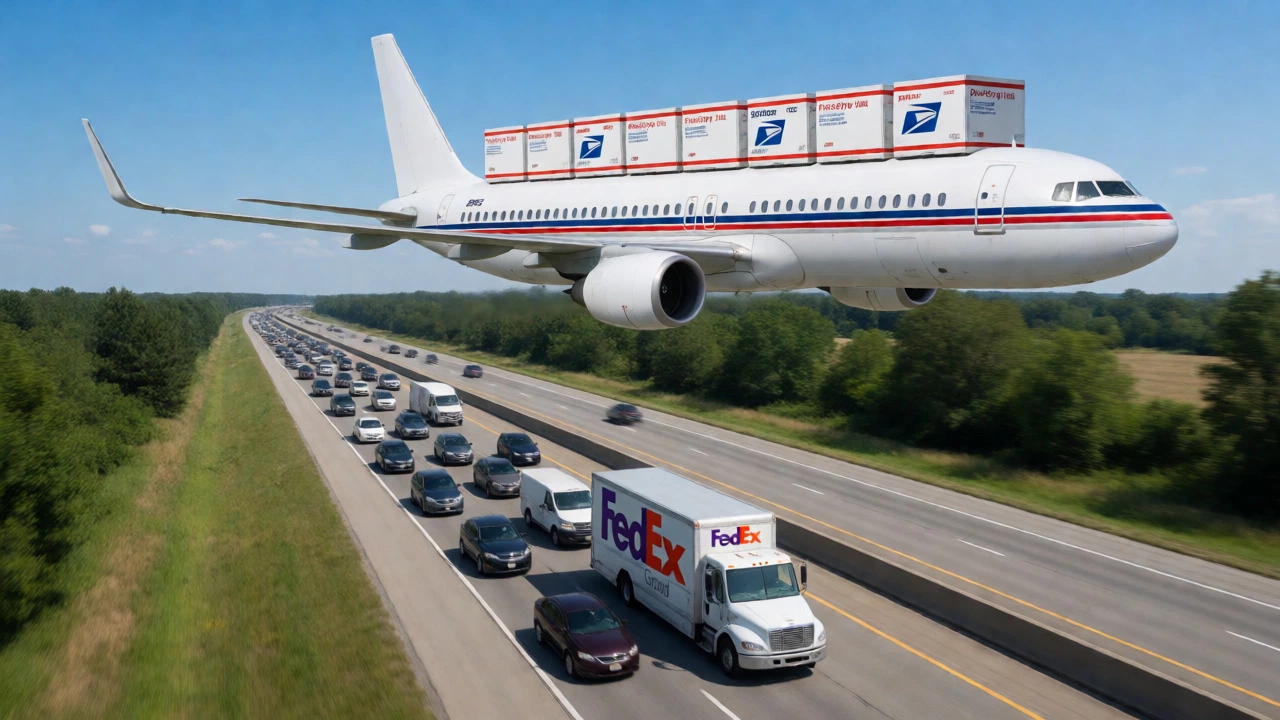
Here’s where it gets counterintuitive. For certain distances, specifically medium-range shipments (500-1,000 miles), USPS can actually be faster than FedEx Ground. How? Because FedEx Ground moves packages by truck. Trucks are limited by highway speeds and driver hours. USPS uses airplanes. Even though USPS doesn’t own the planes, they buy cargo space on commercial flights. A flight from Chicago to Atlanta takes two hours. A truck drive takes ten.
If you send a package via USPS Priority Mail, it often travels by air for the long haul and then switches to local delivery vehicles. For many routes, this hybrid approach beats FedEx Ground’s purely terrestrial method. We’ve seen cases where a package sent from Denver to Miami arrives in two days via USPS, while FedEx Ground estimates four to five days.
Additionally, USPS excels in the final mile for residential deliveries. In dense urban areas like New York City or London-style terraced streets, FedEx drivers often struggle with parking and access. They may leave a note instead of delivering, requiring you to pick up the package at a depot. USPS carriers walk these routes daily. They know the shortcuts, the gate codes, and the dogs. This reduces failed delivery attempts, which adds hidden delays to any shipment.
Same-Day Delivery: The Real Battle
Since you’re interested in same-day delivery, let’s address the elephant in the room. Neither traditional FedEx nor USPS is the king of same-day. Historically, same-day was the domain of local couriers like Uber Eats, DoorDash, or specialized bike messengers.
FedEx launched FedEx SameDay City to compete in this space. It works well in select major cities like Los Angeles, New York, and Dallas. If you need a document moved across Manhattan in two hours, FedEx SameDay City can do it. But it’s expensive-often $30+ for short distances-and availability is spotty outside zip code clusters.
USPS does not offer true same-day delivery for individual retail customers. They have Priority Mail Express, which guarantees next-day delivery, but getting a package picked up and delivered the same day requires dropping it off before the last collection time (usually 3:00 PM) and hoping for luck. It’s not a guaranteed service.
So, if you truly need same-day speed, check if FedEx SameDay City operates in your area. If not, look at regional courier services or gig-economy apps. Don’t rely on national carriers for hyper-local urgency unless you’re willing to pay premium rates for limited coverage.
Cost vs. Speed: Making the Right Choice
Speed isn’t free. Every dollar you save on shipping likely costs you time. Here’s a quick way to decide which carrier fits your needs.
| Service Level | Carrier | Typical Transit Time | Best For | Relative Cost |
|---|---|---|---|---|
| First Overnight | FedEx | Next Day, 8:00 AM - 9:30 AM | Critical contracts, medical supplies | $$$$$ |
| Priority Mail Express | USPS | Next Day, 10:30 AM - 6:00 PM | Urgent personal items, small business docs | $$$ |
| Priority Overnight | FedEx | Next Day, 10:30 AM - 12:00 PM | B2B transactions, e-commerce high-value | $$$$ |
| Priority Mail | USPS | 1-3 Days | General e-commerce, medium weight | $$ |
| Ground/Home Delivery | FedEx | 1-5 Days | Heavy items, non-urgent B2B | $$ |
| Parcel Select | USPS | 2-5 Days | E-commerce bulk, light parcels | $ |
Notice the pattern? FedEx dominates the top tier of speed. USPS dominates the middle tier of value. If you’re shipping a $15 book, paying $40 for FedEx Overnight makes no sense. If you’re shipping a $500 laptop, saving $10 on USPS Ground isn’t worth the risk of delay.
Pitfalls That Kill Speed
Even the fastest carrier can fail if you make simple mistakes. Here are the three biggest reasons your "fast" shipment arrived late.
- Missing Cut-Off Times: Both carriers have strict deadlines. If you miss the FedEx pickup window by five minutes, your package waits until tomorrow. With USPS, if you drop off after the last collection, it sits in the bin overnight. Always check local pickup schedules.
- Inaccurate Addresses: Automated sorting machines reject illegible labels. A smudged ZIP code can add two days to a delivery. Use printed labels whenever possible.
- Weekend Gaps: FedEx Home Delivery now includes weekends, but FedEx Express (the fast stuff) often does not deliver on Sundays. USPS delivers on Sundays for Priority Mail Express and some Amazon packages, but not for standard mail. Plan accordingly if your deadline falls on a Monday.
How to Verify Speed for Your Specific Route
Don’t guess. Use the tools. Before booking, run a rate quote on both websites using the exact origin and destination ZIP codes. Look at the "Estimated Delivery Date" field. If FedEx says "Tuesday" and USPS says "Wednesday," trust the data. But also check reviews for that specific lane. Some routes are notoriously slow due to hub congestion.
For frequent shippers, consider using multi-carrier software. These platforms compare real-time rates and transit times across FedEx, UPS, and USPS, letting you choose the fastest option for each individual package rather than defaulting to one provider.
Is FedEx always faster than USPS?
No. While FedEx generally offers faster guaranteed overnight services, USPS can be faster for medium-distance shipments (500-1,000 miles) because it utilizes air transport more aggressively for standard Priority Mail, whereas FedEx Ground relies solely on trucks.
Does USPS deliver faster on weekends?
Yes, for eligible services. USPS delivers Priority Mail Express and some Amazon packages on Sundays. FedEx Home Delivery also delivers on Saturdays and Sundays, but FedEx Express (overnight) typically does not deliver on Sundays. Check specific service terms as weekend availability varies by location.
Which is cheaper for same-day delivery?
Neither is traditionally cheap for same-day. FedEx SameDay City is available in select metros and is quite expensive. Local courier apps (like Uber Connect or Lyft Same Day) are often more affordable for short distances. USPS does not offer a true same-day service for retail customers.
Why is my FedEx package slower than expected?
Common causes include missed cut-off times, severe weather disrupting air freight, incorrect addresses causing manual sorting delays, or customs holds for international shipments. Also, note that "Business Day" excludes weekends and holidays, so a Friday shipment may not start moving until Monday.
Can I track FedEx and USPS packages together?
Yes, using multi-carrier tracking platforms or apps like AfterShip or Parcel Monitor. These tools aggregate tracking information from different carriers into one dashboard, allowing you to monitor shipments regardless of whether they are moving via FedEx, USPS, or UPS.