
Warehouse Strategy Selector
Answer these 4 questions to find your ideal storage solution.
Why this fits:
Watch out for:
You’ve got products moving, orders piling up, and a supply chain that needs to breathe. But where does all that inventory actually live? It’s not just one big box in the middle of nowhere. The modern logistics landscape is split into three major types of warehouses, each designed for a specific business need. Getting this wrong can cost you thousands in storage fees or lost sales. Getting it right means your goods move faster and cheaper.
Most businesses fall into one of these buckets: they own their space, they rent by the pallet, or they hire a partner to handle everything. Understanding the difference between private, public, and contract warehousing is the first step in optimizing your supply chain. Let’s break down exactly how each works, who they are for, and when you should switch gears.
The Three Major Types of Warehouses Defined
To keep things simple, we categorize warehouses based on ownership and service level. This isn’t just academic; it dictates your cash flow, your scalability, and your control over customer experience.
- Private Warehouses: Owned or leased exclusively by one company for its own use.
- Public Warehouses: Third-party facilities that rent space to multiple clients on a short-term basis.
- Contract Warehouses: Long-term partnerships with third-party logistics providers (3PLs) for customized services.
There is also a fourth category often mentioned: government-controlled warehouses. These are used for customs bonds or agricultural subsidies. For most commercial businesses, however, the decision rests on the first three. Let’s look at them closely.
1. Private Warehouses: Total Control, High Cost
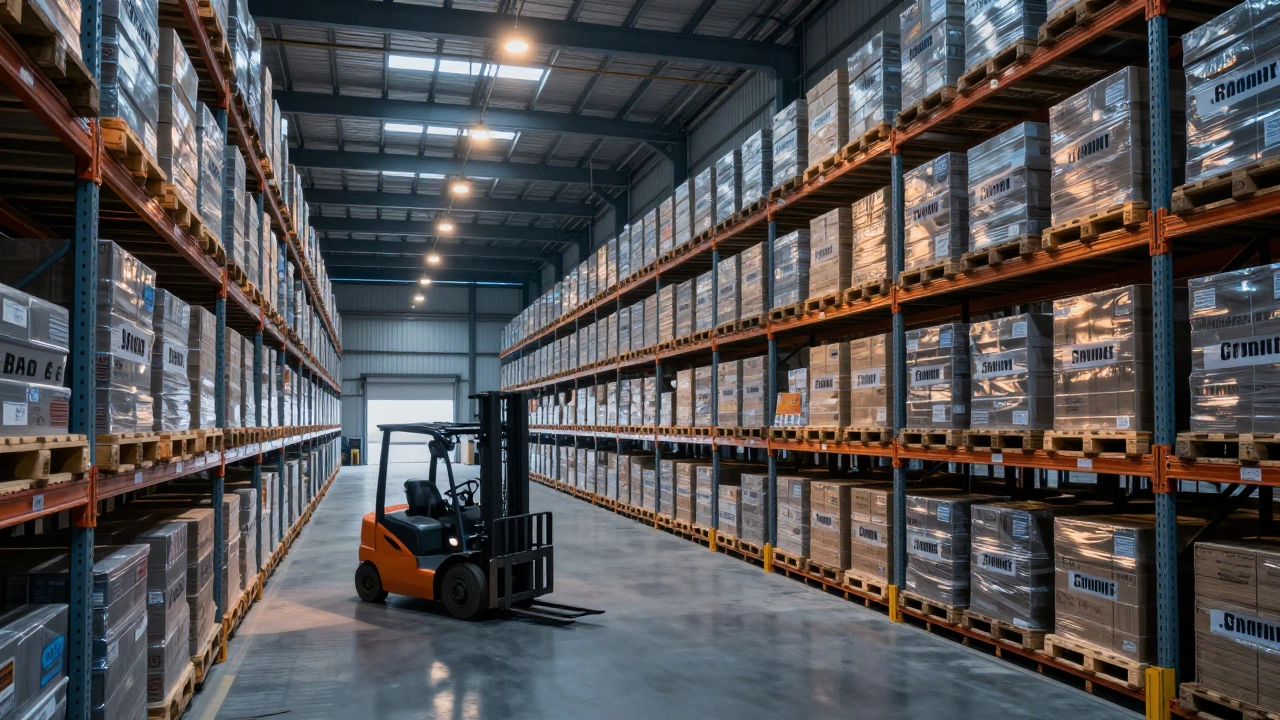
A private warehouse is exactly what it sounds like: a facility owned or long-term leased by a single business. Think of Amazon’s massive fulfillment centers or a large manufacturer’s distribution hub. You have the keys, you set the rules, and you pay the bills.
| Advantages | Disadvantages |
|---|---|
| Total Customization: Layout, technology, and processes are built specifically for your products. | High Capital Expenditure: Buying land and building costs millions. Maintenance is your problem. |
| Brand Control: Staff wear your uniform. Packaging bears your logo. Quality standards are yours alone. | Inflexibility: If sales drop, you still pay for empty space. If sales spike, you’re stuck with limited capacity. |
| Security: No other companies’ goods are on-site, reducing theft risk from external parties. | Management Burden: You need HR, IT, and operations teams to run the facility 24/7. |
This model makes sense if you have predictable, high-volume demand. If you sell seasonal items like Christmas trees or winter coats, a private warehouse is a bad bet. You’ll be paying heating bills and salaries during the off-season when the shelves are bare. However, for steady-state goods like toilet paper or motor oil, owning the infrastructure locks in lower per-unit costs over time.
2. Public Warehouses: Pay-as-You-Go Flexibility
If private warehousing is buying a house, public warehousing is staying in an Airbnb. A public warehouse rents out space to multiple businesses. You pay for the square footage or pallet positions you use, plus handling fees. There are no long-term contracts. You can walk in today and rent a rack, and walk out next month when you don’t need it.
This is the go-to solution for e-commerce startups, seasonal retailers, and companies testing new markets. Imagine you launch a line of summer sunglasses. In July, you need massive storage. In November, you need none. A public warehouse lets you scale up and down without signing a five-year lease.
- Cost Structure: Variable costs only. You pay for what you use.
- Speed: No construction delays. Space is available immediately.
- Geography: Access to prime locations near ports or highways without buying real estate.
The downside? You share the space. Your inventory sits next to someone else’s. While security is generally good, you have less control over how your goods are handled. Also, prices can fluctuate. During peak seasons like Black Friday, public warehouse rates can skyrocket because everyone wants space. You’re at the mercy of market demand.
3. Contract Warehouses: The Best of Both Worlds?
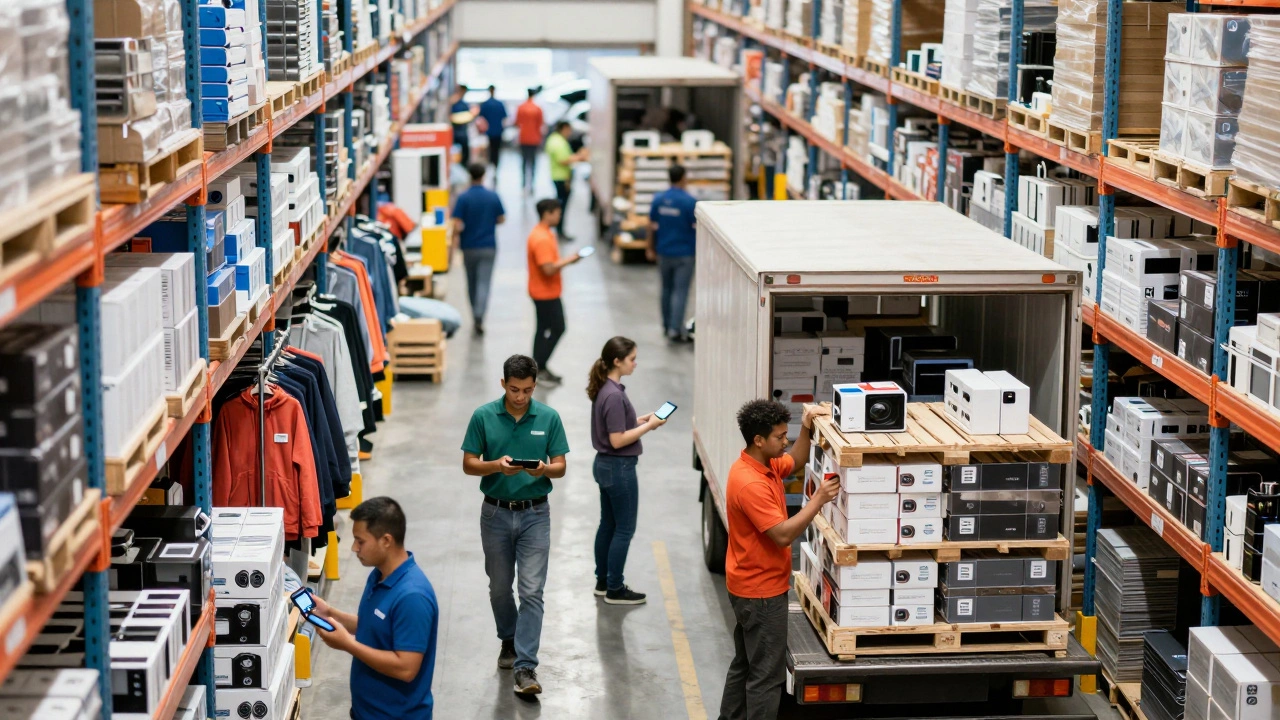
Contract warehousing, often called dedicated contract logistics, sits between private and public models. Here, you sign a long-term agreement with a third-party logistics provider (3PL). They might dedicate a whole section of their warehouse-or even an entire building-to your business. Unlike public warehousing, they customize their services for you.
This is popular among mid-sized brands that want the flexibility of outsourcing but the efficiency of a tailored operation. The 3PL handles staffing, equipment, and software, but they align their KPIs with your brand goals. If you need special cold-chain storage for food, or kitting services for subscription boxes, a contract warehouse will build that capability just for you.
The key difference from public warehousing is the relationship. In a public warehouse, you are one of hundreds of customers. In a contract warehouse, you are a strategic partner. The pricing is usually negotiated annually, offering more stability than the spot-market rates of public facilities. However, you are locked into a contract. Breaking early can be expensive.
Comparison: Which Warehouse Type Fits Your Business?
Choosing the right type depends on your volume, seasonality, and budget. Use this table to see where you fit.
| Feature | Private | Public | Contract |
|---|---|---|---|
| Ownership | You | Third-Party | Third-Party |
| Commitment | Long-term (Years) | Short-term (Days/Months) | Medium-to-Long (1-5 Years) |
| Customization | High | Low | Medium-High |
| Best For | Large, stable volume | Seasonal, variable volume | Growing brands, specialized needs |
| Control Level | Full | Minimal | Shared |

Beyond Storage: The Rise of Fulfillment Centers
You might hear the term “fulfillment center” thrown around interchangeably with warehouse. They aren’t the same. A traditional warehouse focuses on storage. A fulfillment center focuses on movement.
Fulfillment centers are almost always operated as contract or public warehouses. Their layout is optimized for picking and packing individual items for direct-to-consumer shipping, rather than storing bulk pallets for retail stores. If you are selling on Shopify or Amazon, you likely need a fulfillment center, not just a warehouse. The distinction matters because the labor costs and technology investments in a fulfillment center are significantly higher.
Decision Checklist: How to Choose
Before signing a lease or a contract, ask yourself these questions:
- Is my demand predictable? If yes, lean toward private or contract. If no, stick with public.
- Do I have capital? Building a private warehouse requires heavy upfront investment. Public and contract models convert fixed costs into variable costs.
- Do I need specialized handling? If you store hazardous materials, food, or high-value electronics, check if public warehouses allow it. Often, contract partners offer better compliance support.
- What is my growth trajectory? Rapid growth favors contract logistics because they can scale labor and space faster than you can hire and train your own team.
Common Pitfalls to Avoid
Many businesses make the mistake of choosing based on price alone. A cheap public warehouse might seem attractive, but if their pick-and-pack error rate is 5%, your customer service costs will eat up those savings. Always audit the provider’s technology stack. Do they use a modern Warehouse Management System (WMS)? Can it integrate with your ERP? If the answer is no, you’ll end up doing double data entry, which leads to errors.
Another trap is underestimating hidden fees. In public warehousing, watch out for “handling fees,” “minimum charge days,” and “overtime surcharges.” In contract warehousing, clarify who pays for packaging materials and returns processing. Get it in writing.
What is the difference between a warehouse and a distribution center?
A warehouse is primarily for long-term storage of goods. A distribution center (DC) is designed for rapid movement. Goods in a DC typically stay for less than 24 hours before being shipped out. DCs focus on cross-docking and quick replenishment, while warehouses focus on holding inventory safely.
Which warehouse type is best for small businesses?
For most small businesses, public warehousing or a small-scale contract logistics partner is best. You avoid the high capital costs of owning property and gain access to professional logistics networks. As you grow, you can negotiate a dedicated contract.
Can I switch from public to contract warehousing?
Yes, many companies start with public warehousing to test the market. Once volume stabilizes and grows, they transition to a contract warehouse to lock in better rates and get customized services. The transition involves migrating inventory and integrating software systems.
Are automated warehouses worth the investment?
Automation is usually found in private or large contract warehouses. It reduces labor costs and errors but requires high volume to justify the ROI. For low-volume businesses, manual picking in a public warehouse is often more cost-effective.
How do climate-controlled warehouses fit into these categories?
Climate control is a feature, not a type. You can find refrigerated or frozen storage in public, private, and contract warehouses. However, it is most common in contract logistics for food and pharmaceutical companies due to the strict compliance requirements.