
Shipping Speed & Cost Estimator
Select your priority level and package destination to see the recommended shipping tier.
Recommended Choice: -
When we talk about express shipping is a specialized logistics service designed to transport goods faster than standard postal methods by prioritizing speed and minimizing transit time. It's not a single company, but rather a category of high-speed logistics used by thousands of businesses worldwide to keep the global economy moving. If you need a legal document delivered by 10 AM tomorrow or a replacement part for a broken factory machine, this is the system you rely on.
The Mechanics of High-Speed Logistics
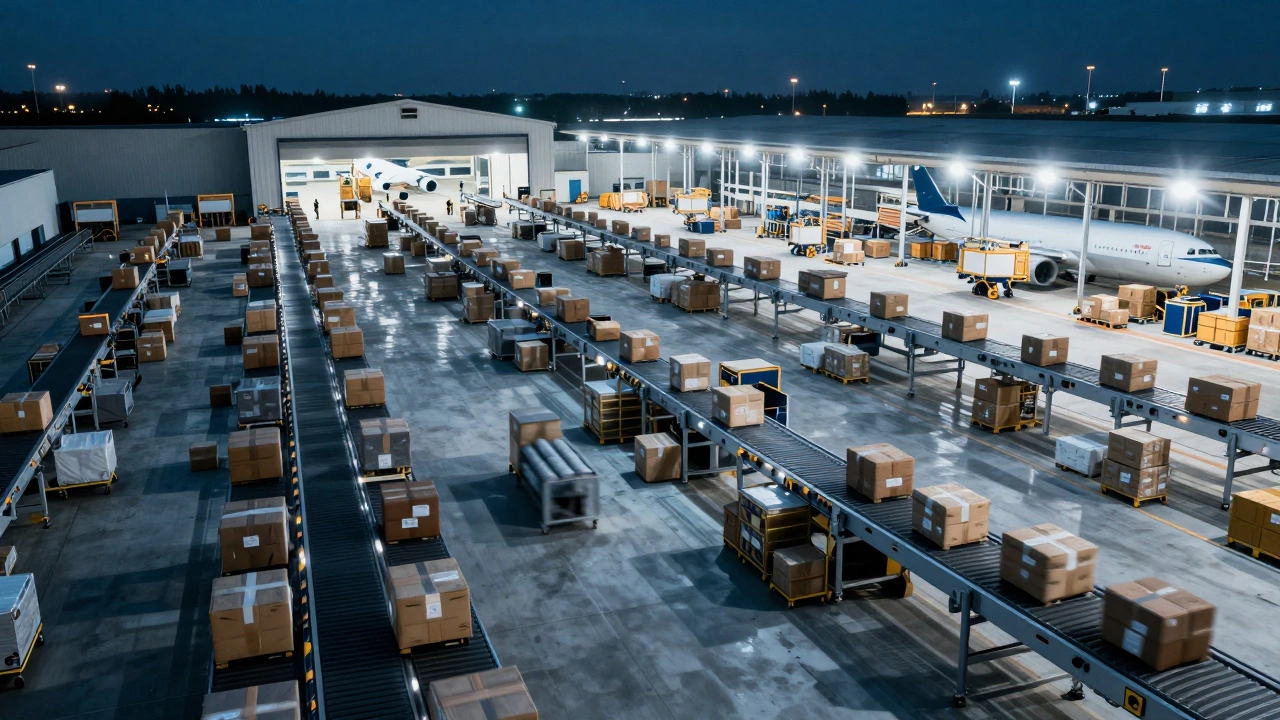
Standard shipping is like a bus route; it makes many stops and follows a set schedule. Express shipping is more like a private jet. Instead of moving through a series of regional sorting centers over several days, express packages are routed through a "hub-and-spoke" system. Imagine a giant wheel: your package goes from a local spoke to the central hub, where it is sorted instantly and flown directly to the destination spoke.
To make this work, companies use Air Freight the process of transporting goods via aircraft to ensure the fastest possible delivery between distant cities. This avoids the congestion of highways and the slow pace of rail. For example, a package sent from New York to Los Angeles via express shipping doesn't sit in a truck for four days; it spends a few hours in a sorting facility and a few more in the air, often arriving within 24 to 48 hours.
Different Tiers of Express Delivery
Not all express options are created equal. Depending on how much you're willing to pay, you'll encounter different levels of urgency. It's helpful to look at these as a spectrum of speed versus cost.
- Next-Day Delivery: The most common choice for business documents and urgent gifts. The package is guaranteed to arrive on the following business day.
- Overnight Shipping: A step up from next-day. This often includes a specific time guarantee, such as "by 10:30 AM," which is critical for time-sensitive legal or medical shipments.
- Two-Day Shipping: A middle ground. It's faster than the standard 5-7 day window but cheaper than overnight options. Many Ecommerce stores use this as their primary "fast" option.
- Same-Day Delivery: The gold standard of speed. This is typically limited to local urban areas where Courier Services specialized delivery companies that provide fast, often local, transport of small parcels and documents can pick up and drop off within a few hours.
| Service Level | Typical Timeline | Primary Transport | Cost Level |
|---|---|---|---|
| Standard | 3-7 Business Days | Ground / Rail | Low |
| Two-Day | 2 Business Days | Air / Ground Mix | Medium |
| Next-Day | 1 Business Day | Air Freight | High |
| Same-Day | Under 12 Hours | Local Courier | Premium |
The Major Players in the Industry
When you pay for express shipping, you're usually paying for the infrastructure of a massive logistics giant. FedEx a global courier delivery services company known for its pioneering overnight shipping model is perhaps the most famous for inventing the concept of the overnight package. They built a dedicated fleet of planes specifically to move parcels across the US in a single night.
Then you have UPS United Parcel Service, one of the world's largest package delivery companies specializing in ground and air logistics. While they started as a ground-based operation, their air network now rivals anyone in the world. And of course, there's DHL a global logistics company that dominates international express shipping, particularly in Europe and Asia. If you're shipping a package from Germany to Japan, DHL is often the fastest route because of their extensive international customs expertise.
Why Express Shipping Costs More
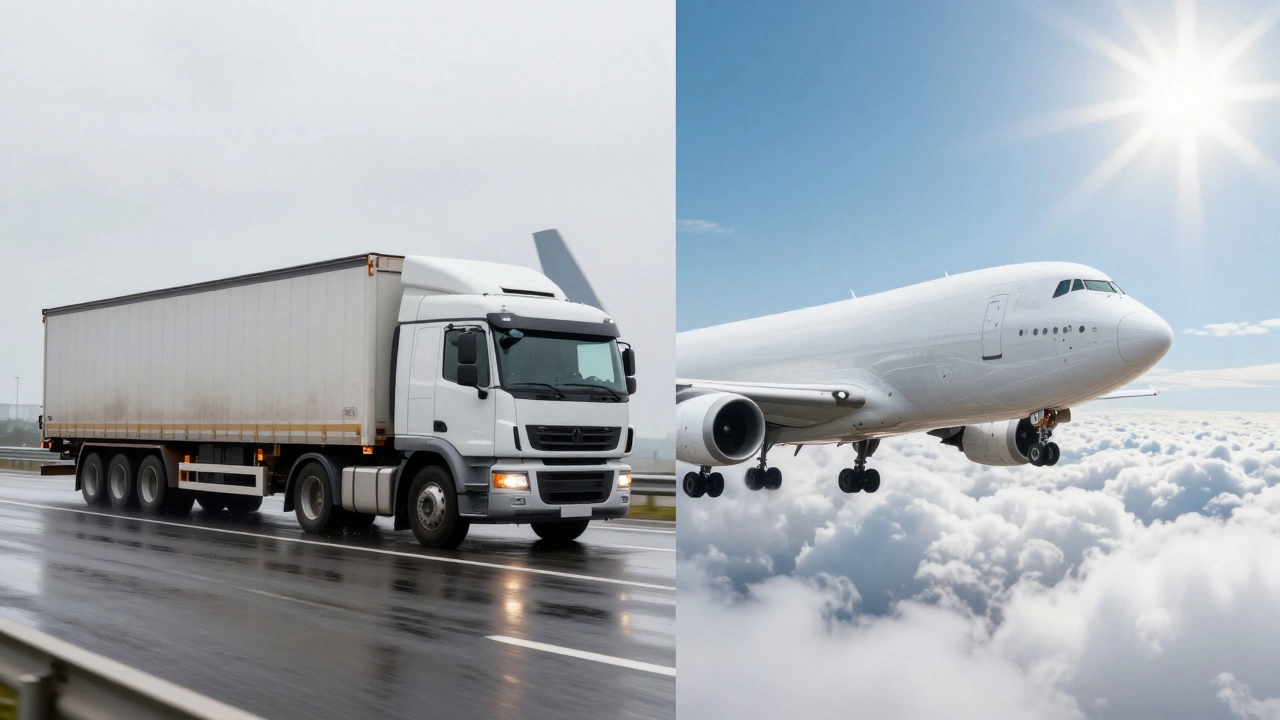
It's easy to feel ripped off when an express shipping fee is almost as high as the product itself. But you aren't just paying for the movement of a box; you're paying for priority. In a standard shipping scenario, your package is treated as a "filler." If there's room in the truck, it goes. If the truck is full, it waits until tomorrow.
In express shipping, the process is flipped. The package is flagged as high priority. This requires more labor (faster sorting), more expensive transport (planes vs. trucks), and a guarantee of speed. If a plane is delayed, the company might have to reroute your package via an even more expensive method just to meet the deadline. You're essentially buying a guarantee of time.
Common Pitfalls and How to Avoid Them
Speed doesn't always equal success. There are a few traps people fall into when choosing the fastest option. First, remember that "Business Days" are the rule. If you order express shipping on a Friday evening, your "Next-Day" package might not actually move until Monday morning. Don't assume the clock starts the moment you hit "Purchase." Check the cutoff times-many warehouses stop processing express orders by 2 PM local time.
Another common issue is the "Last Mile" problem. A package can fly across the ocean in 12 hours, but if the local delivery driver has a flat tire or the warehouse is understaffed, your express package can still sit for a day in a local facility. To mitigate this, look for services that offer real-time tracking and detailed timestamps. If the package is stuck at the final hub, you can often call the local branch to arrange a pickup instead of waiting for the driver.

The Future of Fast Delivery
We are moving toward a world where "express" means minutes, not days. Last-Mile Delivery the final step of the delivery process from a distribution center to the end user is currently being revolutionized. We're seeing the rise of micro-fulfillment centers-tiny warehouses in the middle of cities-that allow companies to promise 2-hour delivery.
Beyond that, drones and autonomous robots are moving from science fiction to reality. Imagine a world where an express shipment of medication doesn't wait for a van to navigate city traffic, but flies directly to your balcony. This shift is pushing the boundaries of what we consider "express," turning it from a luxury for businesses into a standard expectation for consumers.
Does express shipping always guarantee the date?
Most companies offer a "money-back guarantee" on the shipping cost if the package is late, but they can't 100% guarantee the date. Weather events, customs delays for international shipments, and extreme traffic can still cause delays. Always build in a one-day buffer for truly critical items.
Is express shipping better for international orders?
Generally, yes. International standard shipping often involves multiple hand-offs between different national postal services, which can lead to packages getting lost or stalled. Express services like DHL or FedEx manage the entire chain and handle customs paperwork more efficiently, significantly reducing the risk of your package getting stuck in a foreign warehouse.
What is the difference between expedited and express shipping?
"Expedited" is a broader term. It simply means the package is moved faster than standard mail. It might be a faster truck or a prioritized sorting line. "Express" usually implies a specific, guaranteed time window and often involves air transport. All express shipping is expedited, but not all expedited shipping is express.
Why is the tracking sometimes inaccurate for express packages?
Tracking updates happen when a package is scanned. If a package is moved quickly between two hubs in a single night, there might be a gap in updates until it reaches the final destination hub. This doesn't mean it's lost; it just means it's moving too fast for every single hand-off to be logged in real-time.
Can I change the shipping speed after the package has been sent?
Usually, no. Once a package is in the system and routed for ground or air, changing the speed requires pulling the package out of the stream, which is costly and slow. However, some premium services allow you to "upgrade" a shipment via their online portal if the package hasn't left the initial sorting facility.
What to do next
If you're a business owner trying to decide which service to offer your customers, start by analyzing your shipping zones. If most of your customers are within 500 miles, a fast ground service might be a cheaper alternative to air express that still provides a great customer experience. For those sending a one-off critical package, always double-check the cutoff time for the warehouse. If you miss that window by ten minutes, your expensive overnight shipping essentially becomes a very expensive two-day shipment.