
USPS vs UPS International Shipping Cost Calculator
Calculate Your Shipping Cost
Enter your package details to compare USPS and UPS international shipping costs.
Cost Comparison Guide
Learn when USPS or UPS is the best choice for your international shipping needs.
Shipping Cost Comparison
Enter your package details to see the comparison.
When you’re sending a package overseas, cost isn’t the only thing that matters-but it’s often the first thing you check. If you’ve ever stared at two shipping quotes-one from UPS, one from USPS-and wondered which one actually saves you money, you’re not alone. The truth? There’s no single answer. It depends on where you’re sending it, how heavy the package is, how fast you need it there, and what you’re shipping. But if you’re trying to cut costs without sacrificing reliability, here’s exactly how UPS and USPS International stack up in 2025.
USPS International: The Budget-Friendly Option
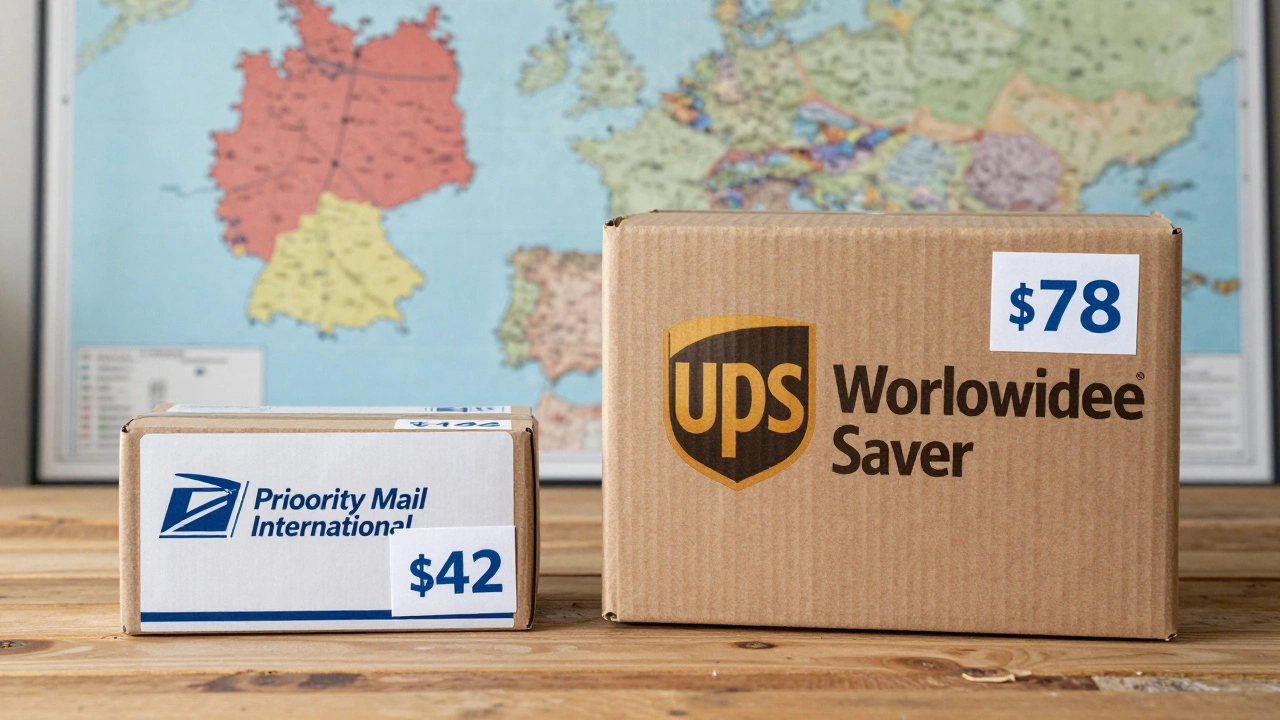
USPS International is the go-to for small, lightweight packages. If you’re shipping a gift, documents, or a few clothing items under 4 pounds, USPS almost always wins on price. Their Global Express Guaranteed and Priority Mail International services are designed for cost-conscious senders. For example, shipping a 2-pound package to Germany costs around $42 with Priority Mail International. The same package via UPS Worldwide Saver? Around $78. That’s nearly double.
USPS doesn’t handle the final delivery in most countries. Instead, they hand off the package to the local postal service-Royal Mail in the UK, La Poste in France, Japan Post in Tokyo. This cuts their costs, and you benefit. But it also means tracking stops being detailed once it leaves U.S. soil. You’ll see ‘Out for Delivery’ in the destination country, but rarely exact times or driver names.
USPS also has no fuel surcharges, no residential delivery fees, and no handling fees for odd-sized boxes. That’s rare in the courier world. UPS and FedEx will add $5-$15 extra for anything that doesn’t fit their standard dimensions. USPS? You can ship a 12x12x12 inch box without penalty.
UPS International: Speed and Visibility, at a Price
UPS doesn’t play the same game as USPS. They own their planes, trucks, and sorting hubs around the world. That means your package stays under their control from door to door. Tracking is precise-you’ll see every scan, every customs clearance, every delivery attempt. If you’re shipping electronics, pharmaceuticals, or high-value items, this level of control matters.
But that control comes at a cost. UPS Worldwide Saver for a 2-pound package to Germany? $78. UPS Worldwide Expedited? $115. Even their slowest international service is more expensive than USPS’s fastest. And that’s before you factor in extra fees. UPS charges for:
- Residential delivery: $5.50
- Fuel surcharge: 15-25% depending on market
- Additional handling for irregular shapes: $10-$20
- Customs brokerage fees: $12-$25 (unless you opt out)
USPS includes customs forms and duties in the base price for most services. UPS makes you pay extra to get the paperwork done. If you’re shipping to the UK, Canada, or Australia, those fees can add up fast.
When USPS Is the Clear Winner
Use USPS International if:
- Your package weighs under 4 pounds
- You’re sending to over 180 countries (USPS covers more than UPS)
- You don’t need tracking beyond the destination country’s postal system
- You’re shipping non-urgent items like books, clothing, or handmade goods
- You’re on a tight budget and can wait 7-20 days
For example, a small parcel from Liverpool to Sydney with USPS Priority Mail International costs $51 and takes 10-16 days. UPS Worldwide Expedited? $142 and takes 5-7 days. If your cousin just wants that UK tea set you promised, $91 saved is worth the extra week.

When UPS Makes Sense-Even If It’s Expensive
UPS is worth the extra cash when:
- You’re shipping over 4 pounds
- You need delivery in 3-5 business days
- You’re sending high-value items (electronics, jewelry, legal documents)
- You need guaranteed delivery dates and signature confirmation
- You’re shipping to countries with unreliable postal systems (Brazil, Nigeria, parts of Southeast Asia)
UPS offers a money-back guarantee on most international services. If your package is late, you get a refund. USPS doesn’t offer that. If you’re a small business shipping to customers in Germany or Japan, that guarantee can mean the difference between a repeat buyer and a refund request.
Weight and Size Matter More Than You Think
Both services charge by dimensional weight (dim weight), not just actual weight. That means if your box is big but light, you could pay more than if it were heavy and compact.
For example, a 5-pound box measuring 12x12x12 inches has a dim weight of 10 pounds. USPS will charge you for 10 pounds. UPS will too-but their rates per pound are higher. So even if you’re under the 4-pound threshold, if your box is bulky, USPS might still be cheaper.
Always measure your box. Use the USPS and UPS online calculators. Plug in the exact dimensions and destination. Don’t guess. One client in Manchester shipped a 3-pound package in a 10x10x10 box and thought USPS would be cheaper. UPS turned out to be $18 cheaper because the USPS dim weight pushed them into a higher rate tier.
Customs and Duties: Who Handles It?
Here’s where people get tripped up. Both services require customs forms. But how they handle duties and taxes is different.
USPS: You pay the duty upfront if it’s collect-on-delivery (COD). Otherwise, the recipient pays. If the recipient refuses to pay, the package gets returned. No surprise fees for you.
UPS: They’ll pay the duty for you upfront (brokerage service) and then bill you later. That’s convenient-but it means you might get a surprise invoice after shipping. Some customers don’t realize they’re being charged $40 extra for customs until it shows up on their credit card.
If you’re shipping to the EU, UK, or Canada, make sure you declare the value accurately. Under-declaring to avoid duties is illegal and can get your package seized. Both services now use AI to flag suspicious declarations.
Real-World Examples: What It Actually Costs
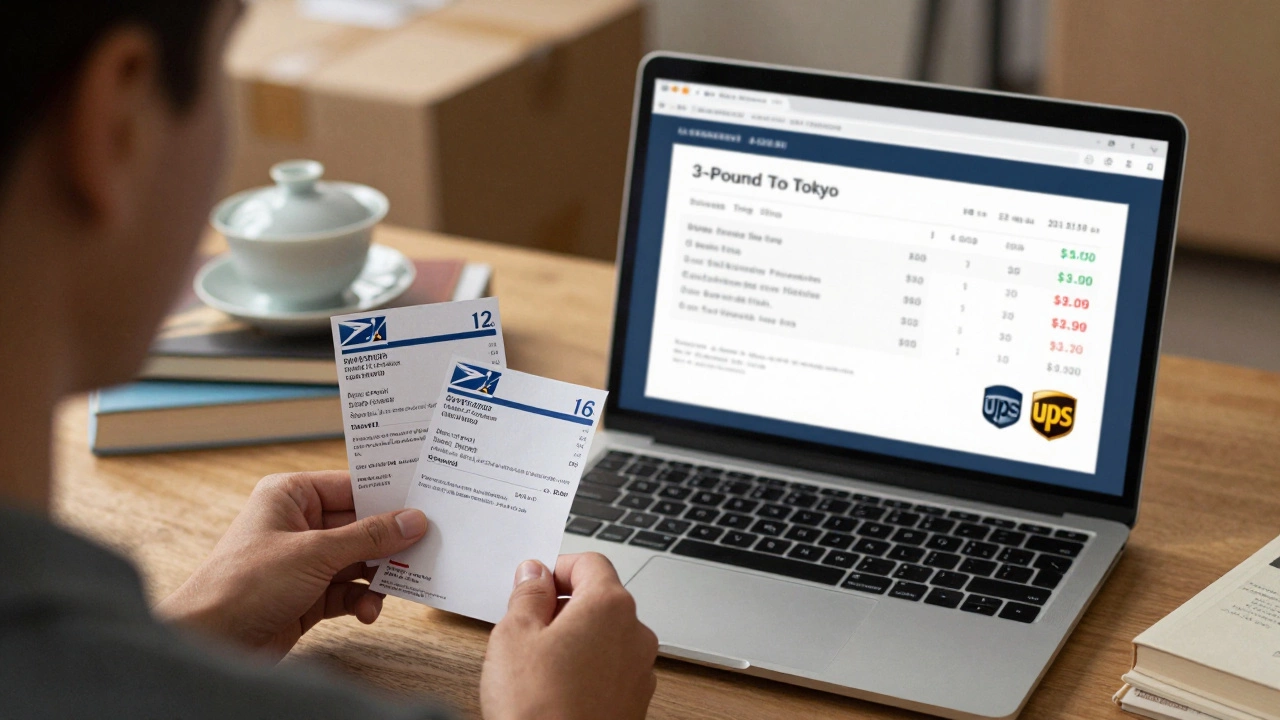
Let’s say you’re shipping from Liverpool to Tokyo:
| Service | Delivery Time | Cost | Tracking | Customs Handling |
|---|---|---|---|---|
| USPS Priority Mail International | 10-16 days | $58 | Basic (stops at Japan Post) | Recipient pays duties |
| UPS Worldwide Saver | 6-10 days | $102 | Full, real-time | UPS pays upfront, bills you |
| UPS Worldwide Expedited | 3-5 days | $148 | Full, real-time | UPS pays upfront, bills you |
Same package. Same destination. Three options. The cheapest? USPS. The fastest? UPS Expedited. The middle ground? UPS Saver. But if you’re not in a rush, USPS saves you $44-enough to buy a nice bottle of Scotch.
What Most People Get Wrong
Many assume UPS is just ‘better’ because it’s more expensive. That’s not true. For 80% of personal shipments, USPS is the smarter pick. You’re not losing security-you’re just trading real-time tracking for savings.
Another myth: ‘USPS is slow.’ It’s not. It’s just not express. Priority Mail International averages 10-15 days to Europe and Asia. That’s faster than many budget freight services. And it’s far more reliable than random third-party couriers you find on eBay.
And don’t assume UPS is always faster. During peak seasons (like before Christmas), UPS can get backed up at customs. USPS often moves through customs faster because they’re not handling as many high-value shipments.
Final Decision: How to Choose
Ask yourself these three questions:
- Is your package under 4 pounds? → USPS almost always wins.
- Do you need guaranteed delivery in 3 days? → UPS is your only real option.
- Are you shipping something valuable or time-sensitive? → UPS with tracking and insurance.
If you’re unsure, ship one small package with each service. Track both. See which one works better for your needs. You’ll learn more from one real test than from reading ten articles.
For most people sending gifts, documents, or small retail items abroad, USPS International is the smarter, cheaper, and just-as-reliable choice. UPS is for when you need certainty, speed, and control-and you’re willing to pay for it.
Is USPS International cheaper than UPS for small packages?
Yes, for packages under 4 pounds, USPS International is almost always cheaper. For example, shipping a 2-pound package to Germany costs $42 with USPS Priority Mail International and $78 with UPS Worldwide Saver. USPS also has no fuel surcharges or residential fees, which adds up over time.
Does UPS deliver faster than USPS internationally?
Yes, but only if you pay for it. UPS Worldwide Expedited delivers in 3-5 days to most countries. USPS Priority Mail International takes 10-16 days. However, UPS’s slower service (Worldwide Saver) takes 6-10 days-still faster than USPS, but at nearly double the price.
Are there hidden fees with UPS international shipping?
Yes. UPS adds fuel surcharges (15-25%), residential delivery fees ($5.50), dimensional weight charges, and customs brokerage fees ($12-$25). These aren’t always shown upfront. USPS includes customs forms and doesn’t charge extra for box size or residential delivery.
Can I ship electronics internationally with USPS?
Yes, but with restrictions. You can ship electronics under 4 pounds via USPS Priority Mail International, but lithium batteries must be removed and shipped separately under special rules. UPS allows lithium batteries in devices with fewer restrictions and offers better tracking for high-value electronics.
What’s the cheapest way to ship to the UK from the US?
For packages under 4 pounds, USPS Priority Mail International is the cheapest. A 2-pound package costs $42 and arrives in 6-10 days. UPS Worldwide Saver for the same package is $78. USPS also avoids fuel surcharges and residential fees, making it the clear budget winner for UK shipments.
If you’re sending something small and don’t need it tomorrow, choose USPS. Save the money. If you’re sending something urgent, expensive, or business-critical, pay for UPS. Both services work-but only one gives you value for your dollar.