

UK Courier Cost Estimator & Comparison Tool
Enter your parcel details below to estimate costs across major UK couriers. This tool accounts for volumetric weight, service levels, and common surcharges mentioned in the article.
| Courier | Est. Cost | Status |
|---|
Volumetric Weight Check
Calculated Volumetric Weight: 0 kg
Billable Weight Used: 0 kg
If Volumetric > Actual, you pay for the space occupied, not just the mass.
Enter parcel dimensions and click "Calculate" to see which courier offers the best value for your specific shipment.
You just packed a box. It’s not heavy, maybe 2kg, and it needs to go from your spare room in Liverpool to a customer in London. You open five different courier websites, paste in the same dimensions, and get five wildly different prices. One says £4.50, another screams £18.99. Why does this happen? And more importantly, which one is actually the cheapest once you stop looking at the headline number?
Here’s the truth: there is no single "cheapest" courier that wins every time. The answer depends entirely on what you’re sending, how fast it needs to arrive, and where it’s going. If you send a lightweight envelope via Royal Mail, you might pay less than a cup of coffee. But if you try to ship a bulky lamp through the same service, you’ll get hit with dimensional weight charges that triple the cost.
The Real Cost Drivers Behind Cheap Delivery
Before we name names, you need to understand what couriers are actually charging you for. Most people think they’re paying for distance. They aren’t. In the UK domestic market, distance matters surprisingly little. A parcel from Liverpool to Manchester often costs the same as one from Liverpool to Edinburgh, because both fall within similar transport zones or use the same trunk routes.
Instead, couriers charge for three things:
- Volumetric Weight: This is the silent killer of budgets. Couriers calculate space, not just mass. If you send a light pillow in a giant box, you pay for the air. The formula is usually Length x Width x Height (in cm) divided by 5000 (or sometimes 6000). If that number is higher than the actual weight, that’s what you pay.
- Service Level: Next-day delivery is expensive because it requires dedicated vehicles and priority sorting. Economy services, which take 2-3 days, let couriers fill trucks efficiently. That efficiency saves you money.
- Access Issues: Does the recipient live on a third-floor walk-up? Is it a remote postcode in the Scottish Highlands? These add surcharges that can dwarf the base rate.
Understanding these factors helps you game the system. Pack tightly. Choose slower speeds when possible. Check if your postcode triggers a rural surcharge before booking.
Royal Mail vs Private Couriers: The Baseline Battle
For anything under 2kg, Royal Mail is almost unbeatable in the UK. Their Tracked 48 service typically costs between £3.00 and £4.50 depending on size bands. For many small businesses, this is the default "cheap" option. It’s reliable, widespread, and doesn’t require a business account to access decent rates.
However, Royal Mail has limits. Once you exceed their standard parcel sizes, or if you need guaranteed morning delivery, private couriers become competitive. Also, Royal Mail’s tracking can be vague compared to private networks like DPD or UPS, which offer precise time slots.
If you’re sending multiple parcels a day, you shouldn’t be using retail rates anyway. Platforms like Parcel2Go or Sendle aggregate demand to negotiate bulk discounts with carriers. This is where the real savings hide. You might see DHL Express quoted at £25 on their website, but through an aggregator, it could drop to £12 for the same service.
Comparing the Big Players: Who Wins on Price?
Let’s break down the major players based on typical use cases. Note that prices fluctuate weekly, so treat these as structural truths rather than fixed quotes.
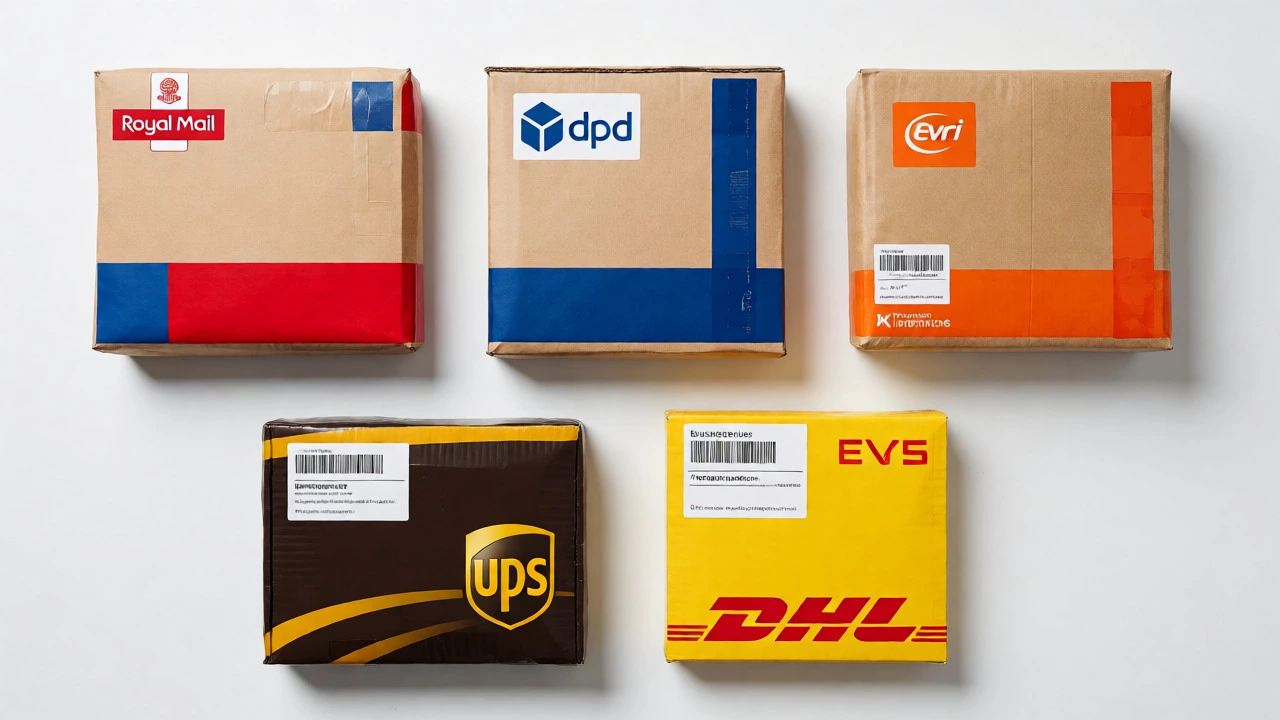
| Courier Service | Estimated Base Cost | Best For | Hidden Risks |
|---|---|---|---|
| Royal Mail Tracked 48 | £3.50 - £4.50 | Lightweight items under 2kg | Limited insurance; slow resolution on lost items |
| EVRi | £4.00 - £6.00 | Mid-weight parcels (up to 15kg) | Inconsistent pickup times; limited drop-off points |
| DPD Classic | £6.00 - £8.00 | High-value goods needing visibility | Surcharges for residential addresses without parking |
| Hermes (Evri) | £4.50 - £7.00 | Budget e-commerce returns/deliveries | Frequent reports of damaged packages; poor support |
| UPS Standard | £8.00 - £12.00 | Heavy or bulky items (20kg+) | Strict dimensional weight enforcement |
Notice the pattern? For small stuff, Royal Mail and Evri compete closely. For heavier items, UPS and DPD enter the fray, but their base rates are higher. However, if you have a business account, UPS Standard can drop significantly. An individual paying retail pays £12; a registered SME might pay £6.
The Aggregator Advantage: How to Find the True Lowest Rate
Never book directly with a courier unless you have a negotiated contract. Use comparison sites. I regularly check Parcel2Go, EasyPost, and Sendle. These platforms act as brokers. They buy volume from couriers like DHL, FedEx, and Yodel, then pass a slice of that discount to you.
Here’s a real-world example from last week: Sending a 5kg box from Liverpool to Bristol. * Direct DHL quote: £14.50. * Direct UPS quote: £13.20. * Parcel2Go quote: £8.90 via UPS Standard. The difference is nearly £5 per shipment. Multiply that by 50 shipments a month, and you’ve saved £250. The catch? Aggregators sometimes have stricter packaging rules. If your box isn’t sealed perfectly or lacks a clear label, they may reject it or charge extra for re-labeling.
Another tip: Look for "drop-off" rates versus "collection" rates. Driving your parcel to a depot yourself can save £1-£3 per shipment. If you’re near a Hermes or UPS Access Point, this is free money.
International Shipping: Where Cheap Becomes Complicated
Domestic pricing is straightforward. International pricing is a minefield. When shipping outside the UK, you’re dealing with customs clearance fees, fuel surcharges, and VAT implications. Here, "cheapest" often means "slowest." If you’re sending a document to Europe, Royal Mail International Tracked is often the most cost-effective solution, costing around £10-£15. However, transit times can stretch to 5-10 working days.
For urgent international parcels, DHL Express dominates but commands a premium. A 2kg parcel to Germany might cost £25+. Through an aggregator, you might find it for £18. But beware: some cheap international services exclude customs duties. If your recipient gets hit with a £20 fee upon delivery, they might refuse the package, forcing you to pay return shipping. Always clarify who pays duties-sender or receiver-before choosing the lowest bid.
Common Pitfalls That Inflate Your Bill
You found a great rate. You booked it. Then why did your final invoice look different? Here are the usual suspects:
- Dimensional Weight Disputes: You measured your box at home. The courier measured it at the hub. If they measure it even 2cm larger, you jump into a higher price tier. Measure diagonally across the longest side, not just straight edges, to be safe.
- Address Corrections: If your address is incomplete (e.g., missing flat number), the courier will attempt delivery, fail, and charge a redelivery fee. This is usually £3-£5.
- Insurance Gaps: Basic coverage is often only £20 or £50. If you’re sending a £200 phone, that £50 limit is useless. Upgrading insurance costs pennies but prevents disasters.
- Weekend Surcharges: Some couriers charge extra for Saturday deliveries. Avoid them unless absolutely necessary.
How to Systematically Lower Your Delivery Costs
Don’t guess. Audit your shipping habits. Follow this checklist to ensure you’re truly getting the cheapest option:
- Right-size Your Packaging: Stop using oversized boxes. Invest in a variety of smaller boxes. Reducing volumetric weight is the fastest way to cut costs.
- Mix Your Services: Don’t put all eggs in one basket. Use Royal Mail for sub-2kg items. Use Evri or DPD for mid-range. Use UPS for heavy/bulky.
- Batch Your Pickups: If you use collection services, schedule them for specific days. Ad-hoc pickups cost more.
- Review Quarterly: Courier rates change. What was cheapest in January might be expensive in July due to fuel adjustments or network changes.
- Negotiate Volume Discounts: If you ship 10+ parcels a week, call the courier’s sales team directly. Ask for a trial account. They often beat aggregator prices for consistent volume.
Remember, the cheapest courier isn’t always the best value. A £1 saving isn’t worth it if the package arrives crushed or two weeks late. Balance cost against reliability. For high-stakes items, pay a bit more for better tracking and insurance. For routine restocks, hunt for the lowest bidder.
Is Royal Mail always the cheapest option in the UK?
Not always. Royal Mail is typically the cheapest for lightweight parcels (under 2kg) sent via non-urgent services like Tracked 48. However, for heavier items (over 5kg) or bulky goods, private couriers like UPS Standard or DPD, especially when accessed through comparison sites, often offer lower rates due to better handling of dimensional weight and bulk logistics.
What is dimensional weight and why does it make my delivery expensive?
Dimensional weight (or volumetric weight) is a pricing technique used by couriers to charge for the space a package occupies rather than just its actual weight. If you send a light item in a large box, the courier calculates the volume (Length x Width x Height / divisor). If this calculated weight is higher than the actual weight, you pay for the higher amount. This ensures couriers don't lose money transporting air.
Are courier comparison sites trustworthy?
Yes, major comparison sites like Parcel2Go, EasyPost, and Sendle are generally trustworthy and widely used by UK businesses. They act as brokers, negotiating bulk rates with carriers. However, always read the fine print regarding insurance limits and pickup procedures. Sometimes aggregators have stricter packaging requirements than direct bookings, which can lead to rejected shipments if not followed precisely.
Do I need a business account to get cheap courier rates?
You do not strictly need a formal business account to access discounted rates, especially if you use comparison platforms. Many sites offer public rates that are already below retail. However, if you ship consistently (e.g., 10+ parcels a week), opening a direct business account with a courier like DPD or UPS can yield further discounts and credit terms, potentially beating aggregator prices.
Which courier is cheapest for international shipping from the UK?
For lightweight documents and small parcels to Europe, Royal Mail International Tracked is often the cheapest. For heavier items or faster delivery, DHL Express and UPS Worldwide Expedited are common choices, though they are pricier. To find the true cheapest, always compare quotes on aggregators like ParcelMonkey or Eurosender, as rates vary significantly by destination country and current fuel surcharges.