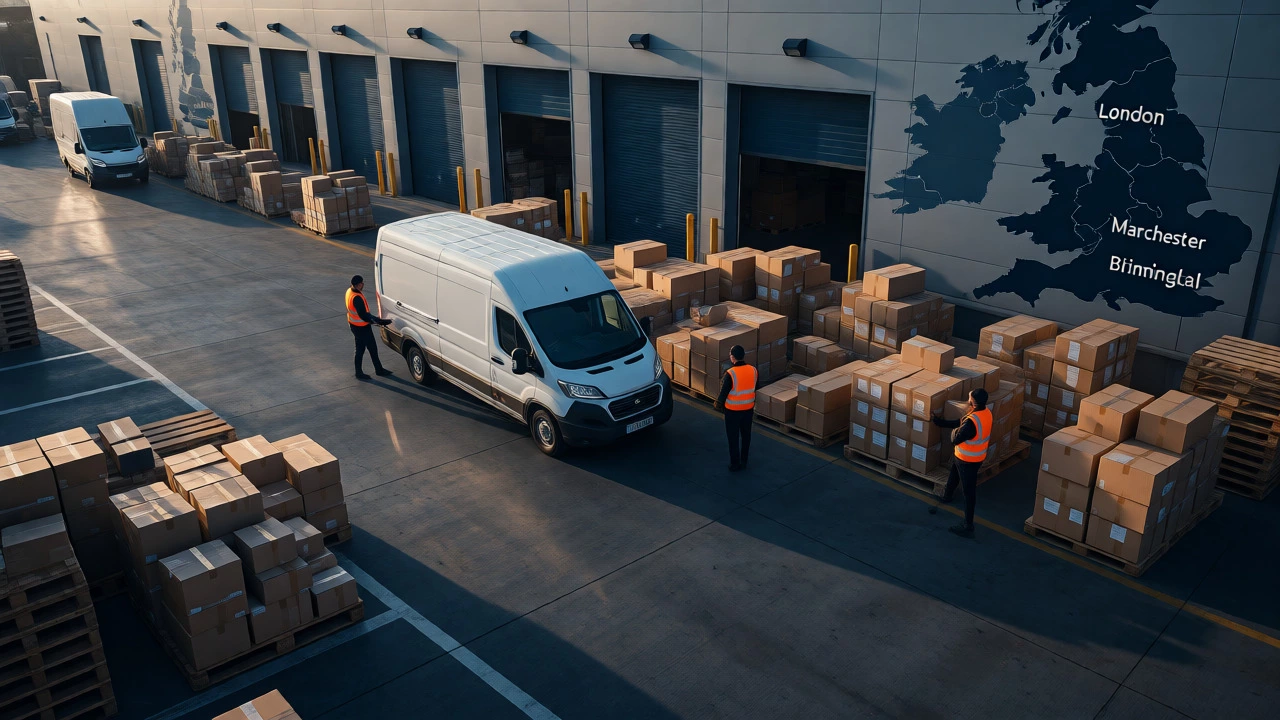
UK Courier Cost Estimator & Rate Per Mile Calculator
Enter your delivery details and click calculate to see your estimated costs.
You just got a quote for a pallet of goods from Manchester to London. The price tag looks reasonable until you do the math and realize they are charging you £3.50 per mile. Is that fair? Or is it highway robbery? If you have ever stared at an invoice wondering how much of your money is actually going toward moving your box versus overhead, you are not alone. There is no single "current rate per mile" because the courier industry does not work like a taxi meter. It works on zones, weight, urgency, and volume. But if you want a ballpark figure to budget effectively in late 2026, here is the reality: standard road freight typically ranges between £1.20 and £2.50 per mile for small parcels, while heavy palletized freight can drop as low as £0.40-£0.80 per mile due to economies of scale.
| Service Type | Average Cost Per Mile | Best For | Speed Factor |
|---|---|---|---|
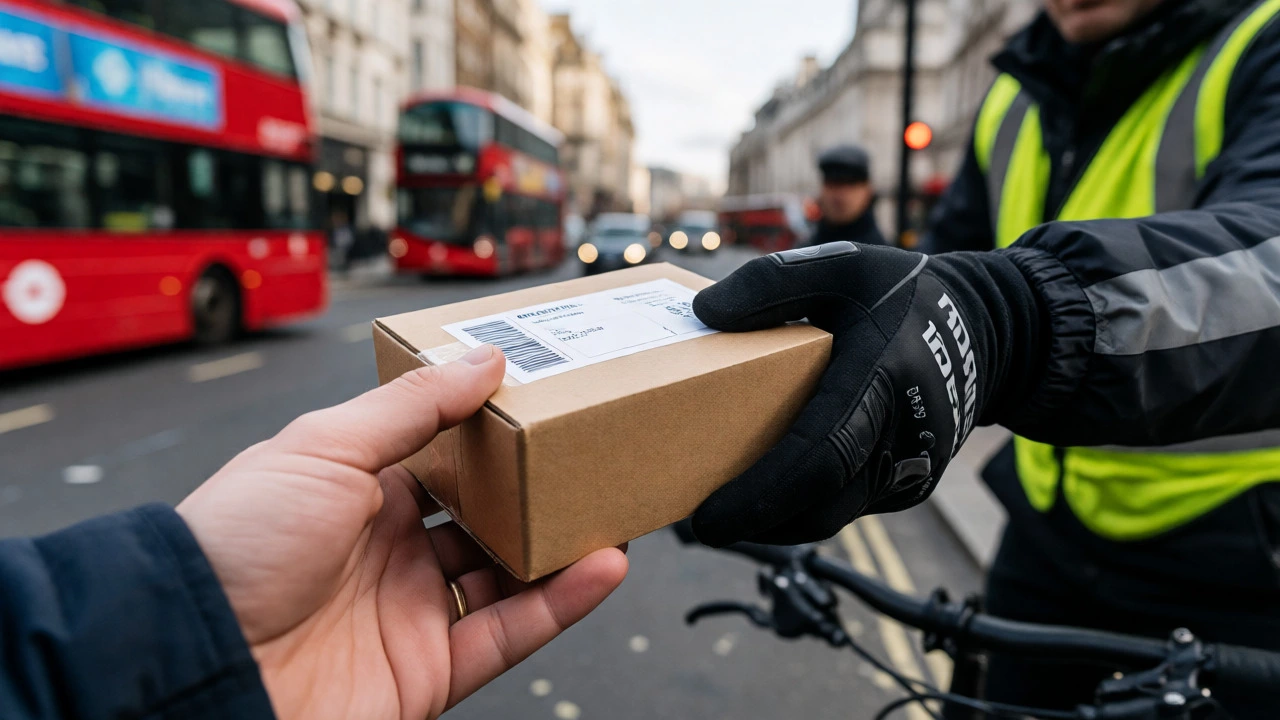
| Same-Day Bike/Courier | £3.00 - £5.50 | Urgent documents, small parcels under 5kg | High (Hours) |
| Next-Day Parcel Network | £1.20 - £2.50 | E-commerce orders, B2B samples | Medium (24h) |
| Standard Pallet Freight | £0.40 - £0.90 | Bulk goods, retail restocking | Low (2-5 days) |
| Dedicated Van Hire | £1.50 - £2.20 + Hourly | Moving offices, irregular routes | Variable |
Why One Number Doesn't Fit All Routes
Think about why a flight from Liverpool to London costs more than a bus ticket. It is not just distance; it is speed, exclusivity, and infrastructure. Courier rates follow the same logic. When people ask for the "rate per mile," they often assume linear pricing. They think double the distance equals double the cost. That is rarely true. Most major carriers use zone-based pricing. A delivery from Birmingham to Coventry might cost the same as one from Birmingham to Leeds, even though Leeds is three times further away. Why? Because both fall into Zone 2 or Zone 3 depending on the carrier's specific map. This means the effective "per mile" rate fluctuates wildly based on where you are sending things.
If you are shipping locally within a city, say from Liverpool city centre to Wavertree, you are paying a high premium per mile because the driver has to navigate traffic, park, and handle the package personally. You might pay £5 for a 3-mile journey. That is over £1.50 per mile. Now, look at a long-haul shipment of 500kg from Glasgow to Bristol. The truck carries other people's goods too. The fuel and driver time are shared. Your slice of the pie drops significantly. Understanding this distinction saves you from overpaying for local deliveries or underestimating long-haul savings.
The Hidden Costs Behind the Mileage
Fuel prices in the UK have stabilized somewhat since the volatility of the early 2020s, but diesel remains a significant variable. Carriers build a fuel surcharge into their base rates. In late 2026, expect a fuel adjustment factor of roughly 10-15% on top of the base mileage rate. If diesel spikes next month, your quote will change. It is contractual, not optional.
Then there is congestion. Driving through central London during rush hour is not the same as cruising down the M6 near Carlisle. Some cities impose congestion charges or ultra-low emission zone fees. These are passed directly to you. A route that looks cheap on paper can become expensive if it crosses multiple paid zones. Always ask your provider if the quoted rate includes access fees for restricted areas. Many smaller couriers hide these costs in the fine print, only revealing them when the invoice arrives.
Volume Discounts and Contractual Leverage
If you send ten packages a week, you are a customer. If you send five hundred, you are a partner. The difference in your per-mile rate is substantial. Large e-commerce brands negotiate rates that individual businesses simply cannot get. They commit to volume guarantees, which allows carriers to plan efficient routes. You don't need to be Amazon to benefit, but you do need to aggregate your shipments.
Consider using a freight broker or a multi-carrier aggregator. These platforms pool demand from hundreds of small businesses. They act like a buying cooperative. Instead of negotiating with DPD, DHL, and Royal Mail separately, you tap into their collective volume. This can shave 15-20% off your effective per-mile cost. It is not magic; it is just leverage. If you find yourself manually booking each delivery, you are likely leaving money on the table.

How Weight and Dimensions Change the Equation
Distance is only half the battle. Couriers charge based on "chargeable weight." This is the greater of actual weight or volumetric weight. Volumetric weight calculates how much space your package takes up in a truck. A giant box containing lightweight pillows weighs less than a small box of lead, but the pillow box takes up valuable shelf space. Therefore, the pillow box costs more to ship.
This impacts your per-mile calculation significantly. If you are shipping bulky but light items, your effective rate per mile skyrockets because you are paying for air. To optimize this, pack tightly. Use void fillers wisely. If you can reduce the dimensions by 10%, you might drop into a lower tariff band, effectively reducing your per-mile cost without changing the destination. Measure twice, ship once.
Regional Variations Across the UK
Not all miles are created equal geographically. Shipping to remote areas like the Scottish Highlands, Northern Ireland, or the Isles of Scilly incurs a "remote area surcharge." This can add £5-£15 flat fee per parcel, regardless of distance. When you divide that surcharge by the short distance traveled, your per-mile rate looks absurdly high. It is not really about the miles; it is about the scarcity of return loads. Trucks often go north empty because there is less freight coming back south. Carriers charge you to cover that empty return trip.
Conversely, the "Golden Triangle" between London, Manchester, and Birmingham is highly competitive. High density of shipments means more competition among carriers, which drives prices down. If your business operates within this corridor, you have more bargaining power. Outside of it, options narrow, and prices creep up.
Tips for Reducing Your Effective Per-Mile Cost
- Consolidate Shipments: Combine multiple small orders into one larger dispatch. Moving one 20kg box is cheaper than four 5kg boxes, even if the total weight is the same.
- Optimize Packaging: Reduce dimensional weight. Square boxes stack better than odd shapes. Better stacking means more efficient truck usage, which lowers your share of the cost.
- Plan Ahead: Avoid express surcharges. Next-day delivery costs nearly double what standard 48-hour service costs. If you can predict demand two days out, switch to standard.
- Review Access Points: Using drop-off points instead of home delivery can sometimes bypass last-mile inefficiencies, especially in dense urban areas.
Frequently Asked Questions
Is there a fixed government-regulated rate per mile for couriers?
No. Unlike taxis, courier rates are not regulated by the government. Prices are determined by market forces, including fuel costs, driver availability, vehicle maintenance expenses, and company overheads. Each carrier sets its own tariffs, which vary by service level and contract type.
Does the rate per mile include VAT?
Typically, quotes provided by logistics companies exclude VAT unless stated otherwise. In the UK, standard VAT is currently 20%. Always check if the displayed rate is net or gross. For business-to-business transactions, you usually see the ex-VAT price, which you then reclaim if you are VAT registered.
Why is my first mile so expensive?
The "first mile" involves collection, sorting, and initial handling. This process requires labor, scanning technology, and warehouse space. It is disproportionately costly compared to the actual driving time. Once the package enters the main transport network, the marginal cost per additional mile decreases.
Do electric vehicles affect the current rate per mile?
Currently, EV adoption has not drastically lowered consumer rates. While electricity is cheaper than diesel, the higher upfront cost of electric vans and limited charging infrastructure in some areas keep operational costs comparable. However, some green couriers offer slight discounts for eco-friendly branding benefits rather than pure cost savings.
How do I calculate my average cost per mile?
Take your total monthly courier bill and divide it by the total number of miles delivered. Include all surcharges, insurance, and packaging costs in the numerator. This gives you a realistic blended rate. Compare this against your industry benchmarks to see if you are overspending.