International Shipping Decision Assistant
Stop guessing. Input your shipment details below to see which carrier or method balances speed, cost, and reliability for your specific needs.
| Method | Best For | Est. Transit | Cost Factor | Reliability |
|---|
Enter your shipment details to see personalized recommendations.
You’re staring at a checkout screen or a logistics dashboard, paralyzed by the options. FedEx says three days. DHL promises two. A local freight forwarder quotes half the price but adds a week of uncertainty. Who wins? The truth is, there’s no single "best" option for international shipping. There’s only the best option for your specific package, destination, and deadline.
If you try to use one method for everything, you’ll either bleed money on unnecessary speed or lose customers waiting too long. This guide breaks down the real trade-offs between the major players so you can stop guessing and start optimizing.
The Core Dilemma: Speed vs. Cost vs. Reliability
Before comparing carriers, you need to understand what you’re actually buying. Every international shipment involves three competing factors. You can usually pick two, but rarely all three.
- Speed: How fast does it move from point A to point B?
- Cost: What is the total landed cost, including duties and fees?
- Reliability: Will it arrive intact, on time, and without getting stuck in customs?
A $50 express courier might be faster than a $10 postal service, but if that package gets held up in customs because the paperwork was wrong, the "speed" advantage vanishes. Conversely, cheap ocean freight saves cash but ties up your capital for weeks. Your choice depends entirely on which factor hurts you most when it fails.
Courier Giants: When You Need It Now
When people ask about international shipping, they usually mean the big names: FedEx, a global courier delivery services company known for its overnight air transportation network, DHL, a German multinational logistics company with strong dominance in Europe and Asia, and UPS, an American multinational package delivery and supply chain management company.
These companies excel at door-to-door convenience. They handle the last mile, track every scan, and offer guaranteed delivery windows. But this premium service comes with a steep price tag.
| Carrier | Best For | Weakness | Typical Transit Time (Global) |
|---|---|---|---|
| DHL Express | Europe & Asia routes; small parcels | Higher fuel surcharges | 1-3 days |
| FedEx International | US-centric exports; time-critical docs | Can be expensive for heavy boxes | 2-4 days |
| UPS Worldwide | North America & Latin America | Customs clearance delays occasionally | 2-5 days |
Here’s the insider tip: DHL often beats FedEx and UPS on European and Asian lanes due to their massive local networks. If you’re shipping from the US to Germany, check DHL first. If you’re moving goods within North America or to Brazil, UPS often has better infrastructure. Don’t assume one carrier is globally superior; they have regional strengths.
Postal Services: The Budget-Friendly Gamble
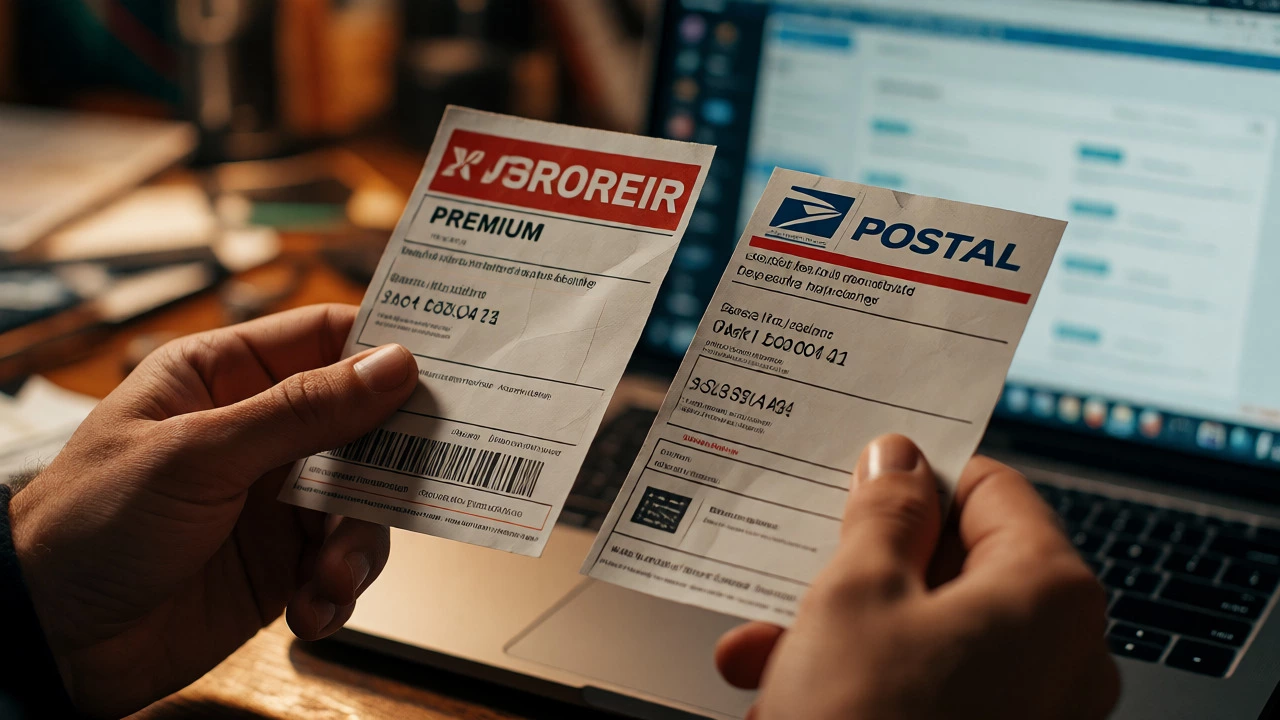
If you’re an e-commerce seller sending low-value items under 2kg, national postal services like USPS, the United States Postal Service, offering affordable international tracking options, Royal Mail, the UK's primary postal service, or China Post are hard to beat on price.
They operate through the Universal Postal Union, allowing them to hand off packages to local post offices worldwide. This avoids the high brokerage fees charged by private couriers. However, tracking is often spotty once the package leaves the origin country. You might see "Departed Facility" and then silence for ten days.
Use postal services when:
- The item value is low (under $50).
- The customer isn’t expecting next-day delivery.
- You want to avoid surprise customs brokerage fees for the recipient.
Freight Forwarders: Scaling Up Volume
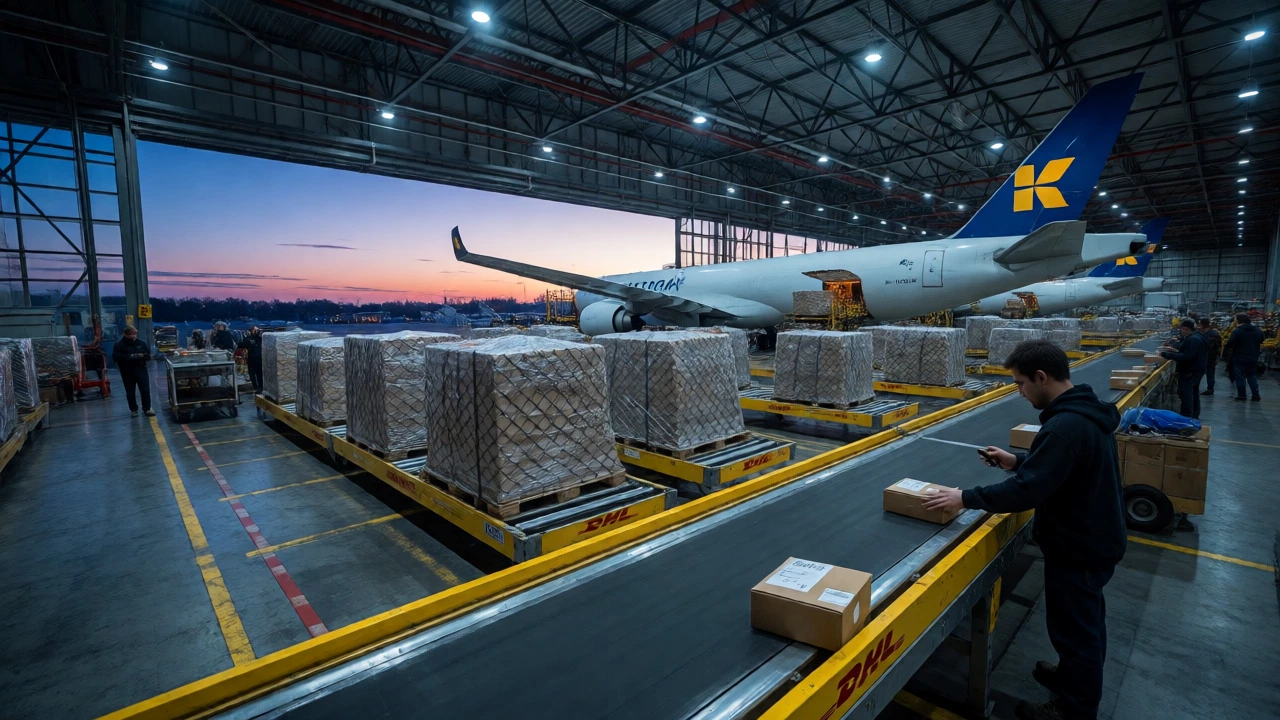
Once your shipments exceed 20kg or you’re sending pallets, couriers become inefficient. This is where freight forwarders, companies that arrange cargo storage and transportation on behalf of shippers come into play. They don’t own planes or ships; they buy space in bulk and sell it to you.
Two main modes dominate here:
- Air Freight: Faster than sea, slower than courier. Good for mid-sized batches needing to arrive in 5-10 days.
- Ocean Freight: Slowest but cheapest per unit. Ideal for non-perishable goods where inventory planning allows 30-45 days transit.
Working with a forwarder requires more effort. You’ll deal with bills of lading, incoterms, and potentially separate customs brokers. But for a box weighing 50kg, ocean freight could cost $100 versus $600 via courier. That margin difference determines whether you make a profit or just break even.
Hidden Costs That Kill Deals
New shippers often compare base rates and miss the hidden fees. Here’s what actually hits your bank account:
- Dimensional Weight: Carriers charge based on volume, not just actual weight. A light pillow takes up more space than a dense book. Calculate L x W x H / divisor (usually 5000 or 139) to find billable weight.
- Customs Duties and VAT: These aren’t shipping costs, but they affect the buyer’s experience. In the EU, VAT is collected upon entry. If you don’t prepay it (DDP terms), the customer pays a fee plus a broker’s handling charge, leading to refused deliveries.
- Remote Area Surcharges: If the address is rural, carriers add fees ranging from $15 to $50+. Always validate addresses before quoting.
- Fuel Surcharges: These fluctuate monthly. A quote today might expire tomorrow if oil prices spike.
How to Choose: A Decision Framework
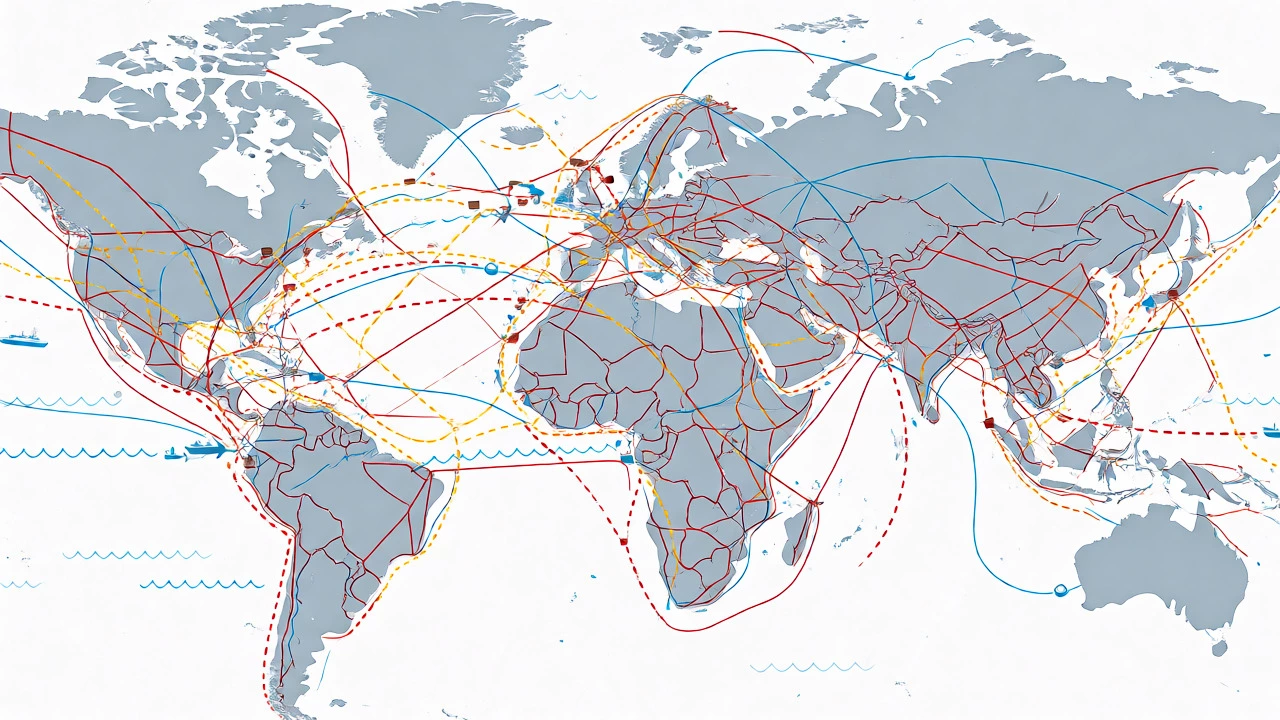
Stop asking "which is better?" Start asking "what do I need?" Use this quick decision tree:
- Is the package under 2kg and urgent? → Use DHL or FedEx Express.
- Is the package under 2kg and low value? → Use USPS Priority Mail International or equivalent.
- Is the package over 20kg and not urgent? → Contact a freight forwarder for ocean LCL (Less than Container Load).
- Are you shipping to a remote village in Africa or South America? → Check if the courier serves the area reliably; otherwise, stick to postal services to avoid return costs.
For e-commerce businesses, hybrid models work best. Use automated shipping software to compare real-time rates across carriers. Some platforms let you plug in multiple accounts, showing you that while FedEx is cheaper for Zone 3, DHL wins for Zone 8. Let data decide, not habit.
Final Verdict: Context is King
There is no universal winner. DHL dominates Europe. UPS owns the Americas. USPS offers unbeatable pricing for small, light parcels globally. Freight forwarders rule bulk logistics.
Your job isn’t to pick one partner forever. It’s to build a flexible strategy. Test different carriers for your top five destinations. Track the true landed cost, including failed delivery attempts. Then, assign each lane to the provider that balances speed and cost for your specific customer expectations.
Is DHL always cheaper than FedEx for international shipping?
No, not always. DHL tends to offer competitive rates for shipments originating in or destined for Europe and Asia. FedEx often provides better pricing for shipments leaving the United States or traveling within North America. Rates vary significantly based on weight, dimensions, and current fuel surcharges, so it is crucial to compare quotes for each specific shipment rather than assuming one carrier is universally cheaper.
What happens if my international package gets stuck in customs?
If a package is held in customs, the carrier will typically notify the recipient or sender. Delays occur due to incomplete documentation, missing invoices, or unpaid duties. To resolve this, ensure all commercial invoices clearly state the value, description, and HS codes of the contents. Using DDP (Delivered Duty Paid) terms where the sender pays duties upfront can prevent the recipient from refusing the package due to unexpected fees.
Should I use postal services or couriers for e-commerce?
It depends on your average order value and customer expectations. For low-value items (under $50) where customers are price-sensitive, postal services like USPS or Royal Mail are cost-effective despite slower speeds. For higher-value items where reliability and tracking are critical to reducing support tickets, couriers like DHL or FedEx are worth the extra cost. Many successful stores use a hybrid approach, selecting the carrier based on the destination and order size.
How do I calculate dimensional weight for international shipping?
Carriers charge based on whichever is greater: actual weight or dimensional weight. To calculate dimensional weight, multiply the length, width, and height of the package in centimeters, then divide by a standard divisor (typically 5000 for metric, or 139 for imperial inches). For example, a box measuring 30x30x30 cm would have a volumetric weight of 27,000 / 5000 = 5.4 kg. If the actual weight is only 2 kg, you pay for 5.4 kg.
Do I need insurance for international shipments?
Standard liability coverage from carriers is often limited (e.g., $100 per pound). If your goods are valuable, fragile, or irreplaceable, purchasing additional insurance is highly recommended. While it adds a small percentage to the shipping cost, it protects against loss or damage during transit. Note that some carriers exclude certain items from insurance, so always read the fine print regarding prohibited items.