
UK Next Day Delivery Cost Estimator
Estimated Costs
💡 Recommendation
It is 9 AM on a Tuesday. You have promised a client a document by Wednesday morning, or maybe you just bought that limited-edition sneaker drop and you need it yesterday. The clock is ticking. Your instinct? Open a browser tab for "next day delivery" and start comparing prices. But here is the catch: finding the cheapest next day mail in the UK right now feels less like shopping and more like solving a puzzle where the pieces keep changing shape.
In June 2026, the landscape of UK logistics has shifted again. Fuel surcharges are stabilizing, but labor costs remain high. The big players-Royal Mail, DPD, Evri, and UPS-are all jockeying for position. Some offer rock-bottom rates if you know how to book; others charge a premium for reliability. If you pick the wrong one, you save £2 today but lose a customer tomorrow because the parcel arrived on Thursday instead of Wednesday.
This guide cuts through the marketing fluff. We will look at who actually offers the lowest price for standard small parcels, who wins when you need something heavier delivered, and where the hidden traps lie. Whether you are a sole trader sending invoices or an e-commerce business scaling up, understanding these price structures is the difference between profit and loss.
The Big Three: Who Actually Offers the Lowest Rates?
When most people think of cheap next-day service, three names come up immediately: Royal Mail (specifically their Parcelforce brand), Evri (formerly Hermes), and DPD. These companies dominate the residential and small-business market. Let’s break down what they actually cost you in mid-2026 for a standard small box (up to 1kg).
| Courier Service | Service Name | Retail Price (Approx.) | Business Account Discount | Reliability Score |
|---|---|---|---|---|
| Royal Mail / Parcelforce | Parcelforce 24 | £8.50 - £12.00 | Up to 30% off | High |
| Evri | Next Day Guaranteed | £6.99 - £9.50 | Up to 40% off | Medium |
| DPD Local | DPD Next Day | £7.50 - £10.00 | Up to 35% off | High |
| UPS | UPS Express Saver | £12.00+ | Up to 50% off | Very High |
Looking at the table, Evri often appears as the cheapest option on paper for retail customers. Their aggressive pricing strategy aims to capture volume. However, "cheapest" can be misleading. Evri’s network relies heavily on subcontractors, which means consistency can vary wildly depending on your postcode. In some rural areas of Liverpool or the Highlands, a "next day" promise might slip into "two days" without much recourse.
Royal Mail, through its Parcelforce arm, is generally more expensive than Evri for small items but offers better coverage. If you are sending something critical, the extra £2-£3 is usually worth the peace of mind. They have their own fleet and infrastructure, so they aren't dependent on third-party drivers who might get sick or lose their van.
The Secret Weapon: Aggregators and Comparison Sites
Here is the truth that couriers don’t want you to realize: the price you see on their website is rarely the best price available. Courier companies sell bulk capacity to aggregators like ParcelMonkey, EasyParcel, or SendCloud at significant discounts. These platforms then pass some of those savings on to you.
If you are sending a single package occasionally, using an aggregator can slash your costs by 20% to 50%. For example, while Royal Mail might quote you £10 for a next-day service, an aggregator might secure that same slot for £6.50. How? Because the aggregator guarantees the courier a certain volume of parcels every week. You are essentially renting a seat on their bulk deal.
This is particularly effective for businesses. If you run a Shopify or WooCommerce store, integrating a shipping software that connects to multiple carriers automatically finds the cheapest route. It compares DPD, Evri, and Royal Mail in real-time and picks the winner. This isn't just about saving money; it's about efficiency. You stop playing phone tag with couriers and start focusing on your product.
Hidden Costs That Kill Your Budget
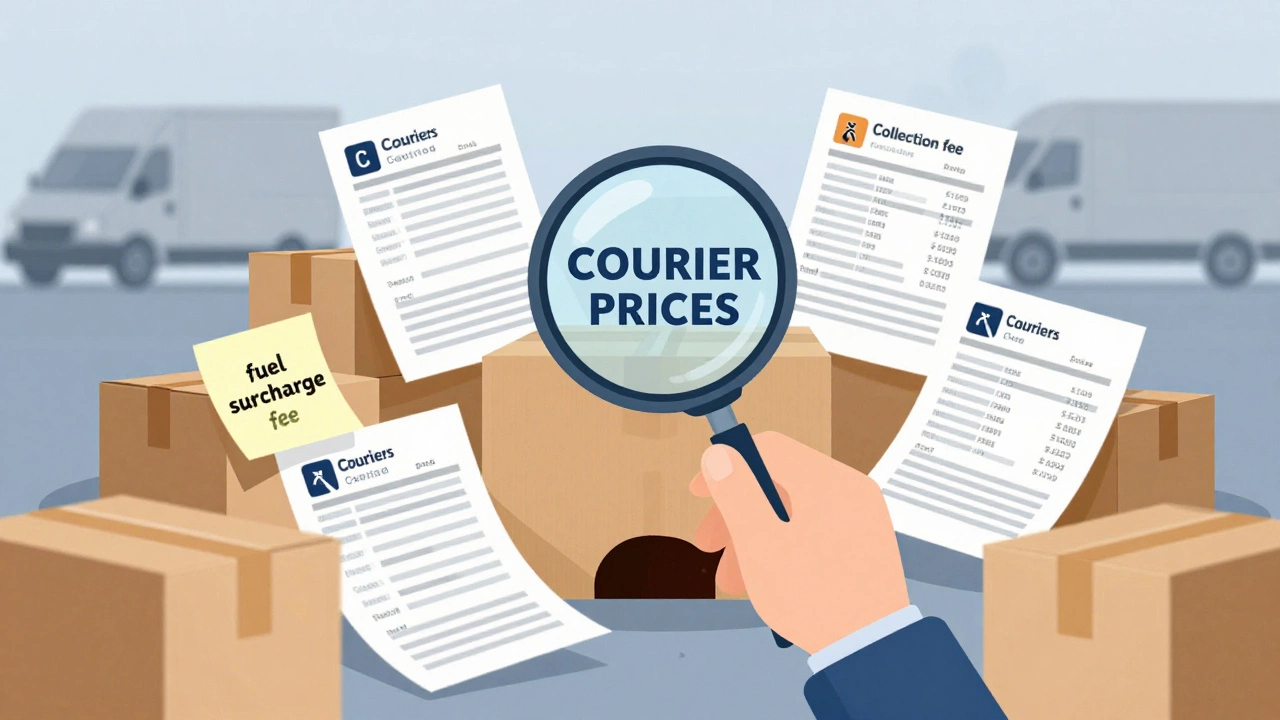
You found the cheapest rate. You booked it. You handed over the box. Then you got hit with a fee you didn't expect. This happens more often than it should. To truly find the cheapest next day mail, you have to look beyond the headline price.
- Fuel Surcharges: Most major couriers add a fuel levy. In 2026, this fluctuates monthly based on global oil prices. While some smaller local couriers absorb this into their base rate, big names like UPS and DHL often list it separately. Always check if the price is "all-inclusive".
- Collection Fees: Many online quotes assume you will drop the parcel off at a depot or a Post Office. If you want them to collect from your door, there is often a £2-£4 fee per pickup. If you are sending five parcels, that adds up fast. Dropping off yourself is almost always cheaper for low-volume senders.
- Dimensional Weight: This is the biggest trap. Couriers charge based on whichever is greater: actual weight or volumetric weight. If you send a lightweight but bulky item (like a pillow or a large empty box), you pay for the space it takes up in the truck. A "small" box that measures 40x30x20cm might be charged as a medium parcel. Measure your items accurately before booking.
- Saturday Delivery: Standard next-day services usually exclude Saturdays. If your client needs it by Saturday morning, you need a specific "Saturday Next Day" service, which can cost double. Check the cutoff times carefully.
Local Couriers: The Underrated Alternative
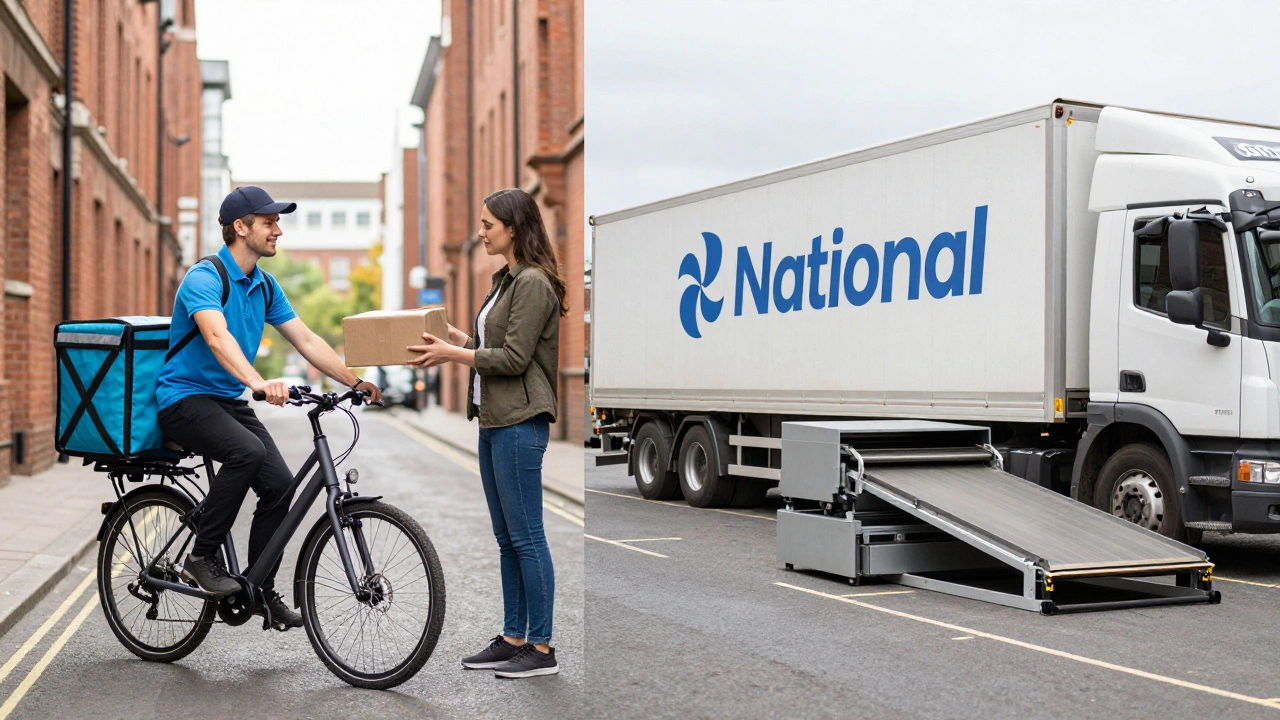
We live in Liverpool, and I see this trend growing across the UK. National giants have scale, but local couriers have agility. Companies like Yodel (which has been restructuring) or smaller regional firms often offer competitive rates for intra-city or short-distance deliveries.
For example, if you are sending a package from Liverpool to Manchester, a national courier still routes it through a central hub in Midlands or London before sending it north. A local courier drives straight there. This reduces transit time and often lowers the carbon footprint. More importantly, local couriers are more likely to negotiate personalized rates if you have consistent volume. They want your business because they don't have the massive marketing budgets of Evri or DPD.
Also, consider Buysi or similar PUDO (Pick Up Drop Off) networks. If the recipient doesn't need home delivery, dropping the item into a locker network can be significantly cheaper and faster. There is no failed delivery attempt, no redelivery fee, and the customer gets it whenever suits them.
How to Choose: A Decision Tree
So, who should you use? It depends on your specific situation. Here is a quick heuristic to help you decide:
- Are you sending one-off personal items? Use a comparison site like ParcelMonkey. Compare Evri and DPD. Usually, Evri wins on price, DPD on tracking accuracy.
- Are you a small business sending 10-50 parcels a month? Sign up for a business account with Royal Mail/Parcelforce or DPD. The discount thresholds are lower, and the reliability is higher. Do not rely on retail rates.
- Are you sending high-value or fragile items? Forget "cheapest." Go with UPS or FedEx. Their insurance claims process is smoother, and their handling protocols are stricter. The extra cost is an insurance policy against disaster.
- Is the destination rural? Royal Mail/Parcelforce has the deepest reach. Private couriers sometimes outsource rural last-mile to Royal Mail anyway, so you might as well book directly with them to avoid double-handling fees.
Pro Tips for Maximizing Savings
Beyond picking the right carrier, there are tactical ways to reduce your shipping costs further.
Pack Smart: Reduce the dimensions of your boxes. Every centimeter counts when dimensional weight applies. Use flat-rate boxes if available. Royal Mail offers "Large Letter" services for thin, rigid items that are drastically cheaper than parcel services. If your item fits in a padded envelope under 750g, use that. It’s often half the price of a box.
Batch Your Collections: If you are a business, try to schedule collections at the same time each day. Some couriers offer free collection if you meet a minimum number of parcels per week. Consolidating your shipments avoids per-pickup fees.
Use Electronic Data Interchange (EDI): For larger volumes, providing electronic labels and data reduces administrative errors. Errors lead to returns, and returns cost money. Clean data is cheap data.
Final Thoughts on Value vs. Price
While Evri might technically offer the lowest sticker price for many routes, the true cost of shipping includes the risk of delay, lost packages, and customer support headaches. In 2026, consumer expectations are higher than ever. People want transparency. They want tracking links that update in real-time. They want their stuff when promised.
If you are a business, your cheapest next day mail provider is the one that keeps your customers happy. Sometimes that means paying £1 more for DPD’s superior tracking interface. Other times, it means using Evri for non-urgent items and keeping margins healthy. Test different providers. Send test parcels. Track the results. Don’t just take the first quote you see.
What is the absolute cheapest way to send a small parcel next day in the UK?
For a single small parcel (under 1kg), using a comparison site like ParcelMonkey or EasyParcel to book with Evri or DPD Local is typically the cheapest method. You can often find rates starting around £6-£7 for next-day delivery, compared to retail prices of £9+. However, ensure you drop the parcel off yourself to avoid collection fees.
Is Royal Mail cheaper than private couriers for next day delivery?
Generally, no. Royal Mail's Parcelforce 24 service is usually more expensive than budget couriers like Evri for standard parcels. However, Royal Mail is often cheaper for very small, light items sent as "Large Letters" rather than parcels. Additionally, for rural addresses, Royal Mail may be the only viable option, making it effectively the cheapest by default.
Do courier prices change based on the time of year?
Yes. During peak seasons like Christmas (November-December) and Black Friday, couriers often impose peak season surcharges. These can range from 10% to 20% on top of standard rates. It is advisable to book early and compare prices during these periods, as availability also becomes tighter.
What is dimensional weight and why does it affect my price?
Dimensional weight (or volumetric weight) calculates the density of your package. Couriers charge based on the space your parcel occupies in their vehicle, not just its physical weight. If you send a large box containing light items, you will be charged for the size of the box. To save money, pack items tightly and use the smallest possible box.
Can I get a discount if I ship regularly?
Absolutely. All major couriers offer business accounts with tiered discounts. If you send more than 10-20 parcels a month, you should sign up for a business account with DPD, Evri, or Royal Mail. Discounts can range from 20% to 50% off retail rates depending on your volume.
Which courier is most reliable for next day delivery?
UPS and DPD are widely regarded as the most reliable for next-day services in the UK, offering robust tracking and strict cut-off times. Royal Mail/Parcelforce is also highly reliable due to its extensive network. Budget options like Evri are cheaper but have historically had more variability in delivery performance, especially in rural areas.