
Logistics Partner Selector
Configure Your Needs
Select your options and click Analyze.
When you order a gadget from overseas or a retailer ships inventory across continents, one question usually pops up: who actually moves this stuff? The answer isn't just one company. It depends on whether we are talking about moving heavy containers across oceans, flying packages overnight, or managing complex digital supply chains. However, if you have to pick a single name that dominates the conversation globally, DHL often takes the crown for pure volume and reach.
But "leader" is a tricky word in logistics. Are you looking for the biggest revenue generator? The fastest delivery network? Or the most advanced software integration? The landscape is split among a few giants, each owning a specific slice of the pie. Let's break down who really runs the world's logistics infrastructure right now.
The Heavyweights: Who Defines "World Leader"?
To understand who leads, we first need to define what they lead. The global logistics industry is divided into three main buckets: express parcel services (like sending a document tomorrow), ocean and air freight (moving massive amounts of goods slowly but cheaply), and integrated supply chain management (handling everything from warehousing to last-mile delivery).
In 2025 and heading into 2026, the top contenders are DHL (part of Deutsche Post DHL Group), FedEx, UPS, and Maersk. Each of these entities operates differently. DHL is a subsidiary of a German postal group, while FedEx and UPS are American conglomerates with deep roots in domestic US delivery before expanding globally. Maersk, originally a Danish shipping line, has aggressively pivoted to become an end-to-end logistics provider, competing directly with the others in contract logistics.
If we look at revenue, the numbers tell a clear story. Deutsche Post DHL Group consistently reports revenues exceeding €80 billion annually. This massive figure comes from its sheer scale in international express shipments and its extensive network of fulfillment centers. FedEx follows closely, driven by its dominance in time-definite air transport. UPS holds a strong third position, leveraging its brown truck fleet and recent acquisitions to bolster its supply chain capabilities.
DHL: The Global Reach Champion
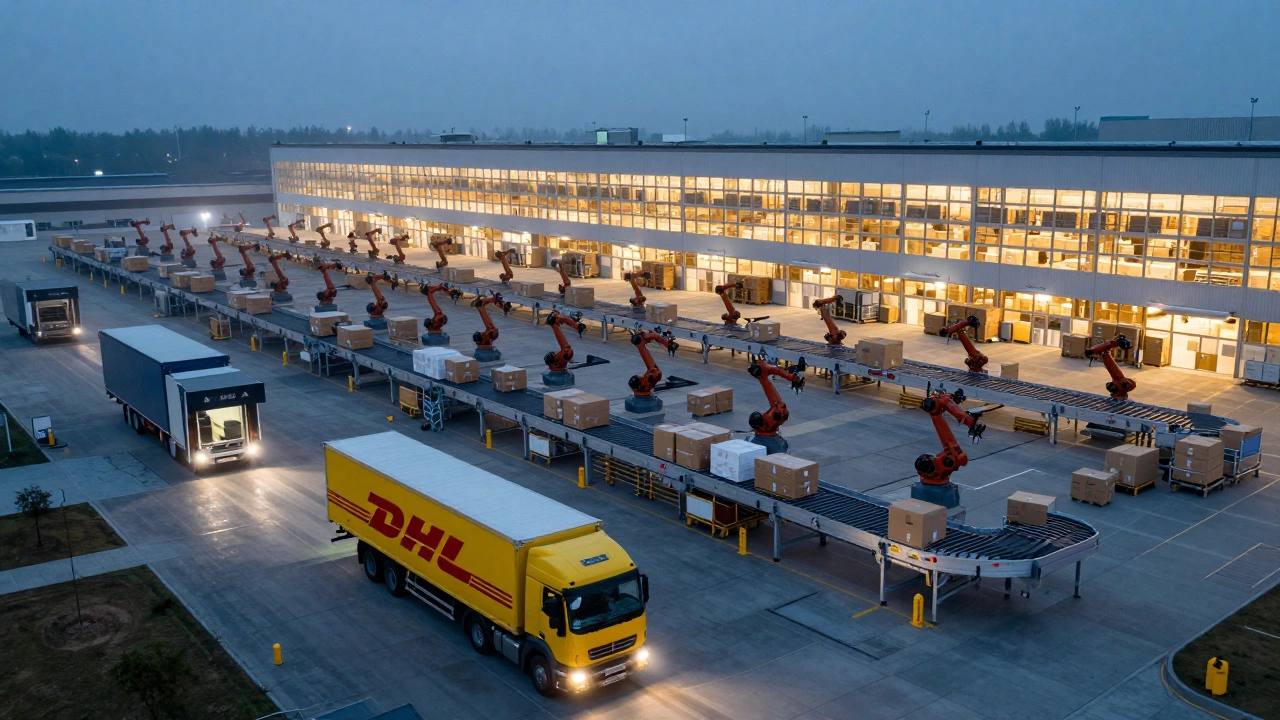
DHL is a global leader in logistics and a subsidiary of Deutsche Post DHL Group, specializing in express mail, freight, and supply chain solutions. Also known as DHL Express, it serves over 220 countries and territories.Why does DHL often win the title of "world leader"? Geography. While FedEx and UPS dominate North America, their networks thin out significantly once you leave the continent. DHL, however, was built for international trade. If you are a small business in Vietnam selling to a customer in Brazil, DHL is likely your primary carrier.
DHL’s strength lies in its cross-border expertise. They handle customs clearance more efficiently than almost anyone else because they do it constantly, everywhere. For businesses engaged in global e-commerce, DHL provides a unified platform to manage returns, duties, and tracking across borders. Their investment in automation hubs, such as the one in Leipzig, Germany, allows them to process millions of parcels daily with minimal human intervention.
However, DHL isn't perfect. Their last-mile delivery in remote rural areas can sometimes lag behind local carriers. They also face criticism for high pricing on smaller, non-urgent packages compared to regional competitors.
FedEx vs. UPS: The American Giants
If your focus is primarily within the United States or between major Western economies, the definition of "leader" shifts. Here, FedEx and UPS are the titans.
| Company | Primary Strength | Global Reach | Best For |
|---|---|---|---|
| DHL | International Express & Customs | 220+ Countries | Cross-border e-commerce, B2B documents |
| FedEx | Air Freight & Speed | 220+ Countries | Urgent domestic/international shipments |
| UPS | Road Network & Supply Chain | 220+ Countries | Bulk ground shipping, retail logistics |
| Maersk | Ocean Freight & End-to-End | 130+ Countries | Large cargo, container shipping, warehousing |
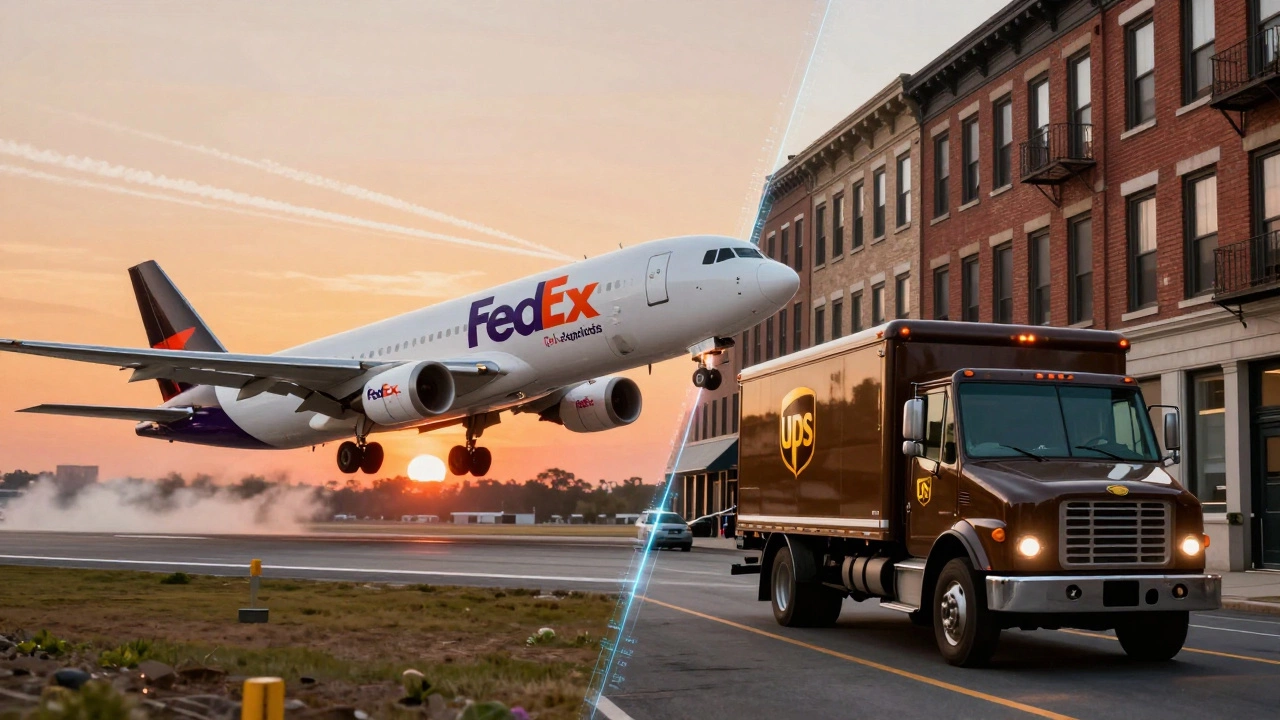
FedEx revolutionized the industry with its hub-and-spoke model centered in Memphis, Tennessee. This system allows for rapid sorting and redistribution of packages overnight. For businesses that need guaranteed next-day delivery within the US, FedEx remains the gold standard. Their air fleet is one of the largest in the world, giving them control over transit times that road-dependent carriers cannot match.
UPS, on the other hand, mastered the road. With a massive fleet of trucks and a sophisticated routing algorithm (ORION), they optimize every mile driven. This efficiency makes them incredibly cost-effective for heavier packages and bulk shipments. In recent years, UPS has acquired several supply chain firms to compete more directly with DHL in the warehousing and distribution space, blurring the lines between a package carrier and a full-service logistics partner.
The Shift to Integrated Supply Chains
The concept of a "logistics leader" is evolving. It is no longer just about moving boxes; it is about visibility, data, and resilience. Companies like Kuehne + Nagel and DB Schenker are rising in importance. These firms don't own as many planes or trucks as FedEx or DHL, but they excel at orchestrating complex movements involving multiple modes of transport.
Kuehne + Nagel, based in Switzerland, is arguably the world's largest freight forwarder. They specialize in connecting manufacturers with retailers through sea and air freight. If you buy a smartphone, Kuehne + Nagel likely managed the journey of the components from factories in Asia to assembly plants in Europe or America. They provide the "invisible" logistics that keep global manufacturing running.
This shift highlights a critical point: for large enterprises, the "leader" might not be the brand on the delivery van, but the backend partner managing their inventory levels, warehouse staffing, and supplier relationships. This is where software becomes crucial. Modern logistics leaders integrate deeply with ERP systems, providing real-time data analytics that predict delays before they happen.
Regional Powerhouses You Can't Ignore
While the global giants dominate headlines, regional players often provide better service and lower costs within their home markets. Ignoring them can lead to inefficiencies.
- China: SF Express and JD Logistics are behemoths. SF Express competes directly with DHL in speed and reliability within Asia. JD Logistics, backed by the e-commerce giant JD.com, offers ultra-fast delivery speeds in Chinese cities, sometimes delivering within hours of ordering.
- Europe: Alongside DHL, GLS (General Logistics Systems) and PostNL play significant roles in parcel delivery, particularly in the Benelux region and surrounding countries.
- Asia-Pacific: Ninja Van and J&T Express are key players in Southeast Asia, navigating the archipelagic challenges of countries like Indonesia and the Philippines with localized solutions.
For a business targeting these regions exclusively, partnering with a local leader often yields better results than forcing a global carrier to handle nuanced local regulations and address systems.

Technology: The New Battleground
By 2026, the difference between a good logistics provider and a great one is largely technological. All major players are investing billions in AI-driven route optimization, autonomous vehicles, and drone delivery pilots.
FedEx has been aggressive with its "On Demand Delivery" technology, allowing customers to change delivery instructions in real-time via an app. UPS uses machine learning to reduce carbon emissions by optimizing routes, saving millions of gallons of fuel annually. DHL has launched "Resilience360," a digital tool that helps clients monitor geopolitical risks and natural disasters that could disrupt their supply chains.
This tech war means that choosing a logistics partner is also a choice about data capability. If your business relies on precise inventory forecasting, you need a partner whose software integrates seamlessly with yours. A carrier with faster planes is useless if their tracking data is delayed by hours.
How to Choose Your Logistics Partner
So, who is the world leader for *you*? There is no single answer. Here is a quick decision framework:
- Define Your Primary Market: If 80% of your sales are in the US, stick with UPS or FedEx. If you are truly global, DHL is indispensable.
- Assess Shipment Type: Small, urgent documents? DHL Express. Heavy pallets? UPS Ground or a dedicated freight forwarder like Kuehne + Nagel.
- Check Technology Needs: Do you need API integrations for real-time tracking? Test the developer portals of your shortlisted carriers.
- Consider Cost vs. Speed: Premium services come at a premium price. For non-urgent items, consider economy options from regional carriers or consolidated shipping services.
Don't feel locked into one provider. Many successful businesses use a multi-carrier strategy. They might use DHL for international express, UPS for domestic ground, and a regional specialist for last-mile in specific dense urban areas. Diversification protects you from disruptions, whether it's a strike, a storm, or a system outage.
Is DHL better than FedEx for international shipping?
Generally, yes. DHL has a stronger network outside of North America and handles customs clearance more efficiently due to its global footprint. FedEx is excellent for US-centric international routes but may rely on partners for final delivery in remote areas abroad.
What is the largest logistics company by revenue?
Deutsche Post DHL Group is typically the largest by revenue, followed closely by FedEx and UPS. However, rankings can fluctuate based on currency exchange rates and annual performance variations.
Who is the leader in ocean freight logistics?
Maersk is widely considered the leader in ocean freight, having expanded from pure shipping to offer end-to-end supply chain solutions. Other major players include MSC (Mediterranean Shipping Company) and CMA CGM.
Are regional logistics companies better than global ones?
For domestic or intra-regional shipping, regional companies often offer better prices, faster local support, and more flexible terms. Global giants are superior for cross-border complexity and standardized global processes.
How important is software integration when choosing a logistics partner?
It is critical. Modern logistics requires real-time visibility. Partners with robust APIs and user-friendly dashboards allow you to automate label creation, track shipments instantly, and manage returns without manual data entry, reducing errors and saving time.