Courier Service Matcher
Not sure which courier solution fits your business? Answer three quick questions below to get a tailored recommendation based on industry standards for speed, cost, and security.
You might think your neighbour ordering a pair of shoes online is the biggest driver of the courier services industry. But if you look at the volume data, that’s actually just the tip of the iceberg. While consumer parcels get all the headlines, the real heavy lifters are often hidden in plain sight: hospitals moving blood samples, law firms sending signed contracts, and manufacturers shipping parts between factories.
So, who really books the most slots on those white vans? Is it the Amazon seller in Manchester or the pharmaceutical giant in London? The answer isn't as simple as picking one winner. It depends on whether you measure by sheer number of packages, total revenue, or urgency. Let's break down exactly which sectors dominate the road and why they rely so heavily on professional delivery networks.
Ecommerce Retailers Are the Volume Kings
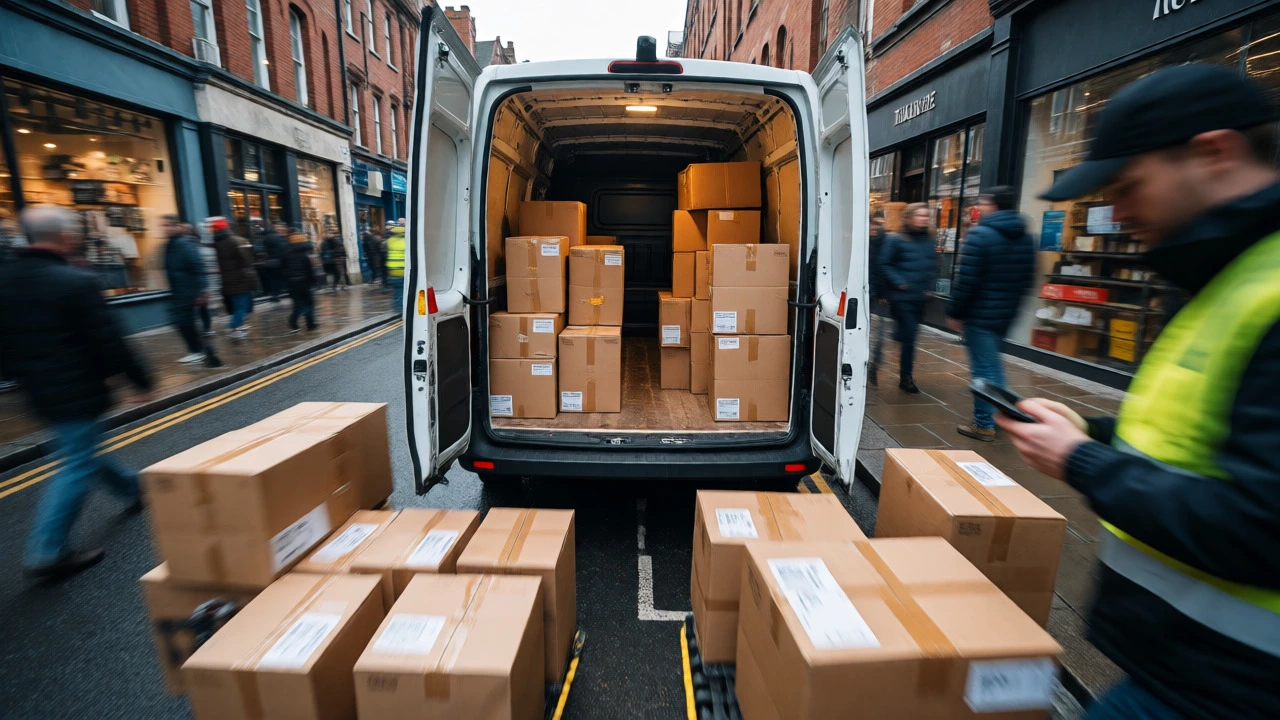
If we're counting individual parcels, Ecommerce retailers are undeniably the largest users of courier services. The shift from high-street shopping to online browsing has exploded the need for last-mile delivery. Every time someone clicks "Buy Now," a courier gets a job.
But not all ecommerce businesses use couriers the same way. Small independent sellers often struggle with costs because they lack volume discounts. They might pay £5-£8 per parcel. In contrast, massive retailers like ASOS or Argos negotiate rates down to pennies per unit because they ship millions of items a month. This disparity shapes how different businesses operate.
Why do they choose couriers over Royal Mail? Speed and tracking. When a customer expects next-day delivery, standard post feels too risky. Couriers offer guaranteed time windows and real-time GPS tracking. For an online store, a late delivery can mean a negative review, which hurts future sales more than the cost of the delivery itself.
Healthcare Needs Reliability Over Cost
Step away from retail, and you'll find a sector where price is secondary to precision: healthcare. Hospitals, clinics, and laboratories don't care about saving fifty pence if it means a sample degrades. They care about integrity and speed.
Medical couriers specialise in transporting biological samples, prescriptions, and medical equipment under strict temperature controls. Think about a blood test sent from a GP surgery to a lab. If that van sits in traffic without proper cooling, the result is wrong. That's why healthcare providers use specialised logistics companies rather than generalist parcel carriers.
- Cold Chain Logistics: Vaccines and insulin require specific temperatures (2-8°C). Standard vans won't cut it.
- Stat Delivery: Emergency organs or critical drugs need immediate transport, often via dedicated motorbike couriers.
- Compliance: Healthcare deliveries must follow strict regulatory standards, requiring trained drivers.
The frequency here is lower than retail, but the stakes are life-or-death. A missed retail delivery loses money; a missed medical delivery can lose lives. This makes healthcare one of the most consistent and loyal user groups for premium courier services.
Legal and Financial Firms Still Rely on Paper
You'd think email killed the courier industry, but lawyers disagree. Despite digital transformation, many legal documents still require wet signatures. Wills, property deeds, and court filings often need physical movement between offices, clients, and courts.
Law firms use courier services primarily for secure document transfer and urgent contract execution. These aren't bulky boxes; they're envelopes. But they carry immense value. A lost deed could delay a house sale by weeks. Because of this, legal users prioritise security and proof of delivery above all else.
They typically use same-day courier services within city centres. A solicitor in Liverpool needs a document signed by a client in Manchester by 5 PM. They can't wait for overnight mail. This creates a niche market for fast, small-parcel delivery that pays well due to the urgency and liability involved.

Manufacturing and B2B Supply Chains Move Heavy Goods
While retail moves small boxes, manufacturing moves pallets. Business-to-business (B2B) logistics is a massive chunk of the courier world, though it looks different. Instead of a driver knocking on your door, a lorry backs into a loading bay.
Factories need components delivered just-in-time to keep production lines running. If a car plant runs out of windscreen wipers, the whole line stops. That costs thousands per minute. So, manufacturers use freight and pallet networks that function like super-sized courier services.
| Sector | Primary Need | Typical Parcel Size | Frequency | Cost Sensitivity |
|---|---|---|---|---|
| Ecommerce | Speed & Tracking | Small/Medium Boxes | Very High | High |
| Healthcare | Temperature Control | Small/Specialised | Moderate | Low |
| Legal | Security & Urgency | Envelopes | Moderate | Low |
| Manufacturing | Volume & Timing | Pallets/Crates | High | Moderate |
These businesses rarely shop around for deals. They sign annual contracts with major logistics providers like DHL Freight or XPO Logistics. The relationship is long-term because switching suppliers risks disrupting the supply chain.
Pharmacies and Local Businesses Drive Same-Day Demand
Don't overlook local commerce. Independent pharmacies, florists, and auto-parts shops are huge users of local courier networks. Why? Because their customers expect immediacy.
If you buy flowers for an anniversary, you want them there today, not tomorrow. If a mechanic needs a part to fix a car, they need it in two hours. These small businesses often partner with local express delivery apps or traditional minicab-style courier firms.
This segment is growing fastest in urban areas. As consumers demand instant gratification, even small shops need access to professional delivery infrastructure. They can't afford their own fleet, so they rent capacity from couriers. This gig-economy style usage blurs the line between personal and commercial delivery, creating a hybrid model that relies heavily on flexible courier platforms.

Which User Group Is Growing Fastest?
While ecommerce holds the crown for volume, the fastest-growing user base is actually cross-border sellers. With Brexit and global trade shifts, UK businesses are selling more to Europe and beyond. This requires complex customs clearance and international tracking, tasks that only specialised courier services handle efficiently.
Small brands are now acting like multinationals. A handmade jewellery maker in Brighton might sell to customers in Germany and France weekly. They can't navigate customs alone. They lean on courier partners who bundle shipping with paperwork. This trend pushes courier services to become more tech-savvy, integrating directly with Shopify or WooCommerce stores to automate labels and duties.
How to Choose the Right Service for Your Business Type
Knowing who uses couriers helps you pick the right one for yourself. Here’s a quick guide based on your likely profile:
- If you run an online store: Look for providers with strong e-commerce integrations and competitive rates for volumes over 100 parcels/month. Check their failure rate for damaged goods.
- If you work in healthcare: Verify ISO certifications for cold chain handling. Ask for proof of temperature logging during transit.
- If you’re in legal: Prioritise insurance coverage and signature capture features. Speed matters, but security matters more.
- If you’re in manufacturing: Negotiate fixed rates for pallet movements. Ensure they have reliable loading dock access times.
The key takeaway? There is no single "best" courier. There is only the best courier for your specific pain point. Ecommerce cares about cost-per-unit. Healthcare cares about risk mitigation. Legal cares about certainty. Match your priority to the provider's strength.
Do small businesses use courier services more than large corporations?
No, large corporations and major ecommerce retailers account for the vast majority of courier volume. However, small businesses are increasing their usage significantly as they adopt same-day delivery expectations. Large firms benefit from bulk discounts, making their per-unit cost much lower, but small businesses drive growth in niche, high-margin segments like legal or medical deliveries.
Why do law firms still use couriers instead of email?
Many legal documents require original wet signatures to be valid, such as property deeds, wills, and certain court filings. Additionally, some jurisdictions or specific contractual agreements mandate physical delivery for proof of service. Couriers provide the necessary chain of custody documentation that email cannot replicate.
What is the difference between standard and express courier services?
Standard services usually offer next-day or two-day delivery with broader geographic coverage and lower costs. Express services guarantee faster times, often same-day or within a few hours, using dedicated vehicles or direct routes. Express is preferred for urgent items like legal contracts, medical samples, or emergency parts, while standard suits general ecommerce parcels.
How does temperature control affect courier usage in healthcare?
Temperature control is critical for preserving the efficacy of vaccines, blood products, and certain medications. Healthcare providers use specialised couriers equipped with refrigerated vans and data loggers to prove that items remained within required ranges (e.g., 2-8°C) throughout transit. Standard couriers without this capability cannot serve this sector reliably.
Are courier services used more for domestic or international shipments?
Domestic shipments dominate in terms of volume and frequency, driven largely by local ecommerce and intra-country business logistics. International shipments are growing rapidly, especially for cross-border ecommerce, but they represent a smaller percentage of total daily deliveries due to higher costs, longer transit times, and complex customs requirements.