

International Shipping Cost Estimator
Shipment Details
Cost Breakdown
Enter package dimensions and weight to see the cost analysis.
Shipping a package across borders feels like paying a premium just for the privilege of moving boxes. You calculate your product cost, add packaging, and then hit 'calculate shipping'-only to see the price double or triple. It’s frustrating, especially when you’re trying to keep margins healthy. But here is the truth: high international shipping rates are rarely fixed. They are negotiable, optimizable, and often inflated by inefficiencies you can control.
In 2026, with global supply chains still adjusting to post-pandemic realities and new digital customs protocols, saving on international shipping requires more than just picking the cheapest carrier. It demands a strategic approach to packaging, documentation, and carrier selection. Whether you are a small Etsy seller sending handmade goods or a mid-sized e-commerce brand expanding into Europe or Asia, the principles remain the same. Reduce weight, eliminate dimensional waste, and leverage technology to avoid hidden fees.
What is the single biggest factor in reducing international shipping costs?
Dimensional weight is the biggest hidden cost driver. Carriers charge based on the space your package occupies, not just its actual weight. If you ship a light but bulky item, you pay for air. Reducing package size through better packaging materials directly lowers this calculated weight, often cutting costs by 20-40%.
Mastering Dimensional Weight vs. Actual Weight
If you only take one thing away from this guide, let it be this: carriers do not care about how heavy your box is; they care about how much space it takes up on their plane or truck. This concept is known as Dimensional Weight is a pricing methodology used by carriers that charges based on the volume of a package rather than its physical mass.
Here is how it works. The carrier measures the length, width, and height of your package in inches (or centimeters) and multiplies them together. Then, they divide that number by a divisor specific to the carrier. For example, UPS and FedEx in the US use a divisor of 139 for domestic and 166 for international parcels. DHL uses 5000 when using metric units. If the resulting dimensional weight is higher than the actual scale weight, you pay for the dimensional weight.
Imagine you are shipping a lightweight jacket. You put it in a large shoebox because it was handy. The jacket weighs 2 pounds. The box, however, has a dimensional weight of 8 pounds. You will be charged for 8 pounds. Now, imagine you vacuum-sealed that jacket and shipped it in a poly mailer. The actual weight is still 2 pounds, but the dimensional weight drops to 2.5 pounds. You just saved yourself the cost of shipping 5.5 pounds of air. That is a massive difference over hundreds of orders.
- Measure accurately: Use a tape measure, not your eyes. Round up to the nearest whole inch or centimeter as required by the carrier.
- Right-size packaging: Buy boxes in various sizes so you can match the product to the container closely.
- Use poly mailers: For non-fragile items, flexible mailers have negligible dimensional weight compared to rigid boxes.
Leveraging Commercial Accounts and Negotiated Rates
Walking into a local post office or courier drop-off point means paying retail prices. These rates are designed for occasional shippers, not businesses. To save significantly, you need a commercial account. Even if you are a solo entrepreneur, you qualify for business rates.
Major carriers like DHL Express, FedEx, and UPS offer online accounts where you can print labels at home. These online rates are typically 20-50% lower than counter rates. However, the real savings come from negotiating. If you are shipping consistently, even just 10-20 packages a week, you have leverage.
Contact your local sales representative. Do not ask for a discount; ask for a "negotiated contract rate." Show them your monthly volume. Ask specifically about discounts on fuel surcharges and residential delivery fees, which are often added on top of the base rate. Many shippers forget that these accessorial charges can add 15-20% to the final bill. Getting a waiver or reduction on these fees is often easier than lowering the base shipping rate.
| Rate Type | Typical Discount | Best For |
|---|---|---|
| Retail/Counter Rate | 0% | One-time personal shipments |
| Online Account Rate | 20-30% | Small businesses starting out |
| Negotiated Contract Rate | 40-70% | Established sellers with consistent volume |
| Marketplace Integrated Rate | Variable | Sellers on Amazon, eBay, Shopify |
The Power of Shipping Aggregators and Software
You do not need to negotiate with every carrier individually. Shipping aggregators like Pirate Ship, Shippo, or EasyShip act as middlemen. Because they aggregate the volume of thousands of small businesses, they buy shipping credits in bulk and pass those discounts to you. In many cases, these platforms offer rates comparable to what large corporations get, without requiring a minimum volume commitment.
Using software also automates the comparison process. Instead of manually checking DHL, FedEx, and UPS websites, an aggregator shows you all options side-by-side for each order. One day, UPS might be cheapest for a package to Germany. The next day, DHL might win due to a promotional route rate. Software ensures you always pick the winner.
Furthermore, these tools help with address validation. Incorrect addresses lead to returns, redelivery fees, and lost packages. Validating addresses at checkout prevents these costly errors before the label is even printed. In 2026, with stricter customs enforcement, accurate data entry is not just a convenience; it is a financial safeguard.
Choosing the Right Service Level
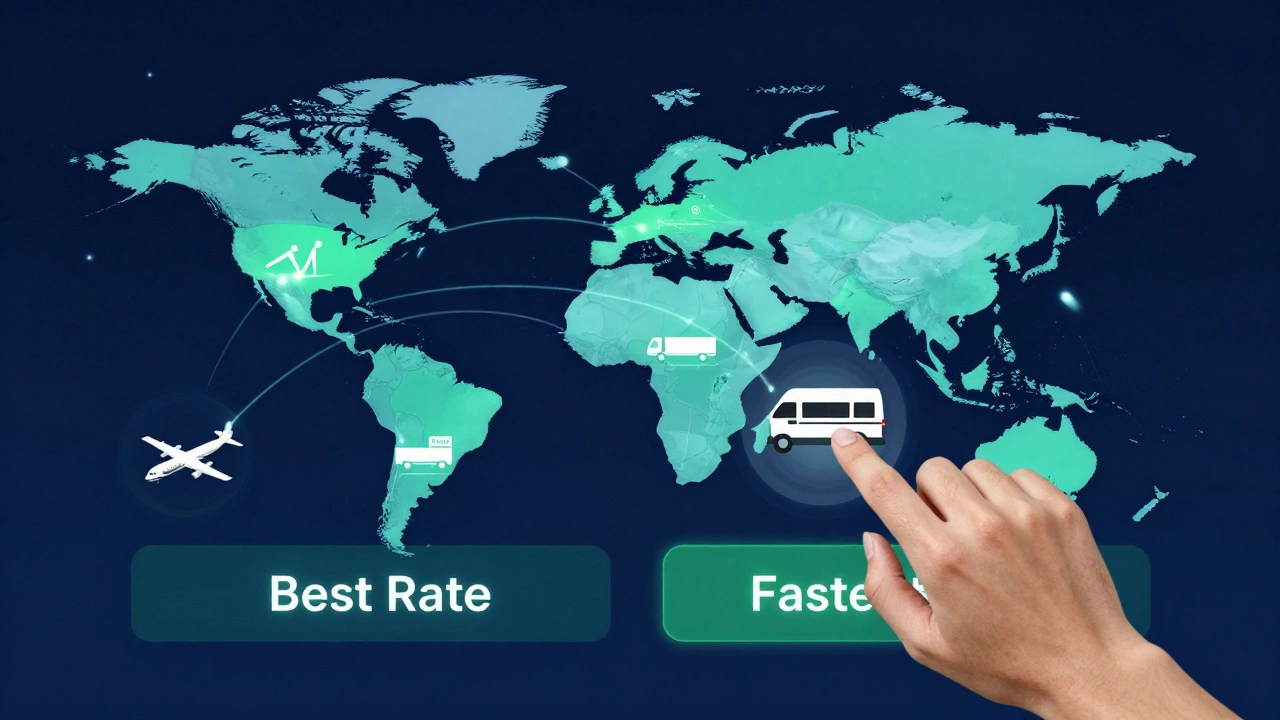
Speed costs money. Always. But do your customers really need their package in two days? Often, no. Offering multiple shipping tiers allows customers to choose speed versus cost. Make the slower, cheaper option the default or highlight its value. For example, "Standard International (7-14 days)" is usually handled by postal services like USPS, Royal Mail, or China Post, which are significantly cheaper than express couriers.
Consider hybrid services. Companies like USPS Global Express Guaranteed or DHL eCommerce combine the affordability of postal networks with the tracking reliability of private couriers. They fly the package internationally via air cargo but hand it off to the local postal service for final delivery. This cuts costs dramatically while maintaining reasonable transit times.
Customs Documentation and Hidden Fees
A poorly filled-out customs form is a recipe for disaster. When a package gets stuck in customs, it incurs demurrage fees, storage charges, and potentially return shipping costs. Worse, the recipient may refuse to pay import duties, leaving you with a stranded package.
To avoid this, be precise with Harmonized System (HS) codes. These six-digit codes classify your product for taxation. Using generic descriptions like "gift" or "merchandise" raises red flags for customs officers, leading to manual inspections and delays. Instead, use specific terms like "Cotton T-shirt, Men's" or "Ceramic Mug." Most shipping software now includes databases of HS codes to help you select the right one.
Also, consider Incoterms. Are you shipping DDP (Delivered Duty Paid) or DDU (Delivered Duty Unpaid)? With DDP, you pre-pay the duties and taxes. While this increases your upfront cost, it improves the customer experience and reduces the chance of refusal. With DDU, the customer pays upon delivery. In some regions, like the EU with VAT reforms, DDP is becoming mandatory for low-value items to ensure tax compliance. Check current regulations for your target markets to avoid penalties.
Consolidation and Warehousing Strategies
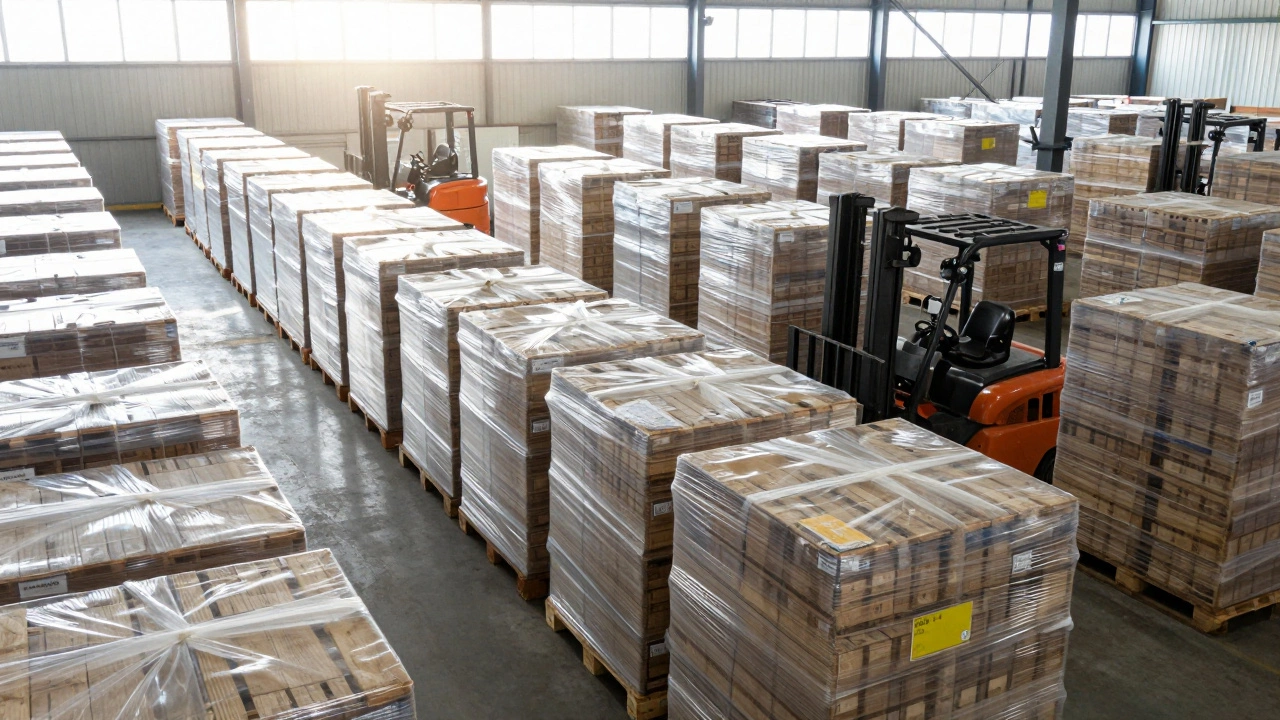
If you sell to multiple customers in the same country, consider consolidating shipments. Instead of sending five separate packages to five different people in London, send one pallet to a third-party logistics (3PL) provider in the UK. The 3PL then handles last-mile delivery locally. This shifts your shipment from expensive international air parcel to cheaper sea freight or consolidated air freight.
This strategy, known as cross-border e-commerce fulfillment, is highly effective for brands scaling globally. By storing inventory closer to the customer, you reduce shipping distances, lower costs, and drastically improve delivery speeds. It transforms international shipping from a per-order expense into a predictable operational cost.
Insurance and Liability
It is tempting to skip insurance to save a few dollars. However, losing a high-value package without coverage costs far more than the premium. Most carriers include limited liability (often around $100 USD) in the base rate. For anything above that, purchase declared value protection.
Compare carrier insurance rates with third-party providers. Sometimes, specialized insurance companies offer better rates for frequent shippers. Ensure your policy covers loss, damage, and theft during transit. Keep photos of your products before shipping as proof of condition. This simple step can expedite claims if something goes wrong.
Is it cheaper to ship internationally via USPS or private couriers?
For lightweight packages under 4 lbs, national postal services like USPS, Royal Mail, or La Poste are generally cheaper. For heavier packages or time-sensitive deliveries, private couriers like DHL, FedEx, or UPS often provide better value due to faster transit and superior tracking, despite higher base rates.
How can I avoid dimensional weight charges?
You cannot avoid them entirely, but you can minimize them. Use smaller boxes, remove excess packaging material, and switch to poly mailers for soft goods. Measure your packages accurately to ensure you are not being overcharged due to rounding errors.
Do I need a commercial account to get discounted rates?
Yes, most significant discounts require a business account. However, you can start with free shipping aggregators that offer discounted rates without a formal contract. As your volume grows, you should negotiate direct contracts with carriers for deeper discounts.
What are HS codes and why do they matter?
HS (Harmonized System) codes are standardized numerical classifications for traded products. They determine the duty and tax rates applied to your shipment. Using incorrect codes can lead to customs delays, fines, or seized packages. Accurate coding ensures smooth clearance and predictable costs.
When should I use a 3PL for international shipping?
Consider a 3PL when you have consistent sales volume in specific foreign markets. If you are regularly shipping to the UK, for example, storing inventory in a UK warehouse allows you to ship domestically within the UK, avoiding international shipping costs and long transit times entirely.