
Amazon Logistics vs UPS: Size Comparison Tool
Select a metric category to compare Amazon Logistics and UPS across different dimensions of their operations.
Package Volume
Annual packages handled globally
Workforce Size
Total employees and contractors
Geographic Reach
Countries and territories served
Revenue Model
How they generate income
Fleet Ownership
Owned vs contracted vehicles
Last-Mile Speed
Delivery speed in urban areas
Look at the map of the United States. You see a grid of roads covered in two distinct colors: brown and blue. Brown is UPS, a legacy carrier with over a century of history. Blue is Amazon Logistics, the fast-growing delivery arm of the e-commerce giant. The question on everyone’s mind in 2026 isn't just who delivers your package, but who actually controls the movement of goods across the country. Is Amazon Logistics bigger than UPS?
The short answer is yes, if you measure by the sheer volume of packages moving through their hands every day. But the longer answer is messy. "Bigger" can mean revenue, fleet size, number of employees, or geographic reach. When we break down these metrics, the story shifts from a simple competition to a complex war for dominance in the last mile.
Defining "Big": Volume vs. Revenue
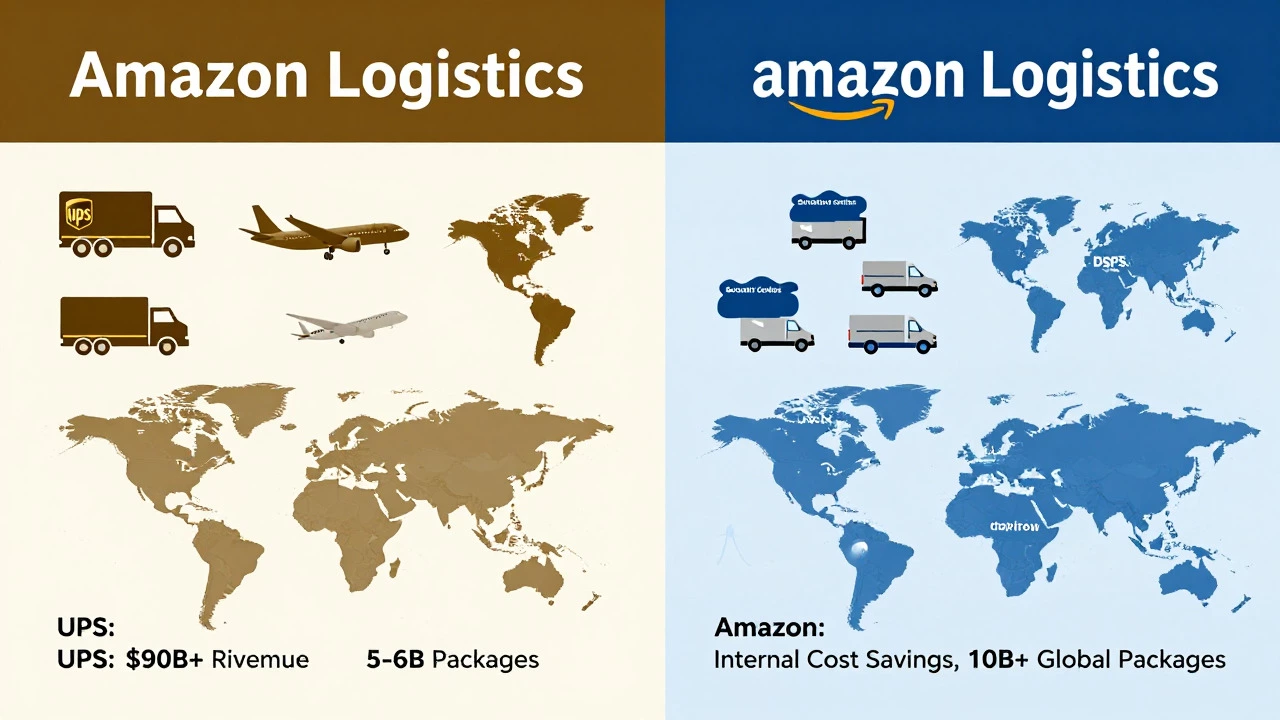
To understand who is bigger, we have to look at what they are counting. UPS is a public company. They report everything. In recent fiscal years, UPS has handled roughly 5 to 6 billion packages annually. That is a massive number. It represents decades of building relationships with businesses that aren't Amazon.
Amazon does not publish its total package volume publicly because it considers this data a competitive secret. However, industry analysts estimate that Amazon now handles more than 10 billion packages a year globally. Even if we look only at the US market, estimates suggest Amazon moves between 3 and 4 billion packages domestically. This puts them neck-and-neck with UPS in terms of raw throughput, but when you add international volumes, Amazon’s total count likely surpasses UPS.
However, revenue tells a different story. UPS generates over $90 billion in annual revenue. Why? Because they charge customers directly for shipping. Amazon Logistics is mostly an internal cost center. They don’t sell shipping labels to third parties as aggressively as UPS does (though Amazon Shipping is expanding). So, while Amazon might move more boxes, UPS makes more money from those boxes.
| Metric | UPS | Amazon Logistics |
|---|---|---|
| Annual Package Volume (Est.) | ~5-6 Billion | ~10+ Billion (Global) |
| Revenue Source | Direct Customer Payments | Internal Cost Savings |
| Fleet Type | Owned & Leased Trucks | Contractors (DSPs) & Owned |
| Geographic Focus | Global (220+ Countries) | US, UK, Europe, Japan |
| Last-Mile Model | Full-Time Employees | Hybrid (Employees + Contractors) |
The Fleet Difference: Owned vs. Contracted
This is where the real structural difference lies. UPS owns one of the largest private fleets in the world. They have tens of thousands of brown trucks and hundreds of airplanes. These vehicles are owned or leased by UPS, driven by unionized full-time employees. This gives UPS incredible control over service quality and reliability. If a driver calls in sick, UPS has protocols to cover that route immediately.
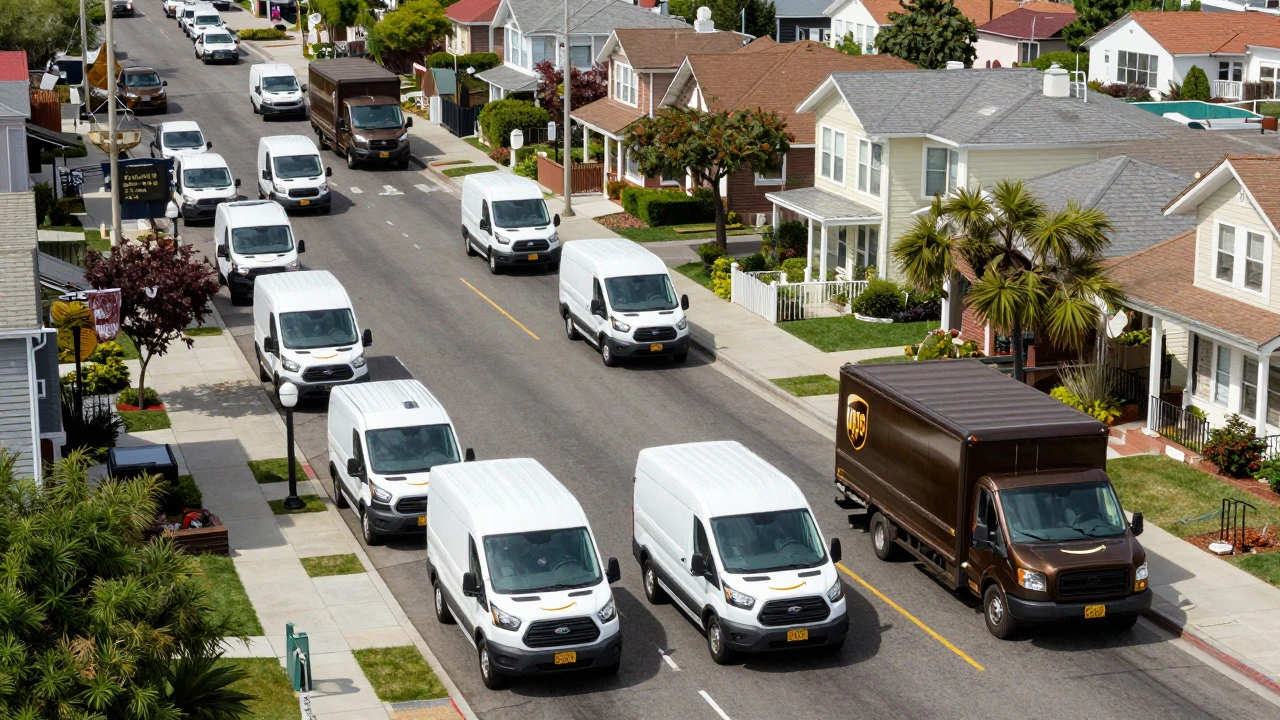
Amazon Logistics operates differently. They rely heavily on Delivery Service Partners (DSPs). These are small, independent trucking companies that buy their own vans (usually Ford Transits) and hire their own drivers. Amazon provides the technology, the branding, and the packages. As of 2026, there are over 700 DSPs in the US alone. This model allows Amazon to scale up incredibly fast during peak seasons like Prime Day or Christmas without having to manage thousands of new W-2 employees directly.
So, who has the bigger fleet? In terms of physical assets owned, UPS wins. In terms of active vehicles hitting the road, Amazon is catching up fast. Amazon is also buying its own electric vans and hiring direct drivers in major cities to reduce reliance on contractors, blurring the line between the two models.
Workforce Size: Employees vs. Contractors
When people ask if Amazon is bigger, they often think about jobs. UPS employs roughly 500,000 people worldwide. Almost all of them are full-time, with benefits and strong union representation (Teamsters). This workforce includes pilots, mechanics, IT staff, and drivers.
Amazon’s total workforce is much larger, exceeding 1.5 million people globally. However, most of these work in warehouses (Fulfillment Centers), not in logistics delivery. The number of people specifically driving for Amazon Logistics is harder to pin down because many are independent contractors through DSPs or via Amazon Flex, a gig-economy app that lets individuals deliver packages using their personal cars. Estimates suggest Amazon has between 200,000 and 300,000 active last-mile drivers in the US. While this is fewer than UPS’s global employee count, the density of Amazon drivers in urban areas is significantly higher.
Geographic Reach: Global Giant vs. Local Dominance
If you live in a rural town in Montana or a remote village in Africa, UPS is probably your only option for reliable ground shipping. UPS has a presence in over 220 countries and territories. Their network is built for long-haul international trade. They move freight from Shanghai to Chicago seamlessly.
Amazon Logistics is primarily focused on key markets: the United States, the United Kingdom, Germany, France, Italy, Spain, Japan, and Canada. They do not offer general consumer shipping services in most of the developing world. If you are a small business owner trying to ship a product to Brazil, you will likely use UPS, DHL, or FedEx, not Amazon Logistics. Therefore, in terms of global footprint, UPS is undeniably bigger.
However, within the US, Amazon’s reach is deeper in residential areas. Amazon has invested billions in building local sortation centers near population hubs. This means an Amazon package might travel from a warehouse 20 miles away to your door in hours. A UPS package might come from a regional hub hundreds of miles away. For last-mile speed in dense cities, Amazon’s localized network feels "bigger" because it is everywhere.
Technology and Software Infrastructure
Since this topic relates to logistics software, we must talk about the brains behind the operations. UPS uses ORION (On-Road Integrated Optimization and Navigation), a proprietary algorithm that optimizes driver routes to save millions of gallons of fuel. It is one of the most sophisticated routing systems in the world.
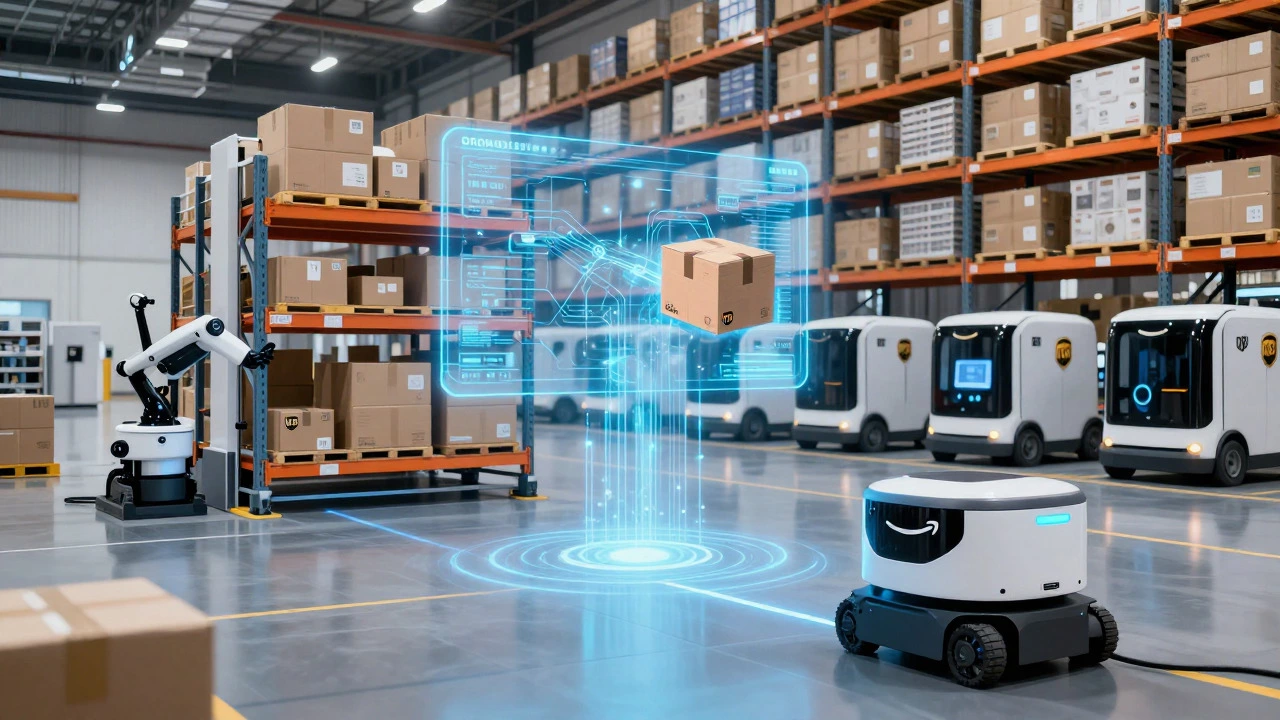
Amazon builds its own tech stack. Their system integrates inventory management, warehouse robotics, and last-mile delivery into one seamless flow. Amazon knows exactly where a package is in its fulfillment center before it even leaves the building. This end-to-end visibility allows them to predict demand and pre-position inventory closer to customers. UPS relies on partners for the first part of the journey; Amazon controls the entire chain. From a software perspective, Amazon’s integrated ecosystem is more comprehensive, even if UPS’s specific routing algorithms are highly respected.

Which One Is Better for Your Business?
For a large enterprise needing global reach, UPS is still the king. Their reliability, insurance options, and customs brokerage services are unmatched. If you need to ship heavy freight internationally, you call UPS.
For e-commerce sellers selling primarily in the US or Europe, Amazon Logistics (via Multi-Channel Fulfillment) offers faster delivery speeds and lower costs. The convenience of integrating directly with Amazon’s seller platform makes it attractive. However, you lose some brand control since the package arrives in an Amazon-branded box or mailer.
The rise of Amazon Relay, which connects shippers with carriers including UPS, shows that the lines are blurring. Amazon is becoming a marketplace for logistics itself, competing with UPS while also hiring them.
Future Outlook: Electric Vehicles and Automation
By 2030, both companies aim to have significant portions of their fleets electrified. UPS has ordered thousands of electric vans from various manufacturers. Amazon has taken a bold step by ordering 100,000 electric delivery vans from Rivian. This investment suggests Amazon intends to maintain its aggressive expansion strategy. The company that solves the battery range and charging infrastructure problem for last-mile delivery will have a decisive advantage in efficiency and cost.
In summary, is Amazon Logistics bigger than UPS? In terms of package volume and domestic last-mile penetration, yes. In terms of global reach, revenue, and owned assets, no. It depends entirely on how you define "big." For the average consumer receiving a package, Amazon’s network feels larger because it is faster and more frequent. For the global economy, UPS remains the backbone of international trade.
Does Amazon Logistics deliver to PO Boxes?
Generally, no. Amazon Logistics typically delivers to physical addresses only. For PO Boxes, Amazon usually defaults to USPS (United States Postal Service) or other carriers that have contracts with the post office for last-mile access to boxes.
Can I use Amazon Logistics for my non-Amazon online store?
Yes, through Amazon Multi-Channel Fulfillment (MCF). You can store your inventory in Amazon's warehouses, and they will pick, pack, and ship orders from your Shopify or WooCommerce store using Amazon Logistics. However, availability varies by region.
Why are there so many Amazon delivery vans compared to UPS?
Amazon uses a decentralized model with many small Delivery Service Partners (DSPs). Each DSP runs a small fleet. This creates a high density of white vans in residential neighborhoods. UPS uses larger trucks that make stops along wider routes, resulting in fewer visible vehicles per neighborhood.
Is Amazon Logistics cheaper than UPS Ground?
For Amazon Prime members, it is free. For third-party sellers, MCF rates can be competitive but are not always transparently cheaper than negotiated UPS Ground rates. Large shippers often find UPS more cost-effective for heavy or bulky items due to established commercial discounts.
Will Amazon replace UPS completely?
Unlikely. UPS has too much entrenched infrastructure in international shipping, air cargo, and heavy freight. Amazon is focused on light parcels and last-mile delivery. They will continue to coexist, with Amazon potentially outsourcing overflow to UPS during peak seasons.