
International Shipping Strategy Matcher
Input your shipment details below to receive a data-driven recommendation for the best carrier in 2026.
Recommended Strategies
Choosing a carrier for cross-border moves is less about finding the "best" brand and more about matching the right service level to your specific risk tolerance. One day, you might need a package to land in Tokyo within 48 hours; the next, you might be shipping bulk inventory to Berlin where cost efficiency matters more than speed. Reliability isn't just about on-time delivery-it’s about predictability in tracking, clarity in customs handling, and consistency in last-mile execution.
The global logistics landscape has shifted significantly since 2024. With rising fuel surcharges and tighter border controls, the gap between top-tier carriers and budget options has widened. This guide breaks down who actually delivers on their promises in 2026, based on operational data, customer feedback trends, and real-world performance metrics across major trade lanes.
Defining Reliability in Global Logistics
Reliability in the context of international freight involves three core components: transit time accuracy, cargo integrity, and documentation precision. It is not merely about whether the box arrives, but whether it arrives when promised, without damage, and with clear visibility at every checkpoint.
- Transit Time Accuracy: The percentage of shipments that arrive within the quoted window. Top carriers aim for >95% accuracy.
- Cargo Integrity: The rate of lost or damaged goods. For fragile or high-value items, this metric outweighs speed.
- Documentation Precision: Errors in commercial invoices or HS codes cause delays. Reliable partners have robust pre-clearance systems.
Top Tier Carriers: The Heavy Hitters
For businesses requiring absolute certainty, the integrated global express networks remain the gold standard. These companies own their aircraft, trucks, and sorting facilities, giving them control over the entire supply chain.
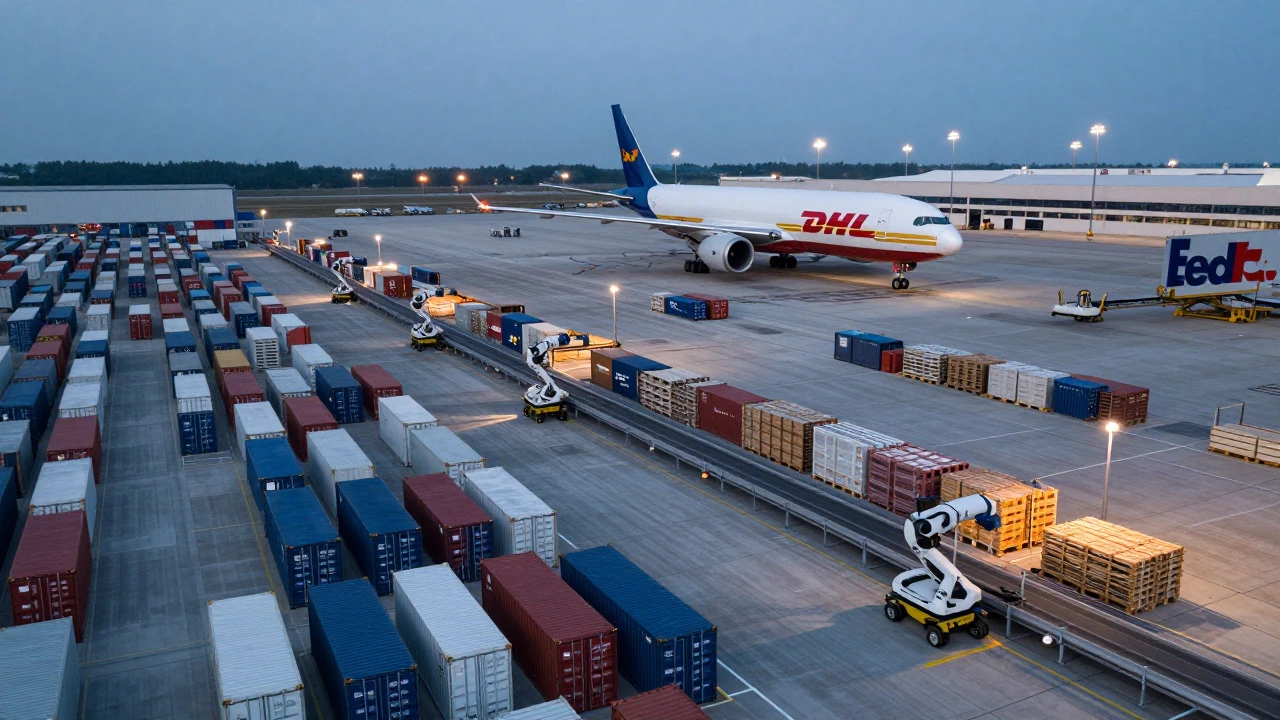
DHL Express is a German multinational courier delivery company known for its extensive air network and strong presence in Europe and Asia. DHL consistently leads in European intra-continental routes. If you are shipping from New York to London or Shanghai to Frankfurt, DHL often outperforms competitors in both speed and consistency. Their customs brokerage capabilities are particularly strong in the EU, reducing the risk of packages getting stuck at borders due to paperwork errors.
FedEx International Priority is a premium overnight and two-day international shipping service offered by FedEx, focusing on North American and Asian corridors. FedEx dominates the trans-Pacific and trans-Atlantic lanes. Their hub-and-spoke model through Memphis and Liège allows for rapid consolidation. However, their last-mile delivery in rural areas of certain countries can be inconsistent compared to their line-haul performance. They are ideal for time-sensitive B2B shipments where the origin and destination are major economic hubs.
UPS Worldwide Express is a premium international shipping service by UPS, leveraging its massive ground and air network for reliable cross-border delivery. UPS excels in North America and Western Europe. Their technology stack offers detailed tracking granularity, including temperature monitoring for sensitive goods. UPS is often the preferred choice for industrial clients who require strict compliance and audit trails.
Regional Specialists and Emerging Players
While the big three dominate long-haul routes, regional specialists often provide better value and local expertise for specific corridors.
China Post EMS is the postal service of China offering international express mail services, known for competitive pricing on e-commerce parcels. For small e-commerce packages moving from China to the US or Europe, China Post EMS has become a reliable alternative. While slower than FedEx (taking 7-14 days), it is significantly cheaper and has improved its tracking infrastructure dramatically since 2023. It is the go-to for low-margin retail goods where a few extra days in transit don’t impact customer satisfaction.
DPDgroup is a European parcel delivery group operating under brands like DPD and Chronopost, specializing in last-mile delivery across Europe. If your shipment ends in continental Europe, partnering with a local forwarder who hands off to DPD ensures faster last-mile delivery than waiting for a global carrier’s local partner. DPD’s network density in Western Europe means fewer missed delivery attempts and better customer service interactions.

Comparison of Key Metrics
| Carrier | Best For | Avg Transit (US-EU) | Customs Strength | Cost Level |
|---|---|---|---|---|
| DHL Express | Europe & Asia Routes | 2-3 Days | High | Premium |
| FedEx International | North America & Asia | 3-4 Days | Medium-High | Premium |
| UPS Worldwide | Industrial & Compliance | 3-4 Days | High | Premium |
| China Post EMS | E-commerce (Low Value) | 7-14 Days | Medium | Budget |
| DPDgroup (Local) | European Last-Mile | 2-5 Days (Total) | Varies by Partner | Mid-Range |
The Hidden Factor: Customs Clearance
The most common reason for "unreliable" shipping isn't the truck or plane-it's customs. In 2026, digital customs declarations are mandatory in many jurisdictions, including the EU and UK. A reliable shipping company doesn't just move boxes; they manage data. Look for carriers that offer:
- Pre-Clearance Options: Services that file customs documents before the shipment lands, cutting dwell time at ports by up to 48 hours.
- HS Code Validation: Automated checks to ensure product classifications are correct, avoiding penalties.
- Duty & Tax Calculation Tools: Accurate upfront estimates so recipients aren't surprised by fees, which often lead to rejected deliveries.
How to Choose the Right Partner for Your Needs
There is no single "most reliable" company for everyone. Your choice depends on your volume, product type, and destination. Scenario A: High-Value Electronics (US to Japan) Choose FedEx International Priority. You need speed and insurance coverage. FedEx’s direct air links minimize handling events, reducing damage risk. Ensure you buy full replacement value insurance. Scenario B: Bulk Fashion Inventory (UK to Australia) Consider Sea Freight + Local Delivery. Air freight is too expensive for heavy clothing. Use a consolidator for sea freight to Sydney, then hand off to a local Australian carrier like AusPost or StarTrack for the final mile. This hybrid approach balances cost and reliability. Scenario C: Small E-commerce Orders (China to US) Use China Post EMS or specialized e-commerce lines like YunExpress. Customers expect free or cheap shipping; premium carriers will eat your margin. As long as you set realistic expectations (7-10 days), these services are highly reliable for their price point.
Red Flags to Watch Out For
Before signing a contract or booking a shipment, check for these warning signs:
- Vague Tracking Updates: If status updates stop after leaving the origin country, you’re likely using a sub-contractor with poor integration.
- No Customs Support: If the carrier says "customs is the receiver's problem," ask how many returns happen due to unpaid duties.
- Inconsistent Pricing: Sudden, unexplained surcharges indicate poor financial health or hidden costs.
- Lack of Insurance Clarity: Read the fine print. Many carriers limit liability to $100 per pound unless you pay extra. Know your exposure.
Future Trends in Shipping Reliability
By late 2026, we are seeing the rise of AI-driven route optimization. Carriers are using machine learning to predict congestion at ports and adjust routes in real-time. This means that while traditional schedules may still show 5 days, actual delivery might take 4 or 6 depending on dynamic conditions. Smart shippers now use API integrations to pull live ETA predictions rather than relying on static quotes. Additionally, sustainability is becoming a reliability factor. Carbon-neutral shipping options are no longer just a marketing gimmick; they are required by some corporate procurement policies. Choosing a carrier with verified carbon offset programs ensures you meet both logistical and ESG goals.
Which is the fastest international shipping company?
Speed depends on the route. For North America to Europe, DHL Express and FedEx International Priority are tied for first place, often delivering in 2-3 business days. For Asia to North America, FedEx tends to have a slight edge due to its hub structure in Memphis and Asia. Always check the specific lane, as "fastest" is relative to origin and destination.
Is DHL better than FedEx for international shipping?
It depends on your region. DHL is generally superior for intra-European and Asia-Europe routes. FedEx is stronger for trans-Pacific and North American origins. If you ship mostly within Europe, choose DHL. If you ship from the US to Asia, choose FedEx. For mixed volumes, consider a multi-carrier strategy to optimize cost and speed.
What is the most affordable reliable international carrier?
For small e-commerce packages, China Post EMS and national postal services (like USPS or Royal Mail) offer the best balance of cost and reliability. They are slower (7-14 days) but significantly cheaper than private couriers. For larger shipments, sea freight via consolidators is the most cost-effective option, though transit times extend to 30-45 days.
How do I avoid customs delays with international shipping?
Accuracy is key. Use correct HS codes, declare accurate values, and ensure all documentation matches the physical goods. Choose carriers that offer pre-clearance services. Also, communicate with the recipient about potential duties so they are prepared to pay, preventing rejection of the package.
Do I need insurance for international shipments?
Yes, for any item worth more than $100. Most carriers include minimal liability coverage (often around $100 total). If an item is lost or damaged, you won't be fully compensated without additional insurance. Calculate the cost of insurance against the risk of loss; for high-value electronics or fashion, it is almost always worth the premium.