
E-commerce Logistics Cost Calculator
Enter your store's estimated monthly metrics below to see a side-by-side breakdown of logistics expenses.
Net Profit Margin: 0%
Net Profit Margin: 0%
You hit "publish" on your new online store. The website looks great. Your products are listed. But then the first order comes in. Suddenly, you realize that selling online is only half the battle. The real work begins when a customer clicks "buy." This is where e-commerce logistics steps in. It is the backbone of your business, handling everything from storing your goods to getting them into the customer's hands.
Many new sellers think shipping is just about sticking a label on a box and dropping it at the post office. If you operate at scale, that mindset will sink your business fast. E-commerce logistics is a complex system of moving data and physical goods. It involves warehousing, inventory management, picking and packing, and final delivery. Getting this right means happy customers who buy again. Getting it wrong leads to lost sales, angry reviews, and wasted money.
Understanding how these pieces fit together is crucial. Whether you are a small boutique owner or scaling a tech brand, mastering your logistics strategy determines your profitability. For those looking to expand their network beyond standard business channels, understanding local resources can sometimes offer unexpected insights into regional operations, such as browsing this directory for specific local context in certain markets, though our focus here remains strictly on commercial supply chains.
The Core Components of E-commerce Logistics
To understand what e-commerce logistics actually is, we need to break it down. It is not one single task. It is a chain of connected processes. Think of it as a relay race. If one runner drops the baton, the team loses. Here are the main parts:
- Inbound Logistics: This is how raw materials or finished goods get from your supplier to your warehouse. It includes freight forwarding, customs clearance (if international), and receiving goods.
- Warehousing and Storage: You need a place to keep your stock. This could be your garage, a rented unit, or a large fulfillment center. The key is organization. You must know exactly where every item is located.
- Inventory Management: This is the software and process that tracks how many items you have left. Accurate inventory prevents overselling. Nothing kills trust faster than telling a customer you have an item in stock when you do not.
- Order Fulfillment: When an order arrives, someone has to find the item (picking), pack it securely (packing), and prepare it for shipment. Speed and accuracy matter here.
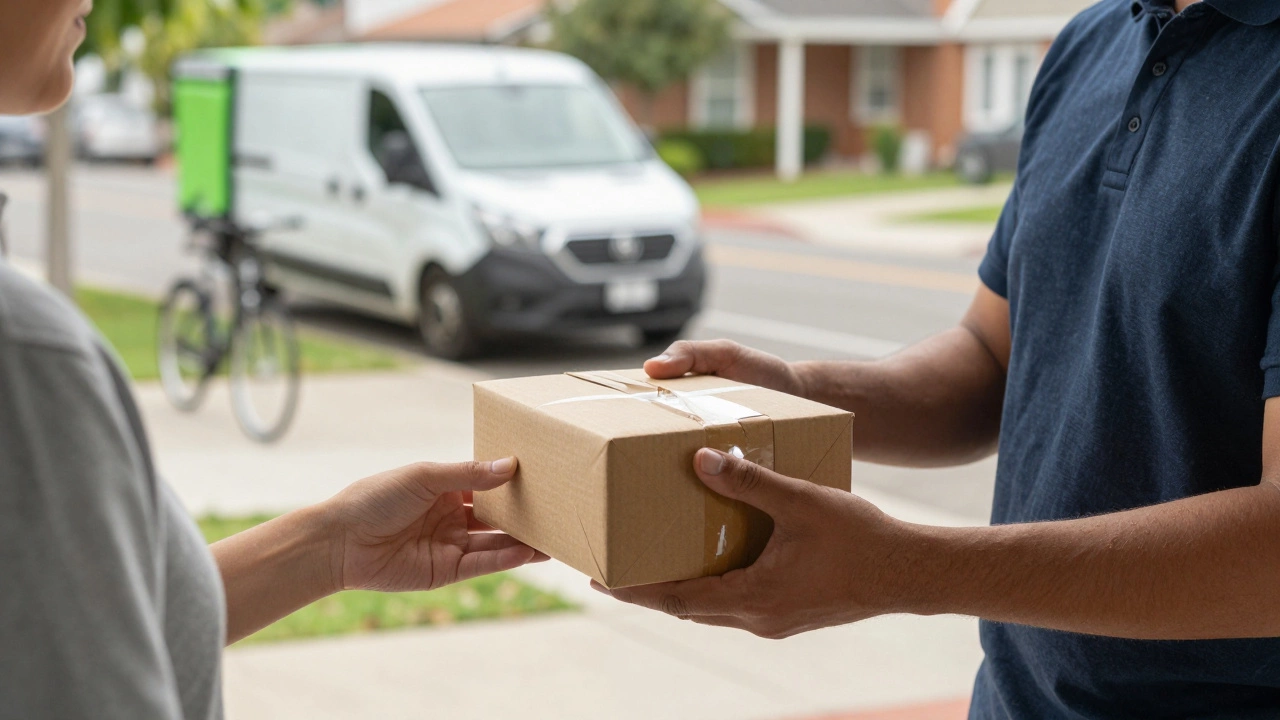
- Last-Mile Delivery: This is the final step. It is the most expensive part of the journey. It involves the courier driving from the local hub to the customer's doorstep.
- Returns Management (Reverse Logistics): Customers will return items. How you handle this affects your bottom line. Efficient returns processing can turn a negative experience into a loyal customer.
In-House vs. Third-Party Logistics (3PL)
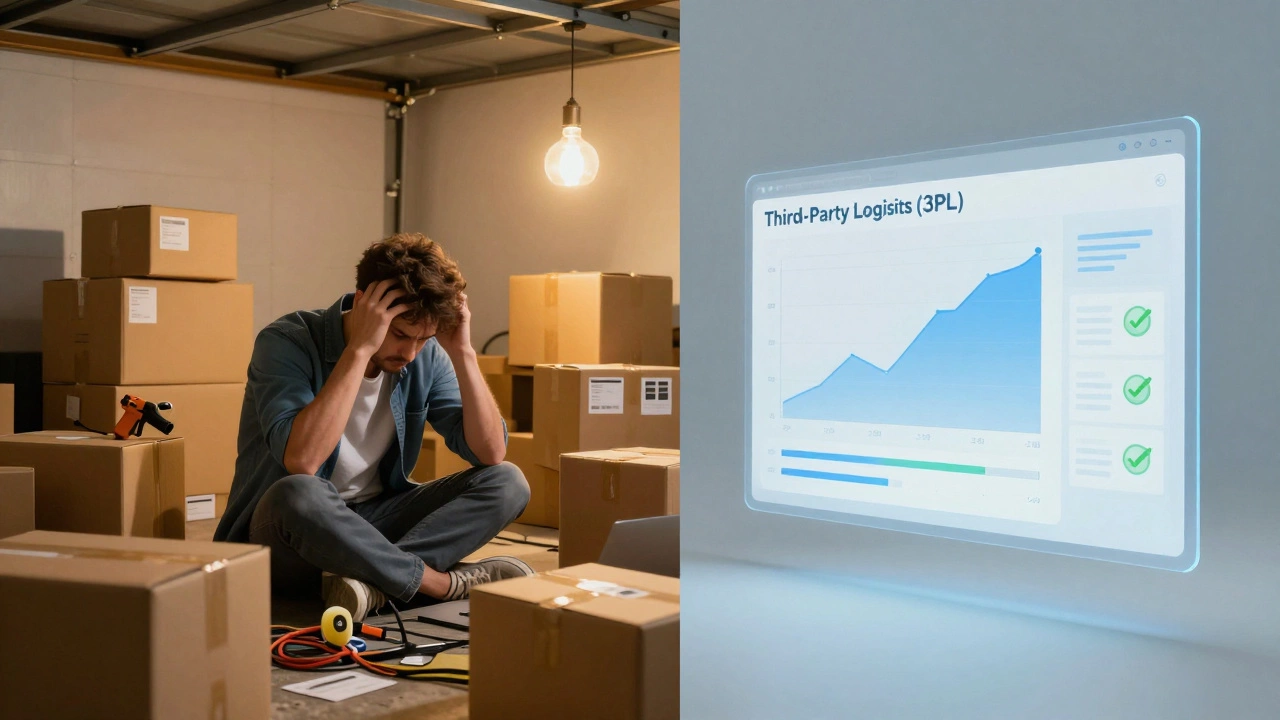
Once you understand the components, you face a major decision: Do you do it yourself, or do you hire help? This is the choice between in-house fulfillment and using a Third-Party Logistics provider (3PL).
In-House Fulfillment means you manage everything. You rent the space, buy the boxes, hire the staff, and negotiate rates with carriers like UPS or FedEx. This gives you total control. You see every package. You know exactly how it is packed. However, it requires significant upfront investment. You also bear all the risk. If you get sick, who packs the orders? If sales spike during Black Friday, do you have enough space?
Third-Party Logistics (3PL) providers take over the heavy lifting. Companies like ShipBob, Amazon FBA, or regional specialists handle storage, packing, and shipping. You send bulk inventory to their warehouse. When an order comes in, their system automatically picks and ships it. They often have better shipping rates because they ship millions of packages annually. This allows you to focus on marketing and product development. The trade-off is less direct control and monthly fees.
| Feature | In-House Fulfillment | Third-Party Logistics (3PL) |
|---|---|---|
| Upfront Cost | High (rent, equipment, labor) | Low (pay per use) |
| Scalability | Difficult to scale quickly | Easy to scale up or down |
| Control | Total control over packaging | Limited control |
| Shipping Rates | Negotiate individually | Bulk discounts applied |
| Focus | Operations-heavy | Growth and marketing focused |
Why Inventory Accuracy Matters More Than You Think
Imagine buying a pair of shoes online. The site says size 10 is available. You pay. Two days later, you get an email saying the item was out of stock and your card was refunded. How do you feel? Frustrated. You might never shop there again.
This scenario happens when inventory management fails. E-commerce logistics relies on real-time data synchronization. Your website, your warehouse management system (WMS), and your sales channels (like Amazon or Shopify) must talk to each other instantly. If they do not, you risk overselling. Overselling leads to cancellations, which hurt your seller rating on platforms like Amazon. Low ratings mean fewer organic sales. It is a vicious cycle.
Modern logistics software uses APIs to update stock levels in seconds. When a sale occurs on Instagram, the inventory count drops immediately on your website and Amazon store. This integration is non-negotiable for serious sellers. Manual updates via spreadsheet are prone to human error and simply cannot keep up with speed.
The Challenge of Last-Mile Delivery
Last-mile delivery accounts for up to 53% of total shipping costs. It is the hardest part of the puzzle. Why? Because it is inefficient. Drivers spend time idling in traffic, searching for addresses, and waiting for customers to answer doors.
Customers today expect fast delivery. Same-day or next-day options are becoming the norm. To meet this expectation, logistics providers are changing strategies. Some use micro-fulfillment centers in urban areas. These are small warehouses located closer to dense populations. Instead of shipping from a central hub hundreds of miles away, the package travels just a few miles. This cuts delivery time and cost.
Another trend is flexible delivery windows. Instead of forcing a customer to wait all day, logistics apps allow them to choose a two-hour slot. This reduces failed deliveries. Failed deliveries are costly. The driver has to return the item to the depot and try again tomorrow. That doubles the cost for the seller.
Handling Returns Efficiently
Returns are inevitable in e-commerce. Fashion brands see return rates of 30% or higher. Electronics are lower, but still significant. Reverse logistics is the process of handling these returns. It is often overlooked but critical for profitability.
A poor returns process can eat your entire profit margin. If a customer has to print a label, drive to a drop-off point, and wait weeks for a refund, they will leave a bad review. Best-in-class companies offer prepaid return labels and easy drop-off points. Some even offer instant refunds upon scanning the return barcode, before the item even reaches the warehouse.
From a logistics standpoint, returned items need quick inspection. Is the item resellable? Does it need repackaging? Or is it damaged? Automated systems can sort returns quickly. Items that are resellable should go back into inventory immediately. Delaying this ties up capital and storage space.
Technology Driving Modern Logistics
You cannot run modern e-commerce logistics with pen and paper. Technology is the glue holding it all together. Key technologies include:
- Warehouse Management Systems (WMS): Software that optimizes storage locations and guides workers to items efficiently. It reduces picking errors.
- Transportation Management Systems (TMS): Tools that compare carrier rates and select the best shipping option for each order. They automate label printing and tracking updates.
- Artificial Intelligence (AI): AI predicts demand. By analyzing past sales data, weather patterns, and trends, AI can tell you how much stock to order for next month. This prevents overstocking (which ties up cash) and understocking (which loses sales).
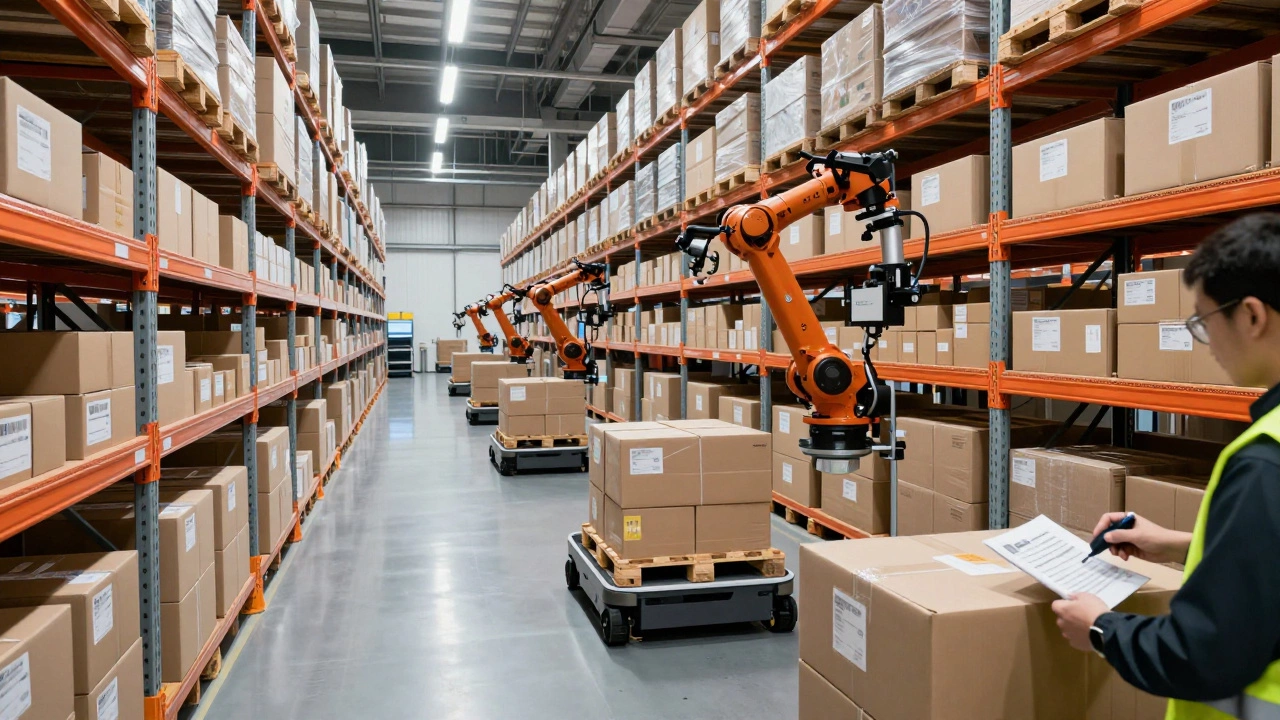
- Robotics: Large fulfillment centers use robots to move shelves to pickers. This speeds up processing and reduces physical strain on workers.
For small businesses, cloud-based TMS and WMS solutions are affordable. They integrate directly with major e-commerce platforms. You do not need a massive budget to access professional-grade logistics tools.
Sustainability in Shipping
Consumers are increasingly conscious of environmental impact. Plastic waste and carbon emissions from delivery trucks are major concerns. Sustainable logistics is no longer a nice-to-have; it is a competitive advantage.
Brands are switching to recyclable packaging materials. Some use compostable mailers instead of plastic poly bags. Others optimize box sizes to reduce air space. Less air means smaller boxes, which means more packages fit on a truck. Fewer trucks on the road mean lower carbon footprints.
Carbon-neutral shipping options are also gaining traction. Carriers now offer programs where they calculate the emissions of a shipment and invest in renewable energy projects to offset it. Sellers can pass this cost to the consumer or absorb it as a brand value proposition. Highlighting eco-friendly practices on your checkout page can increase conversion rates among environmentally aware shoppers.
Measuring Success: Key Logistics Metrics
How do you know if your logistics strategy is working? You need to track specific metrics. Guessing is not a strategy. Focus on these key performance indicators (KPIs):
- Order Cycle Time: The time from when the customer places the order to when they receive it. Shorter times usually lead to higher satisfaction.
- Fulfillment Rate: The percentage of orders fulfilled correctly on the first attempt. Errors include wrong items, damaged goods, or missing accessories.
- Cost Per Order: Total logistics costs divided by the number of orders. This helps you understand your true profit margin.
- Return Rate: The percentage of orders returned. High rates may indicate product quality issues or inaccurate product descriptions.
- Inventory Turnover: How quickly you sell through your stock. Higher turnover means healthy demand and efficient cash flow.
Regularly reviewing these metrics helps you identify bottlenecks. If your cost per order is rising, maybe it is time to renegotiate carrier contracts or switch to a 3PL. If your fulfillment rate is dropping, check your picking accuracy processes.
Future Trends to Watch
The logistics landscape is evolving rapidly. By 2026 and beyond, several trends will shape the industry. Drone delivery is moving from pilot programs to commercial reality in some regions. Autonomous vehicles are being tested for long-haul trucking. These technologies promise faster and cheaper transport.
Hyper-localization is another trend. Brands are setting up micro-warehouses in residential neighborhoods. This enables same-hour delivery for groceries and essentials. For general merchandise, consolidated pickup points in convenience stores reduce last-mile pressure.
Blockchain technology is also entering the supply chain. It provides immutable records of product origin and movement. This increases transparency and fights counterfeiting, especially for luxury goods and pharmaceuticals.
Adapting to these changes early gives you a competitive edge. Stay informed. Test new tools. And always prioritize the customer experience. After all, logistics is not just about moving boxes. It is about delivering promises.
What is the difference between logistics and supply chain?
Supply chain is the broader network involving suppliers, manufacturers, distributors, and retailers. Logistics is a subset of the supply chain focused specifically on the movement and storage of goods. Think of supply chain as the entire recipe, and logistics as the cooking and serving process.
Is 3PL better than in-house fulfillment?
It depends on your volume and goals. In-house is better for low-volume startups needing total control. 3PL is superior for scaling businesses that want to leverage bulk shipping rates and avoid operational headaches. Most growing brands eventually switch to 3PL.
How can I reduce my shipping costs?
Negotiate better rates with carriers, use dimensional weight calculators to optimize box sizes, and consider hybrid shipping models. Using a Transportation Management System (TMS) can automatically select the cheapest reliable carrier for each order.
What is reverse logistics?
Reverse logistics refers to the process of handling returns, repairs, and recycling. It involves transporting goods from the customer back to the seller or manufacturer. Efficient reverse logistics minimizes loss and recovers value from returned items.
How does AI improve e-commerce logistics?
AI improves logistics by predicting demand, optimizing delivery routes, and automating warehouse tasks. It analyzes historical data to forecast stock needs, reducing both overstock and stockouts. Route optimization algorithms save fuel and time for delivery drivers.