
E-commerce Logistics Strategy Calculator
Enter your current business metrics to determine the most efficient logistics model for your online store.
Enter your data and click "Analyze Strategy" to see recommendations.
You click "Buy Now" on a pair of trainers. Two days later, they land on your doormat. It feels like magic, but it’s actually logistics-the detailed coordination of complex operations involving people, facilities, and transportation. In the world of online shopping, this invisible engine determines whether you’re a happy customer or one leaving a one-star review because your package arrived crushed and three weeks late.
If you run an online store, understanding what logistics actually entails isn’t just academic; it’s the difference between profit and bankruptcy. Many new sellers think logistics is simply hiring a courier. They are wrong. It is a strategic network that starts before you even list a product and ends only when the customer decides if they want to buy from you again.
The Core Definition: Beyond Just Moving Boxes
At its heart, logistics in commerce refers to the management of the flow of things between the point of origin and the point of consumption. But in e-commerce, this definition expands. It includes inventory placement, order processing, packaging, shipping, and returns. Unlike traditional retail, where goods move in bulk from factory to warehouse to shop shelf, e-commerce logistics deals with individual parcels moving directly to millions of different addresses.
Think of it as the bridge between digital sales and physical reality. When a customer buys a laptop on Amazon, the website handles the transaction. The logistics team handles the rest: locating the laptop in a specific warehouse aisle, picking it, packing it, slapping a label on it, handing it to a driver, and tracking its journey until it reaches the buyer’s doorstep. If any link in this chain breaks, the sale fails.
The Key Pillars of E-commerce Logistics
To grasp how this works, you need to break it down into four distinct stages. Each stage has its own challenges and costs.
- Inbound Logistics: This is getting stock into your warehouse. It involves forecasting demand so you don’t overstock or run out of popular items. For example, selling winter coats requires accurate inbound planning months before the first frost hits Liverpool.
- Inventory Management: Once goods arrive, they must be stored efficiently. You need systems that track exactly where each SKU (Stock Keeping Unit) is located. Poor inventory management leads to overselling-where you sell an item you don’t physically have-which kills customer trust instantly.
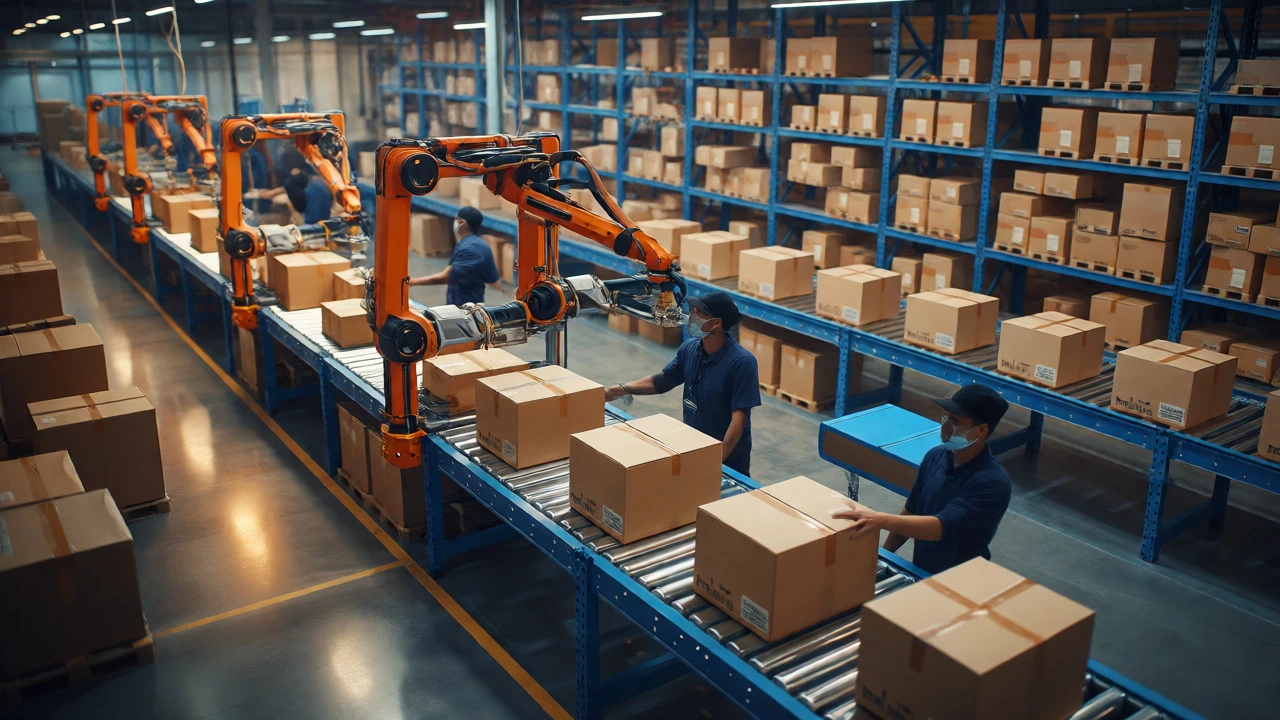
- Order Fulfilment: This is the pick-and-pack process. Speed matters here. Modern warehouses use automation and robots to reduce the time from clicking "buy" to sealing the box. Companies like Amazon have set the bar high with same-day or next-day promises.
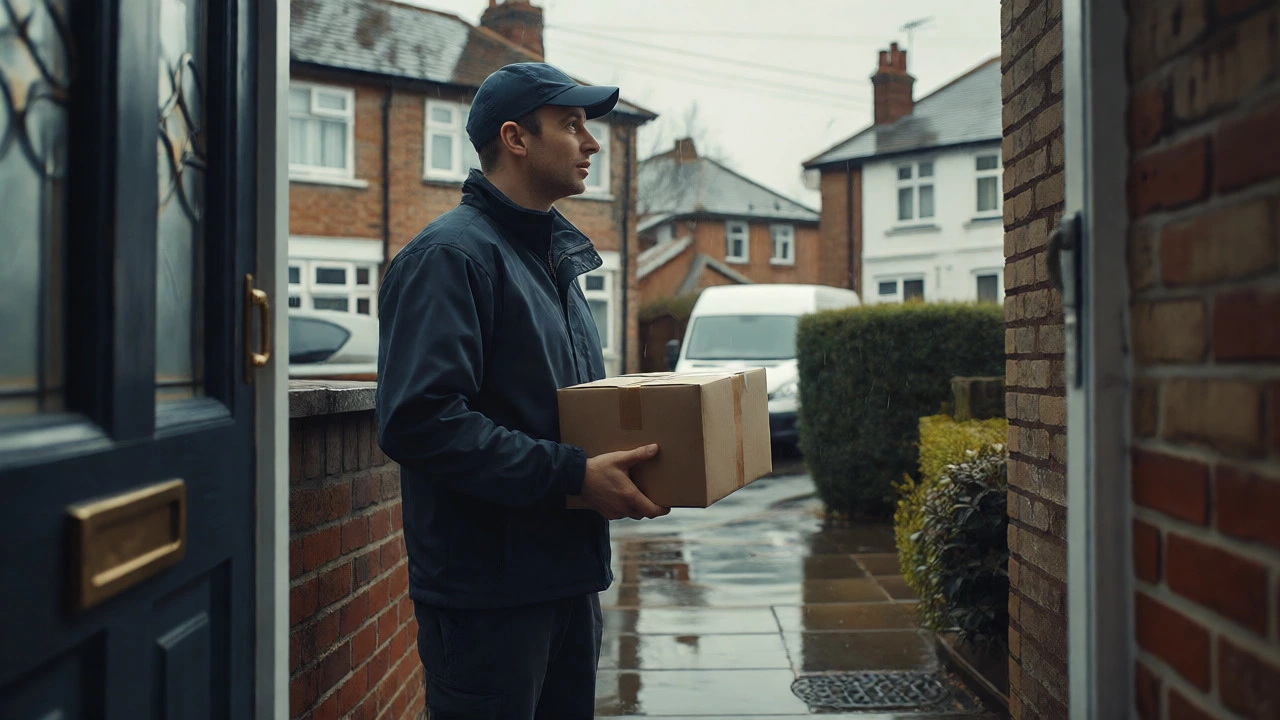
- Last-Mile Delivery: Often called the most expensive part of the chain, this is the final step from the local depot to the customer’s door. It accounts for up to 53% of total shipping costs due to inefficiencies like missed deliveries and traffic congestion.
Why Logistics Defines Your Brand Experience
Customers rarely judge your website speed or product quality alone. They judge their entire experience. If your logistics fail, your brand fails. Consider two scenarios. In Scenario A, a customer orders a phone case. It arrives in two days, neatly packed, with a tracking link provided immediately. They feel confident and likely to return. In Scenario B, the same phone case takes ten days, arrives in a damaged box, and the customer had to email support five times to find out where it was. Who wins?
Data supports this intuition. According to research by Pitney Bowes, 70% of consumers consider shipping and delivery options when deciding where to shop online. Furthermore, poor delivery experiences lead to cart abandonment. If your checkout page doesn’t offer clear, reliable shipping estimates, shoppers will leave. Logistics isn’t just a cost centre; it’s a marketing tool. Fast, transparent delivery builds loyalty faster than discounts ever could.
In-House vs. Third-Party Logistics (3PL)
One of the biggest decisions an e-commerce business faces is who handles the logistics. Do you manage it yourself, or do you outsource it?
| Feature | In-House Logistics | Third-Party Logistics (3PL) |
|---|---|---|
| Control | High control over packaging, branding, and handling processes. | Less direct control; relies on provider standards and integration. |
| Cost Structure | Fixed costs (warehouse rent, staff salaries) regardless of sales volume. | Variable costs; pay per pick/pack/ship. Better for scaling. |
| Scalability | Hard to scale quickly during seasonal spikes (e.g., Black Friday). | Easily scales up or down based on real-time demand. |
| Technology | Requires investing in your own Warehouse Management System (WMS). | Access to advanced tech and carrier integrations without upfront investment. |
| Best For | Small businesses with low volume or highly specialized products. | Growing brands needing efficiency and broader geographic reach. |
For startups, starting in-house makes sense. You pack boxes in your garage, learn about packaging materials, and build relationships with local couriers. But once you hit around 1,000 orders a month, the complexity explodes. That’s when 3PL providers become vital. They act as an extension of your brand, often offering better shipping rates because they aggregate volume across hundreds of clients.
The Hidden Challenge: Reverse Logistics
Most people forget about returns. In e-commerce, return rates can range from 20% to 40%, especially in fashion. Handling these returns is known as reverse logistics. It’s not just about taking the item back. It’s about inspecting it, repackaging it, updating inventory counts, and issuing refunds quickly.
A clunky return process scares off buyers. If customers know returning an item is a hassle, they won’t buy it in the first place. Successful brands make returns seamless. They provide pre-printed labels, easy drop-off points, and instant refunds upon scanning the returned parcel at the hub. Efficient reverse logistics recovers value from returned goods, either by restocking them or selling them as open-box items, rather than letting them sit in a pile gathering dust.
Technology Driving Modern Logistics
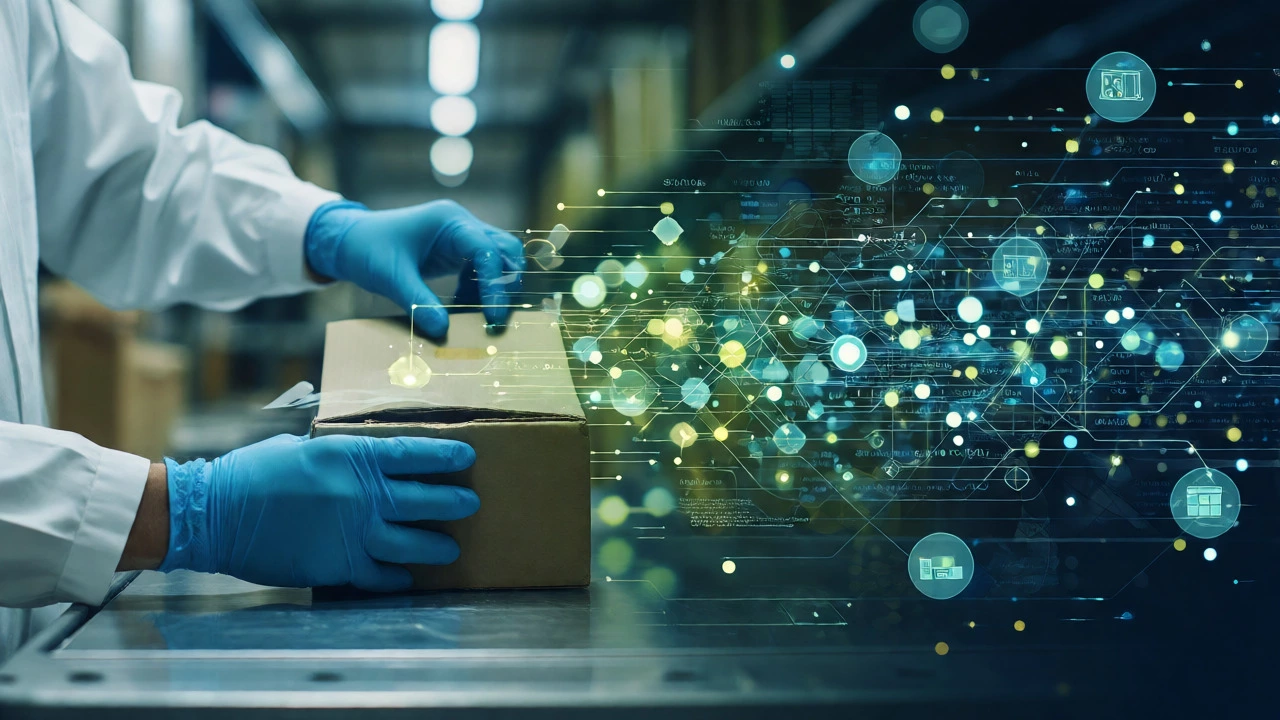
You can’t manage modern e-commerce logistics with spreadsheets. Real-time visibility is non-negotiable. Warehouse Management Systems (WMS) and Transportation Management Systems (TMS) are the brains behind the operation. These tools integrate with your sales channels (like Shopify or WooCommerce) to sync inventory automatically.
Artificial Intelligence now plays a huge role too. Algorithms predict which products will sell best in which regions, allowing companies to position stock closer to potential buyers before the order is even placed. This strategy, known as forward deployment, drastically reduces shipping times. For instance, if AI predicts high demand for heaters in Manchester, stock is moved there in October, ensuring next-day delivery when the cold snap hits in November.
Key Takeaways
- Logistics is strategic: It’s not just moving boxes; it’s managing cash flow, customer satisfaction, and brand reputation.
- Last-mile is costly: Optimize routes and offer flexible delivery windows to cut expenses and improve reliability.
- Returns matter: A smooth reverse logistics process encourages purchases; a difficult one deters them.
- Scale wisely: Move from in-house to 3PL when order volume makes manual handling inefficient.
- Tech is essential: Use integrated software to maintain real-time inventory accuracy and avoid overselling.
What is the difference between logistics and supply chain management?
Supply chain management is the broader concept covering everything from sourcing raw materials to delivering the final product. Logistics is a subset of supply chain management focused specifically on the movement and storage of goods. Think of supply chain as the entire orchestra, while logistics is the conductor ensuring the instruments (goods) get to the right place at the right time.
How much does e-commerce logistics typically cost?
Costs vary widely based on product size, weight, and destination. Generally, shipping and fulfilment costs should aim to stay below 10-15% of your revenue. However, for heavy or bulky items, this percentage can be higher. Last-mile delivery is usually the most expensive component, often accounting for more than half of total shipping costs.
Should I use a 3PL or handle logistics myself?
If you are processing fewer than 50-100 orders per day, handling it in-house is often cheaper and gives you more control over unboxing experiences. Once you exceed that volume, or if you struggle with space and staffing, a 3PL becomes more cost-effective due to economies of scale and professional infrastructure.
What is dropshipping and how does it relate to logistics?
Dropshipping is a retail method where the seller doesn’t keep products in stock. Instead, the seller transfers customer orders and shipment details to either the manufacturer, another retailer, or a wholesaler, who then ships the goods directly to the customer. In this model, the seller outsources almost all logistics responsibilities, focusing primarily on marketing and customer service.
How does technology improve e-commerce logistics?
Technology provides real-time visibility, automates repetitive tasks like label printing, and uses data analytics to optimize inventory levels. Tools like WMS and TMS reduce human error, speed up order processing, and help predict future demand, allowing businesses to operate more efficiently and meet customer expectations for fast delivery.