
Warehouse Software Stack Estimator
Not every warehouse needs a million-dollar enterprise suite. Use this tool to find the right balance of technology for your specific scale.
Core Engine
The foundation of your operations.
Logistics & Transport
Managing outbound flow.
Business Backbone
Financials & Data Sync.
Advanced Modules Recommendation
Why This Choice?
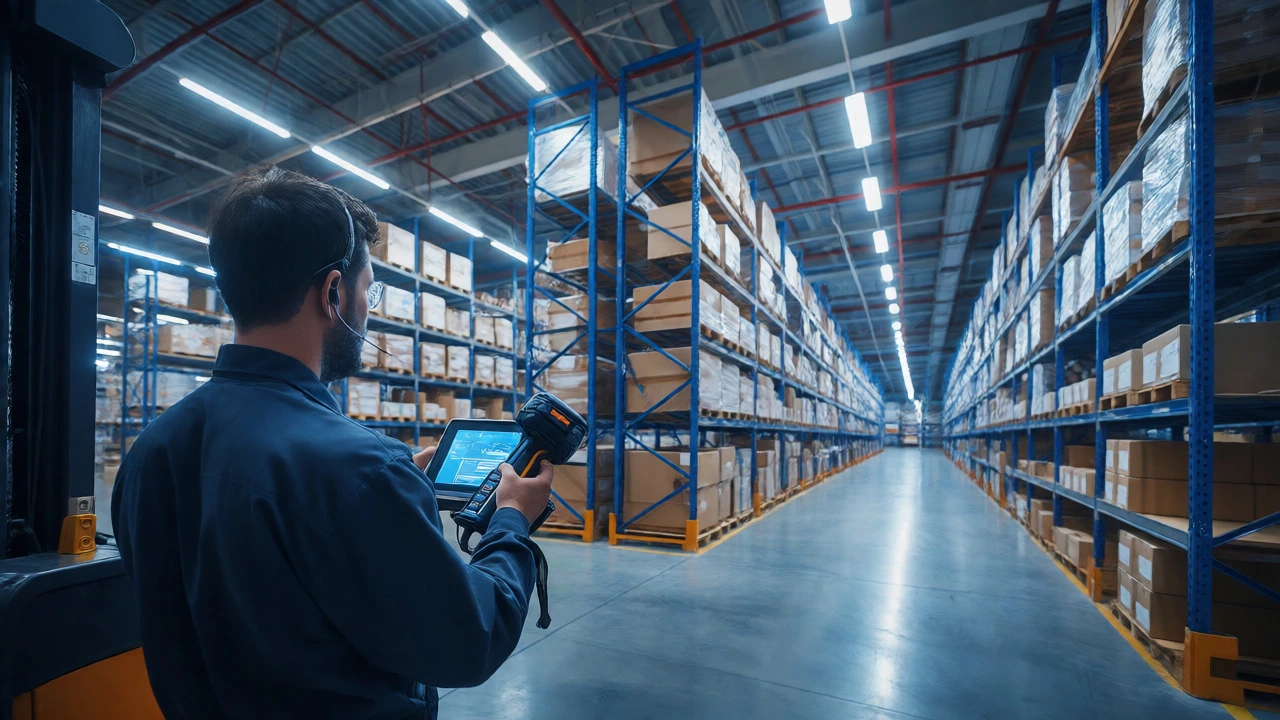
You walk into a modern distribution center, and the first thing you notice isn't the smell of cardboard or the hum of forklifts. It's the silence of organized chaos. No one is shouting orders. No one is running around with clipboards looking for a missing pallet. Why? Because Warehouse Management System (WMS) software is doing the heavy lifting. If you are trying to figure out what tools keep these massive operations from turning into a disaster, you are asking the right question. The answer isn't just "software." It's a specific stack of digital tools designed to track every item, optimize every move, and predict every demand spike.
The Core Engine: Warehouse Management Systems (WMS)
At the heart of almost every serious warehouse operation sits a WMS. Think of it as the brain of the building. Unlike simple spreadsheet tracking, a true WMS provides real-time visibility into inventory levels, location data, and labor performance. It tells workers exactly where to go, which bin to pick from, and how to pack an order to minimize shipping costs.
When companies search for "what software does warehouse use," they are usually looking for this core component. But not all WMS platforms are created equal. Some are standalone applications built specifically for warehousing, like Manhattan Associates or Blue Yonder. Others are modules within larger Enterprise Resource Planning (ERP) systems, such as SAP EWM or Oracle NetSuite. The choice often depends on company size. A small e-commerce startup might rely on a cloud-based SaaS solution like ShipHero or Extensiv because it integrates directly with Shopify or Amazon. A global manufacturer, however, needs the robust, on-premise power of SAP to handle complex manufacturing dependencies alongside storage.
The primary job of a WMS is optimization. It uses algorithms to determine the most efficient picking paths. Instead of a worker walking randomly through aisles, the system groups picks by proximity. This reduces travel time, which is typically the biggest cost driver in manual warehouses. By cutting travel time by even 15%, a facility can significantly lower its operational expenses without hiring more staff.
Beyond the Walls: Transport Management Systems (TMS)
A warehouse doesn't exist in a vacuum. Once that box is picked and packed, it has to leave. This is where a Transport Management System comes into play. While the WMS handles the inside of the four walls, the TMS manages the journey outside them. Many businesses integrate their WMS and TMS to create a seamless flow. When an order is finalized in the WMS, it automatically pushes shipment details to the TMS. The TMS then selects the best carrier based on cost, speed, and reliability.
Why do you need separate software for this? Because freight logic is different from inventory logic. Inventory is about static placement; transport is about dynamic routing. A good TMS compares rates from FedEx, UPS, DHL, and regional carriers in real-time. It also handles documentation, printing labels, and providing customers with tracking numbers. Without this integration, your warehouse team would be manually entering addresses into carrier portals, leading to errors and delays. Modern setups often use API connections to ensure that when a package leaves the dock, the customer receives a notification instantly.
Connecting the Dots: ERP and Integration Layers
If you ask a CFO what software they care about, they won't mention the WMS. They will talk about their Enterprise Resource Planning (ERP) system. The ERP is the financial backbone of the company. It tracks accounts payable, receivable, general ledger, and procurement. The critical link between the warehouse floor and the boardroom is data synchronization.
Historically, warehouses operated in silos. The sales team sold products that didn't exist in the warehouse because the systems weren't talking. Today, middleware or native integrations ensure that when a sale happens online, inventory counts drop in the ERP immediately. This prevents overselling-a nightmare for any retailer. Popular ERPs like Microsoft Dynamics 365, Salesforce Commerce Cloud, and Sage Intacct offer connectors that push and pull data from the WMS multiple times per day. For high-volume sellers, this sync needs to happen near-real-time to maintain accuracy across multiple sales channels.
The Human Element: Labor Management Systems (LMS)
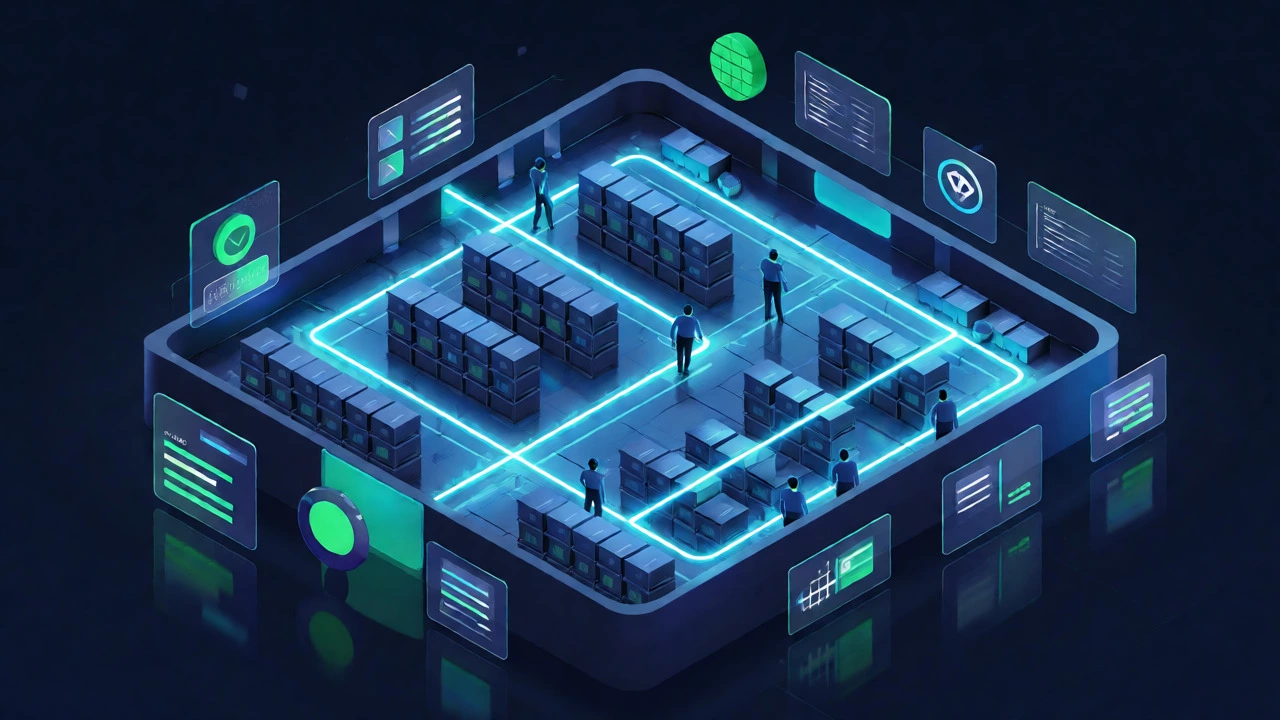
Software isn't just about moving boxes; it's about managing people. In large facilities, Labor Management Systems are essential for maintaining productivity standards. These tools track individual worker performance against industry benchmarks. Did John pick 40 items in an hour, while Sarah picked 60? An LMS flags this discrepancy. It helps managers identify training needs or recognize top performers.
This isn't about surveillance; it's about fairness and efficiency. If a certain zone in the warehouse is consistently slower due to poor layout, the LMS data highlights that bottleneck. Managers can then reorganize the layout or adjust staffing levels. Companies using advanced LMS solutions report up to a 20% increase in labor productivity within the first year. This return on investment makes the software subscription fees negligible compared to payroll savings.
Automation and Robotics Control
As warehouses grow, human feet become too slow. Enter robotics. Whether you are using Autonomous Mobile Robots (AMRs) from companies like Geek+ or traditional Automated Guided Vehicles (AGVs), you need software to control them. This layer is often called a Robotics Control System. It acts as a traffic controller, ensuring robots don't collide and that they prioritize urgent tasks.
The interaction between WMS and robotics is complex. The WMS sends a task-"Pick Item X from Bin Y." The Robotics Control System translates this into a physical movement plan, navigating around obstacles and other robots. If a robot battery runs low, the system automatically routes it to a charging station and assigns the task to another unit. This level of coordination requires robust, low-latency communication protocols. Without this specialized software, your million-dollar robot fleet would be nothing more than expensive toys wandering aimlessly.

Data Visibility: Business Intelligence and Analytics
All these systems generate massive amounts of data. Who is picking the fastest? Which SKUs have the highest return rate? What is the average dwell time for inbound shipments? Raw data is useless unless it is visualized. This is where Business Intelligence (BI) tools fit in. Platforms like Tableau, Power BI, or Looker connect directly to your WMS and ERP databases.
Managers use dashboards to spot trends before they become problems. For example, if BI tools show that packing errors spike during the second shift, you know there is a supervision or fatigue issue. If data reveals that 30% of your inventory sits idle for six months, you can run a promotion to clear space. This predictive capability turns the warehouse from a cost center into a strategic asset. You stop reacting to fires and start preventing them.
| Software Type | Primary Function | Best For | Key Metric Tracked |
|---|---|---|---|
| WMS | Inventory tracking, picking, packing, shipping execution | All warehouse sizes, especially high-volume fulfillment | Pick Accuracy & Order Cycle Time |
| TMS | Carrier selection, route planning, freight auditing | Companies with complex outbound shipping needs | Shipping Cost per Order |
| ERP | Financials, procurement, master data management | Mid-to-large enterprises needing integrated finance/logistics | Inventory Valuation & Cash Flow |
| LMS | Workforce scheduling, performance monitoring | Large facilities with significant manual labor | Units Picked Per Hour |
| BI Tools | Data visualization, trend analysis, reporting | Decision-makers seeking operational insights | Operational Efficiency Trends |
Choosing the Right Stack for Your Size
So, what should you actually buy? It depends entirely on your scale. A small business processing under 1,000 orders a month might get away with a lightweight WMS integrated with their e-commerce platform. Tools like Zoho Inventory or Cin7 Pro offer sufficient features without the complexity of enterprise suites.
Medium-sized businesses, handling 10,000 to 50,000 orders monthly, need more robust automation. They benefit from dedicated WMS providers like HighJump (now Körber) or Descartes. At this stage, integrating a basic TMS becomes crucial to manage rising shipping costs.
Large enterprises, processing millions of units annually, require a full ecosystem. This includes a tier-1 WMS, a comprehensive TMS, an ERP backbone, and likely custom BI dashboards. They also invest heavily in robotics control software. The key is to avoid over-engineering. Buying a Ferrari engine for a bicycle is wasteful. Similarly, implementing SAP EWM for a single-room storage facility is a recipe for failure and budget overrun.
Common Pitfalls in Implementation
Even with the right software, projects fail. The number one reason is poor data quality. If your SKU records are inaccurate, no algorithm can fix them. Garbage in, garbage out. Before implementing new software, audit your current inventory data. Clean up duplicates, correct weights and dimensions, and standardize naming conventions.
Another trap is ignoring user adoption. If the interface is clunky, warehouse workers will find workarounds. They might scan items incorrectly or skip steps to save time, breaking the data chain. Involve frontline staff in the selection process. Let them test the handheld scanners and software interfaces. If they hate it, it won't work, no matter how fancy the backend code is.
Is a WMS the same as an ERP?
No. An ERP manages overall business processes like finance and HR, while a WMS focuses specifically on warehouse operations like picking and inventory location. However, many ERPs include a basic WMS module, but dedicated WMS solutions offer deeper functionality for complex logistics.
Do small warehouses need specialized software?
Yes, but it doesn't have to be expensive. Small warehouses benefit from cloud-based WMS solutions that integrate with e-commerce platforms. These tools prevent stockouts and improve shipping accuracy, which directly impacts customer satisfaction and repeat purchases.
How long does it take to implement warehouse software?
Implementation timelines vary widely. A simple cloud-based WMS can be set up in weeks. A large-scale enterprise implementation involving custom integrations, hardware upgrades, and staff training can take 6 to 18 months. Phased rollouts are common to mitigate risk.
Can software help reduce shipping costs?
Absolutely. A Transport Management System (TMS) analyzes carrier rates in real-time to select the cheapest option that meets delivery deadlines. Additionally, WMS algorithms optimize packaging sizes, reducing dimensional weight charges, which are a major hidden cost in shipping.
What is the difference between on-premise and cloud WMS?
On-premise software is installed on local servers, offering more customization and control but requiring IT maintenance. Cloud WMS is hosted by the vendor, accessible via web browser, and updated automatically. Cloud solutions are generally faster to deploy and cheaper upfront, making them popular for mid-sized businesses.