

International Shipping Rate Estimator (2026)
Compare estimated costs for shipping a package to the UK based on weight and carrier type. This tool uses average market rates from the guide.
Shipping costs are the silent killer of profit margins for online sellers. You spend hours optimizing your product photos and writing copy that converts, only to watch your bottom line vanish when a customer adds a heavy item to their cart. The question isn't just about finding the cheapest option; it is about understanding who actually has lower shipping rates for your specific needs. In 2026, the landscape has shifted again. Fuel surcharges fluctuate weekly, customs regulations tighten, and carrier networks evolve. If you are guessing your carrier, you are likely overpaying.
The short answer is: it depends entirely on weight, destination, and speed. There is no single "cheapest" carrier for every package. For small, light items going overseas, national postal services often win. For heavier boxes or urgent deliveries, private couriers with negotiated contracts offer better value. Understanding this split is the first step to saving money. While some businesses focus solely on domestic efficiency, others looking at global expansion might find niche resources like this directory useful for navigating complex local markets, though our focus here remains strictly on moving goods across borders efficiently.
The Postal Giants: USPS, Royal Mail, and Their Partners
When we talk about low rates for lightweight international shipments, national postal operators are usually the starting point. Services like USPS First-Class Package International Service (for packages under 4 lbs) or Royal Mail International Tracked & Signed rely on a massive, subsidized network. They do not own planes or ships for most of these routes. Instead, they hand off your package to the destination country's postal service once it arrives.
This model keeps base rates incredibly low. You can send a small box to Europe for a fraction of what a courier would charge. However, there are hidden costs. Delivery times are unpredictable, often ranging from 10 to 20 business days. Tracking visibility drops significantly once the package leaves the origin country. If your customer expects their order by next week, the postal service is not the right choice. But if you are selling low-cost items where shipping cost must remain below $10 to maintain conversion, the postal network is hard to beat.
- Best for: Items under 2 kg, non-urgent deliveries, low-value products.
- Average Cost: $15-$30 for small parcels to major hubs.
- Transit Time: 10-20+ business days.
Private Couriers: UPS, FedEx, DHL
On the other end of the spectrum sit the big three: UPS, FedEx, and DHL Express. These companies own their fleets. They control the entire journey from pickup to delivery. This control comes with a premium price tag, but it also brings reliability, speed, and superior tracking.
If you check the public retail rates on their websites, they will look terrifying. A small package to Asia might cost $80 or more. That is why most businesses never pay retail. They use account discounts or third-party aggregators. Even then, for packages over 5 kg, couriers often become competitive because their volumetric pricing models are optimized for density. Plus, they handle customs clearance much more smoothly than postal services, reducing the risk of your package getting stuck in a warehouse.
DHL tends to dominate in Europe and Asia due to its hub in Leipzig and Singapore. UPS and FedEx have stronger networks in North America. If you are shipping high-value electronics or fashion items where customer trust is paramount, the higher rate is an investment in brand reputation.
- Best for: Packages over 2 kg, urgent deliveries, high-value items.
- Average Cost: $40-$150+ depending on speed and weight.
- Transit Time: 2-5 business days globally.
The Hidden Middle: Regional Carriers and Aggregators
Here is where many sellers miss out. Between the slow post office and the expensive couriers lies a growing market of regional carriers and digital freight forwarders. Companies like YunExpress, 4PX, and Cainiao have built specialized lanes for e-commerce. They consolidate thousands of small packages into large containers, fly them to a central hub, and then hand them off to local last-mile partners.
This hybrid model offers a sweet spot. You get faster delivery than standard post (often 7-12 days) and cheaper rates than DHL Express. These services are particularly dominant for sellers shipping from China to the US, Europe, and Southeast Asia. If you are sourcing products from Alibaba or similar platforms, using these dedicated e-commerce lines can cut your shipping costs by 30-50% compared to standard express options.
In Western markets, companies like ShipStation or Pirate Ship act as aggregators. They don't ship the packages themselves but negotiate bulk rates with UPS, USPS, and others, passing those savings on to you. Signing up for a free account with one of these platforms can instantly drop your UPS Ground rate by 20-40%. It is the easiest quick win available to any seller.

How Weight and Dimensions Dictate Your Rate
You cannot compare rates without understanding dimensional weight. Carriers charge based on whichever is greater: the actual weight or the dimensional weight. Dimensional weight calculates the space your package occupies in a truck or plane. The formula varies slightly by carrier, but a common one is (Length x Width x Height) / 139 for inches and pounds.
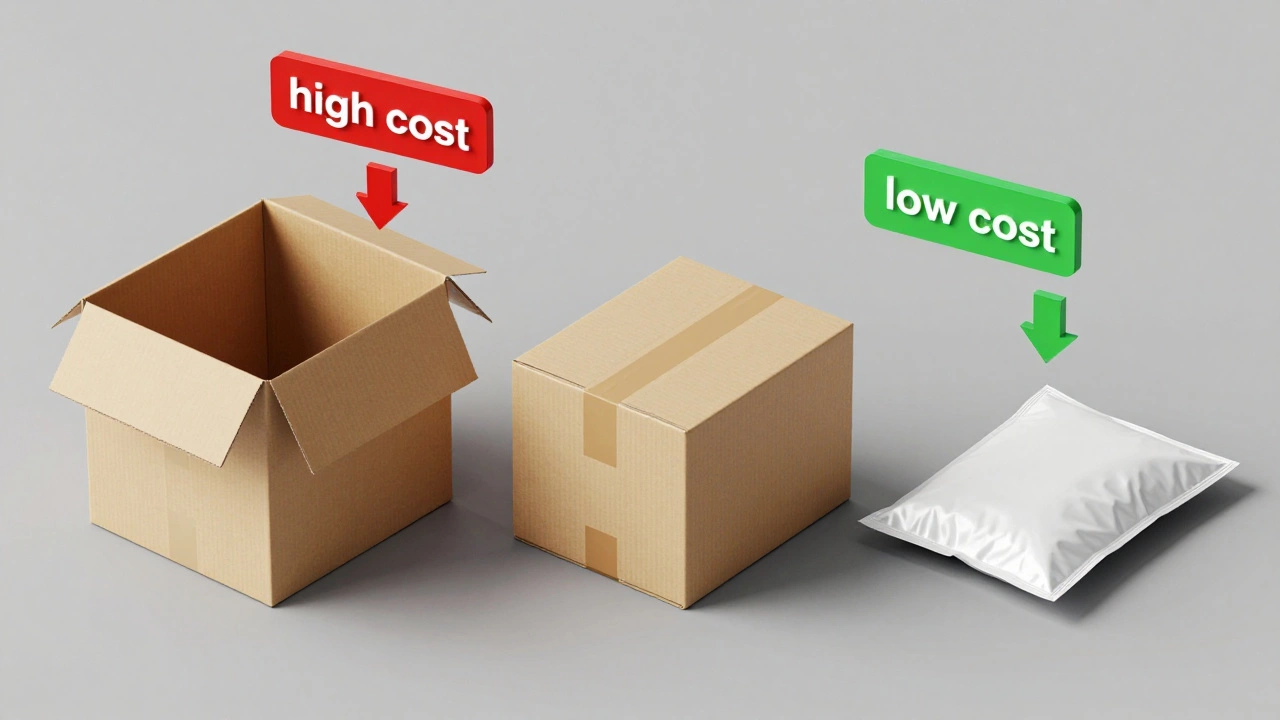
If you sell bulky, lightweight items like pillows or shoes, you will be shocked by your bills if you ignore this. A shoe box might weigh 1 kg but occupy the space of a 5 kg box. The carrier charges you for 5 kg. To combat this, optimize your packaging. Use smaller boxes. Remove excess air. Some sellers even switch to poly mailers for clothing, which drastically reduces dimensional weight. Who has lower rates? The person who packs smarter.
| Carrier Type | Estimated Cost (USD) | Transit Time | Tracking Quality |
|---|---|---|---|
| National Post (Standard) | $18.00 | 14-21 Days | Low (Handoff only) |
| E-commerce Line (e.g., YunExpress) | $28.00 | 8-12 Days | Medium (End-to-end) |
| Courier (DHL/FedEx Retail) | $75.00+ | 3-5 Days | High (Real-time) |
| Courier (Aggregated Discount) | $45.00 | 3-5 Days | High (Real-time) |
Customs Duties and Taxes: The Real Cost
Shipping rates are only half the story. When you ship internationally, your package enters a new tax jurisdiction. Customs duties and import VAT can add 15-25% to the final cost for the buyer. If you do not declare these correctly, the buyer gets hit with surprise fees upon delivery. This leads to returns, negative reviews, and lost customers.
Many modern platforms now offer DDP (Delivered Duty Paid) shipping. This means you, the seller, collect the taxes at checkout and pay them upfront to the carrier. The customer receives the package without extra fees. While this increases your operational complexity, it dramatically improves the customer experience. Carriers like DHL and UPS have streamlined DDP processes, making it easier to calculate and remit these taxes automatically. Ignoring this aspect can make a "cheap" shipping rate very expensive in the long run due to return handling costs.
Strategies to Secure Lower Rates in 2026
Finding the lowest rate is not a one-time task. It requires ongoing strategy. Here are actionable steps to reduce your costs immediately:
- Use Multi-Carrier Software: Do not stick to one provider. Use software that compares rates from USPS, UPS, FedEx, and regional carriers in real-time for every order. The cheapest option changes daily based on volume and fuel surcharges.
- Negotiate Account Discounts: If you ship more than 50 packages a month, call your local carrier sales rep. Ask for a commercial account. Even modest volumes can qualify for 10-15% off retail rates.
- Optimize Packaging: Invest in a scale and measure your boxes accurately. Switch to right-sized packaging. Every centimeter reduction in box size can lower your dimensional weight charge.
- Leverage Free Shipping Thresholds: Encourage larger orders by offering free shipping over a certain amount. The per-unit shipping cost drops as the order value rises, protecting your margin.
- Consider Hybrid Solutions: For non-urgent items, use economy international services. Reserve express couriers only for VIP customers or high-margin products.
Conclusion: It Is About Fit, Not Just Price
So, who has lower shipping rates? For a 500g letter, it is the post office. For a 10kg machine part, it might be a freight forwarder. For a $200 dress arriving in 3 days, it is a discounted courier account. There is no universal winner. The key is to match the shipping method to the customer's expectation and the product's characteristics. By using aggregation tools, negotiating accounts, and mastering dimensional weight, you can consistently secure the lowest possible rate for each individual shipment. Stop paying retail. Start analyzing your data. Your margins will thank you.
Is DHL cheaper than FedEx?
It depends on the destination. DHL is generally cheaper and faster for shipments outside of North America, especially to Europe and Asia, due to its global hub network. FedEx often has better rates and service within the United States and Canada. Always compare quotes for your specific route.
What is the cheapest way to ship internationally?
For lightweight items under 2kg, national postal services like USPS or Royal Mail are usually the cheapest. For heavier items, using an aggregator like Pirate Ship to access discounted UPS or FedEx rates, or using e-commerce specific lines like YunExpress, can offer the best balance of cost and speed.
How can I lower my shipping costs for my online store?
You can lower costs by optimizing packaging to reduce dimensional weight, using multi-carrier shipping software to compare rates, negotiating commercial discounts with carriers, and setting free shipping thresholds to encourage larger orders.
Do I need a business account to get lower shipping rates?
Not necessarily. Third-party aggregators like Pirate Ship or Shippo offer significant discounts on retail rates for individuals and small businesses without requiring a direct contract with the carrier. However, if you ship high volumes, a direct business account with a carrier can yield deeper discounts.
What is dimensional weight and how does it affect my bill?
Dimensional weight is a pricing methodology based on the volume of a package rather than its actual mass. Carriers charge based on whichever is higher: the actual weight or the dimensional weight. Bulky, lightweight items incur higher charges. Reducing package size directly lowers this cost.