
5-Gallon Bucket Shipping Cost Estimator
Shipment Details
Cost Breakdown
Enter details and click Calculate to see the estimated cost.
Shipping a 5-gallon bucket is one of those logistics headaches that catches people off guard. You might think it’s just a box with some paint or oil inside, but carriers see it as a dense, heavy, and potentially hazardous item. If you are moving this across the street, it’s cheap. If you are sending it from Liverpool to London, it’s manageable. But if you are looking at international shipping, the price tag can shock you.
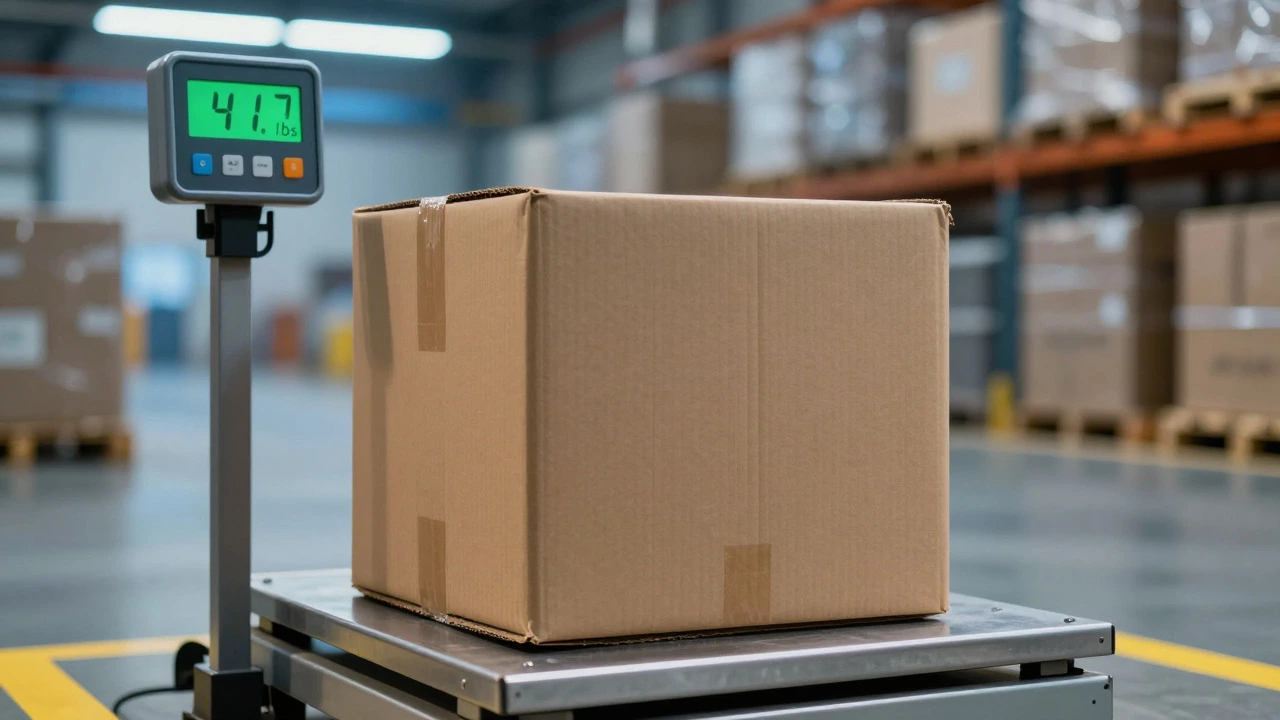
In 2026, fuel surcharges and labor costs have pushed rates higher than they were five years ago. A standard 5-gallon bucket filled with water weighs about 41 pounds (18.6 kg). That puts it right in the "heavy parcel" zone for most couriers. Depending on where it goes, you could pay anywhere from $15 for domestic ground shipping to over $150 for expedited international delivery. Let’s break down exactly what drives these costs and how to keep them low.
The Weight Factor: Actual vs. Dimensional
To understand the cost, you first need to understand how carriers calculate weight. They use two methods: actual weight and dimensional weight. For a 5-gallon bucket, actual weight usually wins because the item is so dense.
A 5-gallon plastic bucket itself weighs around 1.5 to 2 pounds. The contents do the heavy lifting. Water is roughly 8.34 pounds per gallon, so a full bucket is 41.7 pounds plus the container. Oil is lighter, about 7.5 pounds per gallon, bringing the total closer to 39 pounds. Paint varies, but latex is close to water’s density.
Carriers like FedEx, UPS, and DHL charge by the pound. Once you cross the 70-pound threshold, packages often move into freight pricing, which requires palletizing. At 40-45 pounds, your bucket is in the sweet spot for "heavy parcels." However, if you ship multiple buckets, the cumulative weight quickly pushes you into freight territory, where pricing shifts from per-package to per-pallet or per-linear-foot.
| Route | Service Type | Estimated Cost (USD) | Transit Time |
|---|---|---|---|
| Domestic (US/UK) | Ground Economy | $15 - $25 | 3-5 Days |
| Domestic (US/UK) | Express Overnight | $60 - $90 | 1 Day |
| International (North America/Europe) | Standard International | $80 - $120 | 5-10 Days |
| International (Global) | Economy Air | $130 - $180+ | 7-14 Days |
Why International Shipping Is So Expensive
When you cross borders, you aren’t just paying for distance; you’re paying for bureaucracy. International shipping introduces three major cost drivers: customs clearance, duties, and handling fees.
Customs Clearance is the process of declaring goods to government authorities when crossing borders. Every country has different rules. If you are shipping industrial chemicals, food products, or even certain types of paints, you may need specific documentation. Missing paperwork leads to delays, and delays lead to storage fees.
Duties and taxes are another hidden cost. While the sender might prepay these services, the recipient often gets hit with a bill upon arrival. In the UK, for example, VAT applies to most imports. In the US, de minimis values allow small shipments to enter duty-free, but a 40-pound bucket of specialized equipment might exceed thresholds depending on its declared value.
Handling fees come into play because heavy, bulky items require special care. Carriers charge extra for "residential delivery" if the bucket is going to a home rather than a business address. They also charge for "liftgate service" if there is no loading dock at the destination. These add-ons can easily add $50-$75 to your final invoice.
Packaging: The Silent Cost Killer
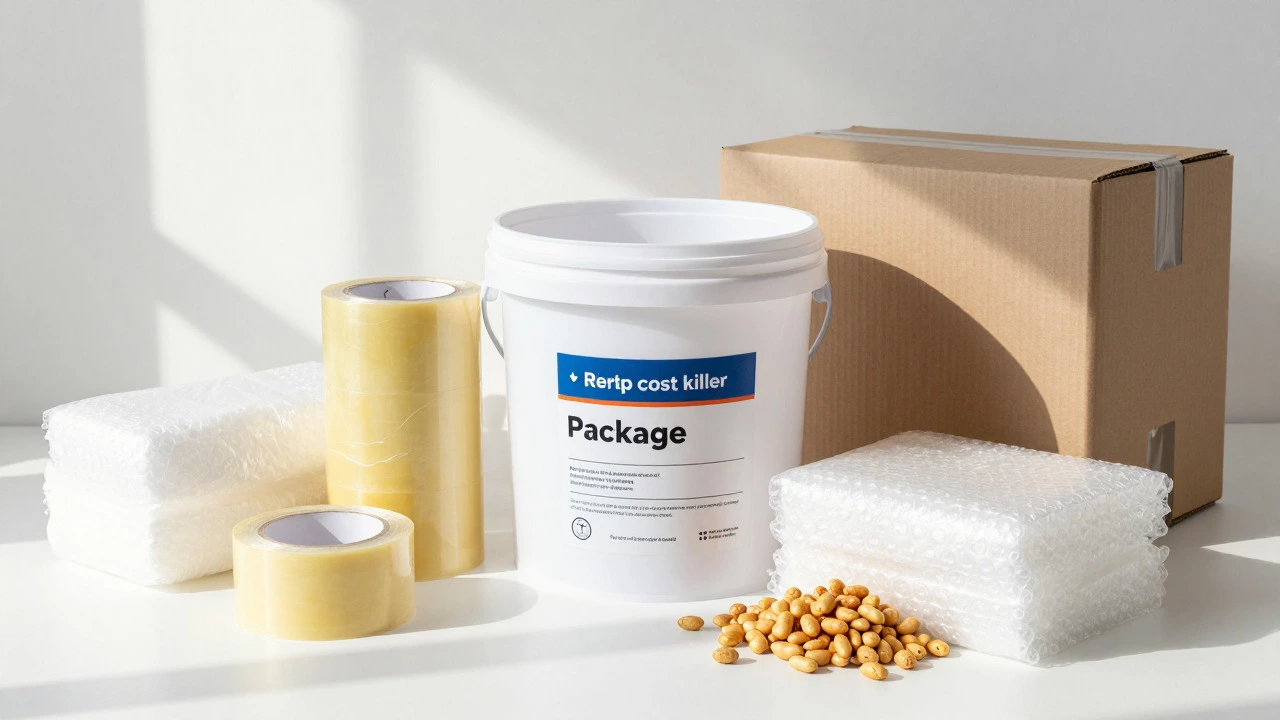
You cannot just throw a 5-gallon bucket in a box and tape it shut. Carriers will reject it, or worse, it will leak during transit. Proper packaging adds weight and volume, both of which increase cost.
Here is the industry-standard way to pack a 5-gallon bucket:
- Seal the Lid: Use heavy-duty duct tape or shrink wrap around the lid to prevent leaks. If the contents are liquid, this is non-negotiable.
- Cushioning: Wrap the bucket in bubble wrap or foam peanuts. Liquids slosh; solids rattle. Both cause damage.
- The Box: Use a double-walled corrugated cardboard box. The box should be large enough to hold the bucket plus 2-3 inches of cushioning material on all sides. A typical box size would be 20" x 20" x 20".
- Weight Check: After packing, weigh the entire unit. Remember, the carrier charges for the heaviest measurement. If your box is huge but light, they charge dimensional weight. If it’s small and heavy, they charge actual weight.
For international shipments, consider using a wooden crate. While more expensive upfront ($30-$50 for materials), crates protect against rough handling in global supply chains. They also signal to customs that the item is fragile or valuable, which can sometimes speed up inspection processes.
Hazardous Materials: The Big Red Flag
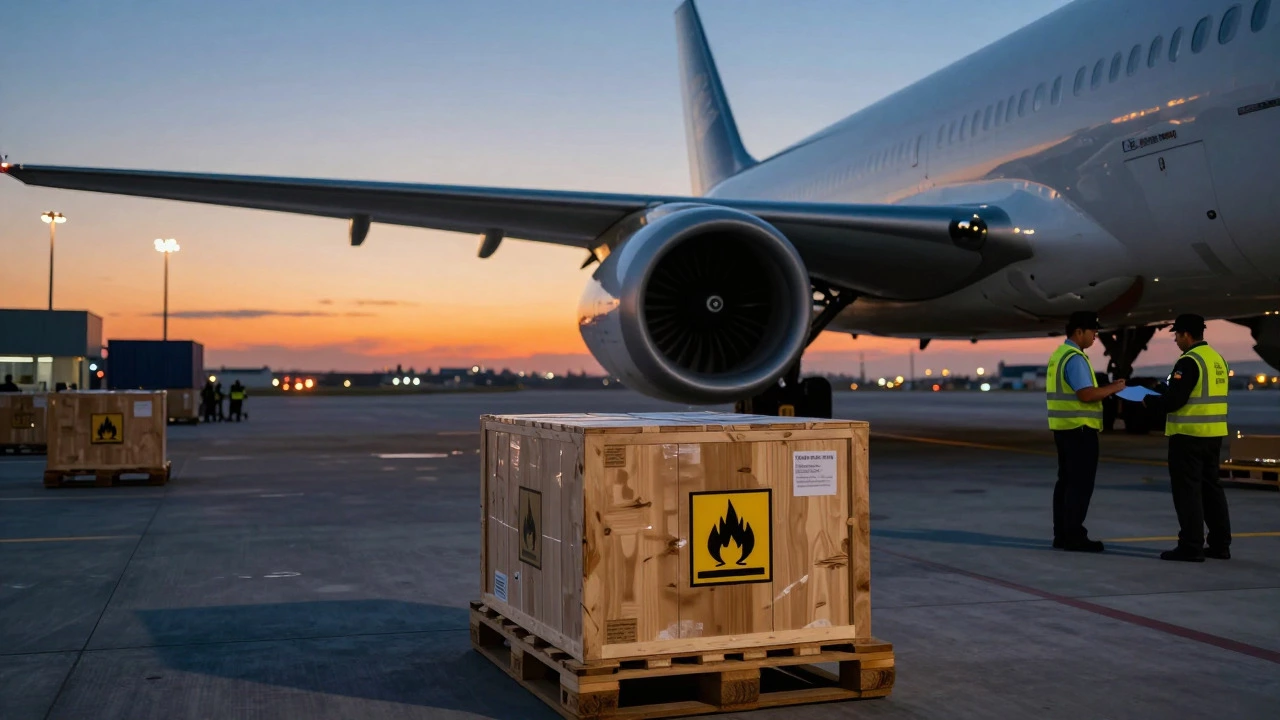
This is where most people get burned. Is your 5-gallon bucket hazardous? If it contains flammable liquids (like gasoline, thinner, or alcohol-based paints), corrosives (acids, bleach), or oxidizers, it is classified as Dangerous Goods (DG).
Shipping DG internationally requires:
- UN Certification: The packaging must be UN-rated for dangerous goods.
- Labeling: Specific hazard labels (flame, skull, etc.) must be affixed correctly.
- Documentation: A Shipper’s Declaration for Dangerous Goods is required.
- Specialized Carriers: Not all couriers accept DG. You may need to use a freight forwarder.
The cost premium for DG shipping is significant. Expect to pay 20-50% more than standard rates. Plus, if you misdeclare a hazardous item as non-hazardous, the fines can reach thousands of dollars, and your insurance will likely deny any claims.
Choosing the Right Carrier
Not all carriers are created equal for heavy parcels. Here is how the big players stack up in 2026:
FedEx is a global courier delivery services company known for reliable overnight and international express options. They have robust systems for handling heavy packages and offer competitive rates for zones within the same continent. Their "Heavy Package Surcharge" kicks in at 70 lbs, so staying under that limit saves money.
UPS is another major logistics provider with extensive global reach and strong residential delivery networks. UPS often matches FedEx prices but may have better coverage in rural areas. Their "Large Package Surcharge" applies to packages with a length + girth over 130 inches, which a boxed 5-gallon bucket rarely hits, but it’s worth checking.
DHL Express is a leader in international air freight, particularly strong outside of North America. If you are shipping from the UK to Asia or South America, DHL often beats FedEx and UPS on both price and speed. They specialize in cross-border logistics and handle customs clearance efficiently.
For purely domestic moves, regional carriers or postal services (like USPS in the US or Royal Mail in the UK) can be cheaper, but their liability limits for lost/damaged heavy items are lower. Always buy additional insurance for high-value contents.
Pro Tips to Save Money
Shipping doesn’t have to break the bank if you plan ahead. Here are actionable strategies:
- Compare Quotes Online: Use platforms like Pirate Ship, Shippo, or ParcelMonkey. They aggregate rates from major carriers and often offer discounted commercial prices that beat retail storefront rates by 30-50%.
- Ship During Off-Peak Hours: Some carriers offer slight discounts for pickups scheduled mid-week rather than Monday mornings or Friday afternoons.
- Consolidate Shipments: If you have multiple buckets, ship them together on a pallet. Freight shipping per pound is often cheaper than individual parcel shipping for bulk quantities.
- Use Pouches for Documents: Never attach shipping documents directly to the package with staples. Use a clear pouch taped to the top. Staples can puncture boxes and cause rejections.
- Verify Address Accuracy: Incorrect addresses trigger return-to-sender fees. Double-check zip codes and apartment numbers.
Insurance and Liability
Most carriers include basic liability coverage, but it’s minimal-often $100 or less. If your 5-gallon bucket contains $500 worth of specialty epoxy, you need to buy declared value protection. This typically costs $1-$2 per $100 of value. It’s a small price to pay for peace of mind.
Take photos before sealing the box. Document the condition of the bucket, the seal on the lid, and the packaging process. If the bucket arrives leaked or damaged, these photos are your best evidence for a successful claim.
Is it cheaper to ship a 5-gallon bucket empty or full?
It is significantly cheaper to ship an empty bucket. An empty 5-gallon bucket weighs only 1.5-2 pounds, falling into the lowest shipping tier. A full bucket weighs ~42 pounds, triggering heavy package surcharges. If possible, drain the contents and ship the bucket separately, or refill it at the destination.
Can I ship a 5-gallon bucket via USPS?
Yes, but with limitations. USPS Ground Advantage handles packages up to 70 pounds. However, for international shipments, USPS is often slower and less trackable than private couriers like DHL or FedEx. For domestic US shipping, it can be cost-effective for lighter contents, but check dimensional weight rules carefully.
Do I need a license to ship hazardous materials internationally?
Individuals generally do not need a license to ship small quantities of hazardous materials, but the shipper must comply with IATA (air) or IMDG (sea) regulations. This includes proper packaging, labeling, and documentation. Many carriers require the shipper to complete a brief training module or sign a declaration form. For large volumes, a formal Hazmat endorsement may be required.
What happens if my 5-gallon bucket leaks during international shipping?
If a bucket leaks, the carrier will assess damage to other packages and the transport vehicle. You will be liable for cleanup costs and any damages caused. This is why proper sealing and declaring hazardous contents are critical. Insurance claims for leaks are often denied if the packaging was deemed inadequate or if the contents were misdeclared.
How long does international shipping take for a 5-gallon bucket?
Transit times vary by service level. Express air freight typically takes 3-5 business days between major hubs (e.g., UK to US). Standard international economy can take 7-14 days. Customs clearance can add 1-3 days unpredictably. Always plan for buffer time, especially during peak seasons like holidays.